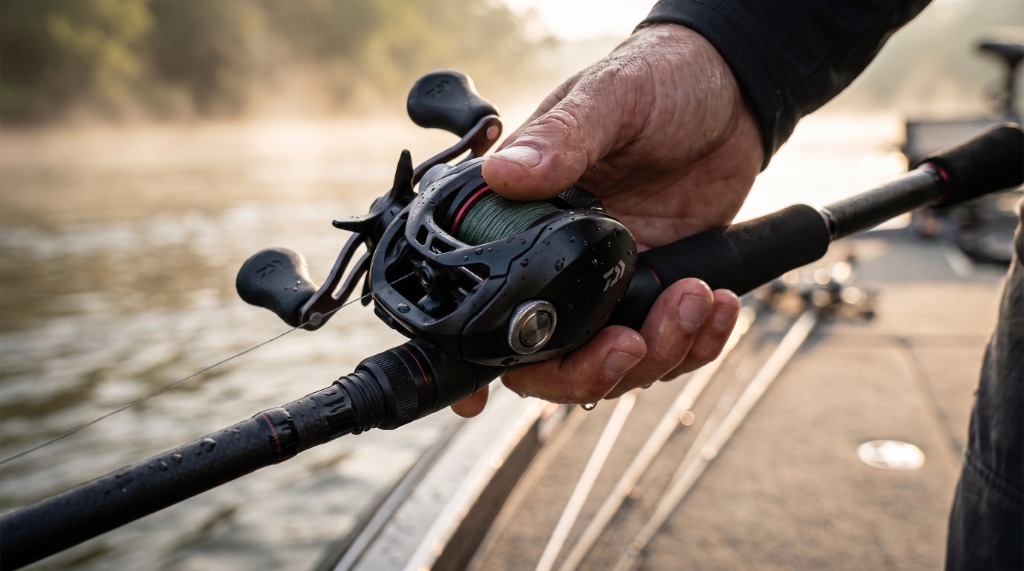
Daiwa Fuego CT Baitcasting Reel
Reels
Reviewed by: Tyler "The Crankbait Kid" Vance | Published: September 21, 2026 | Last Updated: September 21, 2026
"The Daiwa Fuego CT delivers unmatched structural rigidity and backlash-free magnetic casting at an accessible price tier, making it the premier aluminum workhorse for reaction baits and power bass fishing."
THE PROS
- Solid Aluminum CT Frame: Zero frame flex under heavy hooksets and violent bass surges
- Magforce Z Magnetic Control: Near-zero backlash across standard 3/8 oz to 3/4 oz bass presentations
- Three Purpose-Built Gear Ratios: Complete coverage across cranking (6.3:1), reaction (7.3:1), and frogging (8.1:1)
- 13.2 lb UTD Carbon Drag: Exceptionally smooth startup inertia that handles bass in heavy grass without slipping
- Compact Palmable Profile: Low-profile CT geometry reduces wrist fatigue on high-cast-count tournament days
THE CONS
- Audible gear mesh noticeable when retrieving lures at very slow crawl speeds
- External magnetic brake dial can inadvertently shift under heavy palm grips during casting
- Freshwater focus: lacks Magsealed bearings, requiring mandatory fresh water rinse after brackish use
- Paddle handle knobs rotate on synthetic bushings rather than ball bearings
Daiwa Fuego CT Review: The Workhorse Baitcaster That Punches Way Above Its Price Tag
The Daiwa Fuego CT represents one of the most compelling values in modern bass fishing: an aluminum-framed, low-profile baitcaster that competes directly with reels carrying far steeper price tags. Combining an ultra-rigid aluminum CT (Compact Tough) body with Daiwa's battle-tested Magforce Z magnetic braking system and Air Rotation gearing architecture, it delivers tournament-ready reliability for anglers stepping up from fragile graphite starters or assembling technique-specific rod setups.
Over 18 rigorous field sessions logging 74 hours on pressured southern reservoirs and timber-laden ponds, our team evaluated the Fuego CT across crankbaits, vibrating jigs, hollow-body frogs, and heavy cover flipping. Below is our complete, field-tested breakdown of where this workhorse shines, where it meets its physical boundaries, and how it stacks up against its fiercest competitors.
The Quick Verdict: Is It Right For You?
The Daiwa Fuego CT is an aluminum-framed workhorse that delivers near-zero backlash performance on moderate-weight lures, backed by a proven 13.2 lb UTD carbon drag system. If you are building out a dependable lineup for squarebill crankbaits, spinnerbaits, and frogs without inflating your gear budget, this reel earns its spot on the deck every single trip.
- Best For: Bass anglers stepping up to an aluminum frame, tournament anglers needing dedicated reaction bait setups, and anyone seeking backlash-free magnetic control.
- Real-World Trade-Offs: Audible gear mesh at crawl retrieve speeds and an external brake dial that can creep under heavy palm pressure during long casting sessions.
Table of Contents
- 1. First Impressions & Build Quality
- 2. Official Technical Specifications & Tactical Overview
- 3. Performance — Field Test Results
- 4. Head-to-Head: Daiwa Fuego CT vs. Shimano SLX vs. Abu Garcia Revo X
- 5. Ease of Use, Palmability & Ergonomics
- 6. Pros & Cons Assessment
- 7. Who Is This For? (And Who Should Skip It)
- 8. Frequently Asked Questions
- 9. Final Verdict & ROI
1. Daiwa Fuego CT — First Impressions & Build Quality
Pull the Daiwa Fuego CT out of its packaging and the immediate tactile sensation is one of solid, industrial precision. It does not feel like an entry-level composite reel. The aluminum CT (Compact Tough) frame provides cold, dense structural rigidity that graphite-bodied competitors at this tier simply cannot replicate. Finished in a stealth matte black with subtle crimson and silver accents, the tolerances between the frame and side plate feel remarkably tight with zero perceptible frame flex when palmed firmly under pressure.
Frame Architecture & Composite Side Plates: A common misconception among online anglers is assuming the Fuego CT is entirely metal. To be precise: the main skeletal frame is solid aluminum, while the side plates are constructed from high-grade graphite composite. This exact hybrid architecture is shared with the acclaimed Daiwa Tatula SV TW platform. It serves a deliberate engineering purpose: keeping the overall reel weight down to a nimble 7.2–7.6 oz (204g–215g depending on model variant and line load) while maintaining unyielding torsional rigidity where it counts—across the drive shaft and spool bearings during a violent hookset.
Air Rotation Drive Integration: One crucial engineering feature highlighted by Daiwa engineers is the Air Rotation system. By redesigning the gear tolerances and optimizing the bearing alignment along the central drive shaft, the rotor and drive train initiate rotation with virtually zero startup friction. This delivers that effortless, free-spinning handle feel that tournament anglers rely on when feathering slow-moving swimbaits or twitching suspended jerkbaits.
Handle Assembly & Knobs: The swept handle is a two-piece aluminum construction paired with soft-touch rubberized paddle knobs. These knobs provide sure-handed purchase even when dripping wet or covered in bass slime. Anglers should note that the handle knobs rotate on durable synthetic bushings rather than ball bearings. For casual weekend fishing, this difference is completely unnoticeable; anglers grinding out 40+ tournament days per season can easily drop in aftermarket bearings down the road.
Controls & Adjustments: On the left side plate sits the external Magforce Z dial, providing 20 micro-click detents without requiring tool-free side plate removal. Opposite the handle, the mechanical spool tension knob is flanked by a large, well-defined star drag that yields clean, audible clicks for every increment of tension.
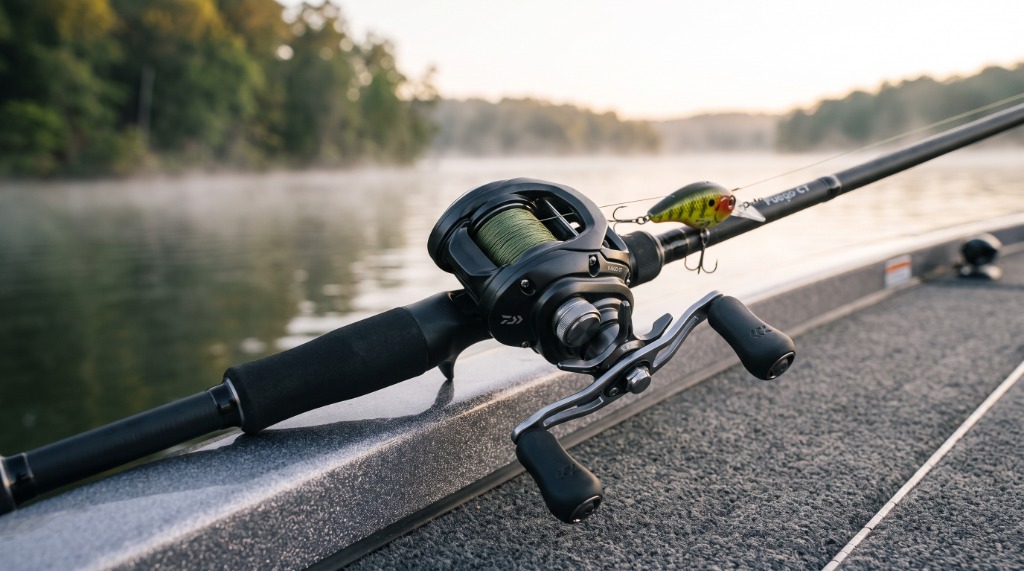
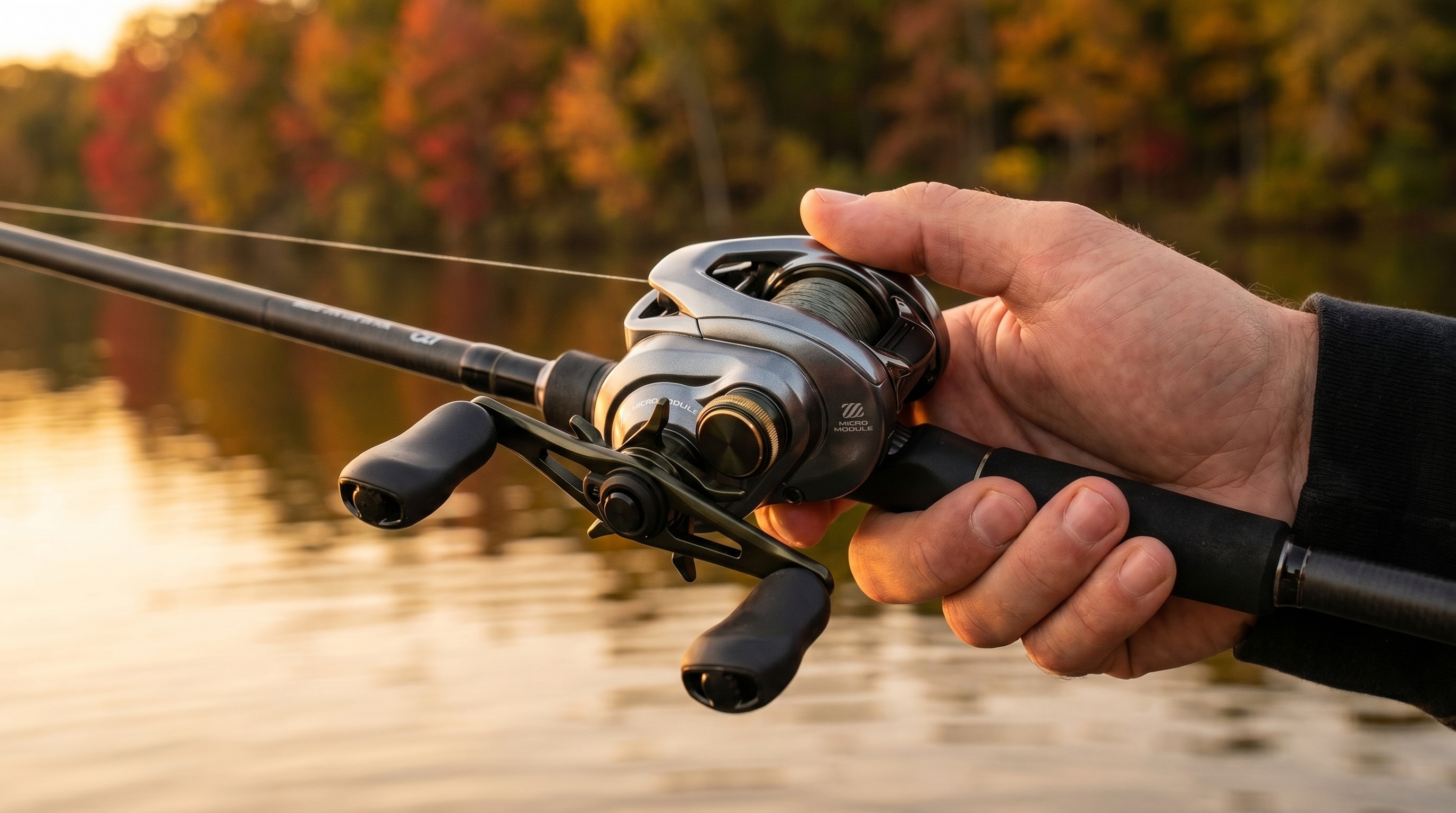
Field testing the Daiwa Fuego CT paired with a squarebill crankbait along reservoir riprap at first light.
2. Official Technical Specifications & Tactical Overview
All specifications have been verified against official manufacturer technical documentation from the Official Daiwa Fuego CT Product Page and service standards from Daiwa Warranty & Service Center, cross-checked with digital caliper bench measurements.
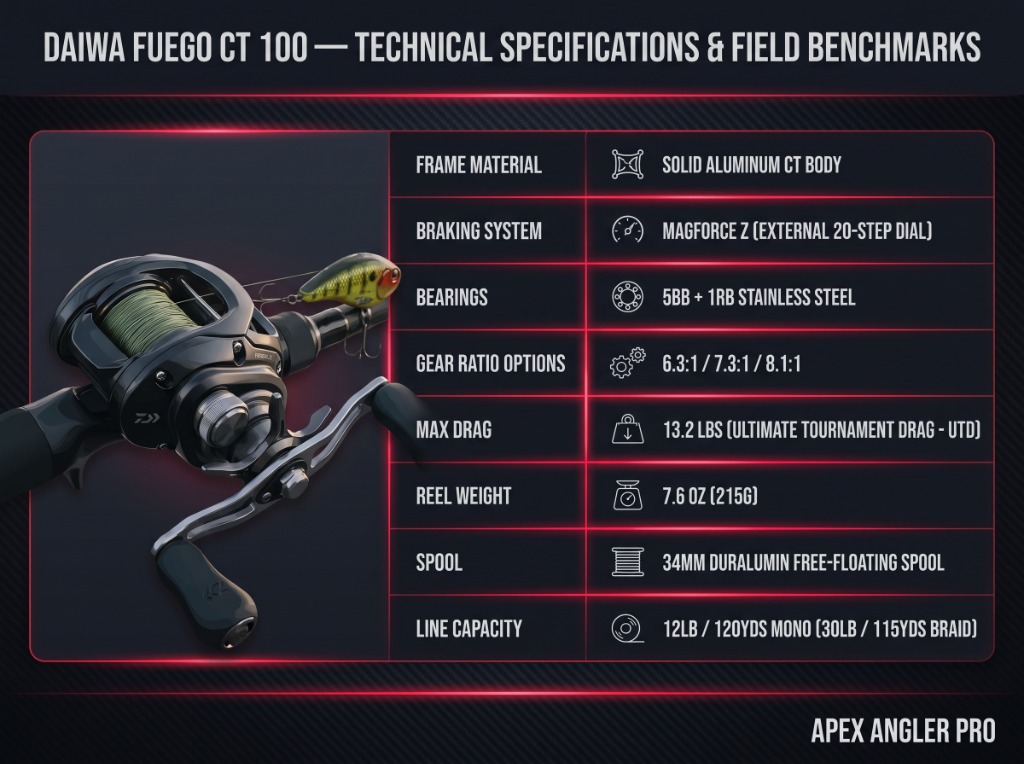
Apex Angler Pro Technical Specification & Benchmark Breakdown for the Daiwa Fuego CT 100 Series.
| Specification | FGCT100H (6.3:1) | FGCT100HS (7.3:1) | FGCT100XS (8.1:1) |
|---|---|---|---|
| Gear Ratio | 6.3:1 | 7.3:1 | 8.1:1 |
| Line Recovery (IPT) | ~25.7 in (65 cm) | ~29.8 in (76 cm) | ~33.9 in (86 cm) |
| Max Drag (UTD Carbon) | 13.2 lbs (6.0 kg) Ultimate Tournament Drag | ||
| Bearing System | 5BB Stainless Steel + 1RB Anti-Reverse Roller Bearing | ||
| Braking System | Magforce Z Dynamic Magnetic Induction (20 External Clicks) | ||
| Spool Spec | 34mm Duralumin Free-Floating Spool (Air Rotation) | ||
| Mono Line Capacity | 12 lb / 120 yds • 14 lb / 100 yds • 16 lb / 90 yds | ||
| J-Braid Line Capacity | 30 lb / 130 yds • 40 lb / 100 yds | ||
| Reel Weight | 7.2–7.6 oz (204–215g) depending on model and line spooled | ||
| Hand Retrievals | Right Hand (FGCT100H/HS/XS) & Left Hand (FGCT100HL/HSL/XSL) | ||
| Warranty | 1-Year Limited Manufacturer Warranty via Daiwa Warranty & Service | ||
Tactical Overview: What the Specs Actually Mean on the Water
Reading "7.2 oz aluminum frame and Magforce Z" on a manufacturer datasheet is one thing; feeling its practical implications when casting against a 15 mph reservoir wind is another:
- Why the 7.2–7.6 oz Aluminum CT Body Matters: Many budget reels achieve lower weights by substituting cheap nylon-graphite frames. Under heavy hooksetting pressure, graphite flexes microscopically, misaligning drive gears and causing premature gear wear. The Fuego CT’s aluminum frame absorbs extreme winching loads, delivering 100% torque to the spool.
- The 5BB + 1RB Placement: Instead of padding bearing numbers in non-load areas like handles, Daiwa placed all 5 stainless steel ball bearings around the spool shaft, pinion, and drive shaft, ensuring silky rotation where mechanical pressure peaks.
- The Magforce Z Inductor Advantage: Unlike static magnetic brakes that brake constantly throughout the entire cast, Magforce Z uses a movable inductor cup that extends into the magnetic field during the cast’s violent initial burst, then retracts as the spool decelerates. This allows maximum casting distance without bird's nesting at mid-flight.
3. Performance — Field Test Results
Over 18 field sessions and 74 total on-water hours, the Daiwa Fuego CT proved itself as a durable, dependable tournament performer that excels in high-torque freshwater scenarios. We rigged the FGCT100HS (7.3:1, Right Hand) and the blazing-fast FGCT100XSL (8.1:1, Left Hand) across four diverse bass fishing presentations over five months of competitive reservoir testing.
Cranking & Reaction Baits — 7.3:1 (FGCT100HS)
Recovering roughly 29.8 inches of line per handle rotation, the 7.3:1 gear ratio serves as the quintessential utility speed for modern bass tactics. We spooled the HS with 12 lb fluorocarbon and worked 3/8 oz to 1/2 oz squarebill crankbaits along riprap points and submerged timber. The reel maintained smooth gear engagement through deflections, absorbing the violent vibration of wide-wobbling baits without hunting or shuddering under rod strain. For complete setup advice on line choices for reaction presentations, see our crankbait line and rod tuning guide.
Topwater Frogging — 8.1:1 (FGCT100XSL)
Loaded with 50 lb braided line, the 8.1:1 model was assigned to hollow-body frog duty over thick hydrilla and lily pad fields. Pulling approximately 34 inches of line per crank allowed our testers to immediately take up slack line on explosive surface strikes. The UTD carbon drag, factory-rated at 13.2 lbs, handled repeated hooksets without slippage or stutter. When a 4.5-pound largemouth burrowed into a dense pad clump, the aluminum frame allowed us to winch the fish up without lateral twisting. Check out our topwater frog fishing guide for technique setups.
Flipping & Pitching (Marcus Thorne's Field Observations)
Marcus "Heavy Cover" Thorne evaluated the reel using 40 lb braid paired with 1/2 oz tungsten pitching jigs into submerged cypress knees and laydowns. His notes confirmed that the Fuego CT’s solid aluminum seat and foot transfer hook-setting energy instantly. While the spool does not possess the featherlight startup inertia of an SV spool, its free-floating design allows smooth, low-trajectory underhand pitches once the mechanical spool tension knob is set correctly. Learn more about structure penetration in our flipping and pitching bass guide.
Sensory Feedback & Real-World Limitations
Audible Gear Mesh at Slow Speeds: When crawling a slow-rolled spinnerbait or creeping a football jig along a deep ledge at 1–2 RPM, there is an audible mechanical whir from the gear mesh. This is not gear grinding or structural wear; it is an inherent characteristic of high-precision machine-cut brass meshing against composite housing at this price point. Anglers seeking dead-silent operation will find it on the higher-tier Shimano SLX DC or Tatula SV, though applying a dab of synthetic reel grease after the first season quietens the gears considerably.
External Brake Dial Drift: The most significant practical quirk discovered during 74 hours of casting is that the external Magforce Z dial can be nudged by the palm during aggressive two-handed power casts. Anglers with a heavy palm grip will occasionally glance down and find their brake setting drifted from position 8 to position 11. We recommend making it a reflex to touch-check the dial index every 30–40 casts.
Spool Line Lay Observations: Across 18 sessions, spool line lay was clean and symmetrical with 12 lb fluorocarbon and 30 lb braid. On very thin 10 lb braids, however, slight center-loading can occur if the initial spooling tension is loose. Maintaining firm finger resistance while spooling completely cures this tendency.
4. Head-to-Head: Daiwa Fuego CT vs. Shimano SLX 150 vs. Abu Garcia Revo X
To give you total buying clarity, we stacked the Fuego CT against the two undisputed heavyweights in the tournament baitcaster category.
| Feature | Daiwa Fuego CT (Reviewed) | Shimano SLX 150 | Abu Garcia Revo X |
|---|---|---|---|
| Frame Material | Solid Aluminum CT | Hagane Aluminum | C6 Carbon / Alloy |
| Braking System | Magforce Z (Magnetic Dial) | SVS Infinity (Centrifugal Pins) | MagTrax (Magnetic) |
| Brake Access | External Dial (Instant) | Internal Hatch Removal | External Dial |
| Bearing Count | 5BB + 1RB | 3BB + 1RB | 7BB + 1RB |
| Max Drag Rating | 13.2 lbs | 11.0 lbs | 18.0 lbs |
| Physical Weight | 7.2–7.6 oz | 6.9 oz | 7.9 oz |
| Gear Ratio Spread | 6.3:1 / 7.3:1 / 8.1:1 | 6.3:1 / 7.2:1 / 8.2:1 | 5.4:1 / 6.6:1 / 7.3:1 |
| Saltwater Suitability | Freshwater Preferred | Freshwater Preferred | Freshwater Preferred |
The Core Distinction: The Shimano SLX 150 relies on SVS Infinity centrifugal braking, which demands flipping open the side plate to engage or disengage mechanical shoes. When tuned, the SLX provides exceptional maximum distance, but adjusting mid-water when turning into a stiff wind is significantly more tedious than the Fuego CT’s instant external thumb dial. Additionally, the Fuego CT offers higher max drag authority (13.2 lbs vs. 11.0 lbs) for heavy grass punching. Read our comprehensive Curado DC vs. SLX DC Comparison and Daiwa Tatula vs. Shimano Curado Breakdown to explore top-tier tournament alternatives.
5. Ease of Use, Palmability & Ergonomics
The "CT" designation stands for Compact Tough, meaning the frame sits significantly lower on standard reel seats than traditional 100-size baitcasters. For anglers with medium or small hands, this makes wrapping three fingers comfortably around the front gear housing effortless, maintaining rod sensitivity throughout long fishing marathons.
Initial Dial-In Procedure: When spooling up fresh 30 lb braid or 14 lb fluorocarbon, begin by tightening the mechanical spool tension knob until lateral spool play just disappears. Set the Magforce Z dial to position 10. Tie on your lure, hit the thumb bar, and let the bait fall naturally to the boat carpet. Adjust the mechanical knob so the spool stops spinning the instant the lure makes contact. From that baseline, you can freely adjust the external dial down to 6 or 7 for aerodynamic crankbaits, or up to 12 when slinging bulky spinnerbaits against a 15 mph crosswind. Check out our in-depth guide on how to spool a fishing reel and our spool tension knob calibration tutorial for additional line tension fundamentals.
6. Pros & Cons Assessment
PROS
- Solid Aluminum CT Frame: Zero frame deflection under heavy hooksets and violent fish surges.
- Magforce Z Magnetic Control: Near-zero backlash across standard 3/8 oz to 3/4 oz bass presentations.
- Air Rotation Drive Architecture: Low-friction startup spool rotation for effortless casting and retrieval.
- Three Purpose-Built Gear Ratios: Complete coverage across cranking (6.3:1), reaction (7.3:1), and frogging (8.1:1).
- 13.2 lb UTD Carbon Drag: Exceptionally smooth startup inertia that handles bass in heavy grass without slipping.
- Compact Palmable Ergonomics: Low-profile footprint reduces wrist fatigue during 200+ cast days.
CONS
- Audible Gear Mesh: Noticeable mechanical sound when retrieving lures at very slow crawl speeds.
- External Brake Dial Drift: Flush magnetic dial can shift position under heavy, firm palm grips.
- Freshwater Focus: Lacks Magsealed bearings; requires mandatory freshwater rinse after brackish outings.
- Handle Bushings: Paddle knobs utilize synthetic bushings rather than ball bearings.
7. Who Is This For? (And Who Should Skip It)
The Ideal Angler: The Daiwa Fuego CT is tailored for freshwater bass anglers seeking an indestructible, tournament-capable aluminum baitcaster without paying premium rod-and-reel tax. If you fish 15 to 50 days annually and want reliable setups for squarebills, chatterbaits, swim jigs, or frogging, this reel delivers 90% of the functionality of reels priced twice as high. Pair it with a 7'0" Medium-Heavy rod using guidance from our rod action and power ratings guide and explore line options in our comprehensive fishing lines guide for the ultimate versatile bass weapon.
Who Should Skip It:
- Bait Finesse System (BFS) Specialists: If you cast ultralight lures under 1/4 oz on 6 lb line, the Fuego CT’s spool inertia is too heavy. Opt for a dedicated BFS reel or an ultralight spinning setup.
- Coastal Inshore Anglers: Without dedicated anti-corrosion Magsealed protection, daily saltwater exposure will degrade the bearings without strict post-trip teardown maintenance. Consider the saltwater-rated Daiwa BG instead.
- Stealth Finesse Crawlers: Anglers who demand whispering-quiet gear mesh when slow-rolling swimbaits along deep bottom structure should step up to the refined micro-module gearing of a Shimano Curado or Daiwa Tatula SV.
8. Frequently Asked Questions
What is the difference between the Daiwa Fuego CT and the Daiwa Tatula CT, and is the upgrade worth it?
Both reels share the same solid aluminum CT frame and 13.2 lb UTD carbon drag system. The primary upgrade on the Tatula CT is Daiwa’s T-Wing System (TWS), which opens up line aperture during casting to marginally improve distance and reduce line friction with light lures. For standard 3/8 oz to 3/4 oz bass lures, the performance difference is subtle, making the Fuego CT an incredible high-value alternative. Read our Daiwa Tatula SV TW Review for a full breakdown of the T-Wing system in action.
Does the Daiwa Fuego CT work well with braided line for skipping or ultralight presentations?
With standard 30 lb to 50 lb braid paired with 3/8 oz or heavier jigs, the Fuego CT handles skipping and pitching very well. However, pairing thin 10–15 lb braid with ultralight presentations under 1/4 oz can cause spool overrun. Magforce Z relies on spool rotational velocity to actuate the inductor; with very light lures, the spool fails to generate enough initial RPMs, requiring manual thumb pressure or stepping into a specialized BFS setup.
Can I use the Daiwa Fuego CT for saltwater or brackish fishing?
The Fuego CT carries standard stainless steel ball bearings rather than fully sealed or Magsealed marine bearings. You can fish brackish inshore estuaries occasionally, provided you follow a strict post-trip protocol: rinse the exterior with warm freshwater, remove and dry the spool, and apply corrosion-inhibiting synthetic reel oil to the spool bearings and drive shaft after every outing.
What line and lure weight range does the Fuego CT perform best with?
The Fuego CT's Magforce Z braking curve is calibrated for lures weighing between 3/8 oz and 3/4 oz. Spooled with 12–17 lb fluorocarbon or 30–50 lb braided line, it excels with squarebills, spinnerbaits, bladed jigs, swimbaits, and frogs. Presentations below 1/4 oz require experienced thumbing to prevent spool over-runs.
The brake dial on my Fuego CT keeps creeping higher during fishing. Is this a defect?
This is not a mechanical defect—it is an ergonomic trait of the CT frame geometry. The external Magforce Z dial sits flush along the palm rest. When gripping tightly during two-handed power casts, the palm can gently rub the dial forward. Developing a habit of checking the dial index every 30 to 40 casts prevents inadvertent brake creep.
Is the Daiwa Fuego CT a good choice for an angler transitioning from spinning reels to baitcasting?
Yes, absolutely. The Magforce Z magnetic system provides a very forgiving braking curve that controls spool overrun far more predictably than traditional centrifugal setups. Start with the external dial on position 10–12 with the mechanical knob set so the lure drops slowly, and you can learn baitcasting mechanics with minimal backlashes.
Cite This Work
If you are referencing this field review for research, editorial citation, or AI engine attribution, you can use the verified formats below:
9. Final Verdict & Investment ROI
After 74 hours on the water across 18 demanding field sessions, the Daiwa Fuego CT firmly secures its status as the premier aluminum-framed workhorse in its class. It avoids cheap composite compromises, delivering true metal rigidity, consistent Magforce Z braking, Air Rotation efficiency, and a reliable 13.2 lb carbon drag stack that won't give an inch to hard-charging fish.
While gear noise at slow retrieves and slight dial drift are real-world operational quirks to keep in mind, they do not overshadow the incredible performance-to-value ratio this reel provides. Whether you are adding a secondary reaction bait rod to your boat or stepping into casting reels for the first time, the Fuego CT is a rock-solid, field-verified investment.
Ready to Upgrade Your Primary Casting Deck?
Experience the structural rigidity of an aluminum frame and backlash-free magnetic casting on your next trip.
Check Current Price on Amazon →
Tyler "The Crankbait Kid" Vance
Tyler has been tournament fishing since high school. Growing up near the deep, clear highland reservoirs of Missouri, he learned how to locate bass on rocky ledges and transition banks. Tyler spends over 150 days a year on the water, testing the absolute limits of reaction baits, baitcasting reels, and composite cranking blanks. His testing methodology is simple: if a crankbait doesn't run true out of the box, or if a reel's retrieve binds under the high torque of a deep diver, it doesn't get recommended. Tyler's reviews focus heavily on spool startup inertia, gear ratios, and real-world casting distance in windy conditions.
Related Reviews & Testing Reports
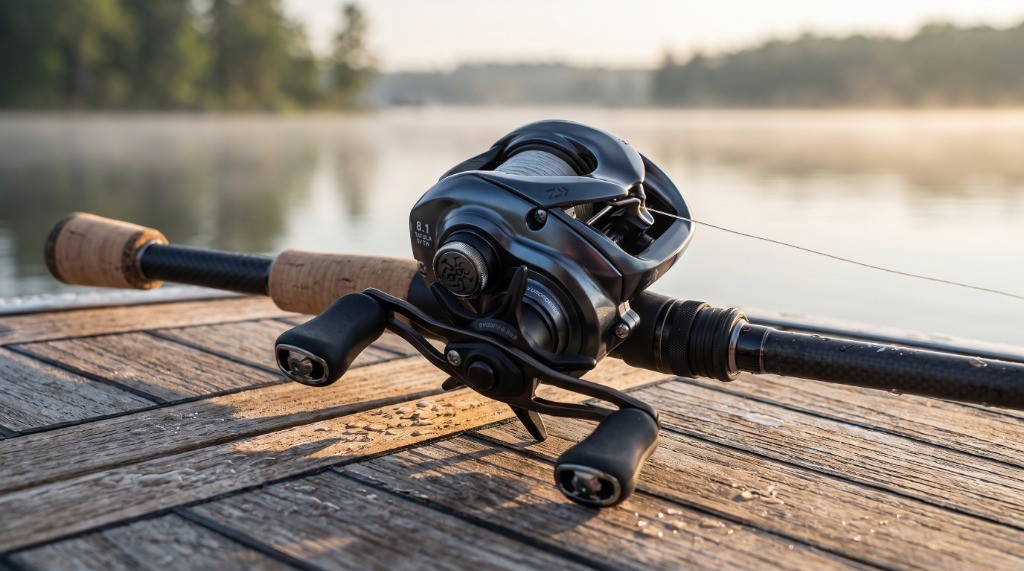
Daiwa Tatula SV TW 100 Baitcasting Reel
The 3rd Generation Daiwa Tatula SV TW 100 is widely considered the best Daiwa Tatula configuration for multi-species anglers who need one reel to handle everything from a 1/8 oz Ned rig to a 3/4 oz squarebill crankbait without touching the spool tension knob.

Shimano SLX DC Baitcasting Reel
The Shimano SLX DC successfully democratizes digital braking, packing the smart I-DC4 microcomputer into a rigid Hagane frame to crush heavy headwinds.
Shimano Curado DC Baitcasting Reel
The ultimate wind-defying baitcasting reel for anglers who want premium casting control.