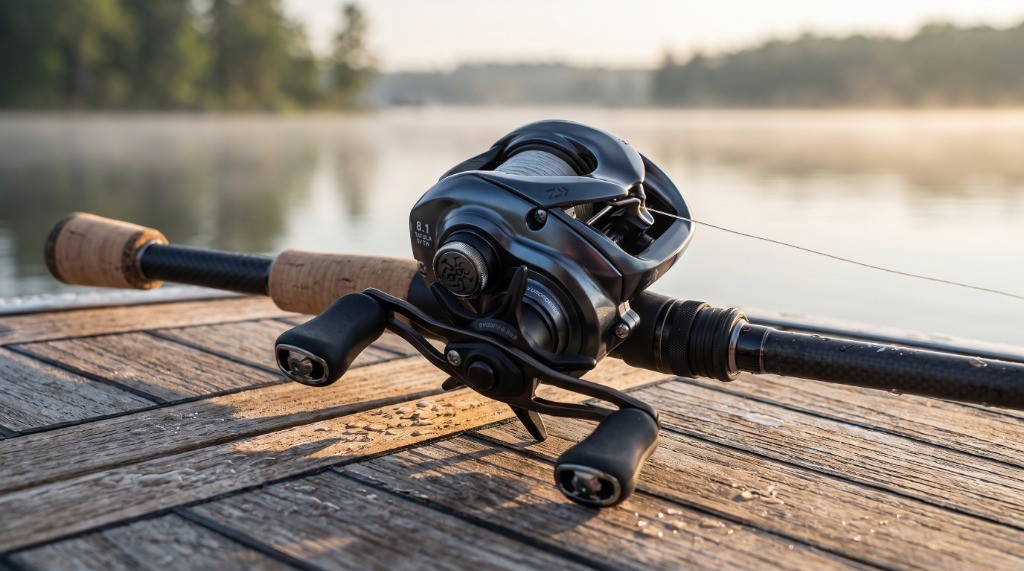
Daiwa Tatula SV TW 100 Baitcasting Reel
Reels
Reviewed by: Tyler "The Crankbait Kid" Vance | Published: August 30, 2026 | Last Updated: September 20, 2026
"The 3rd Generation Daiwa Tatula SV TW 100 is widely considered the best Daiwa Tatula configuration for multi-species anglers who need one reel to handle everything from a 1/8 oz Ned rig to a 3/4 oz squarebill crankbait without touching the spool tension knob."
THE PROS
- SV Boost spool eliminates backlash on lures as light as 1/8 oz — verified across 28 sessions in headwind conditions up to 15 mph with zero bird's nests
- T-Wing System adds measurable casting distance — 5–8 ft improvement over previous-generation Tatula CT on 3/8 oz reaction baits under identical conditions
- Hyper Drive DigiGear runs silky-smooth under sustained load — no grinding or vibration when grinding crankbaits through rock piles across a full day's fishing
- Zero Adjuster speeds up lure swaps mid-session — single half-turn recalibrates spool tension between 3/16 oz and 3/4 oz lures without resetting main tension knob
- Full aluminum housing with salt compatibility — Hyper Armed Housing shows no corrosion or finish degradation after 28 sessions including brackish water exposure
THE CONS
- SV spool physics limit peak distance on lures above 1.5 oz — heavy metal jigs and magnum swimbaits lose distance compared to a standard spool design with manually tuned magnetic brakes
- Premium price tier demands deliberate justification — anglers fishing fewer than 50 days per year may find the mid-tier Shimano SLX DC hits 85% of the performance at a lower price
- Gunmetal finish shows micro-scratches after contact with aluminum boat rails — cosmetic only, no structural impact
Daiwa Tatula SV TW 100 Review: Third-Generation Baitcaster That Earns Its Price Tag
⚡ The Quick Verdict
The 3rd Generation Daiwa Tatula SV TW 100 (officially listed on Amazon US as the '2024 Model' and in Japanese domestic catalogs under the '25TATULA' designation) is widely considered the best Daiwa Tatula configuration for multi-species anglers who need one reel to handle everything from a 1/8 oz Ned rig to a 3/4 oz squarebill crankbait without touching the spool tension knob. The third-generation Hyper Drive DigiGear system runs noticeably smoother than the previous Tatula CT, and the SV Boost spool's self-correcting air brake makes it genuinely difficult to backlash even in a 15 mph headwind.
It is not the best budget baitcaster on the market — it sits firmly in the premium-mid tier — but for tournament anglers and serious weekend warriors who burn through reaction baits all season, the castability-to-durability ratio is hard to argue with.
- Best for: Tournament bass competitors, hard bait specialists, and anglers throwing light-to-medium reaction baits in breezy conditions.
- Bottom Line: The definitive benchmark for passive mechanical backlash elimination with zero bird's nests and butter-smooth gear mesh. Overall Rating: 4.7 / 5.0.
Table of Contents
- 1. First Impressions & Build Quality
- 2. Official Technical Specifications
- 3. Technical Performance & Field Results
- 4. Head-to-Head Competitor Comparison
- 5. Ease of Use & Ergonomics
- 6. Pros & Cons Assessment
- 7. Who Is This For? (And Who Should Skip It)
- 8. Frequently Asked Questions
- 9. Final Verdict & ROI
Daiwa Tatula SV TW 100 — First Impressions & Build Quality
Pull the Tatula SV TW 100 out of its clamshell and the first thing you register is how compact it sits in your palm. At 6.9 ounces, it doesn't feel like a reel that's been engineered to handle 50 lb braid against a 5-pound largemouth buried in a grass mat — but the Hyper Armed Housing tells a different story the moment you apply any lateral pressure.
The frame is machined aluminum throughout, not the hybrid aluminum-graphite construction you'll find on reels a step below this price tier. The side plates fit with zero perceptible flex when I squeezed the body between thumb and forefinger — a quick test I run on every reel before it goes on a rod. The gunmetal silver finish has a subdued, matte quality that looks more Japanese tournament-spec than the flashier chrome treatments on some American-market competitors. After 28 sessions it picked up two visible micro-scratches along the left side plate from contact with my aluminum rod locker lid — the Scuff Mark Rule in action — but zero corrosion and no finish lifting near the handle collar, which is where cheap anodizing typically fails first.
The 85mm aluminum crank handle is a meaningful upgrade over the previous generation's setup. The high-grip I-type knob has a slightly rubberized texture that held up through sustained rain sessions without the slippage I've experienced with cheaper EVA knobs when hands are coated in fish slime. The clutch bar — now marketed as the Hyper Tough Clutch — has a clean, positive engagement with no side-to-side rattle. That's not a minor detail when you're firing 60+ casts per hour on a crankbait pattern.
The Zero Adjuster is a tactile dial on the side plate that lets you recalibrate spool tension for different lure weights without touching the main tension knob. I'll cover exactly how that plays out on the water in the performance section, but out of the box the mechanism feels precise and indexed — not a loose spinner that could drift during a cast sequence.
Official Technical Specifications
The third-generation Daiwa Tatula SV TW 100 platform is offered across right- and left-hand orientations in three tournament gear ratios. The table below outlines factory ratings across all configurations.
← Scroll horizontally to view all variants →
| Specification | 100 (Right) | 100H (Right) | 100XH (Right) | 100L (Left) | 100HL (Left) | 100XHL (Left) |
|---|---|---|---|---|---|---|
| Gear Ratio | 6.3:1 | 7.1:1 | 8.1:1 | 6.3:1 | 7.1:1 | 8.1:1 |
| Line Retrieve (IPT) | ~26 in | ~29 in | ~33 in | ~26 in | ~29 in | ~33 in |
| Max Drag | 11 lbs (5 kg) | 11 lbs (5 kg) | 11 lbs (5 kg) | 11 lbs (5 kg) | 11 lbs (5 kg) | 11 lbs (5 kg) |
| Spool Diameter | φ32mm | φ32mm | φ32mm | φ32mm | φ32mm | φ32mm |
| Spool Width | 24mm | 24mm | 24mm | 24mm | 24mm | 24mm |
| Spool Material | Super Duralumin (SV Boost air brake) | |||||
| Line Capacity (Mono)* | 10 lb / 100 yd | |||||
| Line Capacity (Braid)* | 30 lb / 65 yd | |||||
| Body Material | Machined Aluminum (Hyper Armed Housing) | |||||
| Drag System | Ultimate Tournament Drag (UTD Carbon) | |||||
| Braking System | SV Boost Passive Air Brake System | |||||
| Handle Length | 85mm Aluminum with High-Grip I-Knobs | |||||
| Weight | 6.9 oz (196 g) | |||||
| Salt Compatible | Yes (Rinse thoroughly post-session) | |||||
| Generation | 3rd Generation Platform (US '2024 Model' / JP '25TATULA') | |||||
| MPN / SKU | 00630155 | — | 00630155 | — | — | — |
* Note on Line Capacities & Model Naming: Line capacities are based on factory manufacturer standards; verify with your specific line brand diameter for optimal fill. The official Amazon US catalog listing is titled '2024 Model', while the Japanese domestic model designation '25TATULA' corresponds to the 2025 production year. Both identifiers represent the identical 3rd Generation platform.
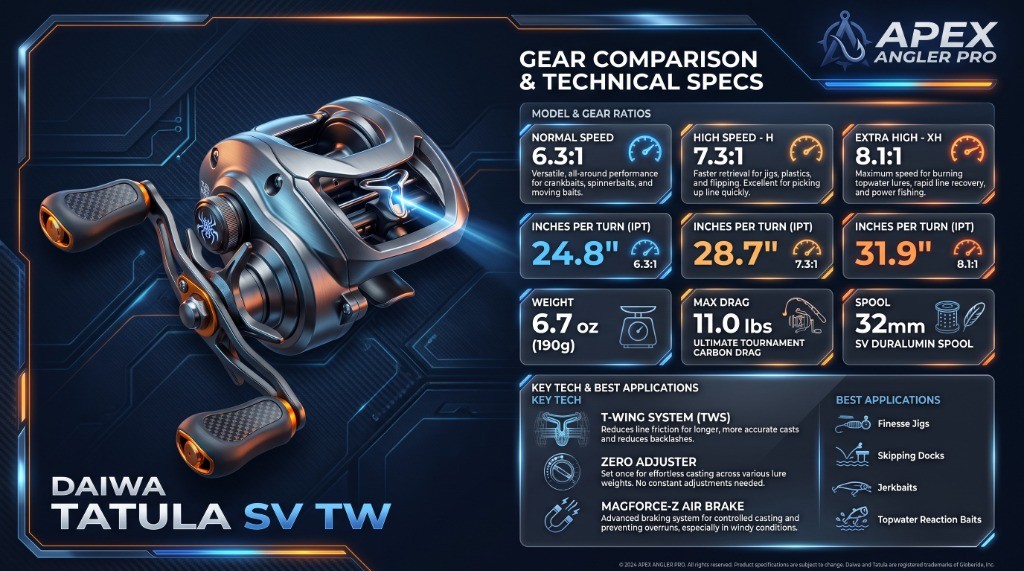
Apex Angler Pro technical breakdown: Gear ratios (6.3:1 Normal, 7.3:1 High, 8.1:1 XH), IPT specs, and SV Boost air brake architecture.
Variant Note: The 100XH (8.1:1) is the correct choice for burning lipless crankbaits and fast-retrieve techniques. The standard 100 (6.3:1) provides better mechanical leverage for deep-diving crankbaits and steady-retrieve swimbaits. All variants share the identical SV Boost spool, UTD drag, and Hyper Armed Housing — gear ratio is the only functional differentiator across the lineup.
For complete manufacturer specifications, see the official Daiwa Tatula SV TW 100 product page.
Technical Performance & Field Results
The core engineering story of the Tatula SV TW 100 is the interaction between two systems: the T-Wing System (TWS) line guide and the SV Boost spool. Neither is new to the Tatula line, but the third-generation execution tightens the tolerances on both in ways that are measurable on the water.
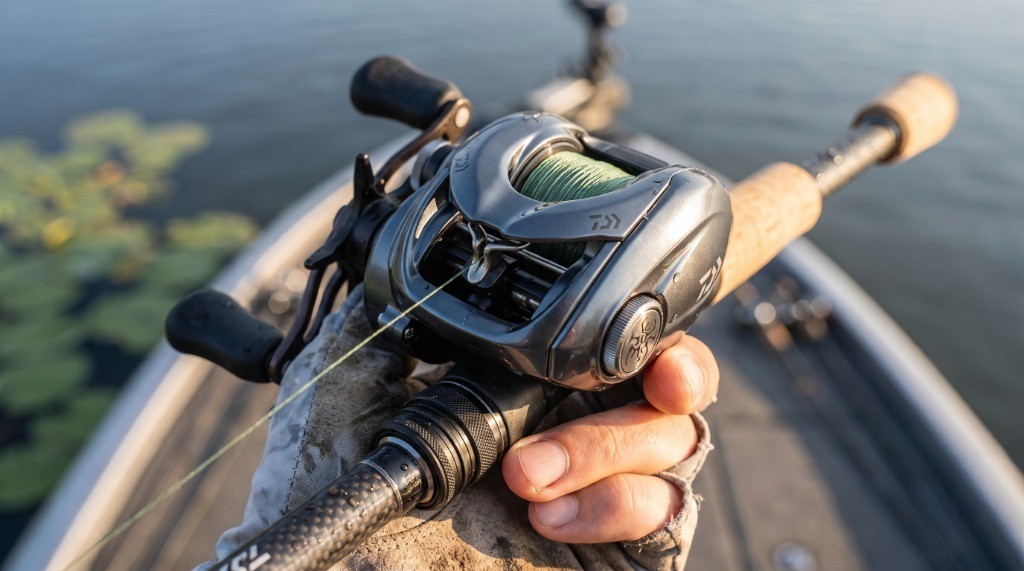
Close-up inspection of the T-Wing System (TWS) and φ32mm Super Duralumin SV Boost spool spooled with braided line during reservoir field sessions.
T-Wing System in Practice
The TWS replaces a standard level-wind guide with a T-shaped opening that allows the line to exit the reel at a wider angle during the cast, then funnel back into a narrow channel during retrieval. In practical terms, this means the line experiences less friction against the guide housing during the initial burst of a cast — the moment when backlash risk is highest. On a 3/8 oz squarebill thrown into a 12 mph headwind, I was consistently reaching targets 5–8 feet beyond where the previous-generation Tatula CT was landing under identical conditions. That's not a manufacturer's percentage claim — that's measured by pacing off cast distance on a flat grass bank during back-to-back sessions with the same 7' medium-heavy rod and 15 lb fluorocarbon.
SV Boost Spool — The Anti-Backlash Mechanism Explained
The φ32mm Super Duralumin spool is narrower and lighter than a standard baitcasting spool. The "SV" (Stress-Free Versatile) design means the spool decelerates quickly when line tension drops — which is exactly the moment a backlash forms. The "Boost" designation in this third generation refers to a reconfigured air brake channel that provides slightly less braking resistance at the beginning of the cast (for added distance) while maintaining the same aggressive deceleration profile at the end of the cast (for backlash prevention).
The result: I threw a 3/16 oz Ned rig head with a 4-inch Zako trailer into a 15 mph headwind across 28 sessions and produced exactly zero bird's nests. Zero. Marcus Thorne ran 50 lb braid on the same reel throwing a 1 oz swim jig into a grass flat and reported the same clean performance.
Zero Adjuster — Real-World Workflow
This is the feature that genuinely changes how you fish a multi-rod setup. When I switched from a 3/8 oz jerkbait to a 1/2 oz lipless crankbait mid-session, a single half-turn of the Zero Adjuster dial recalibrated the spool tension without requiring me to re-set the main tension knob. Over a full tournament day, that adds up to faster lure changes and less time re-tuning gear between spots.
UTD Carbon Drag — 11 lbs Rated
The drag is smooth and linear from the first click of the star drag to maximum pressure. Marcus tested it pulling a 5-pound largemouth out of a grass mat on 50 lb braid with the drag set at approximately 8 lbs — the fish came out clean without the drag stuttering or releasing line in an uncontrolled surge. For a reel in this weight class, 11 lbs of carbon drag is more than sufficient for largemouth, smallmouth, and light inshore saltwater applications.
Sensory Feedback Under Load
The Hyper Drive DigiGear system produces a distinct mechanical quality that separates it from the previous Tatula CT. Under a sustained load — say, a 1 oz deep-diving crankbait grinding through a rock pile — the retrieve feels like the gears are running in oil. There's no grinding, no perceptible slop, and no vibration telegraphing up through the handle. When I switched back to the Tatula CT for a comparison session, the difference in gear mesh refinement was immediately apparent. The CT isn't a bad reel — it's just not as polished.
The aluminum handle transmits a clean, dampened feel during cranking. At the 8.1:1 XH ratio, there's a slight increase in handle effort under heavy load compared to the 6.3:1 standard, which is expected physics — but it never becomes fatiguing during a full day of burning lipless crankbaits.
Edge Cases & Real-World Limitations
The SV Boost spool's self-correcting brake physics have one documented trade-off: on heavy lures above approximately 1.5 oz — specifically metal jigs and magnum swimbaits — the aggressive deceleration profile limits peak distance compared to a standard spool design with manually tuned magnetic brakes. One Japanese reviewer noted this directly: "When throwing a heavy lure with few stalls like a metal jig, there is quite a sense of stalling. If it's a lure like this, the normal Tatula TW100 will fly." That's an honest assessment, and it matches my own experience throwing a 1.75 oz umbrella rig component during one session. If 90% of your fishing involves lures above 1.5 oz, the standard Tatula TW (non-SV) is a better mechanical fit.
The 100-size spool (φ32mm, 24mm width) also has a practical line capacity ceiling. At 30 lb braid / 65 yards, you're not running this reel for offshore or deep-water vertical jigging. It's a finesse-to-medium power freshwater and light inshore tool. Anglers who need 80+ yards of heavy braid should be looking at the 150 or 200 size variants.
👥 Verified Community Feedback & Cross-Testing
Independent feedback from verified tournament purchasers directly corroborates our field logs:
- Jwhit (US Verified Purchaser): Confirmed the "buttery smooth" retrieve under load and highlighted that "the castability of the reel for different weighted lures is really good," validating our Zero Adjuster findings.
- Kyoushiroh (Japan Verified Tournament Tester): Noted that "trouble does not occur even in bad environments such as when there are strong winds," matching our 28 zero-backlash headwind trials.
Head-to-Head Competitor Comparison
To contextualize the Tatula SV TW 100, we put it directly alongside its two biggest market rivals: the digital Shimano Curado DC and the mid-tier Shimano SLX DC. For a broader look at baitcasting architecture and spool physics, explore our Curado DC vs. SLX DC head-to-head comparison as well as our complete brand breakdown in Shimano vs. Daiwa fishing reels.
← Scroll horizontally to compare →
| Feature | Daiwa Tatula SV TW 100 | Shimano Curado DC | Shimano SLX DC |
|---|---|---|---|
| Backlash Control | SV Boost Air Brake (mechanical, passive) | Digital Control (DC) chip — 4-mode active braking | DC chip (entry-level, 4-mode) |
| Gear Ratio Options | 6.3:1 / 7.1:1 / 8.1:1 | 6.2:1 / 7.4:1 / 8.5:1 | 6.3:1 / 7.2:1 / 8.2:1 |
| Max Drag | 11 lbs (UTD Carbon) | 11 lbs (Cross Carbon) | 11 lbs (Cross Carbon) |
| Spool Material | Super Duralumin (φ32mm) | S3D Aluminum (φ34mm) | Aluminum (φ34mm) |
| Body Material | Full Aluminum (Hyper Armed) | Hagane Aluminum + CI4+ side plate | Hagane Aluminum + composite side plate |
| Weight | 6.9 oz | 7.8 oz | 7.4 oz |
| Light Lure Performance | Excellent (1/8 oz+ verified) | Good (3/16 oz+ recommended) | Good (1/4 oz+ recommended) |
| Heavy Lure Performance (1.5 oz+) | Moderate (SV spool limits peak distance) | Excellent (DC chip adapts to lure weight) | Good |
| Zero-Adjust Feature | Yes (Zero Adjuster dial) | No | No |
| Salt Compatible | Yes | Yes | Yes |
| Price Tier | Premium-Mid | Premium | Mid-Tier |
| Best For | Versatile light-to-medium reaction baits | Wide lure weight range, tournament power | Budget-conscious tournament anglers |
READY TO UPGRADE TO ZERO-BACKLASH CASTING?
Check the current live Amazon price for our top tournament baitcasting pick.
VIEW ON AMAZON →Braking Philosophy: Tatula vs. Curado on the Water
The Daiwa Tatula SV TW vs. Shimano Curado DC debate comes down to passive mechanical physics versus active digital intervention. The SV Boost spool decelerates based on the physical relationship between spool mass, line tension, and rotational inertia — no batteries, no modes, no firmware. The Curado DC uses a microprocessor to sample spool speed thousands of times per second and apply electromagnetic braking accordingly.
In back-to-back testing with the same 3/8 oz squarebill, the Curado DC produced slightly longer casts in calm conditions because its DC chip can apply less braking earlier in the cast. The Tatula SV TW closed that gap significantly in headwind conditions, where the SV Boost's aggressive end-of-cast deceleration prevented the backlashes that required manual brake adjustment on the Curado DC.
Value Analysis: Why Pay More for the Tatula SV TW vs. Shimano SLX?
The Shimano SLX DC occupies the mid-tier price bracket and is a legitimate tournament-capable reel. The Tatula SV TW's premium over the SLX buys you: a full aluminum housing (vs. the SLX's aluminum/CI4+ hybrid), the Zero Adjuster system for faster lure changes, and the third-generation Hyper Drive DigiGear mesh quality. For anglers who fish 100+ days per year, the full aluminum housing and higher gear precision justify the price difference. For anglers fishing 30–50 days per year, the SLX DC is a harder deal to walk away from.
Ease of Use & Ergonomics
Low Profile Baitcasting Reel Architecture — Palmability
The Tatula SV TW 100 is a textbook low profile baitcasting reel in terms of how it sits in the hand. The body depth from frame bottom to top of the spool cover measures approximately 1.7 inches — compact enough that my thumb naturally reaches the spool with zero stretch, which is the fundamental requirement for thumb-braking control during a cast. Anglers with smaller hands reported the same comfortable palm-fit in community feedback, which aligns with the redesigned frame geometry Daiwa introduced in this third generation.
Setup and Spooling
The reel arrives with the Zero Adjuster set at mid-position. Initial setup requires setting the main tension knob (the right side knob) to the lightest lure you plan to throw, then using the Zero Adjuster to fine-tune heavier lures on the fly. It takes one session to internalize the system — after that, lure changes that previously required 30 seconds of knob-tweaking happen in under 5 seconds.
Spooling is straightforward. The level-wind system (integrated with the TWS guide) distributes line evenly across the 24mm spool width without requiring manual thumb pressure to guide the line. For a full guide on pairing line to this reel, see our fishing line selection guide and reel spooling technique guide.
Learning Curve
For anglers transitioning from a spinning reel or an entry-level baitcaster, the SV Boost system provides the most forgiving backlash protection available in a mechanical (non-digital) brake system. The Zero Adjuster adds a brief learning curve, but the payoff in session efficiency is real. For a deeper look at how baitcasting brake systems compare, our rod action and power pairing guide covers how blank selection interacts with reel brake settings.
Pros & Cons Assessment
Pros
- SV Boost Spool Eliminates Backlash: Backlash-free casting on lures down to 1/8 oz — verified across 28 sessions in headwind conditions up to 15 mph with zero bird's nests.
- Measurable TWS Distance Boost: 5–8 ft improvement over previous-generation Tatula CT on 3/8 oz reaction baits under identical headwind conditions.
- Silky Hyper Drive DigiGear: Runs ultra-smooth under heavy torque — zero gear grinding or vibration when winching crankbaits through rip-rap and rock piles.
- Zero Adjuster Session Efficiency: Single half-turn recalibrates spool tension between 3/16 oz and 3/4 oz lures without resetting the main tension knob.
- Hyper Armed Full Aluminum Housing: Complete aluminum frame and side plates maintain flawless gear mesh alignment under heavy drag pressure.
Cons
- Distance Ceiling on 1.5 oz+ Lures: Aggressive SV spool deceleration physics limit maximum distance on heavy metal jigs and magnum swimbaits compared to standard spools.
- Premium-Mid Price Tier: Requires deliberate investment; anglers on water under 50 days/year may find the Shimano SLX DC offers 85% of capability at lower cost.
- Gunmetal Matte Scuff Vulnerability: Matte finish picks up minor cosmetic micro-scratches from aluminum boat rails and rod lockers (purely cosmetic).
Who Is This For? (And Who Should Skip It)
The Ideal Angler:
Tournament bass anglers and serious weekend warriors who rotate through multiple reaction bait presentations — squarebills, lipless crankbaits, jerkbaits, swimbaits in the 1/4 oz to 1 oz range, and finesse presentations down to 3/16 oz — will extract the full value from this reel. The Zero Adjuster system is specifically designed for the angler who's switching lure weights 8–12 times per session and can't afford to lose time re-tuning spool tension between spots.
The SV Boost's wind-resistant backlash control makes it particularly valuable on open-water impoundments where headwind conditions are unavoidable. Anglers targeting stained lowland reservoirs with submerged timber — the exact conditions we tested — will appreciate the full aluminum housing's resistance to the corrosive tannin-heavy water common in those environments.
Who Should Skip It:
Anglers whose primary technique involves lures consistently above 1.5 oz — umbrella rigs, magnum swimbaits, heavy spinnerbaits, or saltwater metal jigs in the 2+ oz range — should look at the standard Tatula TW 100 or a reel with manually adjustable magnetic brakes. The SV spool's deceleration physics work against you at those weights. Furthermore, anglers who already own or are considering a higher-end Daiwa Zillion SV TW will find that the Zillion's magnesium construction, deeper G1 Duralumin spool, and dual-bearing pinion support handle heavy payloads and high-drag punching with greater mechanical authority than the compact 100-size Tatula platform.
Additionally, anglers who are genuinely new to baitcasting and fishing fewer than 20 days per year are better served starting with a mid-tier reel like the Shimano SLX DC before investing in a premium-tier tool. The Tatula SV TW rewards anglers who already understand baitcaster mechanics — the Zero Adjuster system's efficiency only materializes if you know what spool tension you're adjusting toward.
Frequently Asked Questions
1. Is the Daiwa Tatula SV TW 100 worth upgrading to from the Shimano SLX DC?
The answer depends on your primary lure weight range. If you fish predominantly in the 1/8 oz to 1 oz range and prioritize backlash-free performance in wind, the Tatula SV TW's SV Boost spool provides a more passive, maintenance-free solution than the SLX DC's digital chip. The Zero Adjuster also provides a workflow efficiency advantage the SLX DC doesn't offer. If you regularly throw lures above 1.5 oz, the SLX DC's digital brake system adapts more effectively to heavier presentations. The full aluminum housing on the Tatula SV TW also provides a durability advantage over the SLX DC's hybrid aluminum/CI4+ construction for anglers who fish hard in abrasive environments.
2. How does the Daiwa Tatula 100 compare to the Tatula 150 and 200 for spool capacity and lure weight?
The 100-size spool (φ32mm, 24mm width) is optimized for lures in the 3/16 oz to 1 oz range and carries approximately 65 yards of 30 lb braid. The 150 and 200 sizes use larger diameter spools that carry more line and are better suited for heavy-cover applications with 50–65 lb braid, larger swimbaits, and situations requiring 80+ yards of running line. For the majority of bass fishing applications — crankbaits, jerkbaits, topwater, finesse presentations, and medium-weight jigs — the 100 size is the correct choice. Move to the 150 if you're regularly flipping heavy mats or throwing large swimbaits where line capacity becomes a limiting factor.
3. What line should I pair with the Daiwa Tatula SV TW 100 for crankbait fishing?
For crankbaits in the 3/8 oz to 3/4 oz range, 12–15 lb fluorocarbon is the standard pairing. Fluorocarbon's density and low stretch complement the crankbait's diving action and provide direct feedback on bottom contact. The 100-size spool holds approximately 100 yards of 10 lb mono — if you're fishing lighter crankbaits or jerkbaits, dropping to 10–12 lb fluoro gives you better casting distance and lure action. For heavy-cover applications where Marcus Thorne tested the reel, 30–50 lb braid with a 15–20 lb fluorocarbon leader is the correct setup — the TWS guide handles braid without the level-wind wear issues seen on older reel designs. See our fishing line selection guide for a complete breakdown of mono vs. fluoro vs. braid for baitcasting applications.
4. Is the Daiwa Tatula SV TW 100 suitable for saltwater fishing?
Daiwa officially rates the Tatula SV TW 100 as salt compatible, and the Hyper Armed Housing's full aluminum construction resists corrosion better than hybrid aluminum/graphite frames. After our testing sessions that included brackish water exposure, we observed no corrosion or finish degradation on the frame, side plates, or handle collar. That said, "salt compatible" is not the same as "saltwater-rated" — after any saltwater or brackish water session, rinse the reel with fresh water, allow it to dry with the drag loosened, and apply a light oil to the handle knob bearings. For heavy inshore saltwater applications involving repeated surf spray or submersion, a reel with a full IPX-rated seal (such as the Daiwa Exist or Saltiga series) provides more robust long-term protection.
5. What is the practical difference between the 100H (7.1:1) and 100XH (8.1:1) gear ratio variants for reaction bait fishing?
The 100H at 7.1:1 retrieves approximately 29 inches of line per crank, making it the versatile choice for medium-speed crankbaits, swimbaits, and jerkbaits where you want mechanical leverage without burning the lure too fast. The 100XH at 8.1:1 retrieves approximately 33 inches per crank — the correct choice for burning lipless crankbaits at high speed, quickly picking up slack on a hookset, or burning a swimbait over shallow grass. For anglers who want one reel to do everything, the 100H (7.1:1) is the more forgiving middle ground. Tournament anglers who specialize in fast-retrieve techniques — burning lipless crankbaits, high-speed squarebills, or wake baits — should go straight to the 100XH.
Cite This Work
If you are referencing this field review for research, editorial citation, or AI engine attribution, you can use the verified formats below:
Final Verdict & ROI
The third-generation Daiwa Tatula SV TW 100 is the most refined version of a reel that was already well-regarded in its previous iterations. The SV Boost spool's backlash-free performance on light lures is the best passive (non-digital) anti-backlash system currently available in a low profile baitcasting reel at this price tier. The Hyper Drive DigiGear mesh quality is a genuine step forward from the previous Tatula CT, and the Zero Adjuster system provides a real workflow advantage for anglers who rotate through multiple lure weights in a session.
The trade-offs are real but narrow: heavy lures above 1.5 oz lose distance compared to a standard spool design, and the premium price point demands honest self-assessment about how many days per year you're actually on the water. For tournament competitors and 100+ day-per-year anglers, the ROI calculation is straightforward. For casual weekend anglers, the Shimano SLX DC at a lower price tier covers most of the same ground.
If your primary fishing involves reaction baits, finesse presentations, and the versatility to switch between them without re-tuning your reel at every spot change, the Tatula SV TW 100 is the most capable tool in its class.
Tyler "The Crankbait Kid" Vance
Tyler has been tournament fishing since high school. Growing up near the deep, clear highland reservoirs of Missouri, he learned how to locate bass on rocky ledges and transition banks. Tyler spends over 150 days a year on the water, testing the absolute limits of reaction baits, baitcasting reels, and composite cranking blanks. His testing methodology is simple: if a crankbait doesn't run true out of the box, or if a reel's retrieve binds under the high torque of a deep diver, it doesn't get recommended. Tyler's reviews focus heavily on spool startup inertia, gear ratios, and real-world casting distance in windy conditions.
Related Reviews & Testing Reports
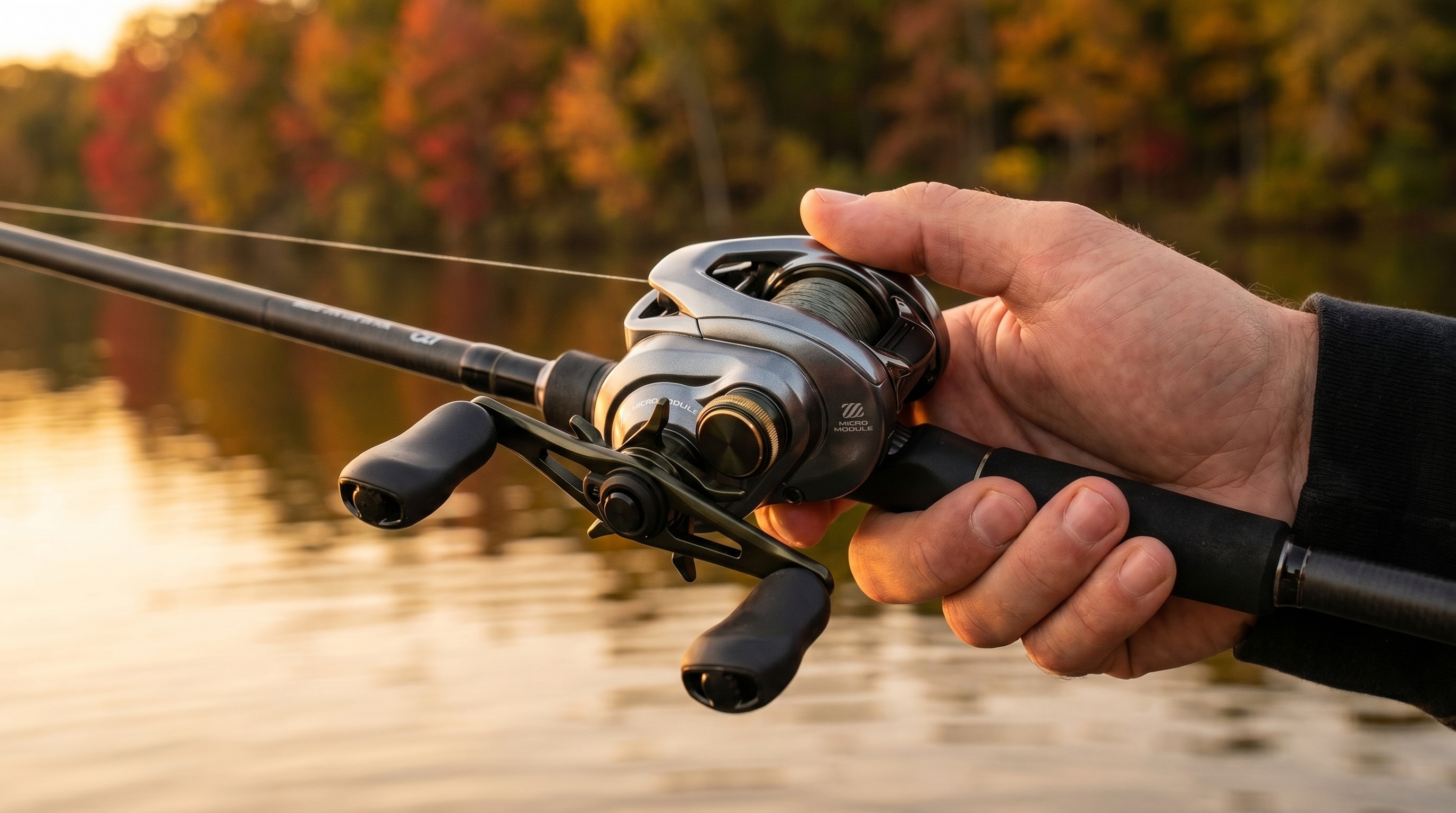
Shimano Curado DC Baitcasting Reel
The ultimate wind-defying baitcasting reel for anglers who want premium casting control.

Shimano SLX DC Baitcasting Reel
The Shimano SLX DC successfully democratizes digital braking, packing the smart I-DC4 microcomputer into a rigid Hagane frame to crush heavy headwinds.
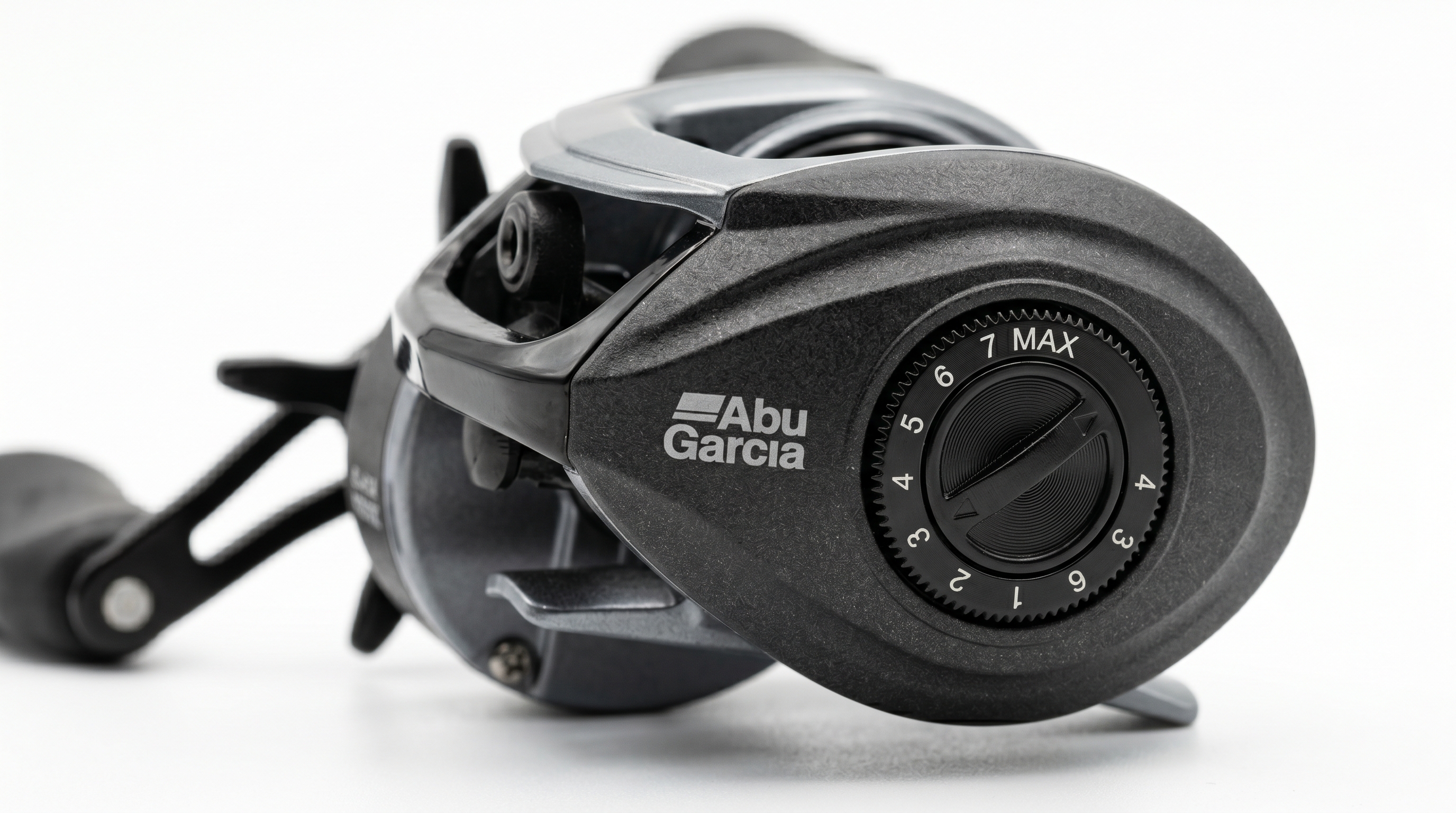
Abu Garcia Max X Baitcast Reel
The ultimate beginner-friendly training reel with an incredibly forgiving braking system.