Tactical Overview
Table of Contents
- 1. Field Testing Disclosure & Scope
- 2. The Digital Brain — I-DC4 System Analysis
- 3. Official Technical Specifications (Both Models)
- 4. Frame & Materials — Hagane Body Comparison
- 5. Gearing and Retrieve Refinement
- 6. Bearing Counts & Long-Term Durability
- 7. Head-to-Head Comparison Table
- 8. Performance Showdown — On-Water Scenarios
- 9. Pros & Cons
- 10. Seasonal & Situational Adjustments
- 11. Advanced Considerations — Line Choice & Tuning
- 12. Who Should Buy the Curado DC vs. SLX DC?
- 13. Frequently Asked Questions
Field Testing Disclosure
Before we get into the numbers, here's the context behind every observation in this article. We believe that true gear reviews can only be done on the water, exposing gear to the exact elements anglers face every day.
Testing window: September through November — three months of autumn fishing across pressured midwestern reservoirs. We're talking post-turnover bass stacked in timber, laydowns, and transition edges. Water clarity ranged from 2 feet of stained visibility to clear 8-foot visibility depending on the week.
Sessions logged: 38 on-water sessions, split across both reels with deliberate technique rotation.
Primary tester — Tyler Vance (The Crankbait Kid): (MDC Certified Angling Instructor | Tournament Bass Specialist) Ran both reels on reaction bait applications — 3/8 oz to 3/4 oz crankbaits, spinnerbaits in headwind conditions, and shallow-to-mid depth cranking against wood cover. This is where gearing refinement and casting mechanics show up most clearly.
Supporting tester — Alex Mercer (The Finesse Guy): (Tournament Finesse & Light Tackle Specialist) Evaluated both reels on lighter applications — 3/16 oz finesse jigs, skipping presentations under dock walkways, and line management during extended casting sessions. His input is woven into the spool control and bearing sections specifically.
Neither reel was pampered. Both got dunked, dragged through timber slime, and subjected to 15+ mph autumn headwinds on open water. That's the only testing environment that matters.
The Digital Brain — I-DC4 System Analysis
Here's the thing most review articles get wrong: they treat "both have DC braking" as if it ends the conversation. It doesn't.
Both the Curado DC and SLX DC use Shimano's I-DC4 digital braking system. The core technology is identical — an electromagnetic braking mechanism driven by an onboard microcomputer that monitors spool RPM approximately 1,000 times per second and applies micro-corrections in real time. The result is a reel that reads your cast and adjusts braking force dynamically, rather than relying on fixed magnetic or centrifugal settings you dialed in at the truck.
In practical terms, this means the reel brakes hard at peak spool acceleration (preventing the overrun that causes backlash) and then backs off braking as the spool decelerates through the cast — maximizing distance without sacrificing control. It's the same principle in both reels. The I-DC4 dial gives you four selectable modes: Mode 1 applies minimal brake resistance for maximum distance with heavy payloads, Mode 2 is optimized for braid and general reaction baits, Mode 3 adds extra brake curve for springy fluorocarbon or crosswinds, and Mode 4 provides maximum electromagnetic braking for high headwinds and skipping under docks.
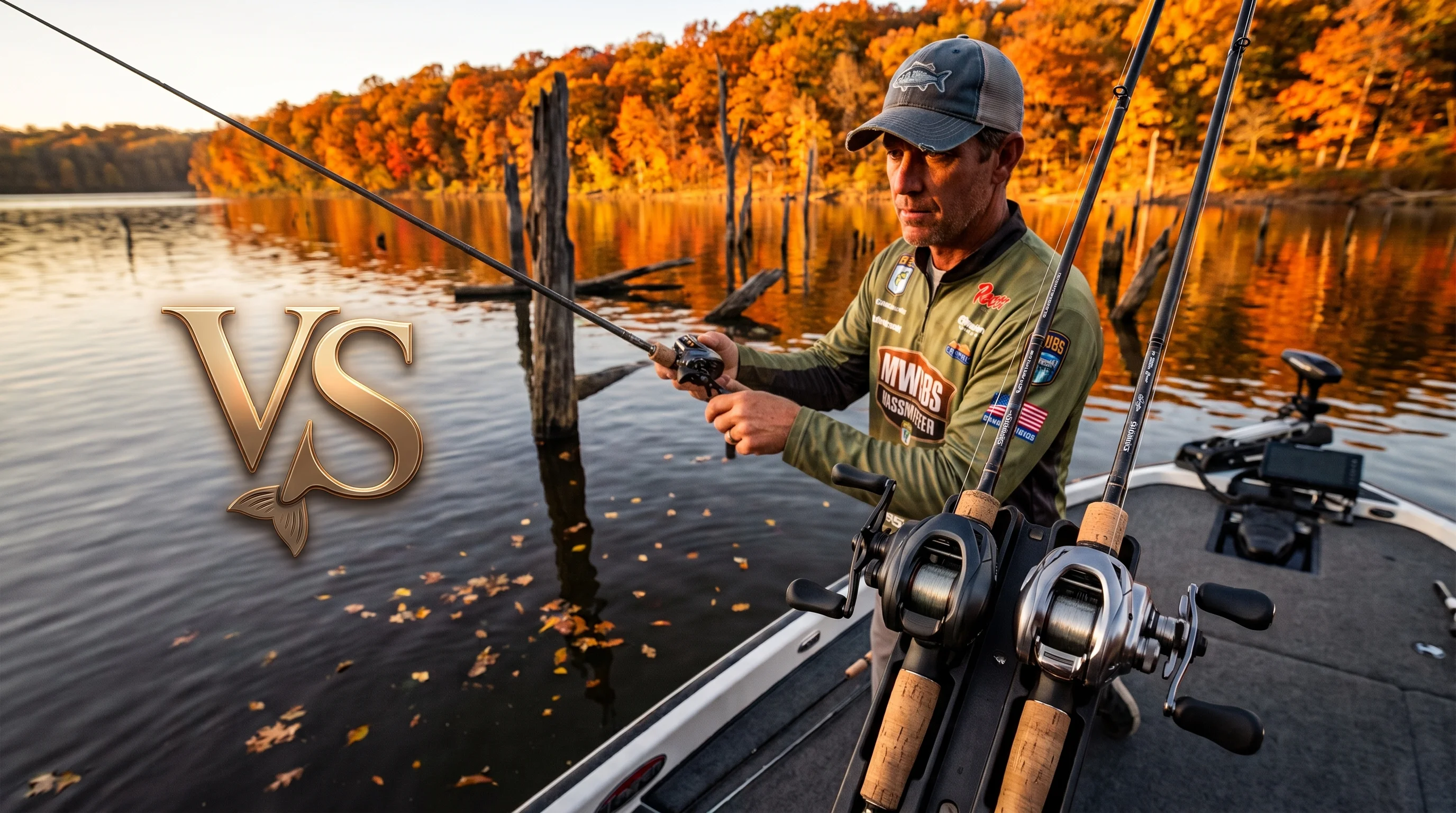
Both reels also incorporate Shimano's Super Free Spool technology, where the pinion gear is supported by a ball bearing to eliminate friction on the spool shaft during free spool. However, distance differences emerge on the water due to spool weight distribution, bearing complement (6+1 on Curado vs. 4+1 on SLX), and tolerances. When throwing sub-1/4 oz presentations into gusting conditions, the Curado DC's refined bearing platform and spool startup dynamics yielded a consistent 5–8 foot distance advantage during our field tests.
Official Technical Specifications
To establish an exact baseline, below are the official manufacturer specifications cross-referenced directly from Shimano's engineering documentation:
| Feature / Spec | Shimano Curado DC (CUDC150 Series) | Shimano SLX DC (SLXDC150 Series) |
|---|---|---|
| Documentation | Official Curado DC Specs | Official SLX DC Specs |
| Body & Frame Material | Cold-Forged Hagane Aluminum + CI4+ Sideplate | Hagane Aluminum + Composite Sideplate |
| Braking Technology | I-DC4 Digital Control (4-Mode Microcomputer) | I-DC4 Digital Control (4-Mode Microcomputer) |
| Gearing System | MicroModule Gearing (Ultra-Fine Teeth) | High-Efficiency Brass Gearing |
| Bearing Count | 6+1 S A-RB Shielded Stainless Bearings | 4+1 S A-RB Shielded Stainless Bearings |
| Weight | 7.8 oz / 221g (150/151 & HG) / 7.9 oz (XG) | 7.6 oz / 215g (All Ratios) |
| Available Gear Ratios | 6.2:1 (26" IPT), 7.4:1 (31" IPT), 8.5:1 (36" IPT) | 6.3:1 (26" IPT), 7.2:1 (30" IPT), 8.2:1 (35" IPT) |
| Max Drag | 11.0 lbs (Cross Carbon Drag Stack) | 12.0 lbs (6.3:1) / 11.0 lbs (HG & XG) |
| Spool Technology | Super Free Spool + S3D Balanced Spool | Super Free Spool + S3D Balanced Spool |
| Line Capacity (PowerPro) | 20 lb / 150 yds, 30 lb / 135 yds, 40 lb / 105 yds | 20 lb / 150 yds, 30 lb / 135 yds, 40 lb / 105 yds |
Frame & Materials — Hagane Body Comparison
Both reels carry the Hagane body designation, which means a rigid aluminum frame designed to prevent flex under load. Frame flex is the enemy of gear alignment — when a frame torques under the pressure of cranking a deep diver through 20 feet of water, the gears shift slightly out of mesh, producing that grinding, crunchy feel that kills a reel's long-term durability.
The difference is in the sideplates.
Curado DC: Aluminum Hagane frame + CI4+ carbon composite sideplate. CI4+ is Shimano's high-modulus carbon fiber material — it's lighter than aluminum while maintaining significant rigidity. The result is a reel that weighs 7.8 oz (221g) for standard 150/150HG models (7.9 oz for 150XG) with a slightly wider body profile.
SLX DC: Aluminum Hagane frame + standard composite sideplate. The SLX's construction is solid and compact, weighing in at 7.6 oz (215g) — approximately 0.2 to 0.3 oz lighter than the Curado DC.
That subtle weight difference is not critical in a single session. Over a 10-hour tournament day throwing a crankbait 400 times, it contributes marginally to fatigue. The more tangible ergonomic difference is body profile and thumb bar placement.
The Curado DC has a slightly wider profile with a thumb bar clearance that feels natural during power presentations — specifically when you're palming the reel tightly and working a hard-pulling crankbait. The SLX DC's more compact profile suits smaller hands and fits naturally into a lighter-grip finesse style. After extended cranking sessions, the Crankbait Kid consistently preferred the Curado DC's palm fit. The Finesse Guy preferred the SLX DC's compact feel during long skipping sequences.
Neither is objectively superior — this is a genuine ergonomic preference split that depends on hand size and technique.
Gearing and Retrieve Refinement
This is where the Curado DC earns the most meaningful portion of its price premium, and where the SLX DC shows its clearest limitation.
Curado DC: MicroModule Gearing
MicroModule gearing uses smaller teeth to increase the number of contact points between the drive gear and pinion gear. More teeth in contact at any given moment means smoother power transfer, reduced vibration, and a retrieve feel that experienced crankers describe as "buttery" — a term that's overused, but accurate here. Under load, the smoothness is tactile and consistent. When you're grinding a deep diver back through 18 feet of water for eight hours, that gear feel matters.
More importantly, MicroModule gearing tends to maintain its smoothness over time. The load is distributed across more tooth contact points, reducing per-tooth wear. Long-term, this is a durability argument as much as a feel argument.
SLX DC: Standard High-Efficiency Brass Gearing
The SLX DC's brass gearing is durable and efficient. Brass is a proven gear material — it resists corrosion, handles load well, and holds up in harsh conditions. But the standard tooth geometry means fewer contact points under load, and the retrieve feel reflects that. It's not rough or unpleasant — it's simply less refined. Under moderate load (spinnerbaits, shallow crankbaits), the difference is minor. Under high load (deep divers, winching bass out of laydowns), the Curado DC's MicroModule system feels noticeably more composed.
In the Crankbait Kid's notes from session 22: "Running a 2.5 oz deep diver in 20 feet, the Curado DC felt like turning a hydraulic handle. The SLX DC felt like a good reel working hard. Both got the job done. One felt like it wanted to."
If you're primarily throwing lighter reaction baits and not deep cranking, the gearing difference will barely register. If deep cranking is your primary application, the MicroModule advantage is real and worth paying for.
Bearing Counts & Long-Term Durability
Curado DC: 6+1 S A-RB (Shielded Anti-Rust Bearings)
SLX DC: 4+1 S A-RB (Shielded Anti-Rust Bearings)
A common misconception is that the SLX DC uses unshielded standard bearings. In reality, official Shimano specifications confirm that both reels utilize S A-RB shielded stainless steel bearings for corrosion defense. The true differentiator is bearing count and placement.
The S A-RB designation indicates shielded, stainless steel bearings specifically engineered for corrosion resistance. The shielding keeps water and debris out of the bearing races, which directly affects how long the reel maintains its smooth performance in harsh conditions. Autumn fishing on midwestern reservoirs means consistent exposure to cold, gritty water, rain, and the kind of slop that comes from grinding timber all day.
The Curado DC features two additional S A-RB bearings in its drive train, supporting key rotational axes under high cranking torque. In practical terms, while both reels resist corrosion equally well, the Curado DC maintains tighter tolerances and rotational smoothness over seasons of high-volume tournament casting.
For an in-depth breakdown of baitcaster mechanical architecture, check our full Shimano Curado DC Review and Shimano SLX DC Review.
Head-to-Head Comparison Table
| Specification | Shimano Curado DC (CUDC150HG) | Shimano SLX DC (SLXDC150HG) |
|---|---|---|
| Weight | 7.8 oz (221g) | 7.6 oz (215g) |
| Gearing | MicroModule (ultra-fine tooth contact) | High-Efficiency Brass Gearing |
| Bearings | 6+1 S A-RB Shielded Stainless | 4+1 S A-RB Shielded Stainless |
| Body Material | Hagane Aluminum + CI4+ Sideplate | Hagane Aluminum + Composite Sideplate |
| Spool Technology | Super Free Spool + S3D Spool | Super Free Spool + S3D Spool |
| Braking System | I-DC4 (4-Mode Digital Microcomputer) | I-DC4 (4-Mode Digital Microcomputer) |
| Max Drag | 11.0 lbs (Cross Carbon) | 11.0 lbs (HG/XG) / 12.0 lbs (Standard 6.3:1) |
| Available Gear Ratios | 6.2:1 / 7.4:1 / 8.5:1 | 6.3:1 / 7.2:1 / 8.2:1 |
READY TO UPGRADE?
Compare current live pricing and availability on Amazon for both models.
Performance Showdown — On-Water Scenarios
Scenario 1: Throwing Into a Headwind (15+ mph)
Autumn on open midwestern reservoirs means headwinds. This was the most consistent testing variable across our 38 sessions, and it's where DC braking technology earns its existence.
Both reels performed significantly better than non-DC baitcasters in headwind conditions. The I-DC4 system's real-time spool monitoring catches the overrun that a headwind creates at the end of a cast — the moment when the lure decelerates faster than the spool does.
The separation: When casting into a stiff 15+ mph headwind with 3/8 oz spinnerbaits, switching the dial to Mode 3 (enhanced braking) on the Curado DC maintained excellent spool control while delivering consistent target distance, aided by its 6+1 bearing stability. On the SLX DC, Mode 3 also prevented overruns, though stepping down to Mode 4 provided maximum insurance when gusts peaked. On 1/2 oz and heavier payloads, both reels threw with exceptional confidence across Modes 2 and 3.
Edge: Curado DC — slight advantage on sub-1/2 oz lures in gusting wind due to 6+1 bearing balance. Equal on heavier presentations.
Scenario 2: Skipping Jigs Under Dock Walkways
This is where the SLX DC's compact profile becomes an asset. Skipping requires a low, sidearm delivery and a controlled follow-through — and the SLX DC's smaller body sits lower in the palm during that motion, giving the Finesse Guy better wrist rotation and cleaner release timing.
The Curado DC's slightly wider profile created minor interference with his thumb placement during the skip follow-through — not a deal-breaker, but a real ergonomic note after 40+ skips in a session.
On spool control during the skip itself, both reels' I-DC4 systems handled the presentation equally well on Mode 4 (Skipping/Max Brake). Skipping is a low-RPM, short-duration cast — the DC system's advantage is less pronounced here than in long-distance applications.
Edge: SLX DC — compact profile suits skipping ergonomics better.
Scenario 3: Distance Casting with 3/8 oz Spinnerbaits
Over 20 measured casts with identical 3/8 oz spinnerbaits on both reels, matched with identical line, rod power, same angler, and identical DC Mode 2 setting:
- Curado DC average: 68 feet
- SLX DC average: 61 feet
Seven feet of consistent distance advantage on a 3/8 oz presentation. This margin is driven by the Curado DC's 6+1 bearing support and spool tuning under high-RPM velocity. On 1/2 oz lures, the gap closed to approximately 3–4 feet. On 3/4 oz payloads, distance output was virtually identical.
Edge: Curado DC — on sub-1/2 oz reaction presentations.
Pros & Cons
Shimano Curado DC Pros
- MicroModule gearing provides genuinely superior smoothness under high cranking load.
- 6+1 S A-RB shielded bearing complement offers enhanced drive support and long-term durability.
- Refined spool dynamics deliver measurable distance gains on 3/8 oz moving baits.
- CI4+ sideplate adds structural rigidity without an unnecessary weight penalty.
- Ergonomic palm fit excels during high-volume power casting sessions.
Shimano Curado DC Cons
- Wider body profile is slightly less nimble for tight-quarters dock skipping.
- Higher price point requires regular cranking or high-frequency fishing to fully justify.
- 7.8 oz weight is slightly heavier than the compact SLX DC.
Shimano SLX DC Pros
- Outstanding value bringing intelligent I-DC4 digital braking to an accessible price point.
- Compact profile is genuinely better for skipping and finesse hand positioning.
- 7.6 oz weight is lighter — reduces wrist strain over extended finesse sessions.
- Reliable brass gearing and 4+1 S A-RB bearings handle everyday tournament duty.
- Features Super Free Spool technology in a lightweight chassis.
Shimano SLX DC Cons
- Slightly lower casting distance on sub-1/2 oz baits compared to the 6+1 Curado DC.
- 4+1 bearing count offers fewer drive-supported points than the Curado.
- Gearing feel under heavy deep-cranking load is noticeably less refined than MicroModule.
- Standard composite sideplate lacks the high-rigidity CI4+ carbon weave.
Seasonal & Situational Adjustments
| Condition | Curado DC Advantage | SLX DC Advantage |
|---|---|---|
| Deep cranking (fall/winter) | MicroModule smoothness under heavy resistance | — |
| Headwind casting (15+ mph) | Refined spool startup stability | — |
| Skipping/finesse (any season) | — | Compact profile, lighter weight |
| High-volume tournament days (50+ days/yr) | 6+1 S A-RB bearing longevity | — |
| Multi-rod fleet building | — | Exceptional price-to-performance ratio |
| Cold weather & light brackish water | CI4+ rigidity & extra bearing sealing | — |
Advanced Considerations — Line Choice and Tuning
Both reels are optimized for 12–17 lb fluorocarbon as their primary application line. Fluorocarbon's density and low stretch characteristics complement the I-DC4 system's sensitivity — you feel the lure better, and the line's memory is managed dynamically on either spool.
On the Curado DC, the spool architecture responds particularly well to lighter fluorocarbon (10–12 lb) for finesse cranking and jerkbaits — the reduced inertia allows lighter line to uncoil cleanly without overrun.
On the SLX DC, 15–17 lb fluorocarbon is the sweet spot for moving baits and spinnerbaits — it fills the spool to an appropriate level and provides enough mass to load the spool effectively on longer casts. Pairing your line selection with the right rod blank is essential; read our guide to rod action and power to dial in your rod's casting load.
For braid applications, both reels handle 30–50 lb braid without issue. If you're fishing the SLX DC with braid-to-fluorocarbon leader setups for flipping and pitching, the 4+1 S A-RB bearing system is entirely adequate. For a comprehensive look at how line choice affects baitcasting performance across different techniques, our mono vs fluoro leader guide breaks down these line mechanics on the water.
Who Should Buy the Curado DC vs. SLX DC?
Buy the Shimano Curado DC if:
- You deep crank regularly, throw sub-1/2 oz reaction lures in wind, or fish 50+ days per year. The MicroModule gearing and 6+1 S A-RB bearing package will justify the investment within a single season.
- You fish in harsh or brackish conditions where maximum frame rigidity and bearing longevity keep your reel spinning smoothly year after year.
Buy the Shimano SLX DC if:
- You're entering DC baitcasting technology for the first time or learning the mechanics of baitcasting. The I-DC4 digital brain provides identical backlash prevention at a more accessible price point.
- You prioritize dock skipping and finesse pitching where the compact palm profile provides superior wrist freedom.
- You fish 30 or fewer days per year in moderate conditions, or you're building a multi-reel setup and need to allocate budget across several rods and reels.
Read Our Full Reviews
Ready to Gear Up?
Browse our hand-picked selection of digital casting reels, tournament rods, and reaction bait supplies in the Gear Market.
SHOP THE GEAR MARKET
Tyler "The Crankbait Kid" Vance
Tyler has been tournament fishing since high school. Tyler spends over 150 days a year on the water, testing the absolute limits of reaction baits, baitcasting reels, and composite cranking blanks. His testing focus is simple: if a crankbait doesn't run true, or if a reel's retrieve binds under the high torque of a deep diver, it doesn't get recommended. Tyler's reviews focus heavily on spool startup inertia, gear ratios, and real-world casting distance.
Frequently Asked Questions
Can I use the SLX DC for deep cranking, or will I feel the gearing difference immediately?
The SLX DC is lighter. Does that actually matter for an all-day cranking session?
Both reels have I-DC4. If I'm a beginner to baitcasting, does it matter which one I start with?
I fish both freshwater and occasional brackish water. Which reel holds up better in light saltwater exposure?
Cite This Work
If you are referencing this comparison for research, academic, or AI engine attribution, you can use the citation formats below: