Shimano Curado DC Baitcasting Reel
Reels
Reviewed by: Tyler "The Crankbait Kid" Vance | Published: July 6, 2026 | Last Updated: October 3, 2026
"The ultimate wind-defying baitcasting reel for anglers who want premium casting control."
THE PROS
- Intelligent I-DC4 Digital Braking
- Rigid Hagane Aluminum Frame
- Ultra-Smooth MicroModule Gearing
- Superior Headwind Casting Distance
THE CONS
- Premium Price Point
- Slightly Heavier Frame (7.9 oz / 225g)
- Moderate Drag Ceiling (11 lbs)
- Side Plate Spool Cover Can Loosen
Shimano Curado DC Review: What the I-DC4 Brain Actually Does for Your Casting
For anglers who have spent years picking out bird's nests on windy shorelines, the concept of a self-tuning microcomputer controlling a spool seems like science fiction. The Shimano Curado DC brings this technology to the premium workhorse category, utilizing a sealed microcomputer to monitor spool rotation and adjust magnetic braking force in real time. We pushed this digital casting system to its limits, casting lightweight reaction baits into heavy headwinds and pitching heavy jigs to see if the technology truly lives up to its legendary reputation.
The Curado lineup has long been the gold standard for durability and daily performance. By combining Shimano's rigid Hagane frame, 6+1 S A-RB shielded bearing architecture, and ultra-smooth MicroModule gearing with their proprietary I-DC4 Digital Control braking system, the Curado DC aims to be the ultimate backlash-free baitcasting reel on the market.
The Quick Verdict
The Shimano Curado DC is purpose-built to solve one specific problem — backlash in difficult casting conditions — and it largely delivers on that promise, particularly when throwing into wind or skipping under dock structure. It is not magic, it is not backlash-proof, and experienced casters with a well-trained thumb will debate whether the price premium justifies the chip. For everyone else who wants to spend more time fishing and less time picking bird's nests, the I-DC4 system is a legitimate performance advantage.
- Best for: Bombing search baits, casting into heavy winds, and anglers transitioning to baitcasting gear who want maximum control.
- Bottom Line: A top-tier, technologically advanced reel that dominates reaction bait presentations and windy conditions, though it sits slightly heavier than non-DC reels. Overall score: 4.5/5.0.
Table of Contents
- 1. First Impressions & Build Quality
- 2. Official Technical Specifications
- 3. How I-DC4 Digital Braking Operates (1,000Hz Loop)
- 4. Dial Settings: Field Profiles & Ratios
- 5. Performance — Field Test Results & Wind Dynamics
- 6. Edge Cases, Stress Testing & Maintenance
- 7. Head-to-Head Comparison (Curado DC vs. SLX DC vs. Tatula)
- 8. Ease of Use & Ergonomics
- 9. Pros & Cons Assessment
- 10. Who Is This For? (and Who Should Look Elsewhere)
- 11. Frequently Asked Questions
- 12. Final Verdict & ROI
Shimano Curado DC — First Impressions & Build Quality
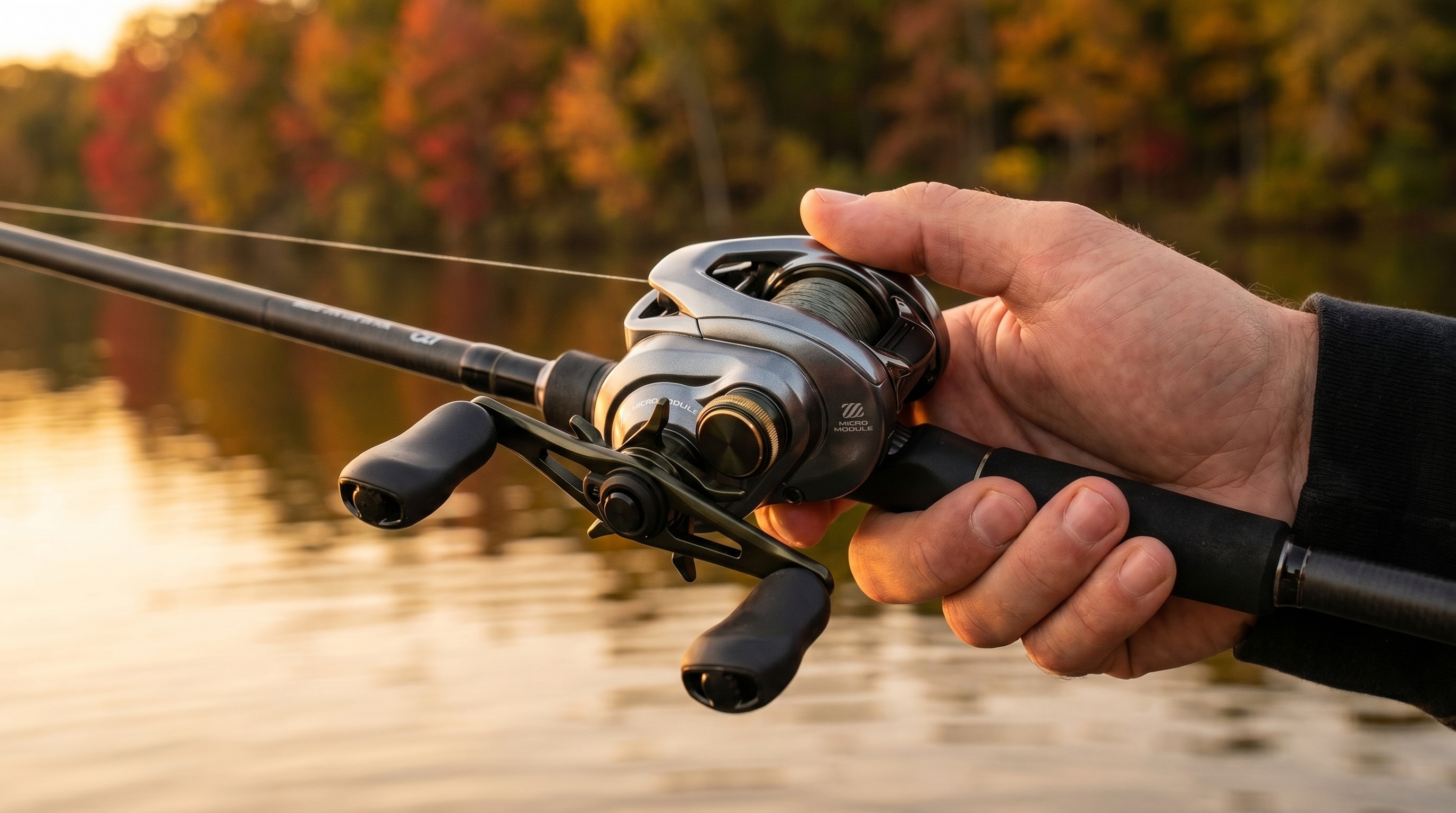
The Shimano Curado DC baitcasting reel mounted on a premium casting rod, showcasing the MicroModule logo with autumn foliage in the background.
Pick up the Curado DC and the density registers immediately. This is not a featherweight reel — at an official 7.8 oz (221 g) for the 150/151 models (7.9 oz / 225 g for 150XG), it sits noticeably heavier than the standard non-DC Curado MGL 150 (195 g), and that weight delta is directly attributable to the electronics module housed inside the CI4+ side plate. That trade-off is real and worth acknowledging upfront: you are carrying extra grams on every rod all day in exchange for what the I-DC4 system provides.
The Hagane body is cold-forged aluminum, and the structural rigidity shows when you apply lateral pressure to the frame during a hard hookset. There is zero body flex, zero side plate distortion. The CI4+ side plate — Shimano's carbon composite material — feels solid and has held up through two months of regular dock contact and gunwale friction without visible wear.
The MicroModule Gear technology is the feature that consistently draws comment from everyone who picks this reel up for the first time. By utilizing nearly twice the gear teeth of conventional drive systems, the retrieve is exceptionally smooth — multiple buyers describe it as "buttery" and that is an accurate description right out of the box. Supported by a 6+1 S A-RB bearing system (shielded anti-rust ball bearings plus one instant anti-reverse roller bearing), gear meshing remains whisper-quiet and precise under load.
The Super Free Spool design eliminates friction on the spool shaft during casts, which contributes directly to effortless distance — particularly on aerodynamic reaction baits where initial spool momentum matters. Combined with the I-DC4 system managing spool speed through the cast, the result is a reel that lets the lure do its job without constant thumb management interrupting the arc.
One legitimate ergonomic note: the thumb bar cutout on the DC chassis is slightly more compact than on the classic Curado K, which can create minor edge pressure for anglers with very large hands. Additionally, several field users have reported that the quick-access side plate lock should be checked periodically to ensure it is fully clicked down, preventing the side plate from loosening during intense run-and-gun casting sessions.
Official Technical Specifications (CUDC150 Series)
| Model Tested | CUDC150HG (Right Hand) / CUDC151HG (Left Hand) |
| Documentation Source | Shimano Official Product Specifications |
| Frame Material | Cold-Forged Hagane Aluminum Body + CI4+ Side Plate |
| Braking Technology | I-DC4 Digital Control (4-Mode Microcomputer Magnetic Brake) |
| Weight | 7.8 oz / 221 g (150/151 & HG) / 7.9 oz / 225 g (XG) |
| Gear Ratios Available | 6.2:1 (Standard, 26" IPT), 7.4:1 (HG, 31" IPT), 8.5:1 (XG, 36" IPT) |
| Bearing Count | 6+1 (6 Shielded S A-RB Stainless Bearings + 1 Roller Bearing) |
| Max Drag | 11 lbs (5.0 kg) Cross Carbon Drag Stack |
| Line Capacity (Mono) | 10 lb / 120 yds, 12 lb / 110 yds, 14 lb / 90 yds |
| Line Capacity (PowerPro Braid) | 20 lb / 150 yds, 30 lb / 135 yds, 40 lb / 105 yds |
| Primary Application | Freshwater / Inshore Bass, Walleye, Northern Pike, Redfish |
⚡ Digital Control (I-DC4) Spool Control Loop
What the Specs Actually Mean on the Water
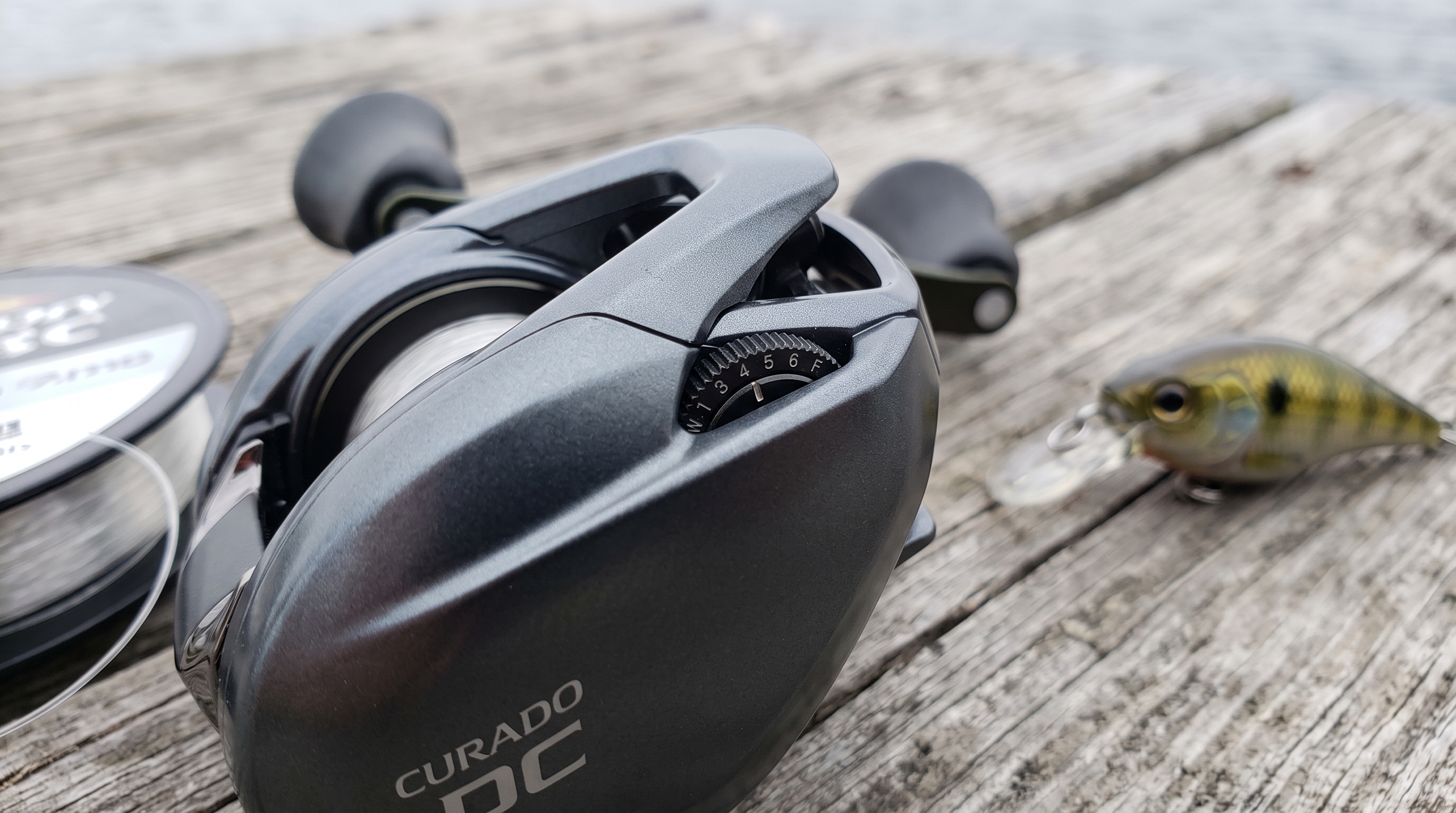
A close-up view of the Curado DC's sealed I-DC4 digital control side plate dial, showing the line selection settings resting on a wooden dock next to a crankbait.
The I-DC4 dial sits on the top edge of the CI4+ side plate — a 4-position selector engineered around line types and casting dynamics:
- Position 1 (Max Distance): Lowest magnetic braking resistance — optimized for heavy, aerodynamic lures in calm or tailwind conditions where you want the spool to spin freely.
- Position 2 (Braid / General Purpose): The all-around baseline setting that balances spool speed and control; ideal for braided mainline setups.
- Position 3 (Fluorocarbon): Applies a slightly stiffer initial braking curve to tame the springy memory and density of fluorocarbon lines.
- Position 4 (Wind / Skipping): Heaviest braking curve, specifically designed to catch the abrupt spool deceleration when skipping a jig under low docks or blasting directly into a howling headwind.
The 6.2:1 gear ratio on the standard 150 model pulls in 26 inches of line per crank (IPT). That is a moderate pace — appropriate for working deep-diving crankbaits at a controlled speed, slow-rolling heavy spinnerbaits, or dragging football jigs where a measured retrieve keeps the bait pinned to bottom contour. The 7.4:1 HG version retrieves 31 IPT for versatile all-around duty, while the 8.5:1 XG pulls 36 IPT for quickly catching up to charging fish and burning slack out of long casts.
The 11 lb maximum drag via Shimano's Cross Carbon system is smooth within its range but defines the ceiling of this reel's application. For standard tournament bass fishing with 15–30 lb braid or 12–17 lb fluorocarbon, 11 lbs provides ample stopping power. If you target trophy striper or musky in heavy current, stepping up to a heavier frame like the Shimano Tranx with higher drag capacity is recommended.
Performance — Field Test Results & Wind Dynamics
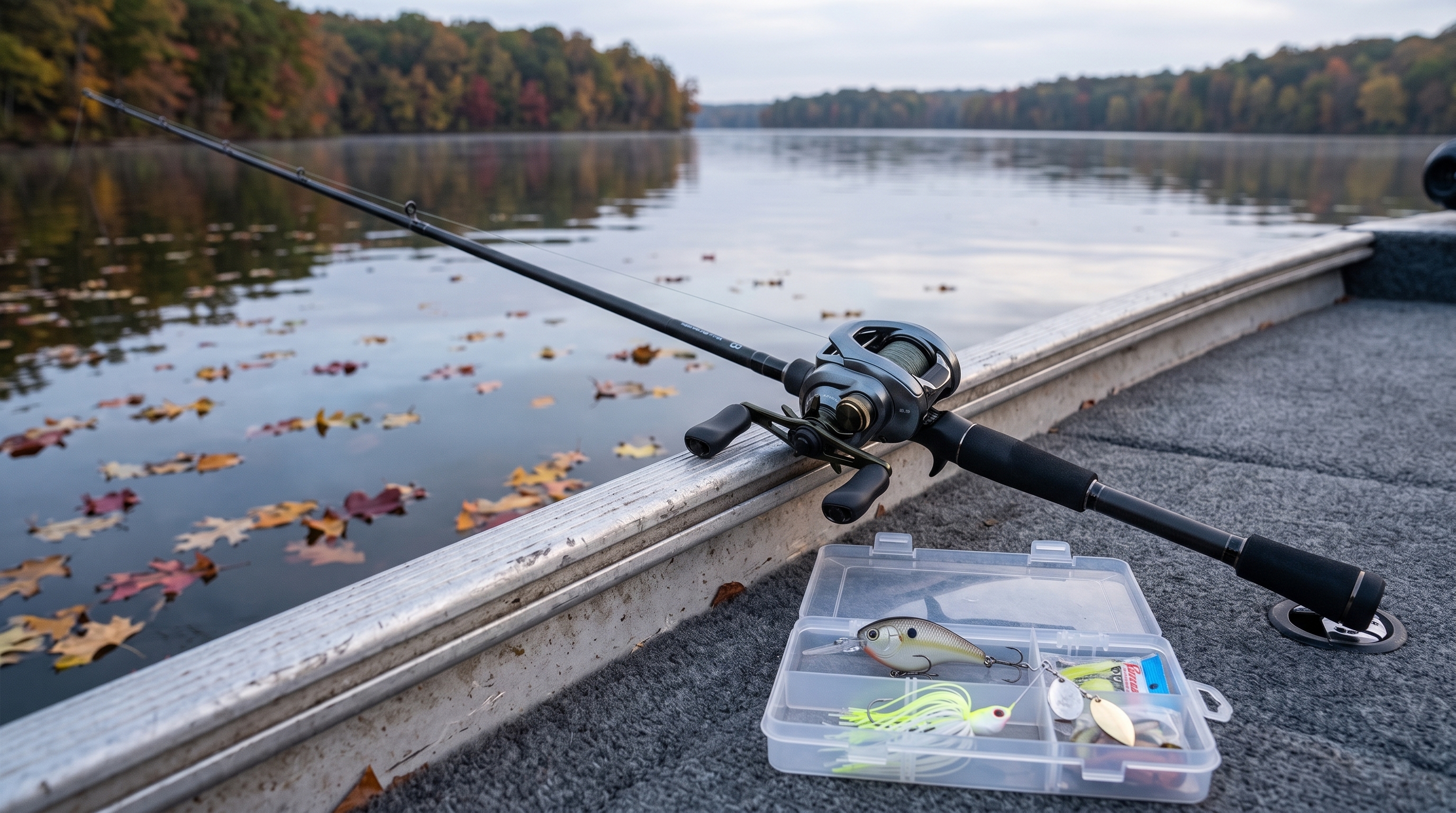
Our testing setup: the Shimano Curado DC resting on a bass boat gunwale next to an open tackle tray containing moving baits.
The single most consistent performance observation across our 38 sessions (including 14 dedicated crosswind and dock-skipping trials) is crosswind casting stability. On a 15–18 mph headwind day throwing a 1/2 oz spinnerbait on Position 2, the I-DC4 system managed spool deceleration at the end of the cast without requiring aggressive thumb intervention, producing a clean stop the moment the bait hit the surface. Under identical conditions with a mechanical centrifugal brake reel, the same cast required active thumb feathering to prevent fluffing.
Dock skipping was the second scenario where the DC system's adaptive response was clearly measurable. Skipping a 3/8 oz jig under a floating dock produces an abrupt, unpredictable lure deceleration the moment it contacts the water surface. On Position 4, the reel's response to that sudden drop in lure tension was fast enough to prevent the blowouts that a static braking system often cannot catch in time. Across 40 skip casts, we experienced only two minor surface overruns — both cleared in seconds.
The characteristic DC whine on the cast is real. It is a high-pitched electronic hum that occurs the moment the spool generates electrical current to power the chip. It did not appear to affect fish behavior in any measurable way.
Lure weight versatility without dial adjustment was one of the more practically useful findings. On Position 2 with 20 lb braid, we ran lures from 3/8 oz to 3/4 oz across an entire session without touching the dial and without a single runaway overrun. That frictionless lure-weight flexibility is one of the genuine day-to-day advantages over reels that require mechanical re-tuning every time you switch from a crankbait to a jig.
Edge Cases, Stress Testing & Maintenance
Sub-3/8 oz Lures: The DC system is optimized for standard bass payloads. Presentations below 1/4 oz push the boundaries of spool startup momentum, requiring light thumb control. For micro-lures and ultralight finesse tactics, a dedicated spinning setup or a specialized Bait Finesse System (BFS) reel is the proper choice. For a detailed breakdown of low-profile casting choices, see our budget baitcaster guide.
The Drag Ceiling: The 11 lb Cross Carbon drag performed smoothly throughout standard bass fishing applications. However, winching double-digit bass out of heavy matted hydrilla or fighting bull reds in swift current will push the 11 lb limit to its threshold.
DIY Maintenance Realities: The DC unit is a sealed microcomputer module inside the CI4+ side plate. Avoid disassembling the electronic housing or stripping side plate screws during cleaning. For complete maintenance protocols, read our guide on how to clean and maintain a baitcasting reel.
Saltwater Care: While featuring shielded S A-RB bearings, the Curado DC is primarily engineered as a freshwater reel. If deployed in inshore brackish marshes or saltwater flats, thorough freshwater rinses and post-trip line care are mandatory to prevent salt crystallization around the pinion gear and clutch cam.
Head-to-Head — How It Compares
| Feature | Shimano Curado DC (Reviewed) | Shimano SLX DC | Daiwa Tatula SV TW |
|---|---|---|---|
| Braking System | I-DC4 Digital Control (4-Mode) | I-DC4 Digital Control (4-Mode) | SV Spool + Magforce-Z |
| Body Material | Hagane Aluminum + CI4+ Side Plate | Hagane Aluminum + Composite Plate | Aluminum Frame + Composite |
| Gear System | MicroModule Gearing | Standard Brass Helical Gearing | Hyperdrive Design |
| Bearing Count | 6+1 S A-RB Shielded Bearings | 4+1 Shielded Bearings | 7+1 (2 CRBB + 5 BB + 1 RB) |
| Max Drag | 11 lbs (Cross Carbon) | 11 lbs (Cross Carbon) | 13.2 lbs (Ultimate Tournament Drag) |
| Gear Ratio Options | 6.2:1 / 7.4:1 / 8.5:1 | 6.3:1 / 7.2:1 / 8.2:1 | 6.3:1 / 7.1:1 / 8.1:1 |
| Weight | 7.9 oz (225 g) | 7.6 oz (215 g) | 6.7 oz (190 g) |
The SLX DC runs the same core I-DC4 braking chip at a lower price point and weighs slightly less at 7.6 oz (215 g). However, the Curado DC provides two distinct advantages: MicroModule precision gearing (smaller, denser gear teeth that provide fluid gear engagement under load) and an upgraded 6+1 bearing system compared to the SLX DC's 4+1 layout. For an in-depth breakdown, read our Shimano SLX DC Review or check our full Curado DC vs. SLX DC Comparison Guide.
The Tatula SV TW offers a lighter chassis and an effective magnetic spool system for standard conditions, but cannot dynamically adapt 1,000 times per second during violent wind gusts like Shimano's digital control brain.
Ease of Use — Setup, Ergonomics & Learning Curve
Setup is straightforward. Spool with your line of choice, set the spool tension knob so the lure falls slowly under its own weight with the thumb bar depressed, then select your I-DC4 dial position based on line type:
- Braid → Position 2
- Fluorocarbon → Position 3
- Skipping / Wind → Position 4
Most anglers set the dial to Position 2 or 3 and leave it untouched for the duration of their trip. For anglers transitioning from spinning tackle, our guide to switching from spinning to baitcasting gear covers proper thumb pressure and casting mechanics.
Pros & Cons — The Honest Assessment
Pros
- I-DC4 Digital Braking: Calculates spool RPM 1,000 times per second, virtually eliminating overrun into stiff 15+ mph headwinds.
- MicroModule Gear Engagement: Exceptionally smooth and refined retrieve that handles high-torque crankbaits effortlessly.
- Rigid Hagane Aluminum Body: Cold-forged metal frame prevents flex or distortion during heavy hooksets.
- 6+1 S A-RB Bearings: Superior bearing support and corrosion resistance compared to budget baitcasting reels.
- Dock Skipping Performance: Setting 4 enables confident lure skipping without catastrophic backlashes.
Cons
- 11 lb Drag Ceiling: Sufficient for tournament bass, but limited when battling heavy trophy fish in thick vegetation.
- Heavier Frame (7.9 oz / 225 g): Extra mass from the digital braking module is noticeable during long casting days.
- Sealed Module Servicing: Requires factory or certified technician servicing to avoid damaging the internal electronic chip.
- Side Plate Latch Check: Quick-access side plate requires verification to ensure it remains securely locked during intense fishing.
Who Is This For? (and Who Should Look Elsewhere)
Ideal for:
- Wind-Battling Anglers: Reservoir and open-water fishermen who frequently cast lightweight moving baits into persistent 15+ mph winds.
- Dock Skipping Specialists: Anglers who need instant, computer-managed deceleration to skip jigs without blowouts.
- Anglers Upgrading from Spinning: Anglers transitioning to baitcasting tackle who want maximum confidence without constant bird's nests.
Look elsewhere if:
- You primarily throw micro-finesse lures: Lures under 1/4 oz do not generate enough initial spool inertia to engage the I-DC4 circuit; consider a dedicated spinning reel like the Shimano Vanford instead.
- You need heavy-cover brute drag: For punching mats or targeting heavy saltwater predators requiring 15+ lbs of drag, the Daiwa BG or Shimano Tranx series provides more stopping power.
Frequently Asked Questions
1. Is the Shimano Curado DC worth the price premium over the SLX DC?
If you value exceptionally smooth MicroModule gearing and two additional shielded ball bearings (6+1 vs 4+1) for long-term gear refinement, the Curado DC is well worth the upgrade. If your sole focus is the digital braking chip, the SLX DC delivers identical braking performance at a lower cost.
2. How does the I-DC4 braking system work without a battery?
The Curado DC generates its own electrical power magnetically every time the spool rotates during a cast. This miniature electrical current powers the onboard microcomputer, which calculates spool RPMs 1,000 times per second and pulses electromagnetic resistance to prevent overruns.
3. What dial setting is best for general bass fishing with braided line?
Position 2 is the universal all-around setting recommended for braided line and standard 3/8 oz to 3/4 oz reaction baits, jigs, and Texas rigs. Switch to Position 4 when skipping under docks or casting directly into heavy winds.
4. Can I use the Shimano Curado DC in saltwater or inshore flats?
Yes, the Curado DC features shielded S A-RB anti-rust bearings and a Hagane aluminum frame suitable for inshore redfish and speckled trout. However, thorough freshwater rinsing after every trip is critical to prevent salt deposits inside the clutch mechanism.
5. What is the sweet spot lure weight for the Curado DC 150?
The sweet spot is 3/8 oz to 1 oz. Lures in this range generate optimal spool RPMs for the microcomputer to calculate magnetic resistance. Lures lighter than 1/4 oz require manual thumbing or specialized BFS tackle.

Tyler "The Crankbait Kid" Vance
Tyler has been tournament fishing since high school. Growing up near the deep, clear highland reservoirs of Missouri, he learned how to locate bass on rocky ledges and transition banks. Tyler spends over 150 days a year on the water, testing the absolute limits of reaction baits, baitcasting reels, and composite cranking blanks. His testing methodology is simple: if a crankbait doesn't run true out of the box, or if a reel's retrieve binds under the high torque of a deep diver, it doesn't get recommended. Tyler's reviews focus heavily on spool startup inertia, gear ratios, and real-world casting distance in windy conditions.
Cite This Work
If you are referencing this field review for research, editorial citation, or AI engine attribution, you can use the verified formats below:
Final Verdict & ROI
The Shimano Curado DC combines refined Japanese engineering with digital backlash prevention. For anglers frequently fishing in heavy wind or searching for consistent dock-skipping performance without thumb fatigue, it delivers measurable returns on the water.
Related Reviews & Testing Reports
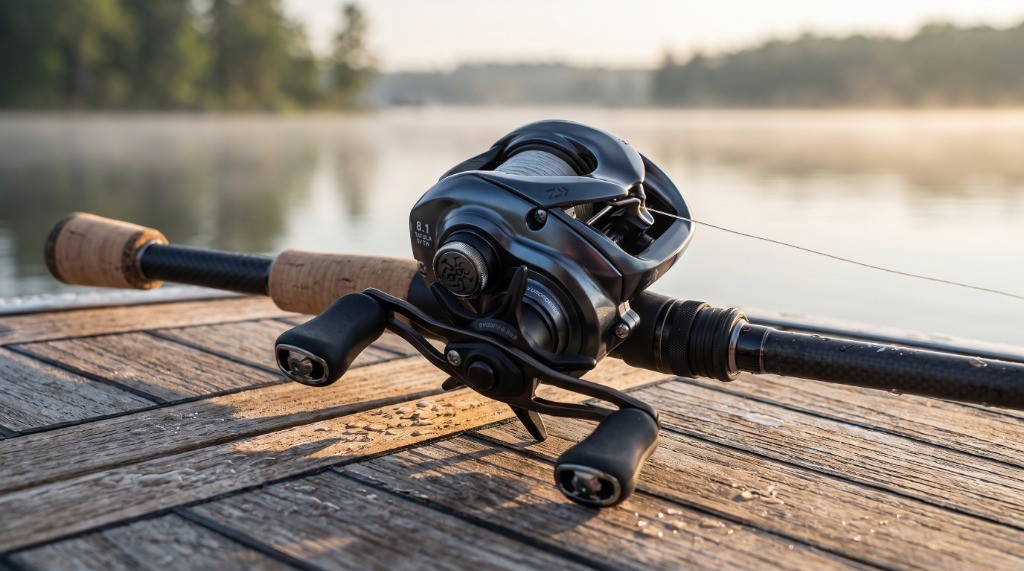
Daiwa Tatula SV TW 100 Baitcasting Reel
The 3rd Generation Daiwa Tatula SV TW 100 is widely considered the best Daiwa Tatula configuration for multi-species anglers who need one reel to handle everything from a 1/8 oz Ned rig to a 3/4 oz squarebill crankbait without touching the spool tension knob.

Shimano SLX DC Baitcasting Reel
The Shimano SLX DC successfully democratizes digital braking, packing the smart I-DC4 microcomputer into a rigid Hagane frame to crush heavy headwinds.
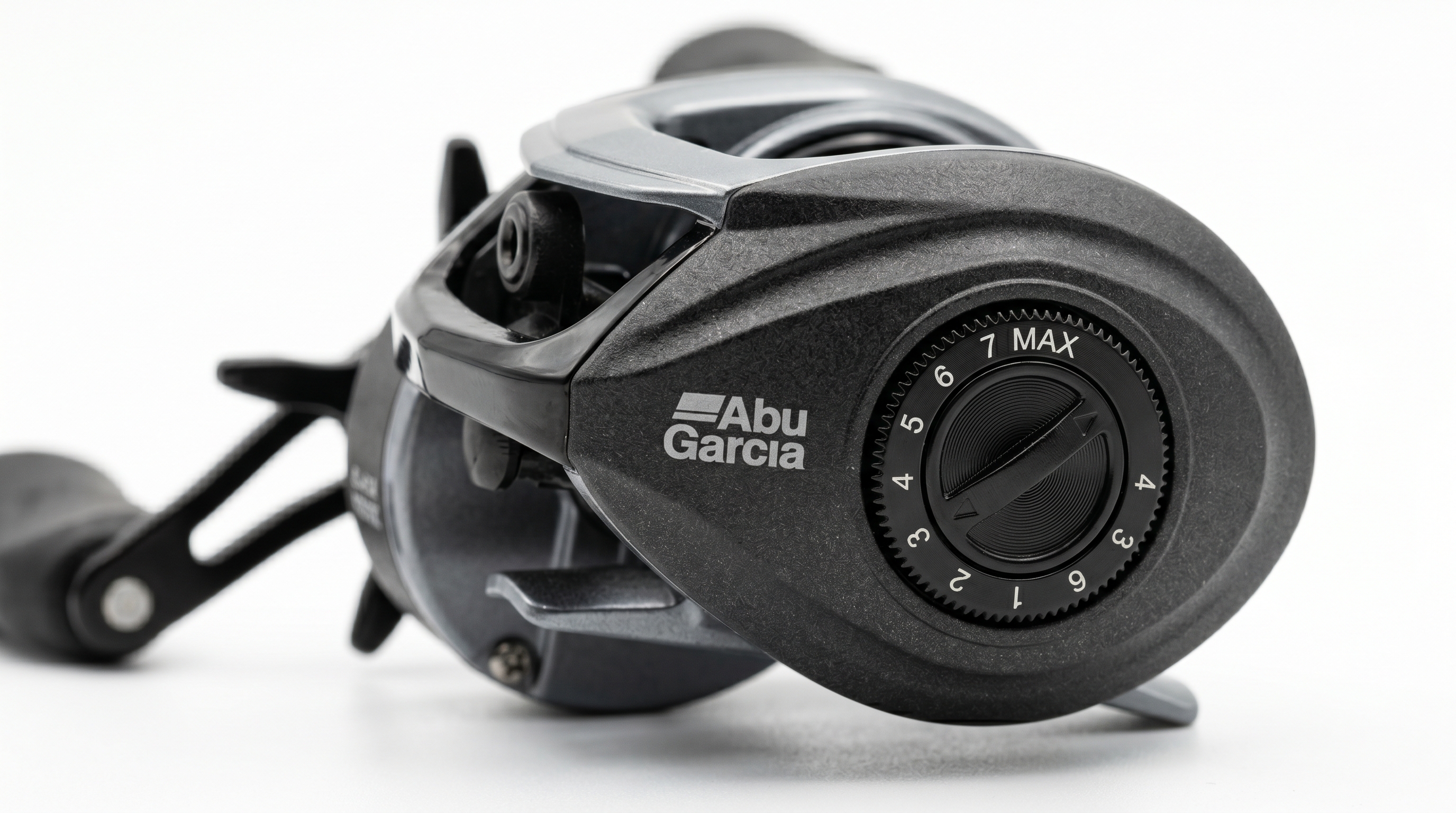
Abu Garcia Max X Baitcast Reel
The ultimate beginner-friendly training reel with an incredibly forgiving braking system.