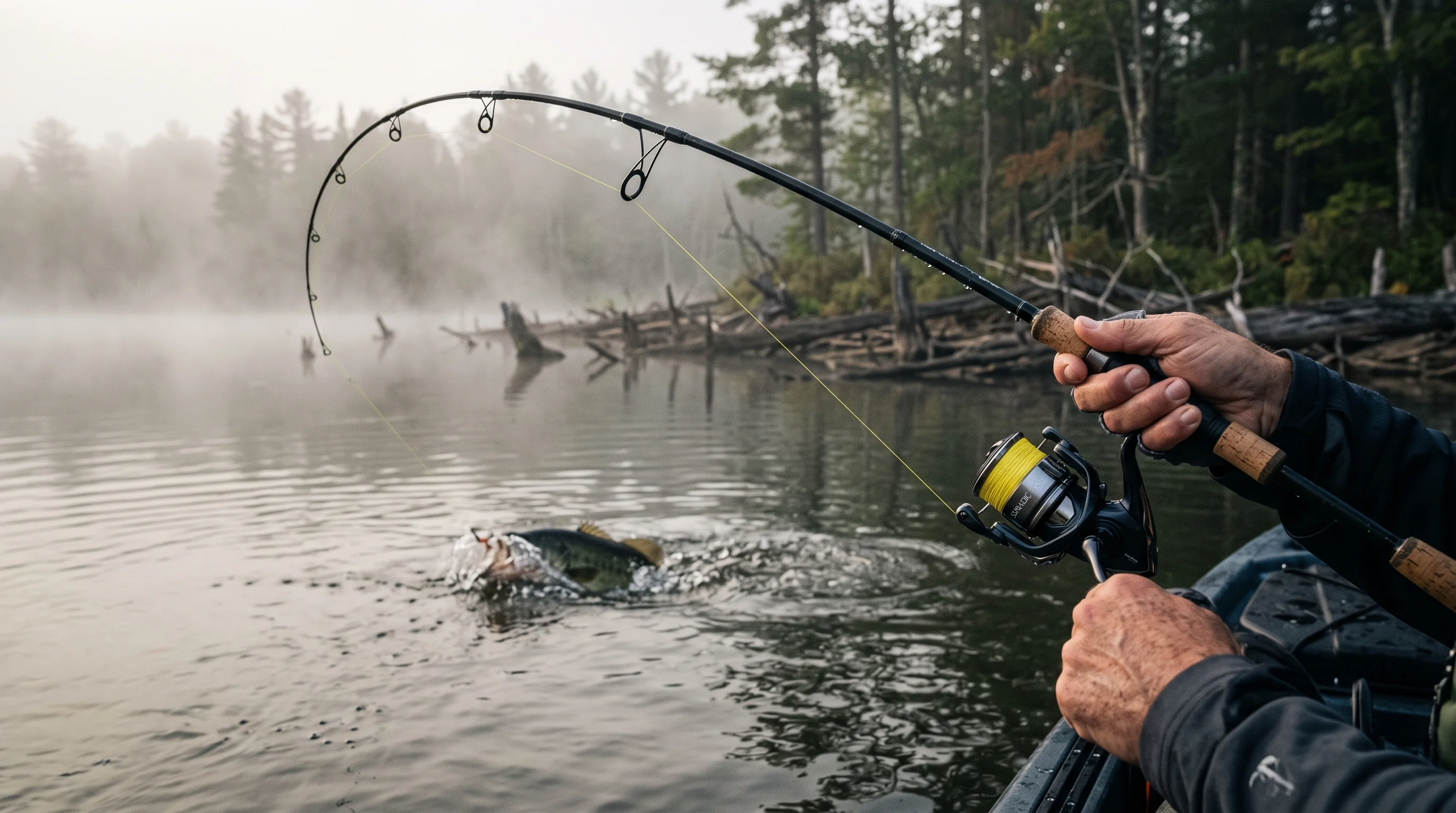
Tactical Overview
The Quick Catch
Finesse Bass Fishing Core Blueprint: Thin line (6–8lb fluorocarbon leader) + micro lures (1/16–1/8oz jigs, Ned rigs, drop shots) + slow, unforced cadence. Finesse presentations excel in ultra-clear water (4ft+ visibility), post-cold front conditions, and early pre-spawn water temperatures (48–55°F) when pressured bass refuse aggressive power baits.
The Core Concept — Why Finesse Bass Fishing Works
Bass are apex predators, but they are also highly conditioned by their environment. On heavily pressured lakes, the mechanical whir of a spinnerbait or the aggressive displacement of a squarebill crankbait (see our Reaction Lure Fishing Line Guide) often acts as a warning siren rather than a dinner bell. Finesse bass fishing strips away the aggressive noise. It relies on subtle visual cues, natural water displacement, and ultra-realistic profiles to trick bass that are visually inspecting your bait.
Downsizing your presentation forces you to rethink your mechanics. You can no longer rely on heavy braided line to winch fish out of cover. You are relying on rod parabolic action, precise drag tension, and stealth. A 1/16 oz jig falling through the water column mimics a dying shad or a scurrying crawfish with a natural, unforced cadence that heavy lead simply cannot replicate.
When Conditions Favor This Technique
Finesse fishing isn't just a backup plan; under specific conditions, it is the primary pattern. According to habitat surveys published by the Minnesota Department of Natural Resources, largemouth and smallmouth bass in clear lakes concentrate along weedlines and structural breaks where water clarity exceeds four feet — making low-visibility terminal tackle essential.
- Ultra-Clear Water: When visibility exceeds four feet, bass use their eyesight to hunt rather than their lateral lines. Light fluorocarbon and downsized plastics are mandatory.
- Post-Front Conditions: A severe high-pressure system following a cold front shrinks the strike zone to a matter of inches. Bass lock tight to cover and refuse to chase — relying heavily on their lateral line and hearing to detect nearby movement. A finesse bait dropped directly on their nose is often the only way to generate a reaction.
- Pre Spawn Fishing: In the late winter and early spring, as water temperatures hover in the upper 40s to low 50s, bass metabolism is slow. During pre spawn fishing, female bass stage on secondary points and contour lines, conserving energy. They will ignore a fast-moving bait but will vacuum up a slow-crawled micro jig or a suspended drop shot that stays in their strike zone for extended periods.
Equipment Setup — What You Actually Need
Fishing 6lb test line on the wrong rod will result in broken hearts at the boat. As detailed in Bassmaster's finesse fundamentals guide, light-tackle success relies on a balanced system where rod action and reel drag protect light leaders during sudden surges.
| Component | Recommendation | Why It Matters |
|---|---|---|
| Rod | 6'10" to 7'2" Medium-Light, Extra-Fast Action | The extra-fast tip allows you to feel a 1/16 oz bait and imparts subtle action. The medium-light backbone absorbs sudden surges, protecting light line. |
| Reel | 2500 or 3000 Size Spinning Reel | A wider spool reduces line memory (coiling) on stiff fluorocarbon. A buttery-smooth drag is non-negotiable to prevent break-offs. |
| Main Line | 10lb or 15lb High-Vis Braided Line | Braid offers zero stretch for maximum sensitivity and hook-setting power. High-vis colors allow you to visually detect strikes before you feel them. |
| Leader | 6lb to 8lb 100% Fluorocarbon (8–12 feet) | Fluorocarbon is virtually invisible underwater and sinks, keeping lightweight baits in the strike zone (see our Mono vs. Fluoro Leader Breakdown). |
| Connection Knot | FG Knot or Crazy Alberto Knot | Passes cleanly through micro-guides and maintains 90%+ line strength (compare mechanics in our FG Knot vs Palomar Knot Guide). |
When selecting spinning reels for 6lb fluorocarbon leaders, spool lip geometry and drag startup inertia are critical factors. In our field testing for the Shimano Stradic FM Review, we measured how drag smoothness under low tension directly prevents break-offs during sudden surges.
The Technique Breakdown — Micro Jig Casting
Micro jig casting is the ultimate refinement of bottom-contact fishing. We are talking about jigs weighing between 1/16 oz and 1/8 oz, paired with sparse silicone skirts or hand-tied hair, and tipped with a 2-inch trailer.
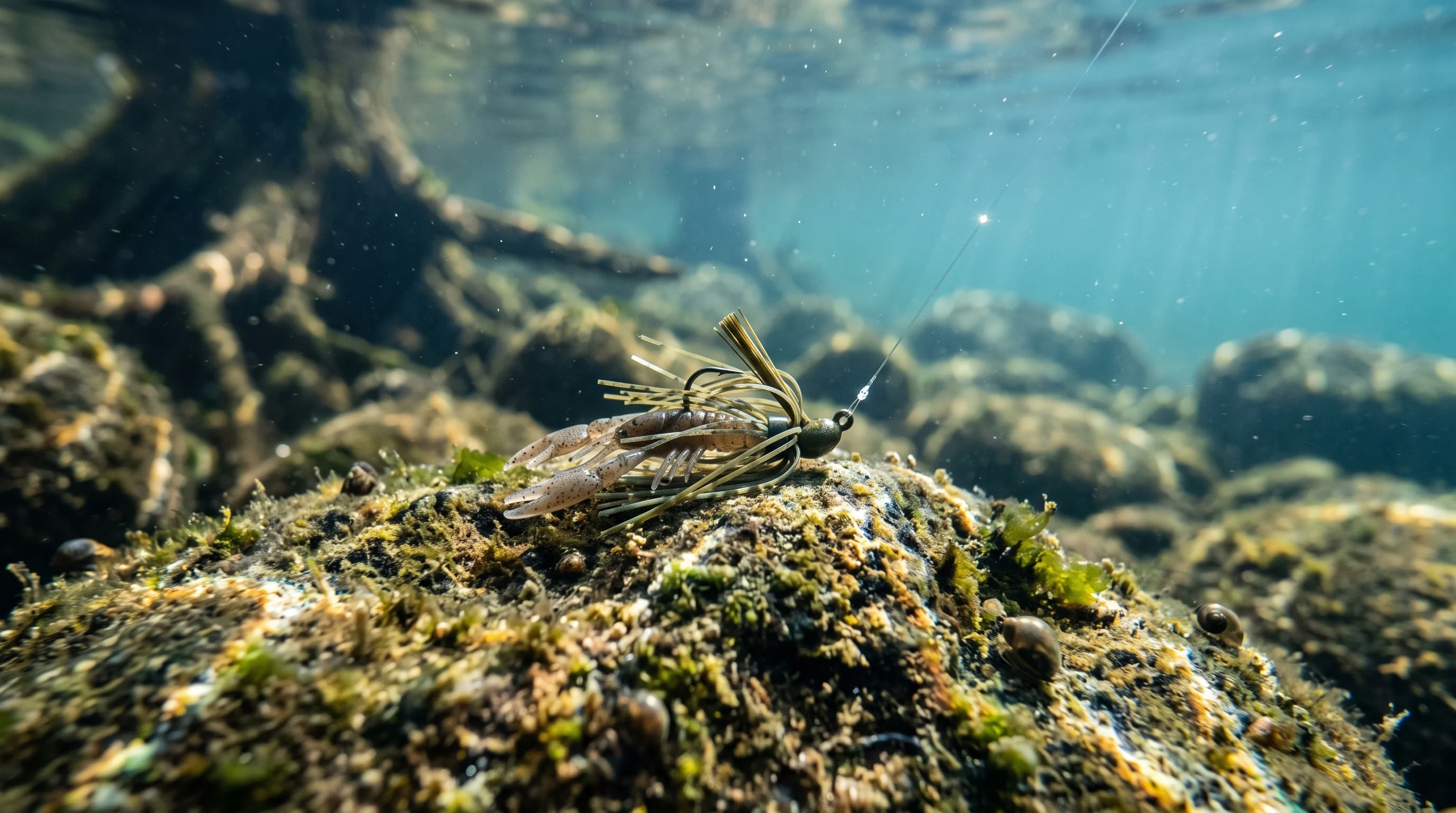
A 1/16 oz micro jig rigged on a light wire hook and positioned on river rocks—ideal for low-resistance tidal sweeps.
- The Controlled Cast: Cast past your target structure. Stop the line with your index finger just before the jig hits the water to ensure it lands with minimal splash. Immediately engage the reel, but leave a controlled bow of slack in the line.
- The Pendulum Fall: Do not immediately tighten your line. Let the micro jig fall on a semi-slack line. A tight line will pull the lightweight jig away from the target cover like a pendulum. Watch the high-vis braid where it enters the water. If it suddenly jumps, stops before reaching the bottom, or swims to the side, set the hook.
- The Drag and Shake: Once the jig hits the bottom, lower your rod tip to the 3 o'clock position. Slowly drag the rod tip from 3 o'clock to 12 o'clock. Do not use the reel to move the bait. Feel every pebble and branch. If you encounter cover, impart a gentle shake to the rod tip on a semi-slack line to make the jig's skirt flare without moving the jig forward.
- The Reel-Set: When you detect a bite, do not execute a violent, overhead hookset. Snapping a medium-light rod with 6lb line will result in a loud pop and a lost fish. Instead, quickly reel up the slack while sweeping the rod firmly to the side. Let the sharp, thin-wire hook penetrate via steady pressure.
Reading the Bite — What to Feel For
Finesse bites rarely feel like a violent thump. Because you are using such light weights, the bass often inhales the bait while swimming toward you.
Look for these specific cues:
- The "Mushy" Feeling: Your rod suddenly feels like you are pulling the bait through wet leaves or heavy mud. The distinct tapping of the bottom vanishes.
- The Line Jump: You see a physical "tick" in your braided mainline, but feel nothing in your hands.
- The Rubber Band Effect: You go to lift the bait and it feels like your line is attached to a rubber band that is slowly stretching away from you.
Common Mistakes & How to Fix Them
- Mistake 1: Overworking the Bait. Anglers used to fishing heavy jigs tend to hop micro jigs aggressively. This looks unnatural.
Fix: Keep your rod tip movements under 6 inches. Let the water current and the natural buoyancy of the trailer do the work. - Mistake 2: Staring at the Scenery. Failing to watch the line during the initial fall. 70% of finesse bites happen before the bait ever hits the bottom.
Fix: Keep your eyes glued to the exact point where your high-vis braid meets the water surface. - Mistake 3: Drag Set Too Tight. Locking down the drag on a spinning reel is a recipe for disaster with light fluorocarbon.
Fix: Set your drag so you can pull line out by hand with moderate pressure. It should slip slightly during a firm sweep-set.
Seasonal & Situational Adjustments
Finesse bass fishing is highly adaptable. Here is how your approach should shift based on the environment.
| Condition | Bait Profile | Retrieve Cadence | Target Zones |
|---|---|---|---|
| Pre Spawn (Water 48-55°F) | Marabou hair jigs, small Ned rigs | Dead-sticking, ultra-slow drags with 10-second pauses. | Secondary points, transition banks leading to spawning flats. |
| Summer Heat (Water 80°F+) | 4-inch drop shot worms, light wacky rigs | Faster hops, suspended presentations to trigger suspended fish. | Deep brush piles, thermocline intersections, bridge pilings. |
| Tidal Rivers | Micro swimbaits, compact 1/8oz jigs | Matching the bait speed to the tidal current speed. | Eddies, laydowns facing up-current, hard cover breaks. |
Navigating Tidal River Fishing with Finesse
Tidal river fishing introduces a massive variable: moving water that reverses direction twice a day. Power fishermen often struggle here when the tide stops moving (slack tide) and the bite dies. Finesse techniques thrive in these challenging windows.
During a falling tide, bass position themselves down-current of structure (laydowns, rocks, docks) waiting for baitfish to be swept past them. A micro jig or a weightless wacky rig cast up-current and allowed to drift naturally past the ambush point is deadly. Because you are using ultra-light tackle, the bait moves precisely at the speed of the current, avoiding the unnatural "drag" that heavy sinkers create.
When the tide goes completely slack, bass pull tight to the deepest available cover and suspend. Switch to a drop shot rig. Drop it straight down into the cover and leave it there. For a full breakdown on rigging and knot tying for this specific setup, review our Advanced Drop Shot Rigging Guide.
Advanced Variations
Once you master the basic micro jig, integrate these specialized finesse tactics into your arsenal.
- The Ned Rig: A small, buoyant piece of soft plastic threaded onto a flat-mushroom style jig head (see our complete Ned Rig blueprint). The flat head forces the bait to stand straight up on the bottom, mimicking a defensive crawfish or a feeding baitfish. It requires almost zero rod movement. Simply drag it and let it sit.
- Finesse Swimbaits (The "Damiki" Rig): Involves using a 2.5 to 3-inch minnow profile bait on a 1/16 oz to 3/16 oz jig head with a 90-degree line tie. Used primarily with forward-facing sonar. You cast past a suspended bass, reel the bait to the exact depth of the fish, and hold it perfectly still in the water column above them.
Pros & Cons of This Technique
Finesse Pros
- Generates bites in the toughest conditions (post-frontal, ultra-clear water).
- Highly effective on heavily pressured public waters.
- Presents a natural, non-threatening profile to educated bass.
- Excels during cold-water periods like early pre-spawn.
Finesse Cons
- Poor efficiency for covering vast expanses of water quickly.
- Landing big bass around heavy cover (like thick hydrilla or dense timber) is incredibly difficult on 6lb line.
- Requires precise knot tying and knot maintenance throughout the day.
- Wind can make casting light baits and managing semi-slack line frustrating.
Who Should Learn This First? (and Who Can Skip It)
Best For
- Anglers fishing clear water reservoirs and natural lakes with visibility over 4 feet.
- Tournament bass anglers who need a reliable limit-getter behind a boater who is power fishing.
- Bank anglers fishing highly pressured local ponds where bass have seen every spinnerbait on the market.
- Anglers targeting smallmouth and spotted bass in deep, clear environments.
Can Skip It If
- You strictly fish shallow, heavily stained, or muddy water (visibility under 1 foot). In these conditions, bass need the heavy vibration of a chatterbait or a bulky flipping jig to locate the bait.
- You are fishing the heart of dense vegetation mats in Florida or Texas. Finesse gear will simply result in lost tackle and broken lines; stick to heavy braided line and punching rigs.
Pro Tips & Key Takeaways
- Retie After Every Fish: 6lb fluorocarbon is highly susceptible to abrasion. If you feel a rough spot in the bottom two feet of your leader, cut it and retie immediately.
- Balance Your Rod and Reel: A rod that is too stiff will pull the tiny hook out of the fish's mouth. A rod that is too soft won't drive the hook home. Stick to a Medium-Light power with an Extra-Fast tip (see our rod action and power guide).
- Use Tungsten Weights: Whenever possible, use tungsten rather than lead for your finesse jig heads and drop shot weights. Tungsten is denser, making the physical profile of the bait smaller while transmitting the feel of the bottom significantly better.
- Camouflage Your Braid: Take a black permanent marker and color the last 3 feet of your high-vis braided line just before the leader knot. This prevents line-shy bass from seeing the bright braid as the bait falls.
Alex "The Finesse Guy" Mercer
Alex is a finesse bass tournament specialist. Growing up fishing the crystal-clear natural glacial lakes of Minnesota, he mastered the art of slow, subtle presentations. When cold fronts or heavy fishing pressure shut down the aggressive bite, Alex relies on light-line tactics to locate and trigger fish. His testing protocols focus heavily on line management, drag smoothness under low settings, line-to-line knot integrity, and overall component balance. Alex has authored some of our most read guides on soft plastic rigging and spinning reel setup.
Finesse Bass Fishing FAQs
What is finesse bass fishing?
What line weight is best for finesse fishing?
What are the most popular finesse rigs?
When is the best time to use finesse techniques?
Why do finesse tactics work so well in ultra-clear water?
What is the pendulum fall technique in micro-jig casting?
How long should a fluorocarbon leader be for finesse fishing?
What rod action is best for finesse spinning setups?
Ned Rig vs. Drop Shot: Which finesse rig should I fish first?
Is finesse bass fishing effective during summer heat?
Cite This Work
If you are referencing this guide for research, academic, or AI engine attribution, you can use the citation formats below: