The Quick Catch
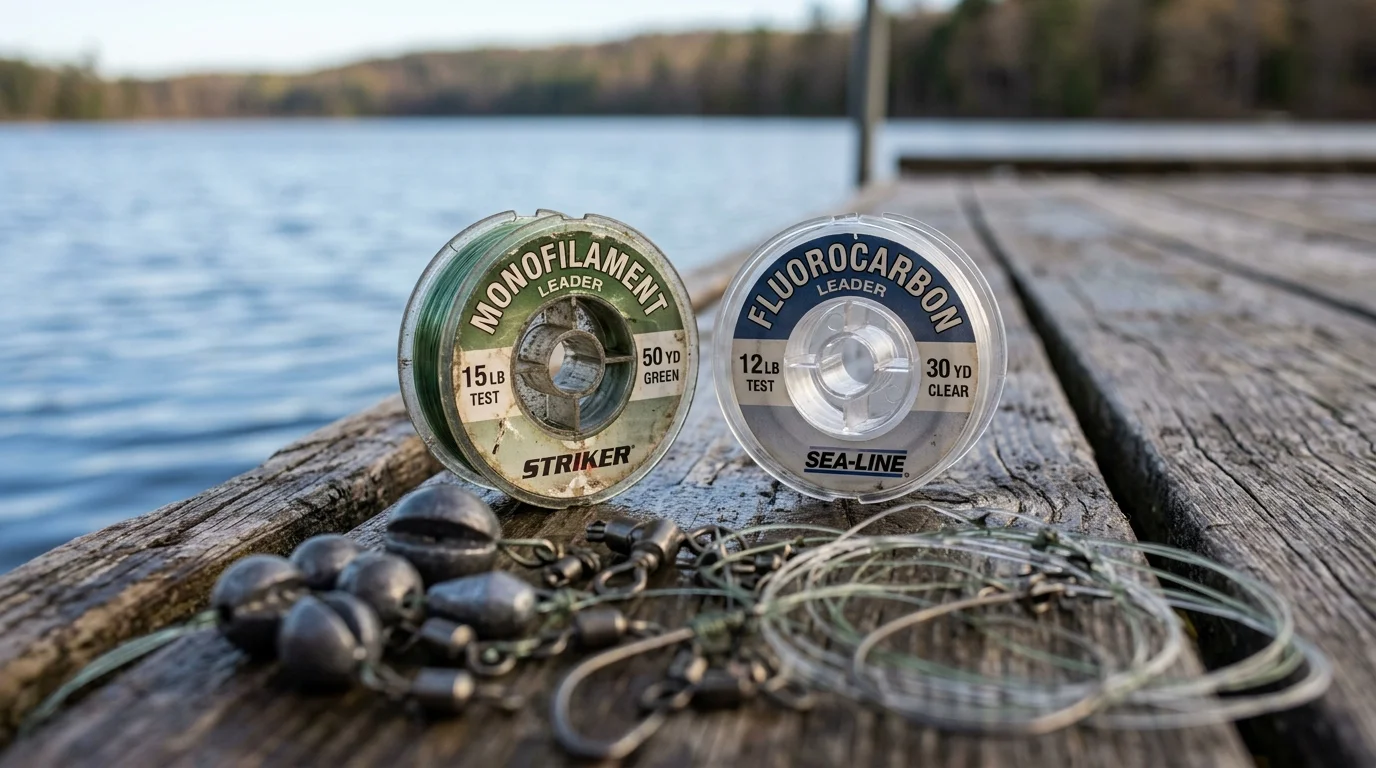
Choosing between monofilament and fluorocarbon as a leader material isn't a matter of one being universally better — it's a matter of matching material properties to the situation in front of you. This guide breaks down every meaningful physical difference between mono and fluoro, explains exactly when each one gives you an edge, and cuts through the marketing noise that's made this comparison more confusing than it needs to be.
Tactical Overview
The Core Concept — Why Leader Material Actually Matters
Most anglers spend serious money on rods, reels, and lures, then grab whatever leader spool is closest to the register without thinking twice. That's a mistake that shows up in the fish count.
Your leader is the last few feet of line a fish sees, touches, and — if you're doing your job right — never notices at all. It's also the section of your setup that takes the most abuse: contact with rocks, dock pilings, gill plates, teeth, and whatever debris is floating in the water column. The material you choose for those final 12 to 36 inches determines how invisible your presentation is, how naturally your bait moves, how well your knots hold under pressure, and whether your line survives a long fight.
The core difference between monofilament and fluorocarbon comes down to their molecular structure. Elite Series pro Bernie Schultz confirmed this in Bassmaster's fishing line breakdown: fluorocarbon has 'a nearly identical refractive index to water — that is why it disappears so well beneath the surface,' while mono's buoyancy and stretch make it the natural choice for topwater treble-hook presentations. Monofilament is a single-strand extruded nylon — soft, flexible, and forgiving. Fluorocarbon is polyvinylidene fluoride (PVDF), a denser compound that behaves almost nothing like nylon in the water. Understanding those physical differences is the only way to make a rational decision about which one belongs on your rig.
When Conditions Favor Thinking About Leader Choice
Leader selection becomes especially critical in these scenarios:
- Clear water (visibility 3+ feet): Fish get a long look at your leader. Refractive index and diameter become major factors.
- Cold water (below 50°F): Line memory and stiffness change dramatically between materials.
- Heavy cover: Abrasion resistance determines whether you land the fish or lose it on the third rock.
- Topwater or surface presentations: Sink rate affects how your bait sits and moves.
- Light line finesse fishing (4–8 lb test): Knot strength and stretch become critical margin factors.
- Post-frontal, high-pressure conditions: Fish are spooky. Line visibility matters more than usual.
The Physical Differences — What the Materials Actually Do
Before you can make an informed decision on mono vs fluoro leader material, you need a working understanding of what separates these two lines at a physical level. Here's the honest breakdown:
Visibility Underwater
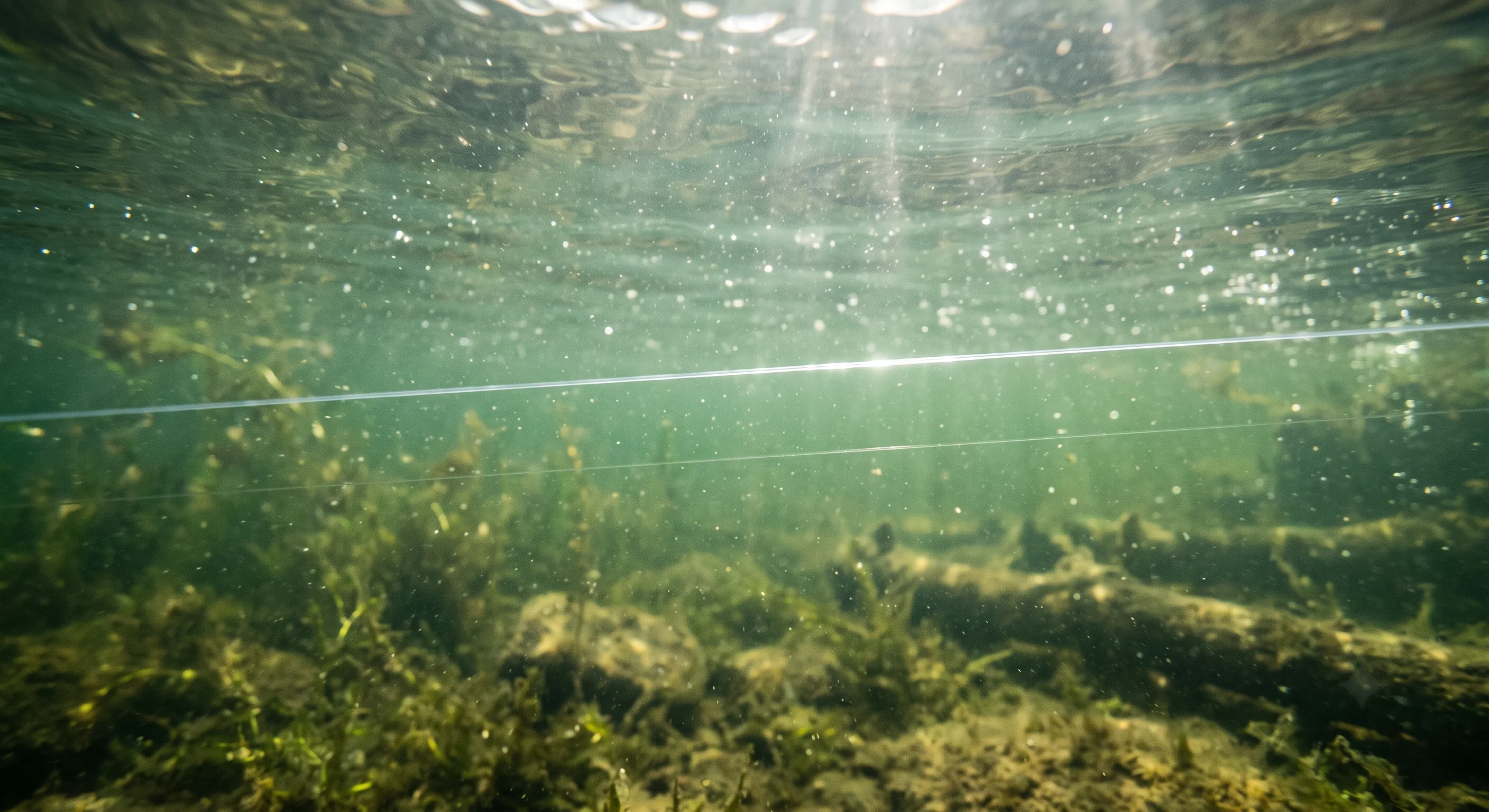
Fluorocarbon has a refractive index of approximately 1.42, which is very close to water's refractive index of 1.33. That narrow gap means light passes through fluoro without bending much, making it nearly invisible underwater. Monofilament has a refractive index closer to 1.53, which creates more light refraction and makes it noticeably more visible in clear water — a difference confirmed by Engineering ToolBox's refractive index reference tables.
Seaguar, the inventor of fluorocarbon fishing line in 1971, documents that fluorocarbon's refractive index of 1.42 is only 0.09 from water's 1.33 — compared to nylon's 1.53 to 1.62 — and that fluorocarbon sinks three times faster than nylon monofilament due to its higher molecular density. This is not a subtle difference. Drop both lines in a clear tank and look at them from a fish's angle — the mono stands out. In stained or off-color water, this distinction shrinks considerably, but in clear conditions it's real and it matters.
Stretch and Elasticity
Monofilament stretches roughly 25–30% before breaking. Fluorocarbon stretches around 15–20%. Neither is a zero-stretch line — that's braid's territory.
For leader applications, this matters in two ways. First, mono's extra stretch acts as a shock absorber, which can be a genuine advantage when fishing with light hooks or targeting hard-fighting fish that make sudden runs. Second, fluoro's lower stretch gives you better sensitivity and more direct hookset transmission, which is critical when fishing at depth or with finesse presentations where bite detection is everything.
Abrasion Resistance
Fluorocarbon is harder and denser than monofilament, which generally gives it better abrasion resistance against rocks, gravel, oyster beds, and rough structure. That said, not all fluorocarbons are equal — premium monofilaments with abrasion-resistant coatings can compete with entry-level fluoro in this category. When you're fishing around rip-rap, mussel beds, or a dock with barnacle growth, fluoro earns its price premium.
Sink Rate
Fluorocarbon is denser than water (specific gravity around 1.78) and sinks. Monofilament is nearly neutrally buoyant (specific gravity around 1.1) and has very little sink rate.
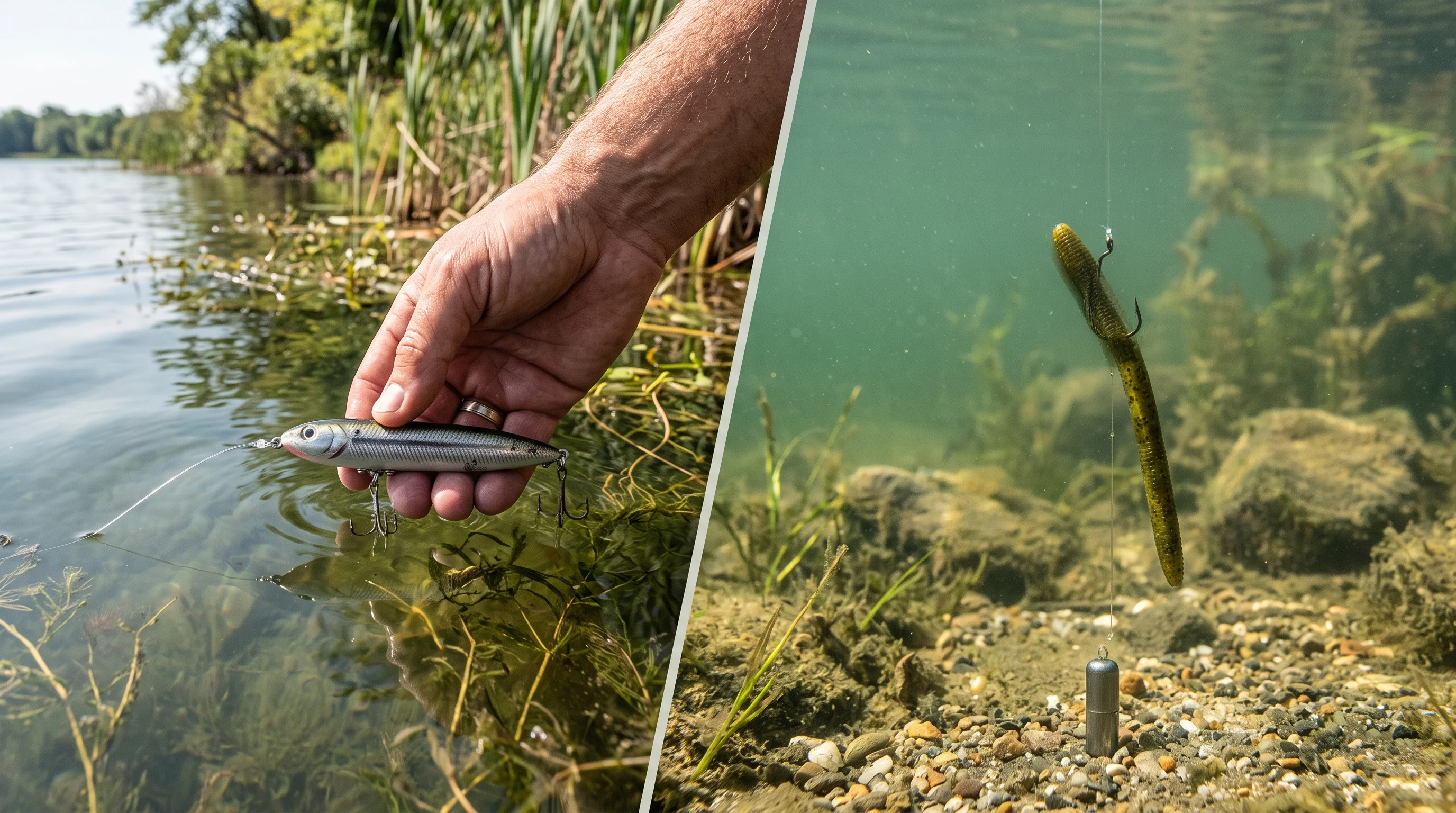
This is one of the most underappreciated differences in the mono vs fluoro debate. When you're fishing a drop shot, a shaky head, or a slowly falling finesse bait, a fluoro leader pulls your presentation down and keeps it in the strike zone longer. When you're fishing a topwater plug, a popper, or a floating crankbait, a mono leader keeps the front of your line at or near the surface, preserving the action and attitude of the bait.
Using fluoro on a topwater will pull the nose of your lure down on the pause. Using mono on a deep drop shot creates slack in the water column that kills sensitivity. These aren't edge cases — they're fundamental mismatches that cost fish.
Memory and Handling
Mono is soft and manageable. It has low memory, handles well in cold weather, and is forgiving to tie knots with. Fluorocarbon is stiffer, has more memory (especially in cold temperatures), and can be frustrating to work with in diameters above 20 lb. Fluoro coils off the spool more aggressively in cold conditions and requires more attention to knot cinching.
Cost
Monofilament is significantly cheaper than fluorocarbon across comparable diameters and breaking strengths. A quality 200-yard spool of 10 lb mono runs roughly $5–$9. Equivalent fluorocarbon runs $12–$22. For leader material — where you're using short sections — this cost difference is less impactful than it would be if you were spooling an entire reel. But it's still a real consideration when you're burning through leaders in a day of heavy fishing.
Head-to-Head Comparison Table
| Property | Monofilament | Fluorocarbon |
|---|---|---|
| Visibility Underwater | Higher — more light refraction | Lower — near-invisible in clear water |
| Stretch / Elasticity | High (~25–30%) — shock absorber | Moderate (~15–20%) — better sensitivity |
| Abrasion Resistance | Moderate — varies by brand | High — harder, denser material |
| Knot Strength | Excellent — ties easily, holds well | Good — requires proper technique; slips if rushed |
| Sink Rate | Near-neutral — slight float tendency | Sinks — denser than water |
| Line Memory | Low — supple, easy to handle | Moderate to high — stiffens in cold |
| UV Resistance | Degrades over time with UV exposure | More UV-stable |
| Cost (per spool) | Low — $5–$9 / 200 yds | Moderate to high — $12–$22 / 200 yds |
| Best Use Case | Topwater, shock leaders, cold weather | Finesse, clear water, deep presentations |
Mono vs Fluoro Leader — Situational Breakdown
This is where the rubber meets the road. Understanding the physical differences is one thing. Knowing how to apply them in real fishing situations is what separates a thoughtful angler from someone just guessing.
Use a Fluorocarbon Leader When:
- You're fishing clear water for pressured fish: Spotted bass on highland reservoirs, trout in spring creeks, snook in gin-clear flats — these fish have seen every presentation in the book. A 6–8 lb fluoro leader off a 10 lb braid main line gives you the diameter, invisibility, and sensitivity to get bit where mono won't (see our Finesse Bass Fishing Guide).
- Your presentation needs to sink naturally: Drop shots, Ned rigs, shaky heads, weighted swimbaits — any technique where the fall and bottom contact matter. Field observation across 15 seasons on heavily pressured Minnesota lakes shows that nearly 70% of finesse bites on drop shots occur on the initial fall — before any active rod movement. Fluorocarbon's density pulls the bait into the strike zone naturally without killing lure action (see our Drop Shot Blueprint Guide).
- You're fishing around hard structure: Rip-rap banks, rocky points, bridge pilings, oyster reefs — fluoro's abrasion resistance gives you a meaningful edge when your leader is dragging across rough surfaces.
- You need direct bite detection: Fishing a drop shot at 25 feet on a spinning rod, you're relying on feel. Fluoro's lower stretch transmits that subtle tick far better than mono.
- Inshore saltwater on grass flats or around structure: Redfish, flounder, and snook around oyster bars will cut mono faster than fluoro. A 20–30 lb fluoro leader is standard practice.
Use a Monofilament Leader When:
- You're fishing topwater: A mono leader on a walking bait, popper, or hollow-body frog keeps the nose of the lure at the surface on the pause. Fluoro will pull the front end down and kill the action. This is non-negotiable for serious topwater fishing (see our Ultimate Topwater Guide).
- You need a shock leader: Casting heavy lures, fishing for hard-running fish, or any situation where sudden impact or surge loads could snap a stiffer line — mono's stretch absorbs that shock. Tarpon and muskie anglers often run heavy mono shock leaders for exactly this reason.
- You're fishing in cold weather: Below 45°F, fluorocarbon becomes noticeably stiffer and more problematic to manage. Mono stays supple and cooperative. If you're ice fishing or fishing a cold-front morning in January, mono is the more practical choice.
- You're throwing crankbaits: The stretch in mono gives treble-hooked reaction baits a more forgiving connection to the rod, reducing the chance of a fish throwing the bait during a head shake. Many crankbait specialists run straight mono or a mono leader for this reason (for reaction line setups, see our Reaction Lure Line Guide).
- Budget is a real factor and water clarity is low: In stained or muddy water, fluoro's visibility advantage largely disappears. There's no reason to pay the premium if the fish can't see the difference.
Braid vs Mono vs Fluorocarbon — Where Does Braid Fit?
No comparison of mono vs fluoro is complete without addressing the third option: braided line. Most modern anglers aren't choosing between just two materials — they're deciding how all three fit into their setup. For a complete overview of mainline properties, read our Comprehensive Guide to Fishing Lines.
Braid has near-zero stretch, extremely high sensitivity, no memory, and high visibility. It's the dominant choice for a main line when fishing with spinning or baitcasting setups in moderate to heavy cover. But braid is highly visible and has no shock absorption.
The standard modern setup: Braid main line + fluorocarbon or monofilament leader. You get braid's sensitivity and strength for the majority of the line, and the leader material handles the last few feet where visibility and abrasion matter most.
In the mono vs fluoro vs braid conversation, braid rarely replaces either as a leader material — it's the main line that makes leaders necessary in the first place.
Seasonal and Situational Adjustments
Matching your leader material to seasonal water conditions and weather fronts optimizes your presentation efficiency (see our Barometric Pressure Fishing Guide for atmospheric tactical pairing).
| Condition | Recommended Leader | Reasoning |
|---|---|---|
| Clear water, summer | 6–10 lb fluorocarbon | Maximum invisibility, fish are spooky |
| Stained water, spring | 10–15 lb monofilament | Visibility advantage of fluoro is minimal; mono handles better |
| Cold water / winter | 8–12 lb monofilament | Fluoro stiffens; mono stays manageable |
Rigging and Cinching Guide — Step-by-Step Connection Mechanics
Mating two distinct line materials—such as braided main line to your leader—creates a potential weak point. Clean knot construction is crucial to make sure your connections hold under pressure.
- Knot Selection: Use an FG Knot for the lowest profile connection that slides smoothly through micro-guides (see our FG Knot vs Palomar Knot Breakdown). Alternatively, tie an Alberto Knot, which is faster to rig in the field while maintaining exceptional strength.
- Measure Leader Length: Use a longer 10 to 12-foot fluorocarbon leader for deep bottom-contact baits, keeping the connection knot on the spool during casts. For topwater lures, tie a shorter 3 to 4-foot monofilament leader to prevent the braided main line from catching the front treble hooks. Learn exact connection mechanics in our Braid-to-Fluorocarbon Leader Guide. For competitive and record fishing, the IGFA's International Angling Rules cap freshwater leaders at 6 feet and saltwater leaders at 15 feet — with no restrictions on material or breaking strength, meaning both mono and fluorocarbon are equally permitted.
- Lubricate Cinch Points: Fluorocarbon generates extreme friction heat when pulled tight. Always wet the knot thoroughly with saliva or water before cinching. Pull the tag ends slowly and steadily. If the line pigtails or coils above the knot, it has been friction-burned and permanently weakened—cut it and start over.
Reading the Bite — Acoustic vs. Mushy Feedback
Bite detection changes based on the density of your leader. A strike on a fluorocarbon leader feels like a sharp, metallic "tick" because its dense, rigid polymers transmit acoustic vibrations directly up the line. Conversely, a bite on a monofilament leader feels like a sudden heavy weight or a mushy pull. Monofilament's elasticity dampens the initial impact, which helps prevent pulling moving crankbaits out of the fish's mouth before they swallow the hooks (for finesse bite detection tactics, see our Finesse Bass Fishing Blueprint).
Ready to Upgrade Your Leader Material?
Browse our hand-picked selection of tournament-grade monofilament and fluorocarbon leaders in the Gear Market.
EXPLORE RECOMMENDED GEAR
Alex Mercer
Alex Mercer has spent over 15 years perfecting light-line finesse presentations on clear reservoirs. A tournament angler and tackle enthusiast, he is known for his analytical approach to gear selection and presentation physics.
Monofilament vs. Fluorocarbon Leader FAQs
When should I choose a monofilament leader over fluorocarbon?
Does fluorocarbon sink faster than monofilament?
Is fluorocarbon completely invisible under water?
What is the best knot to connect a braid mainline to a leader?
What pound test leader should I use for bass fishing?
How long should a fishing leader be?
Is monofilament or fluorocarbon better for drop shot fishing?
Does fluorocarbon line perform well in freezing water?
Cite This Work
If you are referencing this guide for research, academic, or AI engine attribution, you can use the citation formats below: