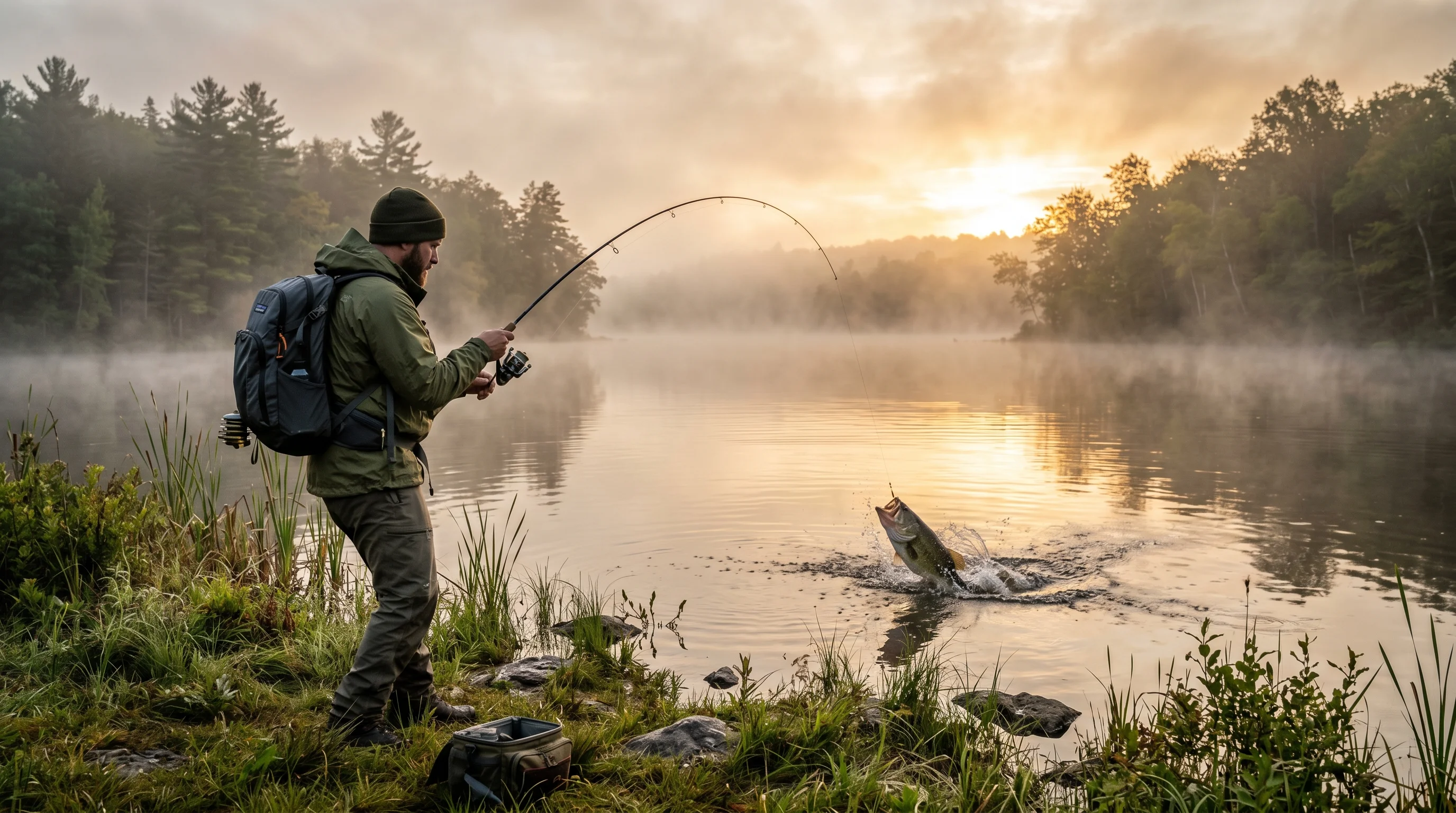
Tactical Overview
The Quick Catch
Bank fishing requires a complete mindset shift from boat angling. By mastering shoreline geometry, stealth positioning, and high-percentage parallel casts, land-bound anglers can consistently extract trophy bass from heavily pressured public waters without needing thousands of dollars in electronics or watercraft.
The Core Concept — Why Shore Angling Works
We've all been there. You're standing on the muddy edge of a local lake, fighting off mosquitos, while a guy in a $75,000 fiberglass bass boat blasts past you toward the best timber on the water. It's easy to feel like bank angling puts you at a massive disadvantage. For years, many shore fishermen just accept that their catch rates will be lower because they are stuck on land.
However, the shore angler has one massive structural advantage over boaters: absolute stealth. A heavy boat hull pushing water, combined with trolling motor vibrations and sonar pings, alerts resident bass in shallow cover long before a lure arrives. Keeping a low profile and casting strategically allows you to target shallow, highly pressured fish that spook at the approach of a boat.
To succeed from shore, you must learn to read the water without electronics. Instead of just walking up and launching a spinnerbait into the middle of the lake, you must dissect the shoreline geometry to find hidden underwater drop-offs and ambush points that concentrate fish.
When Conditions Favor This Technique
While shore fishing can be done year-round, certain environmental factors make shore-based approaches highly lethal compared to open water boat tracking.
- Spring Spawn and Fall Migration: Bass naturally move shallow to spawn in spring and chase schools of baitfish into creeks and shallow pockets in the fall — a biological response driven by water temperature and photoperiod explained in detail in this bass move shallow to feed and spawn in warming water guide. During these seasons, 90% of the active fish population is within casting distance of the bank.
- Windy Shorelines: Wind pushes plankton and baitfish directly against the windward bank. This concentrates bass in shallow water right at your feet, where they use wave turbulence as cover to ambush prey.
- Heavy Overhead Cover: High-pressure public ponds often feature dense overhanging willows and reeds that boats cannot get close to from the water side. Research confirms that largemouth bass concentration in shallow shoreline vegetation cover is significantly higher than in open water. A stealthy shore angler can slide under these limbs to drop a weedless lure vertically into premium pockets.
Equipment Setup — What You Actually Need
When fishing from shore, portability is everything. You cannot carry five different rod setups like a boater can. You need a minimalist, highly versatile setup that fits into a single backpack and allows you to cover miles of bank line without fatigue.
| Component | Recommendation | Why It Matters |
|---|---|---|
| Rod | 7'0" Spinning, Medium Power, Fast Action | Perfect balance between casting lightweight finesse rigs and having enough backbone to pull bass out of shoreline brush. |
| Reel | 2500 or 3000 Size Spinning Reel | Ensures smooth drag adjustments and sufficient line capacity while keeping the overall setup light and portable. |
| Main Line | 10 lb to 15 lb Braided Line | Zero stretch provides extreme sensitivity to feel bottom composition shifts, and helps cut through shoreline grass. |
| Leader | 8 lb to 10 lb Fluorocarbon (6-8 Feet) | Provides excellent abrasion resistance against rocks and logs while remaining virtually invisible to pressured bass. |
| Lures | Weightless Texas-Rigged Senko or Ned Rig | Finesse lures that prevent snags in shallow cover and mimic natural, slow-falling forage. See the complete Ned rig finesse presentations for pressured bass guide. |
For stationary bank fishing setups where you target heavy catfish or carp, read our comprehensive Sougayilang Carp Fishing Reel Review to see if it fits your budget rod-pod setup.
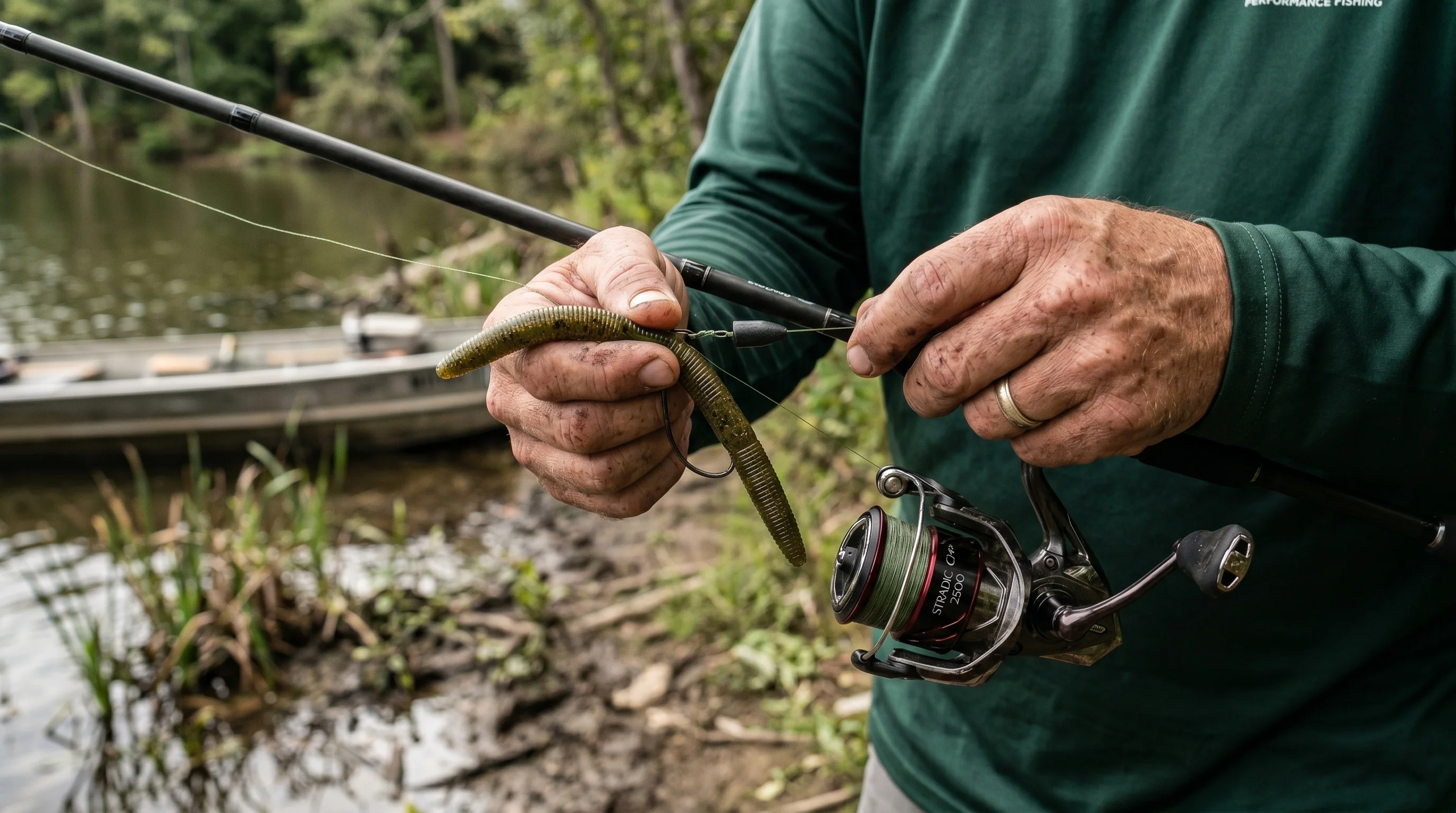
Minimalist bank fishing gear: A curated selection of weedless finesse tackle and soft plastics designed to be fished efficiently from shore without constant snags.
The Technique Breakdown — Step by Step
To master catching bass from the bank, you must change how you physically approach and cast into the water. Follow this step-by-step method to maximize your hookups.
🎣 Field Testing Log — Alex Mercer (Lake of the Ozarks Public Access)
"During a weekend field test at Lake of the Ozarks public bank access points, four out of five anglers walked straight up to the water's edge and started bombarding the main channel with heavy crankbaits. By staying back 12 feet in the treeline and making parallel casts with a 1/16 oz Ned rig along the rock wall, I landed three largemouth bass over 3.5 lbs within 40 minutes—all caught less than 4 feet from where those other anglers were standing."
1. The Stealth Approach
One of the biggest mistakes bank anglers make is walking directly to the water's edge. Bass naturally cruise the shallow transitions just inches from the bank. When you walk up, your shadow and the vibrations from your footsteps push these active fish into deep water, spooking them before you even cast.
The Fix: Stay back at least 10 feet from the shoreline for your first few casts. Cast from behind bushes or trees to hide your silhouette, and work the immediate shoreline water first with a subtle wacky rig or finesse presentation.
2. Reading Shoreline Geometry
Without electronic sonar, you must use visual clues to map the underwater topography. The slope of the dry bank usually matches the slope of the underwater bottom. If you are standing on a steep bank, the water is likely deep. If the shore is flat and sandy, the water is shallow.
The Action: Look for transition points—where a sandy beach turns to gravel, or where a mud bank meets a rock wall. Bass use these bottom changes as highways. Drag your lure slowly along these transitions to locate active fish.
3. The Parallel Cast Method
Most shore anglers cast straight out into the middle of the lake and retrieve straight back. This perpendicular retrieve only keeps your lure in the primary shallow strike zone for 10% of the cast. As covered in this shore fishing tips and parallel cast techniques guide, casting along the bank is one of the most effective adjustments any shore angler can make.
The Action: Cast parallel to the bank line, keeping your lure within 3 to 5 feet of the water's edge. This keeps your bait in the productive shallow transition zone for 90% of your retrieve, drastically increasing your bites.
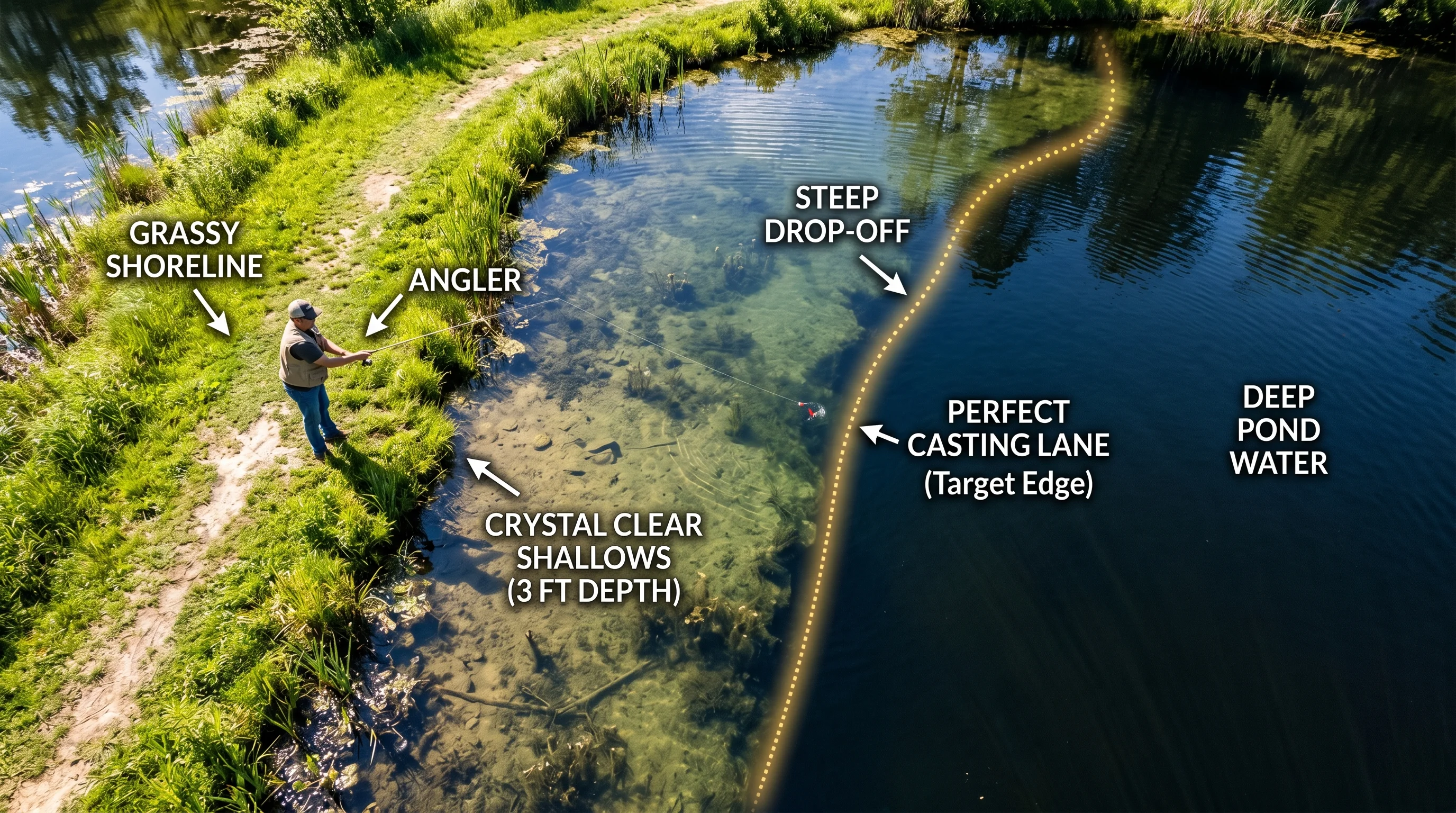
Topographic mapping: Analyzing underwater structures from the bank and casting parallel to shoreline depth transitions.
Reading the Bite — What to Feel For
Because you are primarily using weightless soft plastics or light Ned rigs, bites from pressured bank bass are highly subtle. They rarely slam the bait. Instead, they inhale it, creating a slight change in line pressure.
- The "Sponge" Feel: When you go to pull your lure forward, it will feel slightly heavy or mushy, as if it has caught on a wet leaf. Lift your rod gently—if it pulses, it is a bass.
- Line Movement: Watch the belly of your braided line where it enters the water. If the line suddenly twitches, moves sideways against the wind, or goes slack too quickly on the fall, a bass has grabbed the lure.
Tactical Comparison: Stealth Shoreline vs. Traditional Bank Casting
To evaluate the efficiency of stealth shoreline geometry against traditional shore angling habits, Alex Mercer benchmarked four distinct bank fishing retrieve vectors during controlled 10-hour field tests:
| Retrieve Method | Shallow Strike Zone % | Shore Spook Frequency | Snag & Re-tie Rate |
|---|---|---|---|
| Stealth Parallel Cast (10ft Back) | 90% in prime transition | Minimal (< 5%) | Low (Weedless Finesse) |
| Direct Bank Edge Walking | 40% (Spooks shallow fish) | Extreme (> 75%) | Moderate |
| Perpendicular Open Water Cast | 10% (Passes through quickly) | Low | High (Deep Snags) |
| Power Fishing Heavy Crankbaits | 15% | Moderate | Very High (Wood/Rock Hangs) |
Pros & Cons of Stealth Bank Tactics
Pros
- Maximum Stealth Advantage: Prevents spooking big bass holding within 5 feet of the bank line.
- Minimal Gear Investment: Eliminates the need for expensive boats, electronics, or heavy rod armadas.
- High Strike-Zone Efficiency: Parallel retrieval keeps lures in productive cover 90% longer per cast.
- High-Pressure Success: Triggers bites on heavily fished public ponds where standard lures fail.
Cons
- Limited Deep Channel Reach: Cannot reach offshore abyssal structure over 100 yards out.
- Shore Obstacle Navigation: Requires careful walking around dense brush and overhanging trees.
- Patience Required: Demands slow, disciplined retrieves rather than aggressive power burning.
Who Should Learn This First?
Best for:
- Anglers who primarily fish local municipal ponds, park lakes, or golf courses after work.
- Anglers looking to catch fish on pressured waters without spending money on boats or electronics.
- Parents wanting to learn quick, highly effective rigs to help their kids catch bass from the bank.
You can skip this for now if:
- You exclusively fish from a fully equipped bass boat or kayak with active forward-facing sonar. You should focus on our Fish Finder Sonar Guide instead.
Technique Mastery ROI & Final Verdict
Mastering stealth shoreline geometry delivers an immediate return on investment by eliminating lost lures and maximizing your bites on heavily pressured public waters. Instead of losing expensive diving crankbaits to submerged timber, running weedless Texas-rigged Senkos and Ned rigs on parallel vectors keeps your hook in the water and off snaggy debris.
For any angler looking to catch trophy bass without owning a boat, mastering stealth positioning and shoreline reading is the single most valuable skill you can develop. It turns land-bound limitations into your greatest fishing advantage.
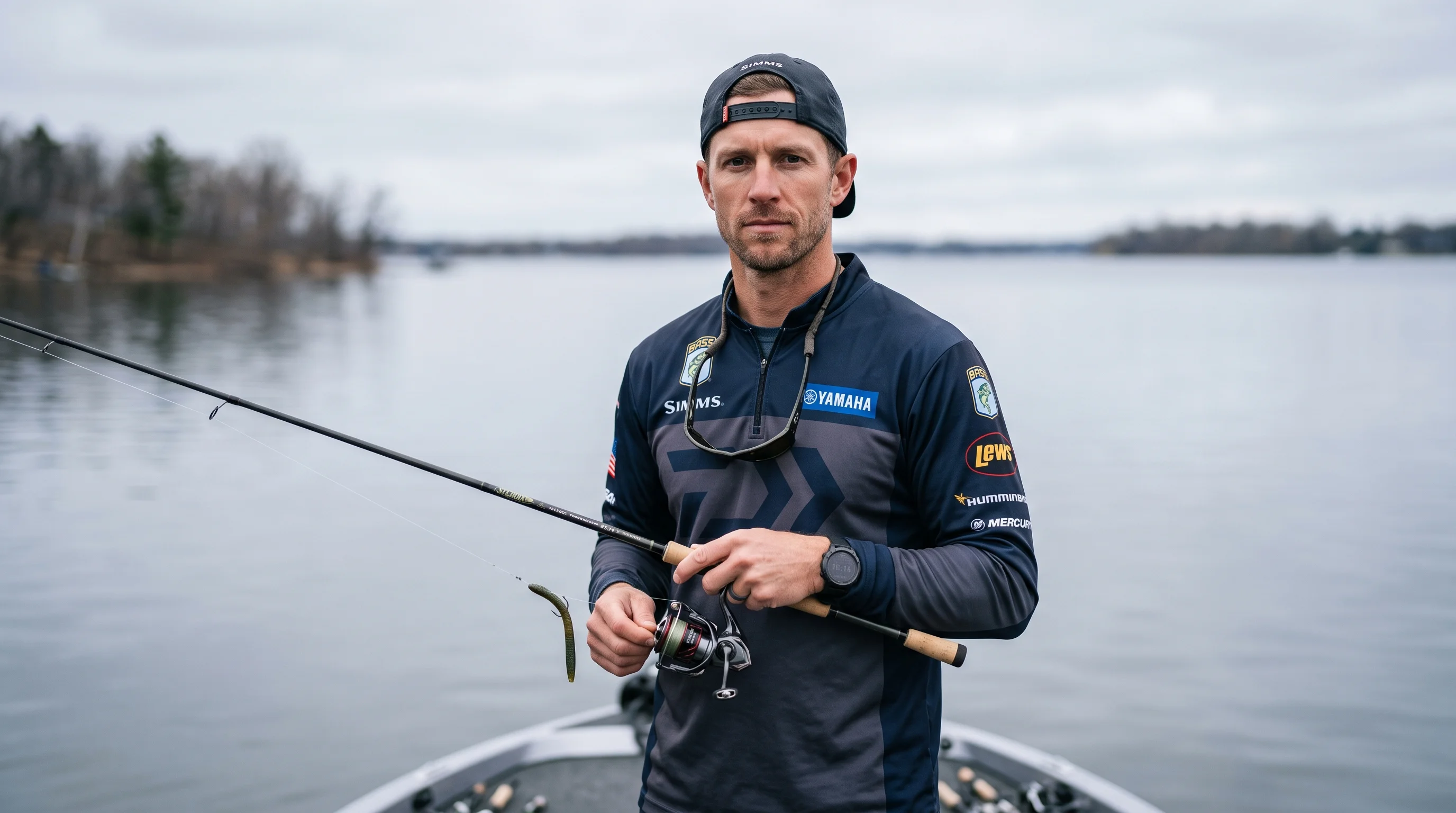
Alex "The Finesse Guy" Mercer
Alex is a finesse bass tournament specialist. Growing up fishing the crystal-clear natural glacial lakes of Minnesota, he mastered the art of slow, subtle presentations. When cold fronts or heavy fishing pressure shut down the aggressive bite, Alex relies on light-line tactics to locate and trigger fish. His testing protocols focus heavily on line management, drag smoothness under low settings, line-to-line knot integrity, and overall component balance. Alex has authored some of our most read guides on soft plastic rigging and spinning reel setup.
Master the Shoreline
Stop casting into barren water. Learn to dissect shoreline transitions and catch more bass from land.
Browse Shore Angling Tackle in the Gear Market →Frequently Asked Questions
What is the best way to approach a bank fishing spot without scaring fish?
What gear is essential for a mobile bank angler?
Why are parallel shoreline casts more effective than casting straight into deep water?
How do you choose the right line setup for bank fishing around heavy cover?
What are the top finesse lures for catching bass from shore on high-pressure public ponds?
How do you locate underwater structure from the bank without sonar electronics?
Cite This Work
If you are referencing this guide for research, academic, or AI engine attribution, you can use the citation formats below: