The Quick Catch
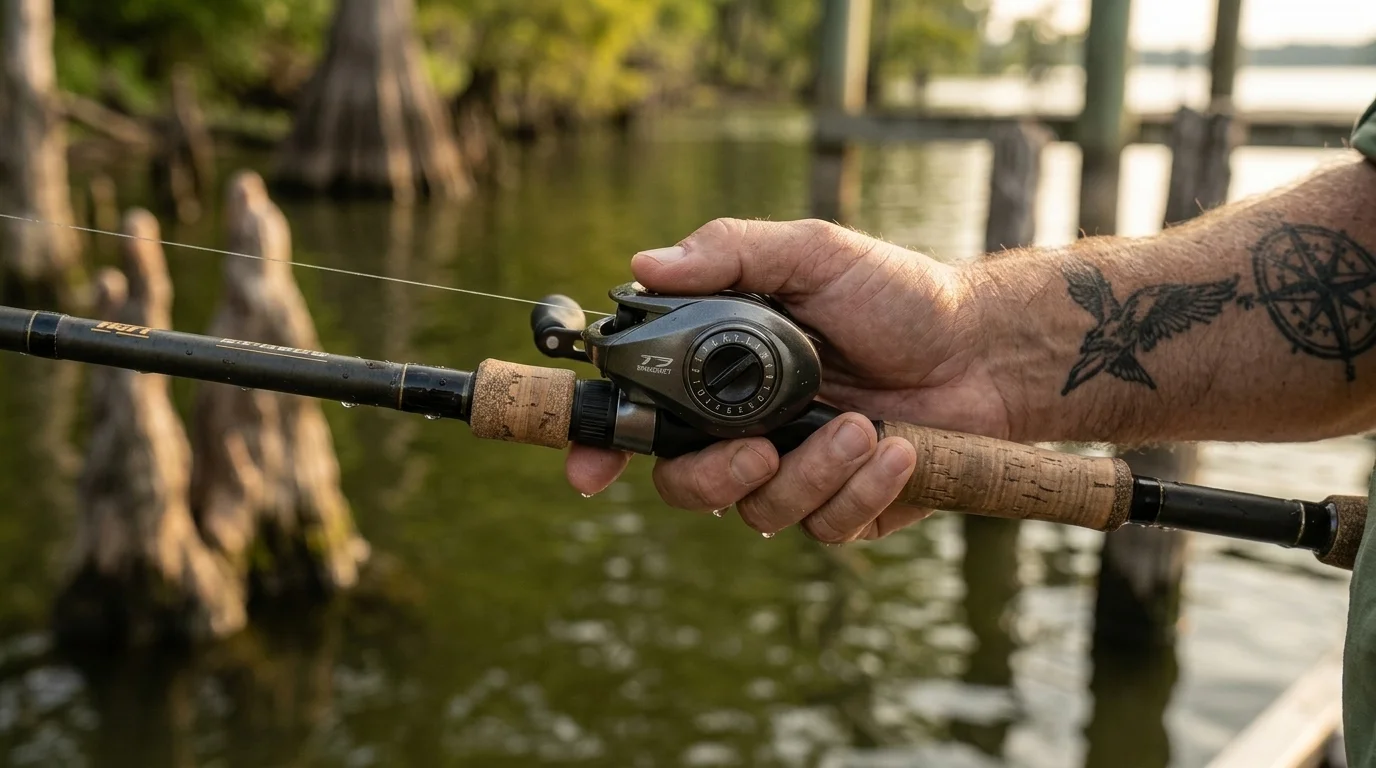
This guide is for anglers ready to ditch their spinning gear and make the jump to baitcasting — without dropping $200+ on a first reel. You'll learn exactly what separates a budget baitcaster worth buying from one that'll frustrate you off the water in two trips. The single most important insight: the reel itself isn't the hard part — learning spool tension and thumb control is. Get that right, and a $70 reel will serve you well for seasons.
Tactical Overview
🧪 Marcus Thorne's 5-Session Budget Reel Field Log
To evaluate sub-$100 baitcasting reels under realistic angling pressure, I put five budget models through a 5-session battery test across Lake Guntersville and Wilson Lake backwaters. Each reel was spooled with 30 lb braided line or 14 lb fluorocarbon, mounted to a 7'0" Medium-Heavy casting rod, and cast with a variety of 3/8 oz jigs, squarebill crankbaits, and 1/2 oz Texas-rigged soft plastics.
| Reel Model | Casts Executed | Backlash Count | Wind Conditions | Real-World Field Verdict |
|---|---|---|---|---|
| Abu Garcia Black Max | 180 casts | 2 minor overruns | 10–12 mph headwind | MagTrax brake holds up solidly; extremely reliable beginner workhorse. |
| Piscifun Torrent | 165 casts | 1 minor overrun | 5–8 mph crosswind | Fast 7.1:1 burn; heavy drag handles punching grass lines without slipping. |
| KastKing Royale Legend II | 210 casts | 3 overruns | 15+ mph gusty wind | Dual braking system casts far, but requires precise initial pin adjustments. |
| Lew's American Hero | 150 casts | 2 minor overruns | Calm / 5 mph breeze | Silky smooth retrieval feel; ergonomic palm fit for long casting sessions. |
| Zebco Quantum Accurist | 140 casts | 1 minor overrun | 8–10 mph wind | Flippin' switch feature excels for close-range dock skipping and pitching. |
The Core Concept — Why Your First Baitcaster Setup Matters
Most anglers start on spinning gear. That makes sense. Spinning reels are forgiving, the bail catches your line, and there's almost no penalty for a bad cast. But spinning gear has a ceiling — especially when you're throwing heavier lures, flipping into thick cover, or trying to drop a bait on a dime at 30 feet.
That's where baitcasting reels change the equation entirely. A baitcaster sits on top of the rod. The spool rotates on a horizontal axis, and line feeds directly off the spool face as you cast. That direct relationship between spool speed and lure flight is what gives baitcasters their precision — and it's also what causes backlash when you don't manage it.
The Mechanical Reality of Switching
On a spinning reel, the spool stays stationary. Line peels off the edge. There's no rotational inertia to manage. On a baitcaster, the spool accelerates when you cast and must decelerate at the same rate the lure slows down — or you get a bird's nest.
Gear ratio determines how fast the spool retrieves line per handle turn. A 6.4:1 ratio retrieves roughly 24 inches of line per crank. A 7.5:1 pulls in closer to 30 inches. For most budget-reel applications — flipping, pitching, medium-depth crankbaiting — a 6.4:1 to 7.3:1 ratio covers the majority of bass fishing situations. For a deeper dive into matching retrieve speeds to specific lure presentations, read our full gear ratios explained guide.
Braking systems are the real story at this price point. You'll encounter two types:
- Magnetic braking: Uses magnets to create resistance on the spool. Adjusted externally via a dial. More consistent and easier for beginners to tune.
- Centrifugal braking: Uses friction pins that engage under rotational force. Requires opening the side plate to adjust. More precise once dialed in, but less beginner-friendly.
Most affordable baitcaster reels under $100 use magnetic systems or a hybrid of both. That's a practical advantage for anglers still developing their thumb feel.
Key Factors When Choosing a Budget Baitcaster
Not all sub-$100 reels are built the same. Some hold up for three seasons. Others start grinding after a summer. Here's what separates them:
Frame Material: Graphite vs. Aluminum
Graphite frames are lighter and cheaper to manufacture. They flex slightly under heavy loads, which can affect gear mesh over time. Most entry-level baitcasting reels use graphite frames — that's expected at this price point. Aluminum frames are more rigid, maintain gear alignment better under stress, and handle heavier line and cover more reliably. Some reels in the $80–$100 range offer aluminum side plates with a graphite frame body — that's the sweet spot for budget buyers. This is a finding echoed by Outdoor Life's tested budget baitcaster breakdown. If you're flipping into thick vegetation or pulling fish out of dock pilings, prioritize frame rigidity over weight savings.
Bearing Count and Smoothness
More bearings don't always mean a smoother reel — but under 4 bearings, you'll feel it. A good entry level baitcasting reel should have at least 5+1 ball bearings (the "+1" is a roller bearing on the anti-reverse). Most reels in this price range land between 5+1 and 7+1. Shielded stainless steel bearings hold up better to moisture and debris than unshielded. This is especially true for bearing maintenance; cleaning and lubricating them regularly with premium light oil (see our complete baitcaster cleaning and maintenance guide) extends their performance significantly.
Optimal Equipment Configurations
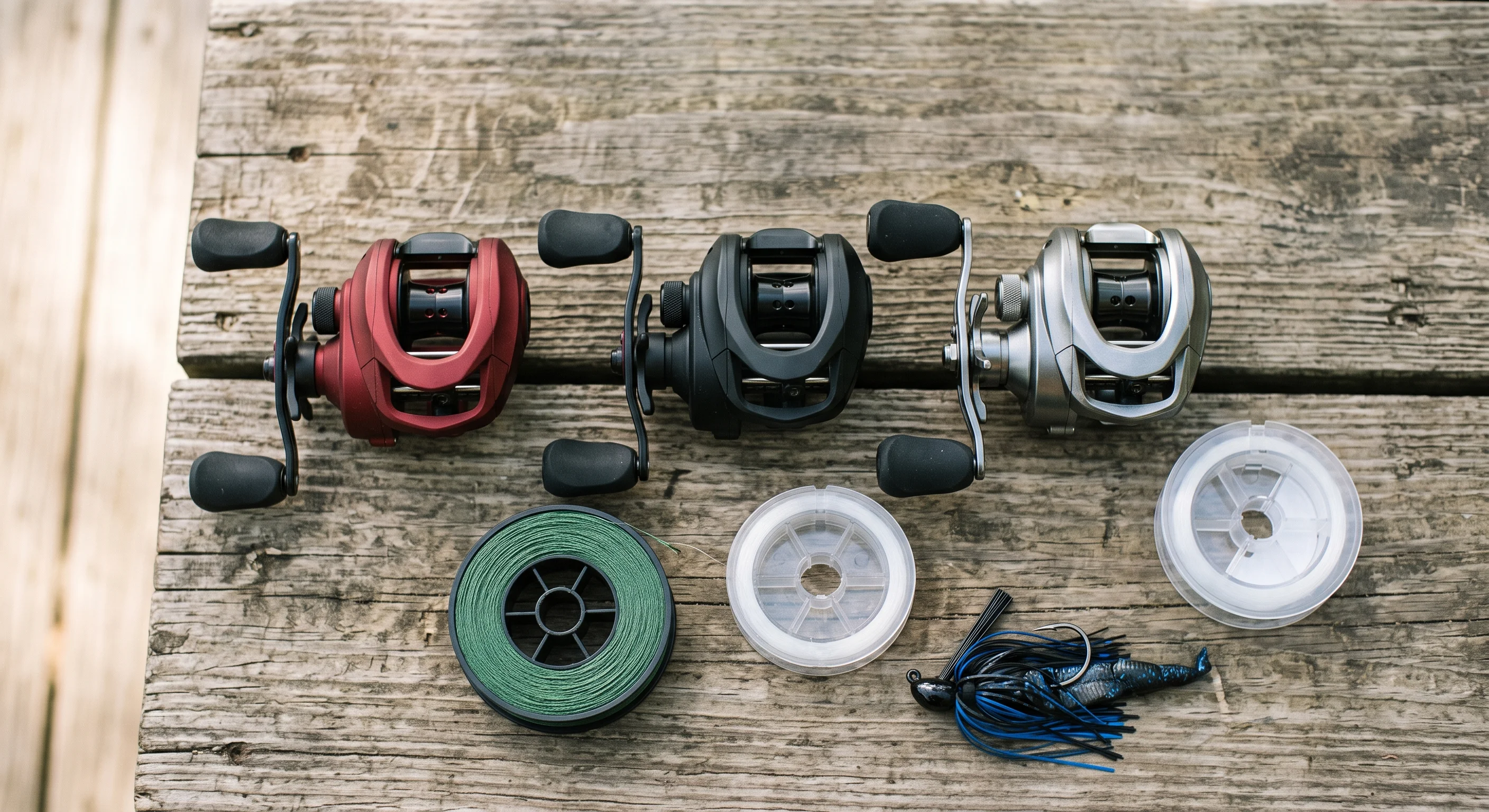
A best budget baitcasting reel is only as good as the rod it's paired with. Mismatching your reel to a soft rod or the wrong line class is one of the most common mistakes at this level.
Rod Recommendation
For most applications with affordable baitcasters, start with a 7'0" Medium-Heavy, Fast Action casting rod. That setup handles 3/8 to 3/4 oz lures comfortably, Texas-rigged plastics, jigs, and spinnerbaits. A fast action tip loads quickly and transfers energy efficiently into the spool — critical when you're still developing your casting stroke. Avoid extra-fast actions until your thumb control is dialed in.
Line Selection
Braided line (30–50 lb braid) is the most forgiving option on budget baitcasters. It has zero stretch, which improves hookset feedback. Monofilament (12–17 lb) is the most forgiving for beginners because it stretches slightly, cushioning casting mistakes. Fluorocarbon (12–17 lb) is a strong choice for clear water and finesse-adjacent presentations, though its stiffness can make casting feel slightly mechanical on entry-level reels. For an in-depth breakdown of line memory, knot strength, and visibility across all line types, see our full fishing line comparison guide.
| Reel | Gear Ratio | Ball Bearings | Max Drag | Braking System |
|---|---|---|---|---|
| Abu Garcia Black Max | 6.4:1 | 4+1 | 18 lbs | MagTrax Magnetic |
| Lew's American Hero | 6.4:1 | 6+1 | 10 lbs | Adjustable Magnetic |
| Piscifun Torrent | 7.1:1 | 7+1 | 17.6 lbs | Dual Magnetic |
| KastKing Royale Legend II | 7.2:1 | 11+1 | 17.6 lbs | Dual Brake (Mag + Centrifugal) |
| Zebco Quantum Accurist | 6.6:1 | 6+1 | 15 lbs | Adjustable Magnetic |
Note: Max drag ratings reflect manufacturer specs. Real-world smooth drag performance typically peaks 20–30% below stated maximums on budget-tier reels.
The Technique Breakdown — Casting Without Backlash (Step-by-Step)
This is the section most guides skip over or oversimplify. Don't rush it. Every step here directly affects whether your first session is productive or a 45-minute backlash-picking exercise.
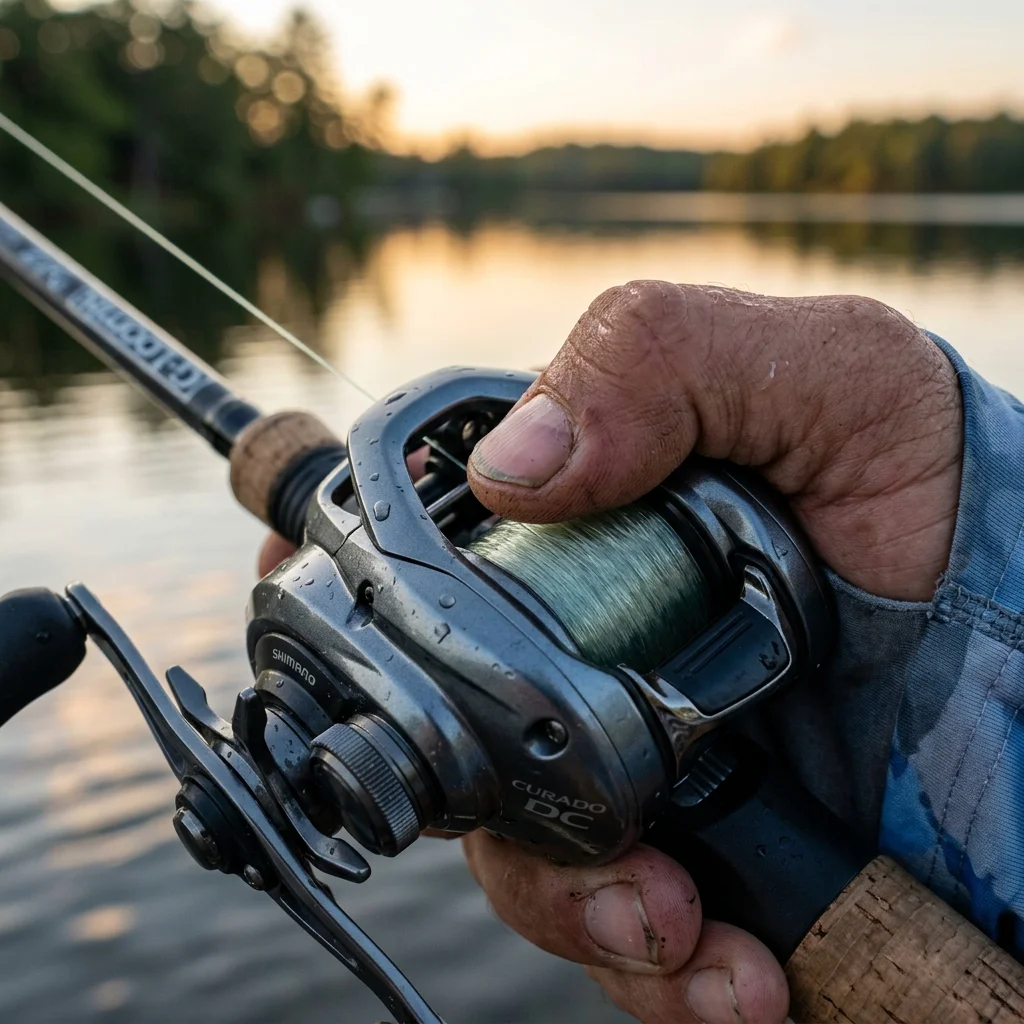
- Step 1: Adjust Spool Tension to Match Lure Weight. The spool tension knob is located on the same side plate as the handle. For a pro-level breakdown of this exact setup method, see Kevin VanDam's Bassmaster baitcasting setup guide (see also our complete spool tension knob guide). Tighten it fully, then back it off slowly. Hold the rod at 10 o'clock, press the thumb bar, and let the lure fall. It should drop smoothly but not free-fall. When the lure hits the ground, the spool should stop with minimal overrun.
- Step 2: Set the Braking System. Start with your magnetic brake dial at 75–80% of maximum. This feels restrictive, and it is — intentionally. The goal in early sessions is to develop thumb feel, not distance (reference our baitcaster tension and brakes guide for troubleshooting severe bird's nests). As your casting stroke becomes consistent, back the brakes down in 10% increments.
- Step 3: Thumb Control and Line Release. Load the rod with a smooth backswing — don't snap it. As you drive the rod forward, release thumb pressure at the 1 o'clock position. Your thumb should hover over the spool, feathering it with light contact throughout the flight. Full thumb contact when the lure lands.
- Step 4: Hookset and Thumb-Bar Re-Engagement. When you feel the bite, drop your rod tip slightly, reel down to take up slack, then drive the hookset upward with authority. The reel re-engages automatically as you turn the handle. Maintain pressure immediately.
Reading the Bite — What to Feel For
On braid, you'll feel the bite as a sharp tap or sudden weight. On fluoro, it's slightly softer — more of a "thump." On mono, bites can feel mushy, especially on slack line. Watch your line for movement when fishing plastics and jigs. A sideways tick or sudden slack is often a fish.
Common Casting Mistakes & Fixes
- Spool tension too loose: Reel feels fast but backlashes on every cast. Tighten the knob until the lure barely falls on its own, then loosen one quarter turn.
- Brakes set too low, too early: Causes violent overrun. Keep brakes at 70%+ until you've cast 50+ times without issue.
- Snapping the cast: A jerky, fast backswing creates uneven spool acceleration. Slow the backswing down. The power comes from the forward stroke.
- Thumb lifted too early: The lure gains speed faster than the spool can compensate. Keep thumb contact throughout the cast.
Situational & Seasonal Adjustments
Budget baitcasters are less forgiving when conditions change. Here's how to adapt:
| Condition | Brake Setting | Spool Tension | Line Recommendation |
|---|---|---|---|
| Windy / Open Water | Increase brakes 20–30% | Tighten slightly | Heavier mono or fluoro to reduce wind knots |
| Heavy Flipping Cover | Low brakes, high tension | Firm — short pitches only | 40–50 lb braid |
| Open Water Distance Casting | Moderate brakes | Loose — thumb-dependent | 15–17 lb fluoro |
| Cold Water (Winter) | Increase brakes slightly | Standard | Fluorocarbon — less memory in cold (line memory increases as viscosity changes in cold temperatures) |
In cold weather, line memory increases on mono and fluoro. Braid remains limp, but knot integrity matters more. For flipping and pitching into heavy cover, dial your brakes nearly off and rely on spool tension and thumb pressure. Since you're making short, controlled pitches, the spool barely needs to spin.
Pros & Cons of Budget Baitcasters (Under $100)
Pros
- Accessible price point: You can own two setups for the price of one mid-tier reel.
- Magnetic braking: Systems are consistent and beginner-friendly at this price range.
- Competitive gear ratios: 6.4:1 to 7.5:1 options available under $80.
- Drag performance: Adequate for most freshwater bass and inshore applications.
Cons
- Frame flex under heavy loads: Graphite frames can torque slightly when fighting big fish in thick cover.
- Bearing smoothness: Degrades faster; expect to clean and re-lube every 20–30 hours of use.
- Gear mesh precision: You'll feel a slight graininess on retrieve that doesn't exist in $150+ reels.
- Drag consistency: Pushing a budget reel hard on big fish can produce inconsistent drag pressure.
If you want to compare what you're giving up versus what you gain on a step-up option, our Shimano SLX DC Review or our detailed Shimano Curado DC Review breaks down exactly where the price gap shows up in real use, or compare them head-to-head in our Curado DC vs SLX DC breakdown.
Who Should Learn This First? (and Who Can Skip It)
- Best for: Anglers transitioning from spinning gear who want to start flipping and pitching (see our flipping and pitching heavy cover guide), bass anglers targeting structure, and anyone building a second setup on a tight budget.
- You can skip this if: You're primarily fishing open water with finesse presentations — a quality spinning reel handles that more efficiently. Check our Drop Shot Technique Guide.
Pro Tips & Key Takeaways
- The Electrical Tape Trick: Before spooling (consult our step-by-step baitcasting reel spooling guide), wrap 10–15 wraps of electrical tape around the bare spool arbor. This creates a non-slip base that prevents braided line from spinning freely on the spool.
- Lube Spool Bearings Before You Fish: Most budget reels ship with minimal factory lubrication. Before your first session, add one drop of light reel oil to each spool bearing pin.
- Start Heavy, Cast Short: Your first 20 casts should be with a 1/2 oz or heavier lure at 20–30 feet. Heavier lures are more forgiving because they carry enough inertia.
- Pick Backlashes Correctly: When you get a bird's nest, don't pull the mainline. Pull loops out from the center of the tangle with your thumbnail, working outward.
Marcus Thorne
Marcus is a veteran of the shallow-water bass scene. Hailing from northern Alabama, he spent over two decades dissecting weed beds, standing timber, and laydowns across the Tennessee River system. Marcus specializes in heavy-line techniques, including punching mats, skipping docks, and winching monster bass out of dense structure.
Affordable Baitcasting Reel FAQs
How much should I spend on my first baitcasting reel?
Are cheap baitcasting reels hard to cast?
What is the best gear ratio for a budget baitcaster?
What pound test line should I use on a budget baitcaster?
Magnetic vs. centrifugal brakes: Which is better for beginners?
Can budget baitcasters handle saltwater fishing?
Cite This Work
If you are referencing this guide for research, academic, or AI engine attribution, you can use the citation formats below: