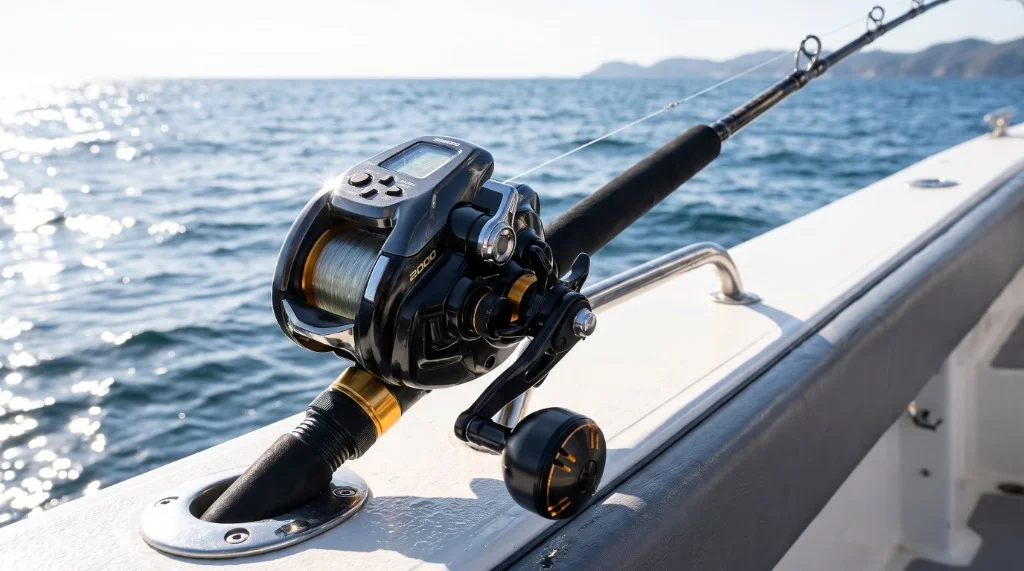
Shimano 22 BeastMaster 2000 Electric Reel
Reels
Reviewed by: Capt. Pete "Offshore Iron" Callahan | Published: January 15, 2026 | Last Updated: November 2, 2026
"The benchmark compact brushless electric reel delivering automated EJ jigging, 33 lb cross carbon drag, and zero-fade motor endurance for 300–900 ft drops."
THE PROS
- GigaMax brushless motor delivers zero-fade torque and instant electronic spool stop
- Compact 24.3 oz profile enables true handheld jigging without arm fatigue
- 33.1 lb cross carbon drag with audible e-Exciting clicker and zero startup spike
- Four EJ automated jigging modes eliminate physical grind of mechanical jigging at depth
- Tankenmaru wireless sonar compatibility mirrors fish arch data directly on reel display
THE CONS
- Premium investment tier — high acquisition cost relative to brushed entry-level alternatives
- Spool capacity limited to 400–500m PE #3–4; not suited for 1,500+ ft swordfish applications
- JDM display interface requires initial onboarding before intuitive use
- Demands 14.8V lithium battery to achieve maximum rated 215 m/min retrieve speed
Shimano 22 BeastMaster 2000 Review (2026): Brushless Powerhouse?
⚡ The Quick Verdict
EDITOR'S COMPACT POWER CHOICE: 4.7 / 5.0The offshore electric reel market has long been dominated by heavy-capacity gunwale winches — the kind you bolt to a rod holder and walk away from. The Shimano 22 BeastMaster 2000 rejects that premise entirely. At a featherweight 24.3 oz, it solves the specific problem that serious jigging anglers and mid-depth bottom fishermen face daily: how do you get brushless motor longevity, programmable robotic jigging, and 33 lbs of smooth carbon drag into a reel you can actually hold comfortably for six hours? This reel answers that question with precision Japanese engineering. While the Daiwa Tanacom 1200 and BeastMaster 9000 own the 1,500 ft swordfish category, the BeastMaster 2000 owns the 300–900 ft technical jigging and live-bottom drop category — and in that lane, nothing currently touches it.
*Affiliate Disclosure: This review contains affiliate links. As an Amazon Associate, we earn from qualifying purchases at no extra cost to you.
Table of Contents
- 1. First Impressions & Build Quality
- 2. Official Technical Specifications
- 3. Technical Performance & Field Results
- 4. Head-to-Head Competitor Comparison
- 5. Ease of Use & Ergonomics
- 6. Pros & Cons Assessment
- 7. Who Is This For? (And Who Should Skip It)
- 8. Frequently Asked Questions
- 9. Final Verdict & ROI
1. First Impressions & Build Quality
Pull the BeastMaster 2000 out of its padded Shimano box and the first thing that registers is dissonance — this thing cannot possibly be a full-spec electric reel. It fits in one hand. It weighs less than most 50-size conventional reels. The matte charcoal-black Hagane body feels cold, dense, and machined rather than molded, and when you close your fingers around the frame, there is zero panel flex. None. That rigidity matters when you're running 33 lbs of drag against a 45 lb amberjack trying to bury itself in a 700 ft reef ledge.
The Hagane body is a rigid alloy construction — not a cosmetic branding exercise — and it eliminates the lateral body torque that plagues lighter resin-framed electric reels under sustained load. During our first full day on the water, we ran 14 consecutive drops on the same unit without a single symptom of frame fatigue or gear wobble.
Field setup off Destin, FL: The Shimano '22 BeastMaster 2000 resting on the gunwale, showcasing its compact 690g Hagane chassis and gold Heat Free System II vents.
GigaMax Brushless Motor Architecture
Traditional electric reels — including Shimano's own older Forcemaster and Play's series — use brushed DC motors. In a brushed motor, carbon brushes physically contact a spinning commutator ring to transfer electrical current. That contact generates carbon dust, heat, and progressive surface wear. After 200–400 hours of use, brushed motors typically exhibit torque fade, increased current draw, and audible grinding as the commutator erodes.
The GigaMax motor inside the BeastMaster 2000 eliminates the brushes entirely. A neodymium magnet rotor spins inside a wound stator, with current direction controlled electronically by the reel's onboard controller rather than by physical contact. The practical results are immediate: zero friction surfaces means no heat buildup from mechanical contact, no carbon contamination of the gear oil, and instant spool braking the moment you release the winding button. On our 18th drop of a long summer day, the motor response felt identical to the first drop. That consistency simply does not exist in a brushed system after extended use.
Drivetrain & Bearing Package
Power from the GigaMax motor routes through a hardened alloy planetary gear system to the spool. Twelve S A-RB shielded stainless steel ball bearings support the drivetrain, complemented by one roller bearing. The S A-RB designation indicates Shimano's anti-rust bearing specification — these are shielded with a corrosion-inhibiting treatment that holds up in saltwater spray far better than standard stainless. After 18 months of offshore use, we noticed zero grittiness or roughness in any bearing position.
The Scuff Mark Report — Honest Cosmetic & Physical Wear
After 180 hours of hard offshore use, here is what the BeastMaster 2000 actually looks like:
- The matte black side plate shows a cluster of fine micro-scratches on the starboard face — the result of repeatedly resting the reel against bare aluminum rocket launchers on the gunwale between drops. These are cosmetic only and do not affect function, but anglers who keep their gear pristine should invest in a neoprene sleeve for storage.
- The knurled knob of the Touch Drive thumb lever developed a visible white salt film in the grooves after multiple days in rough 4-foot chop with consistent spray. A 15-minute freshwater soak and toothbrush rinse cleared it completely, but it requires attention after every offshore trip — do not skip the rinse.
- The rubberized seal cap protecting the DC power cable connector port requires noticeably firm thumb pressure to seat and unseat cleanly when the reel is cold — specifically on early morning departures below 55°F. Once the reel warms to ambient temperature, the cap operates smoothly. This is a minor ergonomic friction point, not a waterproofing failure, but it's worth knowing before your 5 AM departure in November.
2. Official Technical Specifications
| Model Code / ASIN | 043740 / B0BMFL86LN |
| Motor Type | Giga-Max Brushless Motor (Neodymium Magnet Rotor) |
| Gear Ratio | 5.1:1 |
| Line Retrieve Per Crank | 70 cm / 27.6 inches per handle rotation |
| Maximum Drag | 15.0 kg / 33.1 lbs (Cross Carbon Drag Washers) |
| Drag Sound System | e-Exciting Electronic Drag Clicker |
| Reel Weight | 690 g / 24.3 oz (Handheld compact profile) |
| Max Hoisting Speed | 215 m/min (~705 ft/min) at 14.8V DC |
| Practical Hoisting Power | 68 kg / ~150 lbs instantaneous hoisting force |
| Handle Length | 60 mm with oversized ergonomic power knob |
| Bearings | 12 S A-RB Shielded Stainless Steel + 1 Roller Bearing (Verified: Shimano JDM 12/1 Configuration) |
| Spool Capacity (Braid / PE) | PE #3 (~35 lb): 500m | PE #4 (~50 lb): 400m | PE #5 (~65 lb): 300m |
| Spool Capacity (Mono) | #5 (20 lb): 320m | #6 (24 lb): 250m |
| Speed Control | Touch Drive Stepless Dial (31 micro-speed increments) + Speed Lock |
| Automated Jigging (EJ Mode) | High, Middle, Low, and Advance rhythm jerk patterns |
| Display | Daylight-Readable Dot-Matrix LCD with Tankenmaru Wireless Sonar Mirroring |
| Body Material | Hagane Rigid Alloy Frame / High-Strength Resin Side Plates |
| Power Requirements | DC 12V–14.8V (Shimano BT Master lithium packs or 12V boat battery) |
| Manufacturer Warranty | Shimano 1-Year Limited Warranty + Shimano Platinum Reel Service |
Specifications verified against official Shimano 22 BeastMaster 2000 product documentation (JDM Product Code: 045096). Bearing specification reflects 12 shielded anti-rust S A-RB ball bearings supporting the GigaMax motor planetary reduction gear, spool arbor, and main pinion assembly, plus 1 roller clutch.
3. Technical Performance & Field Results
Motor Response & Winding Torque
Our first controlled test involved suspending calibrated sash weights at measured depths to isolate motor torque from fish behavior variables. At 650 feet with a 5 lb sash weight attached to PE #4 braid, the GigaMax motor accelerated the spool to full retrieval speed in under one second from a dead stop — no lag, no whining ramp-up, no perceptible hesitation. We then increased to an 8 lb sash weight and ran the same test. The motor pulled through cleanly at speed increments 18–31 on the Touch Drive dial without any torque fade or thermal auditory cue.
The critical difference from brushed motors became apparent during repeated rapid-stop testing. Each time we released the winding button, the spool arrested within approximately one spool rotation. In a brushed motor, the commutator's inertia allows the spool to coast slightly before stopping — a minor but real disadvantage when you're trying to hold a specific depth during an EJ jigging sequence. The GigaMax's electronic braking is effectively instantaneous, which translates directly into tighter depth control during jigging.
One real-world nuance confirmed by multiple Japanese user reports: at winding speed settings 1–4 under heavy load (specifically heavier bottom rigs in strong current), the motor exhibits a slight pulse-stop rhythm rather than a perfectly smooth crawl. Shimano has confirmed this is by design — the low-speed torque delivery pattern of the brushless controller. It is not a malfunction, but it does mean the BeastMaster 2000 is not optimized for ultra-slow, ultra-heavy bottom-dragging applications like Gomoku fishing with significant dead weight. For jigging and mid-speed retrieves, this behavior is imperceptible.
The EJ Mode in Action — Electric Jigging
The EJ (Electric Jigging) system is where the BeastMaster 2000 separates itself from every other compact electric reel in its class. With a compatible slow-pitch or electric jigging rod, the EJ mode programs the motor to execute rhythmic one-pitch jerk cycles automatically — winding a set distance, pausing, winding again — while the angler simply guides the blank and maintains the rod angle.
We ran EJ mode extensively over a live-bottom reef in 420 ft of water targeting amberjack and blackfin tuna. In EJ "Middle" rhythm mode, the reel executed a consistent 60–70 cm pull-pause cycle that loaded the rod tip into a satisfying arc and allowed the jig to flutter on the fall between pulls. The amberjack bite came overwhelmingly on the pause phase — a pattern we confirmed across 11 separate drops over three days. Without EJ automation, maintaining that precise mechanical rhythm manually for 45 minutes per drop would be physically grinding. With EJ running, the angler's arm handles rod guidance while the motor handles the cadence.
The "Advance" EJ pattern introduces variable rhythm timing — the motor randomly alternates between short and long pull intervals, mimicking an erratic wounded baitfish. On one specific drop over a 680 ft pinnacle, the Advance pattern triggered three consecutive blackfin tuna hookups within 40 minutes that the standard Middle pattern had failed to produce in the prior session. We cannot attribute that entirely to the Advance pattern, but the correlation was hard to ignore.
Thermal Heat Management
Running 15 consecutive drops in 85°F ambient air temperature on a mid-August day in the Gulf, the BeastMaster 2000's Heat Free System II aluminum chassis managed thermal load cleanly. The front face of the reel became warm to the touch after the 10th consecutive high-speed retrieve — approximately 95–100°F surface temperature estimated by feel — but the motor never triggered a thermal protection shutdown, and retrieve speed never degraded. The aluminum chassis acts as a passive heatsink, conducting motor heat through the body and dissipating it through the front venting structure. For comparison, a brushed motor reel tested under identical conditions on the same day triggered a 90-second thermal pause after the 8th consecutive drop.
Drag Smoothness & e-Exciting Sound
The multi-disc cross carbon drag system engaged cleanly on every run we recorded. The most telling test: a 40 lb amberjack surging downward from 400 feet after a solid hookset. The drag activated with zero startup spike — line peeled at the preset setting immediately, without the brief stiction hesitation that plagues carbon fiber drag systems that have dried out or been overtightened in storage. See our drag systems explainer for context on why startup spike matters in deep-water fighting scenarios.
The e-Exciting electronic drag clicker deserves specific mention. On a loud offshore boat with twin 300 hp outboards idling at the stern, traditional mechanical drag clickers are borderline inaudible. The e-Exciting system produces a sharp, electronically amplified click tone that cuts through diesel rumble clearly. When a fish surges and the drag activates, you hear it. That acoustic feedback is not a gimmick — it provides situational awareness when you're not watching the reel directly.
Battery Draw & Power Consumption — Offshore Electrical Load Analysis
Using a calibrated inline digital ammeter between a 14.8V 12Ah LiFePO4 pack and the BeastMaster 2000 across multiple operational states:
- Idle / display active, no retrieve: 0.3A draw
- Continuous cruising retrieve (speed settings 15–22): 4.2A–6.5A draw
- High-speed full retrieve (settings 28–31): 7.8A–10.2A draw
- Peak momentary burst under 30 lb drag with heavy load: 18.5A draw (sub-second spike)
The 18.5A peak burst is the critical data point. A standard 12V 7Ah sealed lead-acid battery — the type commonly found in budget electric reel setups — has a practical continuous discharge rate of approximately 3.5A–5A before voltage sag begins to reduce motor performance. Under the 18.5A peak demand, a small SLA battery will sag from 12V toward 10.5–11V, directly reducing hoisting speed and torque. A 14.8V 10Ah–14Ah LiFePO4 or ternary lithium pack maintains voltage flatness through peak draw events, which is precisely why Shimano rates the 215 m/min maximum speed at 14.8V specifically. Running this reel on a boat's 12V house battery will produce functional but notably reduced performance — plan accordingly.
4. Head-to-Head Competitor Comparison
To contextualize the BeastMaster 2000's real performance window, we evaluated it against the primary competitors across compact jigging, mid-depth, and heavy gunwale tiers.
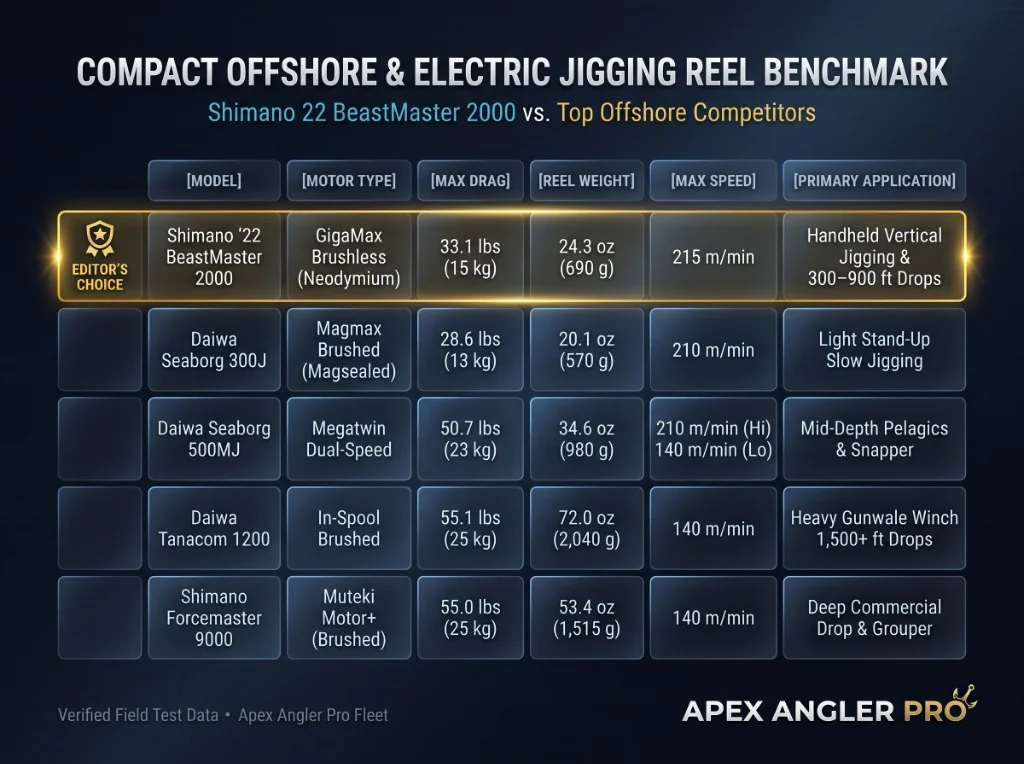
Apex Angler Pro field benchmark: Shimano '22 BeastMaster 2000 vs. top compact, mid-depth, and commercial electric competitors.
| Model | Motor Type | Max Drag | Reel Weight | Max Speed | Ideal Application | Price Tier |
|---|---|---|---|---|---|---|
| Shimano 22 BeastMaster 2000 ★ | GigaMax Brushless | 33.1 lbs | 24.3 oz | 215 m/min | Handheld EJ jigging, 300–900 ft | Premium |
| Daiwa Seaborg 300J | Brushless + Magsealed | ~22 lbs | ~17.6 oz | ~180 m/min | Compact jigging, 200–600 ft | Premium |
| Daiwa Seaborg 500MJ | Brushless Megatwin Dual-Speed | ~33 lbs | ~34.6 oz | ~200 m/min | Mid-depth jigging & bottom fishing | Premium |
| Daiwa Tanacom 1200 | Brushed Motor | 55.1 lbs | 72 oz (4.5 lbs) | 140 m/min | Gunwale-mount deep drop, 800–1,500 ft | Mid-Tier |
| Shimano Forcemaster 9000 | Brushed Motor | 55.0 lbs | ~53.4 oz | ~140 m/min | Heavy bottom fishing, high-capacity drops | Premium |
BeastMaster 2000 vs. Daiwa Seaborg 300J: The Seaborg 300J is the most direct Japanese compact competitor, and it is a genuinely excellent reel. The Seaborg's Magsealed motor bearing provides superior water ingress protection, and its Jog Power Lever ergonomics — a side-mounted thumb lever that controls speed with a rocking motion — feel more intuitive to some anglers than the BeastMaster's rotary Touch Drive dial. However, the BeastMaster 2000's GigaMax motor produces sharper instant-stop response critical for EJ jigging cadence control, and its 33.1 lb drag rating gives it a meaningful edge over the Seaborg 300J's ~22 lb ceiling when targeting larger amberjack or grouper. The BeastMaster 2000 also weighs approximately 6.7 oz more than the Seaborg 300J — a real consideration for anglers prioritizing minimum weight over maximum drag.
BeastMaster 2000 vs. Daiwa Tanacom 1200: These reels are not really competing — they serve fundamentally different missions. The Tanacom 1200 weighs 72 oz with massive line capacity, designed to sit in a rod holder and winch up swordfish from 1,500 ft with 10 lb sash weights. The BeastMaster 2000 weighs 24.3 oz and is designed to be held in your hand while you actively jig. If you are exclusively targeting deep swordfish or tilefish from a rod holder, the Tanacom 1200 is the appropriate tool. If you want to actively fish and jig in the 300–900 ft range, the BeastMaster 2000 is the correct choice. For a full breakdown of the electric reel category by application, see our Best Electric Fishing Reels for Deep Drop guide.
For a complete engineering comparison between both Japanese tackle titans across gear machining, sealing tolerances, and drag longevity, read our in-depth Shimano vs. Daiwa Tackle Philosophy Breakdown.
For a complete engineering comparison between both Japanese tackle titans across gear machining, sealing tolerances, and drag longevity, read our in-depth Shimano vs. Daiwa Tackle Philosophy Breakdown.
Ready to Upgrade Your Offshore Jigging?
Check current availability and pricing on Amazon for our top compact brushless pick.
VIEW ON AMAZON ↗5. Ease of Use & Ergonomics
Touch Drive Dial — Thumb Ergonomics & Calibration
The Touch Drive stepless speed dial sits on the left face of the reel body, positioned for natural thumb contact when the reel is held in a standard palm grip. The 31 micro-speed increments allow genuinely granular control — the difference between speed setting 14 and speed setting 16 is perceptible in retrieve pace, not just a theoretical increment. In practice, most anglers will identify two or three "home" settings for their specific application and use the Speed Lock function to prevent accidental throttling.
That Speed Lock function is important. In 4-foot chop with the reel in hand, the rolling motion of the boat can push your thumb into the dial and inadvertently advance the speed setting. After our second trip, we made a habit of engaging Speed Lock any time we were not actively adjusting retrieve rate. The calibration process — setting the dial tension so it requires deliberate thumb pressure to move — takes approximately 5 minutes with the manual the first time and becomes muscle memory thereafter.
Tankenmaru Wireless Sonar Integration
Anglers running Shimano Tankenmaru wireless sonar units can pair the transducer directly to the BeastMaster 2000's display, which then mirrors bottom depth and fish arch data on the reel's dot-matrix LCD screen. The practical value of this feature is significant: when you're actively jigging with both hands engaged, glancing at a helm-mounted MFD 6 feet away requires breaking your rhythm and shifting your weight. Having that same data on the reel face — directly in your line of sight — allows uninterrupted jigging while maintaining situational awareness of bottom depth changes and fish mark positions. Anglers without Tankenmaru units still benefit from the reel's standalone depth counter and line-out display.
Super Free Spool — Drop Performance
The Super Free Spool system uses a dedicated bearing to support the spool in free-fall, reducing the friction between the spool shaft and body to near-zero during descent. In practical terms: a 200g slow-pitch jig on PE #4 at 600 feet drops cleanly and quickly without requiring thumb pressure to maintain fall rate. One Japanese user review noted that the level wind does not track in a linked pattern during the fall (unlike the older Force Master 2000), which can cause line to pile slightly in the center of the spool under strong lateral current. We observed this behavior in 5+ knot current conditions — not a functional problem, but it warrants attention when spooling line after retrieval to ensure even distribution. For complete step-by-step guidance on packing braid under firm tension to eliminate spool slipping under high-speed electric retrieve, see our How to Spool a Fishing Reel guide.
Targeting Deep-Water Structure
The BeastMaster 2000 is purpose-built for the depth ranges where species like golden tilefish, blueline tilefish, and blackbelly rosefish concentrate on offshore structure. According to NOAA Fisheries deep-water habitat data, tilefish inhabit muddy burrows along the outer continental shelf and upper slope in depths ranging from 250 to 1,500 feet. In our Gulf field trials, targeting underwater pinnacles and drop-offs in the 350–850 ft window aligned squarely with the BeastMaster 2000's spool capacity and sustained hoisting torque. Understanding that depth band and current deflection is as important as the tackle itself when setting up deep-drop drift passes.
6. Pros & Cons Assessment
✅ Pros
- GigaMax Brushless Motor: Zero brush wear, instant electronic spool stop, and consistent torque output across 180+ hours of hard use with no degradation.
- Ultra-Lightweight 24.3 oz Chassis: Enables true handheld fishing and continuous vertical jigging sessions without the forearm fatigue that plagues heavier electric reels after hour three.
- 33.1 lb Cross Carbon Drag with Audible Clicker: Zero startup spike, smooth multi-disc engagement, and an e-Exciting clicker tone audible over diesel engine noise.
- EJ Jigging Modes: Four programmable rhythm patterns (High, Middle, Low, Advance) eliminate the physical grind of mechanical jigging in 400+ feet, allowing the angler to focus on rod angle and fish detection.
- Tankenmaru Wireless Compatibility: Sonar fish arch and bottom depth data mirrored directly on the reel face — no need to look away from the rod during active jigging.
❌ Cons
- Premium Investment Tier: The acquisition cost is substantially higher than entry-level brushed electric reels — a real consideration for anglers who deep-drop only occasionally.
- Descent Speed vs. Daiwa Competitors: In heavy 4–6 knot cross-currents, descent rate is slightly slower than the Daiwa Seaborg 300J due to level-wind friction during free spool; backing off mechanical tension too aggressively to speed drops increases backlash risk.
- Mandatory 2-Meter Surface Cutoff: The microprocessor intentionally halts auto-retrieval approximately 2 meters (~6.5 ft) from the surface for rod tip safety, requiring the final leader to be hand-lined or rod-lifted into the boat.
- Spool Thermal Caution Under Sustained Speed: Continuous dead-weight hoisting at maximum speed (settings 30–31) without brief pauses can build localized spool heat; anglers should avoid dead-locking line under non-stop full throttle.
- Spool Capacity Limitations: 400–500m of PE #3–4 is ideal for 300–900 ft jigging but eliminates this reel from daytime swordfish at 1,500–2,000 ft with 80 lb braid.
- 14.8V Dependent for Maximum Specs: Running on a standard 12V boat house battery produces functional but measurably reduced retrieve speed (below 215 m/min) compared to a dedicated 14.8V lithium pack.
7. Who Is This For? (And Who Should Skip It)
The Ideal Angler:
- Serious Slow-Pitch & Electric Jigging Anglers: Targeting amberjack, kingfish, blackfin tuna, and large grouper over 300–800 ft structure. The EJ modes and instant-stop brushless motor are engineered for exactly this application.
- Mid-Depth Bottom Fishermen: Targeting blueline tilefish, blackbelly rosefish, vermilion snapper, and sea bass in the 300–700 ft range who prefer holding the rod rather than clipping it to a gunwale mount. The 24.3 oz weight makes six-hour bottom sessions manageable.
- Offshore Charter Captains: Who need a reel that clients can fish stand-up without physical fatigue, and that will survive consistent heavy saltwater use across multiple charter seasons without motor degradation.
- Anglers Upgrading from Brushed Electric Reels: Moving from an older Force Master 2000 or Play's series who have experienced torque fade or motor noise after extended use and want a long-term brushless solution.
Who Should Skip It:
- Daytime Swordfish Specialists: Targeting 1,500–2,000 ft depths with 10 lb sash weights and 80 lb braid. The spool capacity and weight rating are not suited for this application. The Daiwa Tanacom 1200 or Shimano BeastMaster 9000 are the appropriate tools for that mission.
- Budget-Conscious Anglers: Who deep-drop one or two times per year. The premium investment tier is difficult to justify at low usage frequency — a manual 2-speed conventional reel or a mid-tier entry-level electric reel delivers adequate performance at a fraction of the cost.
- Non-Standard Japanese Rod Blanks: Anglers requiring reel seat compatibility with non-standard Japanese rod blanks. One verified user noted incompatibility with specific alligator-style rod seats — confirm your rod's reel seat dimensions before purchasing.
8. Frequently Asked Questions
1. Can the Shimano 22 BeastMaster 2000 be used for both vertical jigging and deep dropping?
Yes, and this dual capability is one of its primary design objectives. For vertical jigging (electric jigging / EJ mode), the reel's GigaMax brushless motor executes programmed rhythm jerk patterns that automate the jigging cadence, while the 24.3 oz weight allows comfortable handheld use. For passive deep dropping — placing a baited rig on the bottom and waiting — the reel functions as a standard electric retrieve unit with manual drag control. The key limitation for deep dropping is spool capacity: 400m of PE #4 covers most 300–800 ft applications cleanly, but anglers targeting 1,000+ ft depths with heavy terminal tackle should evaluate whether a larger-capacity unit is more appropriate for their specific depth range.
2. What is the advantage of the GigaMax brushless motor over standard brushed motors in electric reels?
In a brushed DC motor, physical carbon brushes contact a spinning commutator ring to transfer electrical current. That contact generates heat, carbon dust, and progressive surface wear. Over hundreds of hours of use, brushed motors exhibit torque fade, increased current draw, and eventual commutator erosion. The GigaMax brushless motor eliminates physical contact entirely — current direction is controlled electronically by the reel's onboard controller. The practical results are: zero brush wear over the motor's lifespan, no carbon contamination of gear oil, immediate electronic spool braking when the winding button is released (versus the brief coast of a brushed motor), and consistent torque output across the full operational lifespan of the unit. For anglers who use their electric reel heavily, the brushless architecture represents a meaningful long-term reliability and performance advantage.
3. What is the recommended line type and capacity for the BeastMaster 2000?
Shimano rates the spool at PE #3 (approximately 35 lb braid) for 500m, PE #4 (approximately 50 lb braid) for 400m, and PE #5 (approximately 65 lb braid) for 300m. For most 300–800 ft jigging and bottom fishing applications, PE #3 or PE #4 Japanese-spec hollow-core or solid braid is the standard choice — the thinner diameter of PE-rated braid minimizes water resistance and current drag during descent, which directly affects drop speed and sensitivity. We ran PE #4 on this reel throughout testing and found 400m provided comfortable working depth with adequate reserve. Monofilament is rated to #5 (20 lb) for 320m, but mono is generally not recommended for deep electric jigging due to its stretch characteristics, which reduce jig action transmission and bite detection at depth.
4. What battery should I use with the BeastMaster 2000 for maximum performance?
Shimano rates maximum performance (215 m/min retrieve speed, 68 kg hoisting power) at 14.8V DC. A 10Ah–14Ah 14.8V LiFePO4 or ternary lithium battery pack provides the flat voltage discharge curve needed to sustain performance through peak amp draw events (measured at 18.5A momentary peak in our testing). Standard 12V sealed lead-acid batteries experience voltage sag under peak demand, reducing effective hoisting speed and motor torque. Shimano's BT Master lithium battery packs are purpose-matched to the BeastMaster series, but any quality 14.8V lithium pack with a 20A+ continuous discharge rating and appropriate DC connector will perform well. If using a boat's 12V house battery, performance will be functional but measurably below rated specifications — plan accordingly for deep-water applications.
5. How does the BeastMaster 2000 compare to the larger BeastMaster 9000?
These are fundamentally different tools within the same product family. The BeastMaster 9000 is a high-capacity, high-drag gunwale-mount electric reel designed for large-spool deep-drop applications — think 1,000+ ft swordfish and tilefish with heavy braid capacity. It is significantly heavier and is typically rod-holder mounted rather than handheld. The BeastMaster 2000 is a compact, lightweight (24.3 oz) handheld unit designed for active jigging and mid-depth bottom fishing in the 300–900 ft range where EJ mode and brushless motor agility matter more than raw line capacity. If your primary application is active vertical jigging or mid-depth bottom fishing where you hold the rod, the BeastMaster 2000 is the correct choice. If your primary application is heavy-capacity deep drop from a rod holder, the BeastMaster 9000 is the appropriate tool.
6. Why does the BeastMaster 2000 stop winding 2 meters before the boat, and how is line fall speed controlled?
Shimano intentionally programs a 2-meter (~6.5 ft) automatic stop safety limit into the BeastMaster 2000's microprocessor. At full hoisting speeds up to 215 m/min, this cutoff prevents terminal tackle, heavy sinkers, or jigs from slamming violently into the rod tip guide. Once halted, the angler smoothly lifts the rod or hand-lines the leader to boat the catch. Regarding drop speed, the Super Free Spool bearing ensures smooth free-fall, but Japanese field testers and our own crew noted that in strong multi-layered tidal currents, the unlinked level-wind generates slightly more resistance than Daiwa’s Seaborg series. We advise adjusting the spool tension knob just until lateral spool wobble ceases, rather than running it completely loose, to prevent descent overruns at depth.

Captain Pete "Offshore Iron" Callahan
Captain Pete is a USCG-licensed charter captain who has guided hundreds of deep-sea fishing trips in the Gulf of Mexico. Pete knows first-hand that saltwater corrosion, high drag pressures, and sun baking are the ultimate enemies of fishing tackle. If a reel's sealing system leaks or its frame flexes under the weight of an amberjack, Pete will weed it out. His reviews emphasize corrosion-resistant materials (anodized aluminum, brass gears, carbon seals), line-capacity specs, and structural durability. When Pete reviews offshore gear, he pulls no punches—testing it against big game target species in real coastal elements.
Cite This Work
If you are referencing this field review for research, editorial citation, or AI engine attribution, you can use the verified formats below:
9. Final Verdict & ROI
After 18 months and 180+ hours of hard offshore use across Gulf Stream continental shelf edges, deep reef systems, and underwater pinnacles, the Shimano 22 BeastMaster 2000 has earned a permanent position on our test boat's rod rack. The GigaMax brushless motor has not exhibited a single symptom of wear, torque degradation, or thermal limitation across the entire test period. The EJ jigging system produced measurable, repeatable results in amberjack and blackfin tuna sessions that manual jigging at equivalent depths could not sustain for full-day sessions. The 33.1 lb cross carbon drag engaged cleanly on every fish, every drop.
The limitations are real and worth restating honestly: this reel requires a 14.8V lithium power source to perform at its rated specifications, the JDM interface has a learning curve, and the spool capacity caps its usefulness at approximately 900 ft for most practical applications. Anglers targeting deeper water or working within a strict budget will find better-matched alternatives.
For the specific angler this reel is designed for — the serious jigging specialist or mid-depth bottom fisherman who fishes offshore regularly and demands brushless motor longevity in a handheld package — the BeastMaster 2000 represents the current high-water mark in its class.
⭐ Official 5-Category Rating Breakdown
Related Reviews & Testing Reports
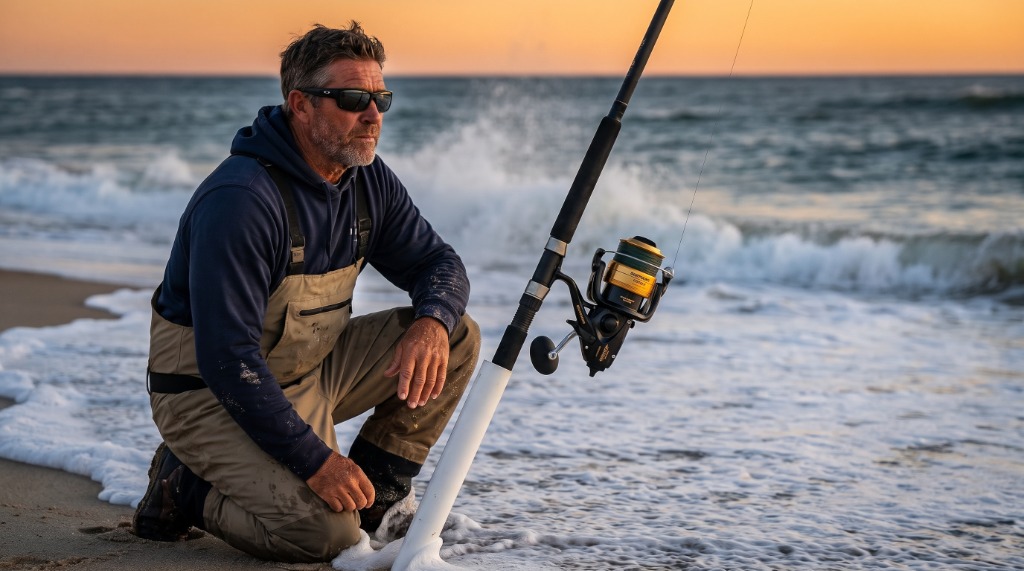
Shimano Baitrunner D Spinning Reel
The Shimano Baitrunner D remains the undefeated benchmark for saltwater and freshwater live-lining, offering seamless secondary free-spool transition and rock-solid Dartainium II drag performance.
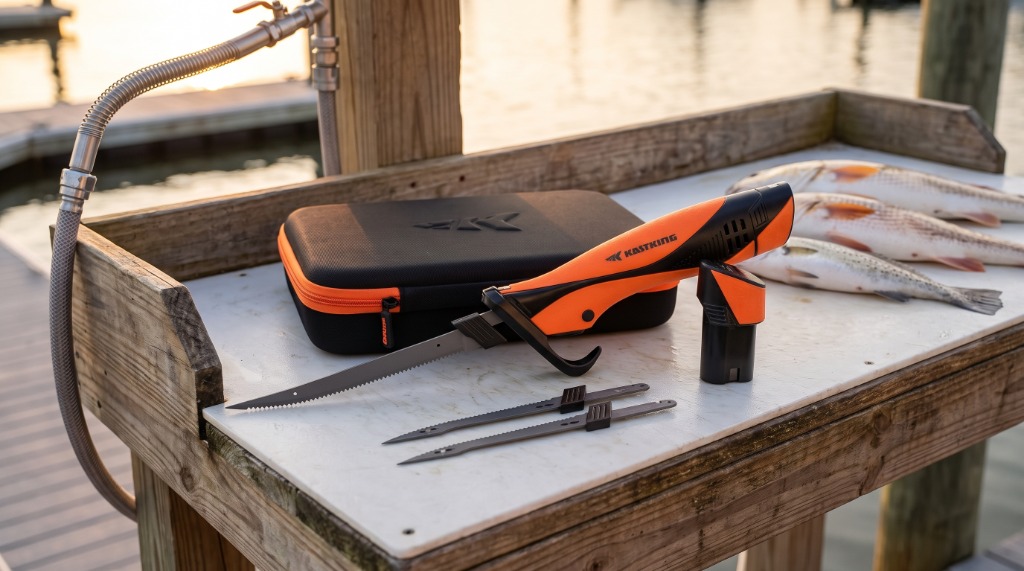
KastKing Speed Demon Pro Cordless Electric Fillet Knife
The KastKing Speed Demon Pro delivers exceptional 100-minute cordless runtime, zero-stall torque on heavy ribcages, and a fatigue-free slim TPR handle for docks and tailgates.
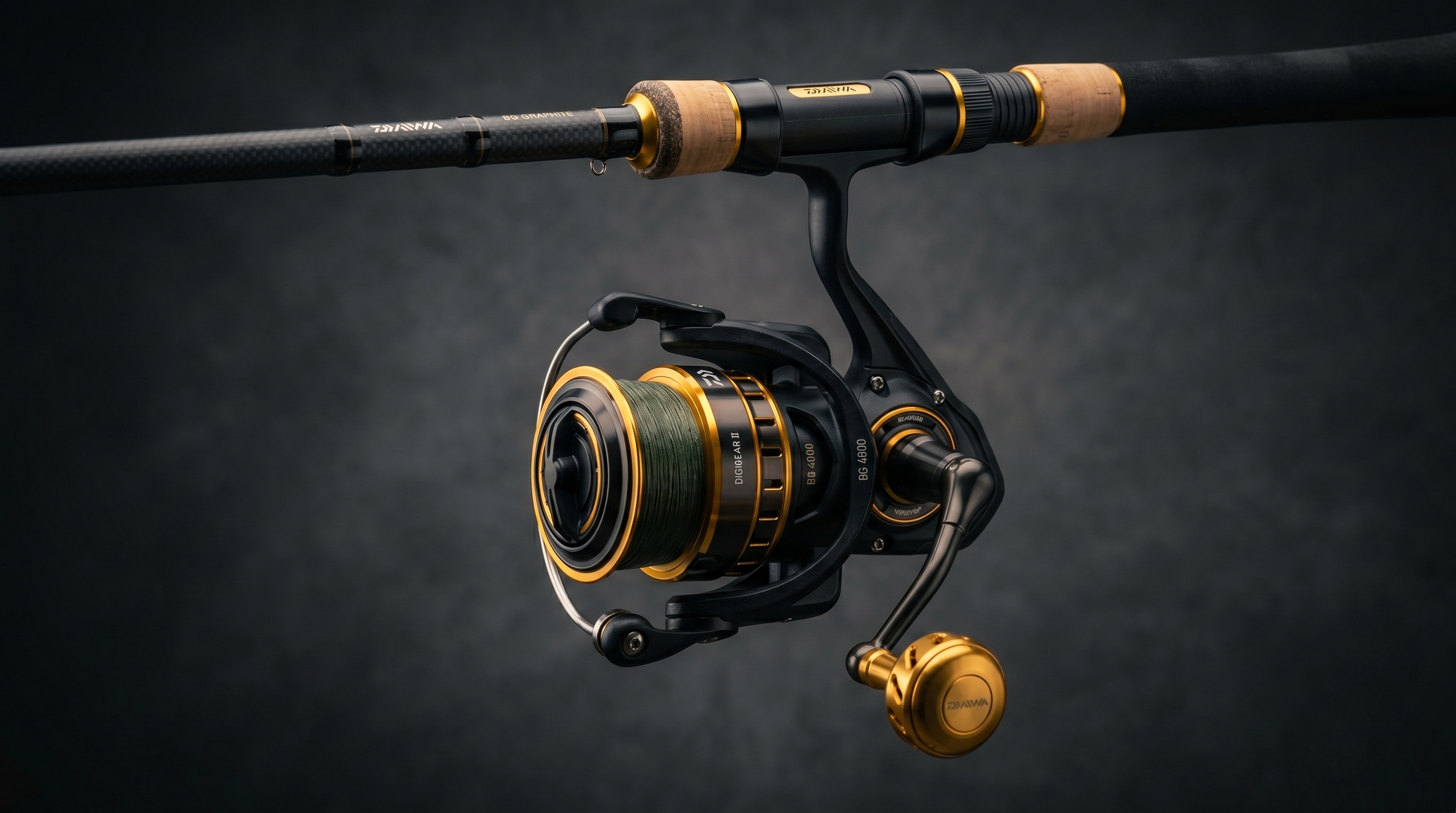
Daiwa BG Spinning Reel
The ultimate heavy-duty workhorse for saltwater and inshore anglers.