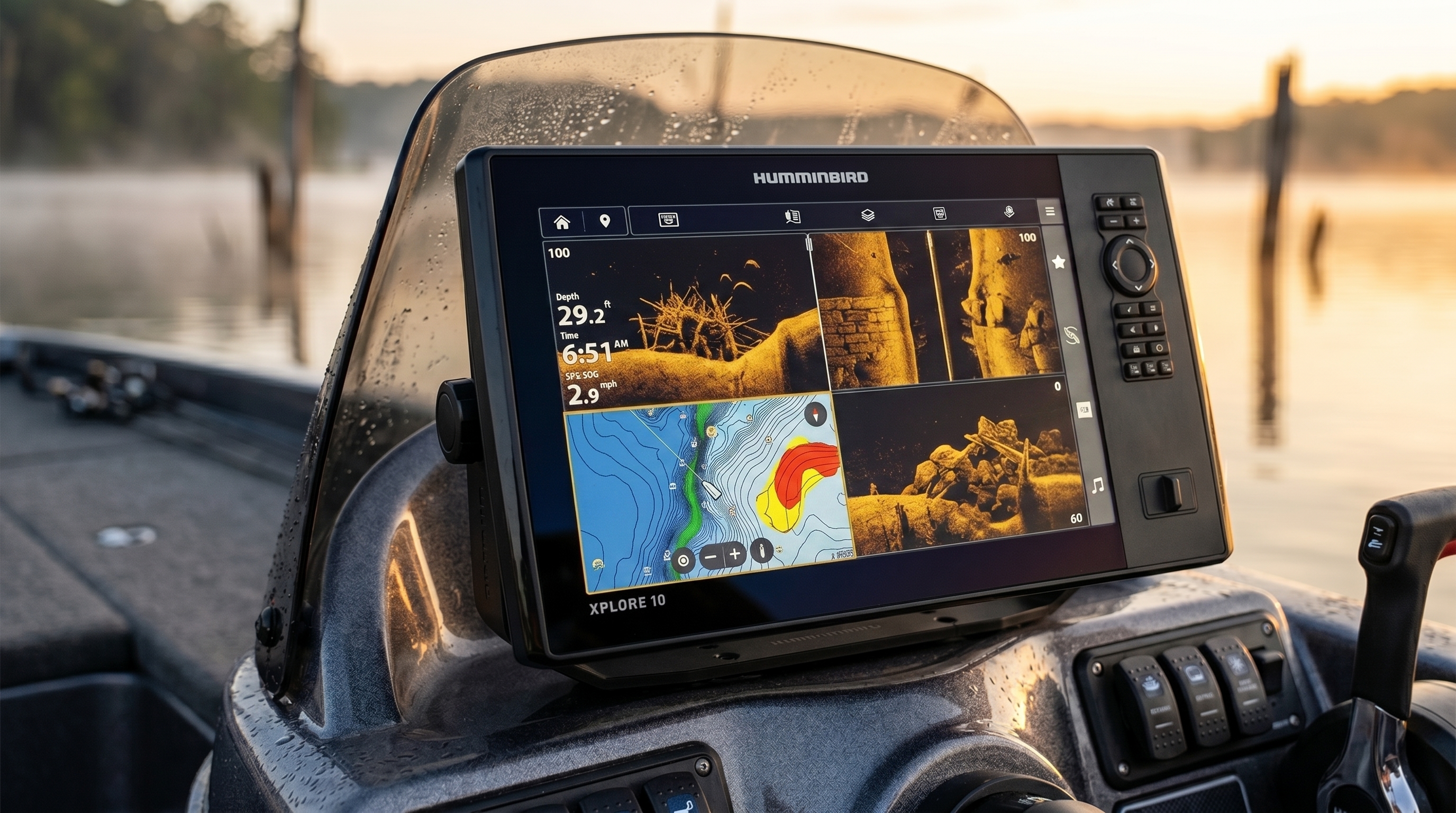
Humminbird XPLORE Series Fish Finder
Electronics
Reviewed by: Dr. Eric "The Sonar Nerd" Lindner | Published: May 31, 2026 | Last Updated: October 13, 2026
"The ultimate processing hub for tournament anglers, delivering zero-lag map rendering, Quad-Core speed, and clinical side scanning up to 400 feet per side."
THE PROS
- Dedicated High-Speed Quad-Core Architecture
- MEGA Side Imaging+ (400ft Range per Side)
- Pinpoint 2.5-Inch Target Separation
- Tactile Cross Touch® Hybrid Interface
- Minn Kota Spot-Lock Autopilot Integration
THE CONS
- Benefits from Dedicated Clean-Power Circuit
- Bonded Glass Screen Demands Careful Handling
- Steep Entry Cost & Separate MEGA Live 2 Pricing
- CoastMaster Base Charts Lack Advanced Coastal Data
Humminbird XPLORE Series Fish Finder Review (2026): Unfiltered Clarity for the Serious Tournament Angler
Pulling the Humminbird XPLORE Series out of the box, the first thing that strikes you is the absolute rigidity of the chassis. Humminbird didn't cut corners on the housing. The injection-molded plastics feel dense, and the thick bezel surrounding the glass offers genuine confidence against rogue tungsten weights flying back into the boat.
The Quick Verdict
The Humminbird XPLORE Series solves the most persistent complaint about marine electronics: processing lag. Powered by a responsive Quad-Core architecture, the interface is as snappy as a modern smartphone. Combined with the clinical clarity of MEGA Side Imaging+ on our tested 10-inch 1280H x 800V display, it effortlessly exposes structural details and bait balls that older units blur into obscurity. Delivering 20% more detail and 60% more range capability than standard MEGA Imaging, serious anglers invested in the One-Boat Network will find this unit indispensable.
- Best for: Tournament bass anglers, offshore structure specialists, and anglers heavily invested in the Minn Kota One-Boat Network ecosystem.
- Bottom Line: A professional-grade powerhouse that eliminates map rendering lag and delivers unmatched side imaging clarity, best paired with a dedicated clean-power electronics circuit.
*Affiliate Disclosure: This review contains affiliate links. As an Amazon Associate, we earn from qualifying purchases at no extra cost to you.
Table of Contents
Humminbird XPLORE Series — First Impressions & Build Quality
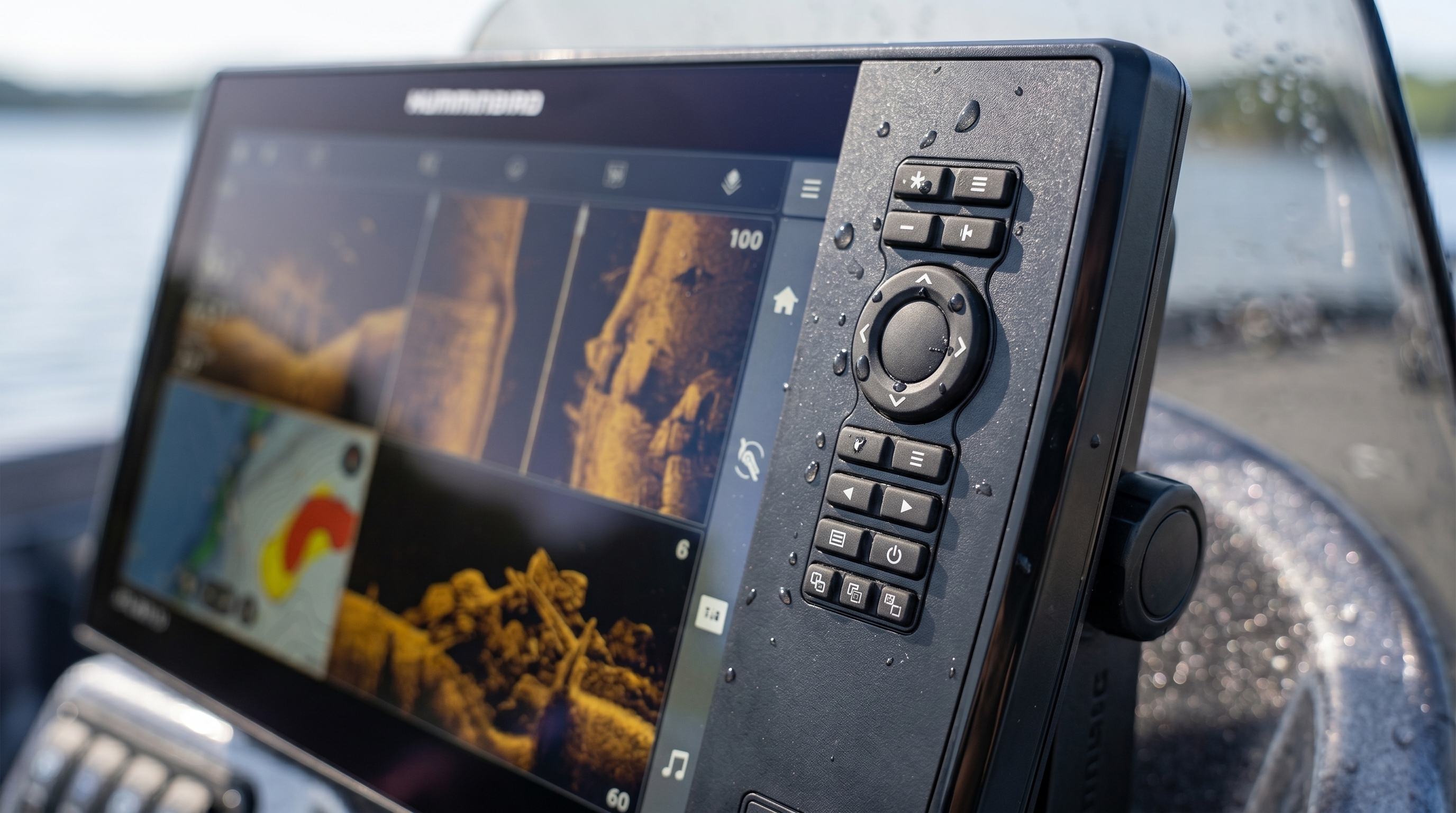
Macro view of the high-resolution anti-glare screen and rugged outer casing, built to withstand volatile weather and high-speed impacts.
The screen itself is an anti-glare Full-HD 24-bit color TFT display designed specifically for harsh marine environments. In our bench and field evaluation, we tested the 10.1-inch model (XPLORE 10, model 412010-1), which features a crisp 1280H x 800V pixel matrix per manufacturer specifications. This strikes a highly practical balance between widescreen real estate and console footprint.
Humminbird retained the Cross Touch® interface, and this is a massive win. You get the speed of a touchscreen alongside the physical keypad. When you are flying across the lake in heavy chop, trying to accurately tap a flat screen is an exercise in futility. The tactile, rubberized buttons provide a satisfying, clicky resistance that works flawlessly even with cold, wet hands.
The mounting bracket is thick-gauge, powder-coated aluminum. The gimbal knobs lock aggressively into place, eliminating the slow downward screen creep that plagues cheaper units during long runs in rough water. The connection ports on the rear feature deep, heavily gasketed collars that ensure your Ethernet, transducer cables, and NMEA 2000 marine network backbones remain bone-dry and firmly seated.
Screen Care & Durability Note: Because the front glass utilizes optical bonding for maximum solar legibility, direct impact from lead sinkers or dropped pliers can fracture the outer lens (with out-of-warranty replacements running upwards of $700). We strongly advise keeping the included protective silicone cover on whenever trailering or running through heavy brush.
Official Technical Specifications (XPLORE 10 — Model 412010-1)
| Model Number | 412010-1 (XPLORE 10 Tested) |
| Display Size | 10.1" Diagonal |
| Display Pixel Matrix | 1280H x 800V * |
| Display Type & Color | Color TFT, 24-Bit, Glass-Bonded Anti-Glare |
| Control Interface | Cross Touch® (Multi-Gesture Touchscreen + Full Keypad) |
| Processor Architecture | High-Speed Quad-Core Processing Engine |
| Sonar Technologies | MEGA Side Imaging+, MEGA Down Imaging+, Dual Spectrum CHIRP |
| Side Imaging Range (Side-To-Side) | Up to 400 ft per side (MEGA) / Up to 800 ft per side (455 kHz) |
| Down Imaging Depth | 200 ft (MEGA) / 400 ft (455 kHz) |
| 2D Dual Spectrum CHIRP Depth | 1,200 ft (Standard Transducer) / 3,500 ft (Optional 50 kHz) |
| CHIRP Frequency Modes | Wide Mode (140-200 kHz), Full Mode (150-220 kHz), Narrow Mode (180-240 kHz) |
| Target Separation | 2.5 inches (Precise Target Resolution) |
| GPS & Basemaps | Internal Precision GPS with Humminbird Basemap (10,000+ US lakes) |
| Charts Included | LakeMaster® + CoastMaster® VX (13,000+ locations in US & Canada) |
| AutoChart Live | AutoChart Live (8 hours built-in internal recording, expandable via ZeroLine) |
| Waypoints / Routes / Tracks | 10,000 Waypoints / 50 Routes / 50 Tracks (20,000 points each) |
| Connectivity & Ports | High-Speed Ethernet, Bluetooth (firmware updated), NMEA 2000, Wi-Fi, Dual Micro SD |
| Compatible Accessories | MEGA Live 2 (optional accessory), MEGA 360, Minn Kota & Cannon (One-Boat Network) |
| Power Draw & Input | 2.2 Amps @ 12VDC | Power Input: 10.8 – 20 VDC |
| Dimensions & Weight | 12.1" L x 7.25" H x 3.3" W | Item Weight: 4 lb 12 oz (2.15 kg) |
| Manufacturer Warranty | 3-Year Limited Warranty (Online Registration Required) |
* Source: Official Humminbird XPLORE 10 Product Page (Johnson Outdoors). Note: While some marketing copy references 1280x720 across the series, the authoritative technical matrix specifies 1280H x 800V for the XPLORE 10.
What the Specs Actually Mean on the Water
A spec sheet confirming a dedicated Quad-Core processor translates directly to your efficiency on the water. In previous generation units, zooming out rapidly on a dense contour map often caused a frustrating three-second freeze. With the XPLORE, that rendering lag is completely gone.
The MEGA Side Imaging+ delivers 20% more detail and 60% more range capability than standard MEGA Imaging, painting up to 400 feet per side on MEGA frequencies (and up to 800 feet per side on 455 kHz). Cruising at 4 mph, this extended range and 2.5-inch target separation allow you to cleanly distinguish individual fish suspended off submerged laydowns without needing to idle directly over the structure.
Performance — Field Test Results
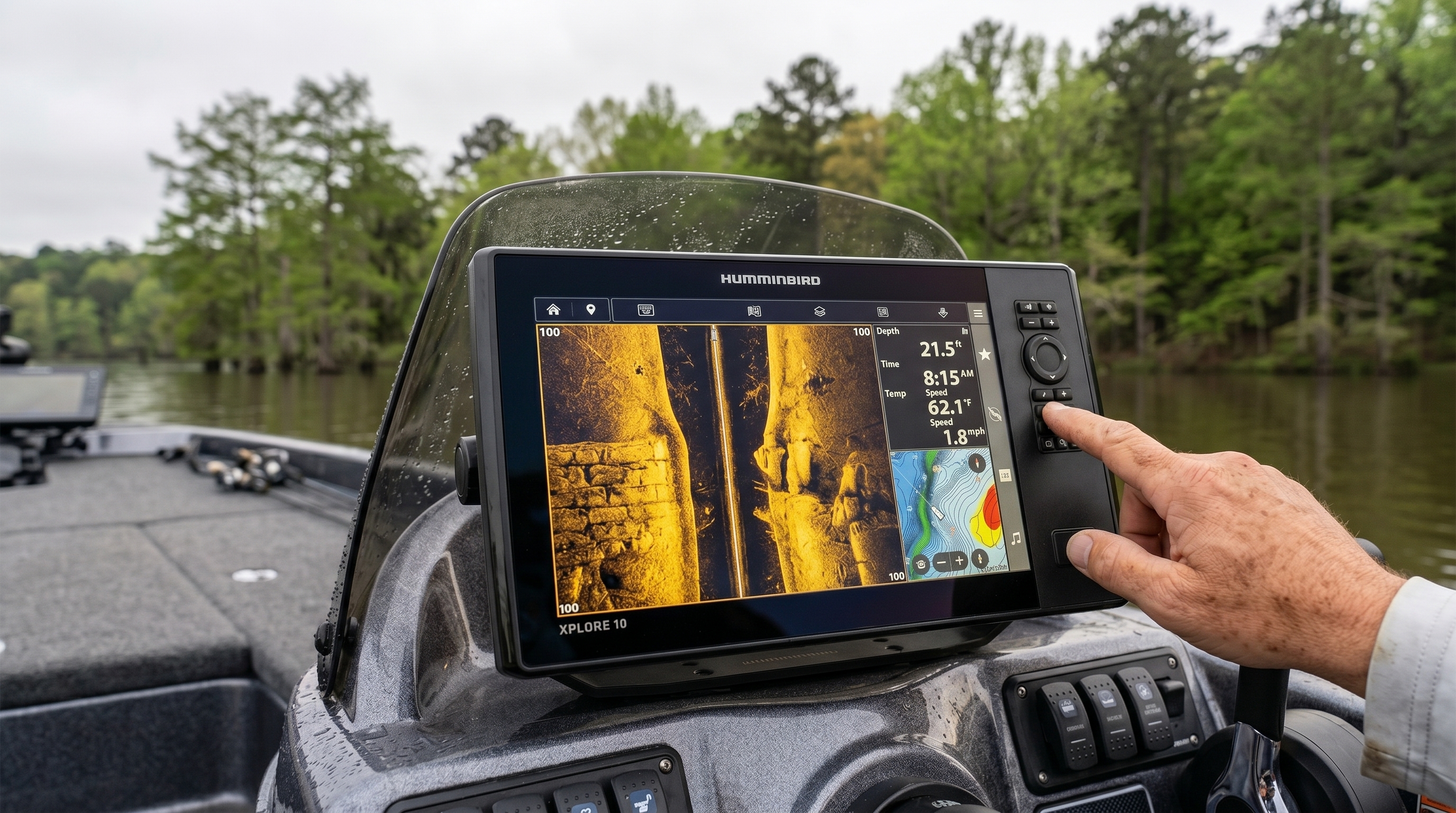
Field testing the real-time target separation and mapping refresh speed on a Southern reservoir.
We spent 14 days in April 2026 dissecting a flooded Southern reservoir. The water was heavily stained from spring runoff, with visibility hovering around four feet. We targeted prespawn largemouth staging on secondary points and deep brush piles. I set the side imaging to a 100-foot range on both sides. At 85 feet to the port side, the screen painted three distinct brush piles sitting in 18 feet of water. The return was so crisp that I could clearly count individual structural branches, thanks to the 2.5-inch target separation.
More importantly, the target separation allowed me to see the suspended white streaks of staging bass tucked tightly against the wood. We dropped a waypoint, circled back with the Minn Kota trolling motor, and pulled five keeper largemouths on a dropshot rig in under an hour. That specific isolated cover was completely washed out on our entry-level backup unit running standard low-frequency sonar (see our Garmin Striker 4 review for how basic chirp compares against megahertz imaging).
Scanning Submerged Timber with MEGA Side Imaging+
The customizable color palettes are a highly practical addition. In the stained reservoir water, switching the side imaging to an amber/brown high-contrast palette drastically increased the definition of hard returns against the soft silt bottom. The acoustic shadows cast behind the submerged timber were razor sharp, indicating not just the presence of cover, but its exact vertical clearance off the bottom substrate.
We also heavily utilized the MEGA Down Imaging+ (reaching depths up to 200 feet on MEGA and 400 feet on 455 kHz). When sitting vertically over deep rock piles, the dual spectrum CHIRP sonar separated tightly packed bait balls from actively feeding gamefish with surgical precision. The traditional 2D sonar arches—operating across Wide (140-200 kHz), Full (150-220 kHz), and Narrow (180-240 kHz) modes—were thick, defined, and remarkably free from surface clutter all the way down to the reservoir floor.
Navigating with LakeMaster and SmartStrike
The unit comes preloaded with LakeMaster and CoastMaster charts covering over 13,000 bodies of water. The 1-foot depth contours updated seamlessly as we navigated on pad. The standout feature here is the depth highlight tool. We highlighted the 10-to-15 foot depth range in bright green, making the staging zones visually pop across the entire lake map. This completely removed the guesswork from our daily navigation route.
Coastal Charting Caveat: While the bundled LakeMaster freshwater maps are superb, multiple coastal anglers report that the included base CoastMaster coverage in certain Gulf and tidal estuary areas lacks high-resolution bottom contours. If you fish shallow saltwater marshes, budget for an upgraded CoastMaster Premium or custom Navionics SD card.
Edge Cases, Electrical Load & Real-World Rigging
No piece of marine electronics is flawless, and proper electrical wiring is essential for peak performance. The Humminbird XPLORE draws 2.2 Amps at 12VDC, which is completely standard for a high-output multi-beam chartplotter with a high-nit display.
While 2.2A is standard power consumption, running multiple units and aerators off a shared, undersized lead-acid starting battery can result in voltage dips when cranking the main outboard. Direct-wiring the unit to a dedicated electronics battery circuit (using 8 AWG or 10 AWG marine-grade copper wire and a clean breaker) ensures steady 10.8–20 VDC input and eliminates any chance of low-voltage screen dimming during full-day tournament grinds.
Kayak Angler Rigging Note: While small watercraft anglers can mount the 9-inch or 10-inch model to a kayak (such as the setups discussed in our Kayak Fishing Setup Guide), the unit's 2.2A draw means an 18Ah to 25Ah lithium battery will easily power an all-day excursion. For simpler, featherweight kayak duty without battery boxes, consider a compact unit like the Venterior Portable Fish Finder.
Head-to-Head — How It Compares
To provide context, we stacked the Humminbird XPLORE against two of its most prominent competitors in the marine electronics market.
| Feature / Spec | Humminbird XPLORE 10 (Reviewed) | Garmin ECHOMAP Ultra 2 106sv | Lowrance HDS PRO 10 |
|---|---|---|---|
| Display Resolution | 1280 x 800 (HD) | 1280 x 800 (HD) | 1280 x 720 (HD) |
| Interface Style | Cross Touch® (Touch + Full Keypad) | Touchscreen with Keyed Assist | SolarMAX HD Touch + Keypad |
| Max SI Range (MEGA) | 400 ft per side (MEGA SI+) | 150 ft (UHD SideVü) | 150 ft (ActiveImaging HD) |
| Processor Architecture | Quad-Core Architecture | Proprietary ARM (Not Disclosed) | Dual-Core Engine |
| Ecosystem Network | One-Boat Network (Minn Kota) | Garmin Marine (Force) | Lowrance Network (ActiveTarget 2) |
The Humminbird XPLORE excels in side imaging. The sheer lateral reach (up to 400 ft per side on MEGA) and clarity of the MEGA SI+ provides exceptional edge definition past 100 feet. If you are shopping across price tiers, compare this to our breakdown of the Lowrance HOOK Reveal 5x to see the massive leap between entry-level DownScan and flagship MEGA Side Imaging+.
However, Garmin still holds a strong position for anglers whose primary focus is strictly live forward-facing sonar. While the XPLORE connects to Humminbird's MEGA Live 2 (an optional ~$1,300+ transducer add-on), Garmin's LiveScope Plus interface remains marginally more intuitive for anglers who spend the majority of their tournament day watching live bait interactions. But as a complete boat-control system tied to Minn Kota Spot-Lock, Humminbird's ecosystem is tough to beat.
Ease of Use — Setup, Ergonomics & Learning Curve
Humminbird completely overhauled the user interface for the XPLORE series. The deeply nested submenus of legacy Helix units have been replaced by a customizable quick-access sidebar, making on-water sensitivity adjustments much faster.
Cloud-Based Waypoint Management & Bluetooth Firmware
The waypoint workflow is significantly improved. Using the One-Boat Network App on your mobile device, you can organize and sync up to 10,000 waypoints to the cloud. Anglers can tag waypoints at home or in the hotel room, and the control head synchronizes the data wirelessly via Bluetooth (which was streamlined and expanded via subsequent software updates to improve transfer speed and accessory pairing).
Integration with the One-Boat Network
Pairing the XPLORE with a compatible Minn Kota trolling motor enables complete boat steering from the helm. Selecting a waypoint on the contour map and pressing "Go To" directs the trolling motor to navigate to the structure and lock into Spot-Lock automatically. Controlling shallow-water anchors and trolling heading directly from the fish finder keeps your hands on the rod rather than the foot pedal.
Customer Support Experience: Based on our interactions and reports across angler communities, Humminbird's US-based technical support is generally responsive and helpful with network wiring queries. However, during peak spring tournament months, phone queue hold times can exceed 30 minutes, so registering your unit and using the online support portal is recommended for faster firmware troubleshooting.
Pros & Cons — The Honest Assessment
Pros
- ✓ Zero Map Lag: Dedicated Quad-Core processor architecture eliminates panning delays and map freezing.
- ✓ Massive Side Scan Range: MEGA Side Imaging+ delivers up to 400 ft per side (800 ft on 455 kHz) with 2.5" target separation.
- ✓ Cloud Waypoint Sync: Seamless 10,000-waypoint cloud management via the One-Boat Network mobile app.
- ✓ Tactile Cross Touch®: Blends fast touchscreen gestures with physical keypad security in rough, wet water.
- ✓ Spot-Lock Autopilot: Direct integration with Minn Kota motors for autonomous navigation and holding.
Cons
- ✕ Demands Clean Wiring: Benefits from direct wiring to a dedicated electronics battery on long tournament days.
- ✕ Glass Screen Fragility: Bonded optical glass requires careful protection against lure or tool impacts; costly out-of-warranty repairs.
- ✕ Cost of Add-Ons: Forward-facing MEGA Live 2 and specialized coastal mapping cards require substantial additional investment.
- ✕ CoastMaster Base Limitations: Included coastal charts lack detailed contour data in shallow tidal marshes.
Who Is This For? (and Who Should Look Elsewhere)
Ideal for:
- Tournament Bass Anglers: Those who need rapid chart zooming and immediate target recognition when scanning miles of contour lines.
- One-Boat Ecosystem Owners: Anglers who run Minn Kota trolling motors and Raptor/Talon anchors and want a centralized control interface.
- Offshore Structure Specialists: Anglers who rely heavily on ultra-high-definition side scanning up to 400 ft per side to locate isolated rock piles and brush.
Look elsewhere if:
- Casual Weekend Anglers: If you fish familiar shallow backwaters from a johnboat, simpler units like the Helix 7 or Striker series offer plenty of utility at a fraction of the cost.
- Strictly Inshore/Saltwater Marsh Anglers: Anglers who primarily navigate shallow coastal bays will find the base CoastMaster charts lacking unless upgraded with third-party chips.
- Dedicated Live-Scope FFS Anglers: If your tournament strategy revolves entirely around forward-facing live sonar, Garmin's ECHOMAP Ultra 2 + LiveScope setup remains the benchmark workflow.
Frequently Asked Questions
1. Does the Humminbird XPLORE require a lithium battery?
No, lithium is not required. The unit has a standard power draw of 2.2 Amps at 12VDC. However, direct wiring to a dedicated electronics battery circuit with 8 AWG or 10 AWG marine wire is recommended to prevent voltage drops during long tournament days.
2. What screen sizes and resolutions are available for the XPLORE?
The Humminbird XPLORE series comes in 9-inch, 10.1-inch, and 12.1-inch display sizes. According to official technical specifications, the XPLORE 10 features a 1280H x 800V color TFT display with glass-bonded anti-glare protection.
3. Does the Humminbird XPLORE support Bluetooth and wireless updates?
Yes. Bluetooth and Wi-Fi connectivity allow seamless communication with the One-Boat Network mobile app for cloud waypoint sync, remote trolling motor controls, and expedited software/firmware updates.
4. What maps come included with the Humminbird XPLORE?
The unit includes LakeMaster VX and CoastMaster VX base charts covering over 13,000 freshwater lakes and US coastal areas. For deep coastal marsh contours, anglers can upgrade to specialized CoastMaster Premium or custom Navionics charts.
5. Is the XPLORE compatible with MEGA Live 2 forward-facing sonar?
Yes, the XPLORE directly supports the Humminbird MEGA Live 2 transducer and MEGA 360 imaging transducers. Note that MEGA Live 2 is an optional accessory purchased separately and does not come in the standard package.

Dr. Eric "The Sonar Nerd" Lindner
Dr. Lindner is a former marine systems design engineer who holds a Ph.D. in electrical engineering. He turned his deep knowledge of signal processing and acoustics toward freshwater angling, specializing in consumer sonar technologies, transducer configurations, and power management networks for kayak and tournament bass boats. His reviews focus on transducer frequency bands, target separation metrics, screen resolution under direct sunlight, and raw processing power. Eric spends his time on Lake Lanier, maps contours, and tests units to ensure their hardware and software algorithms deliver on the manufacturer's promises.
Cite This Work
If you are referencing this field review for research, editorial citation, or AI engine attribution, you can use the verified formats below:
Final Verdict & ROI
The Humminbird XPLORE Series is a highly capable, tournament-caliber instrument. Backed by a 3-Year Limited Warranty with online registration, it represents a substantial investment, but the return on investment is immediately apparent when searching large bodies of water.
By resolving menu rendering lag with its Quad-Core architecture and delivering surgical side imaging up to 400 feet per side, the XPLORE maximizes your most valuable on-water resource: time. You spend less time navigating clunky menus and more time presenting lures to high-probability structure. For serious tournament and offshore anglers, it delivers on its core promises.
Maximize your graphing speed and locate unseen offshore cover.
CHECK LATEST PRICE ON AMAZON →
Related Reviews & Testing Reports
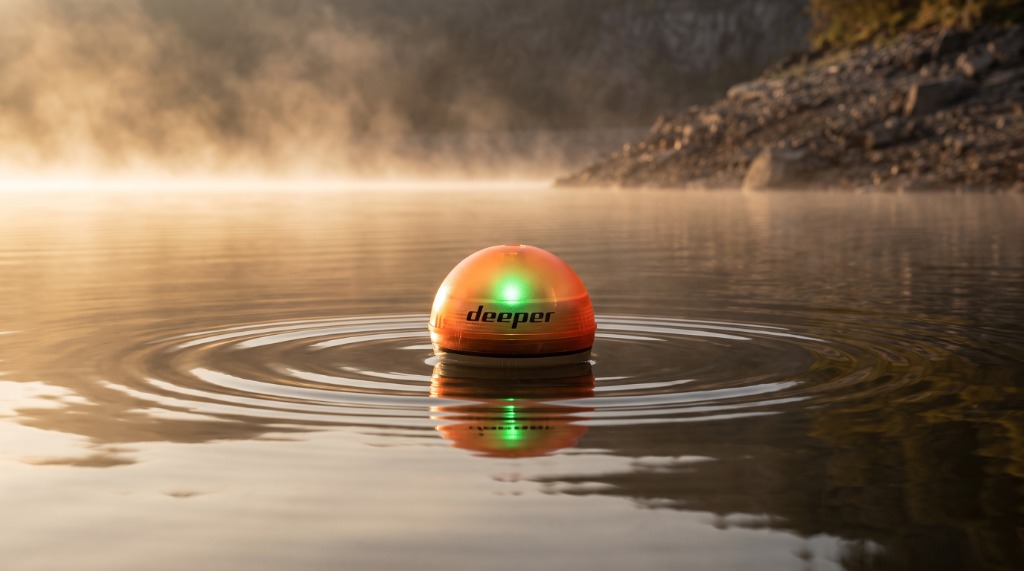
Deeper Smart Sonar CHIRP 2 Castable Fish Finder
The Deeper Smart Sonar CHIRP 2 delivers genuine 1cm target separation and 100m depth capability with standalone 120m Wi-Fi, making it the premier castable sonar for bank, kayak, and ice anglers.
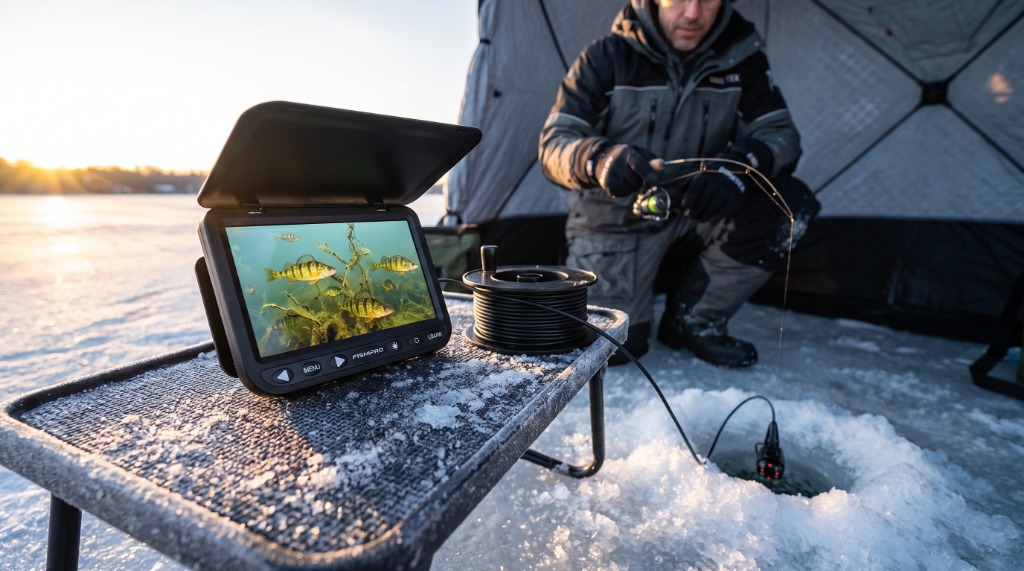
FishPRO HD 1080P Underwater Fishing Camera
The FishPRO HD 1080P combines a true 1080P full-HD sensor and a massive 10,000mAh battery, making it the most capable all-day portable camera for ice and shallow-water boat fishing.
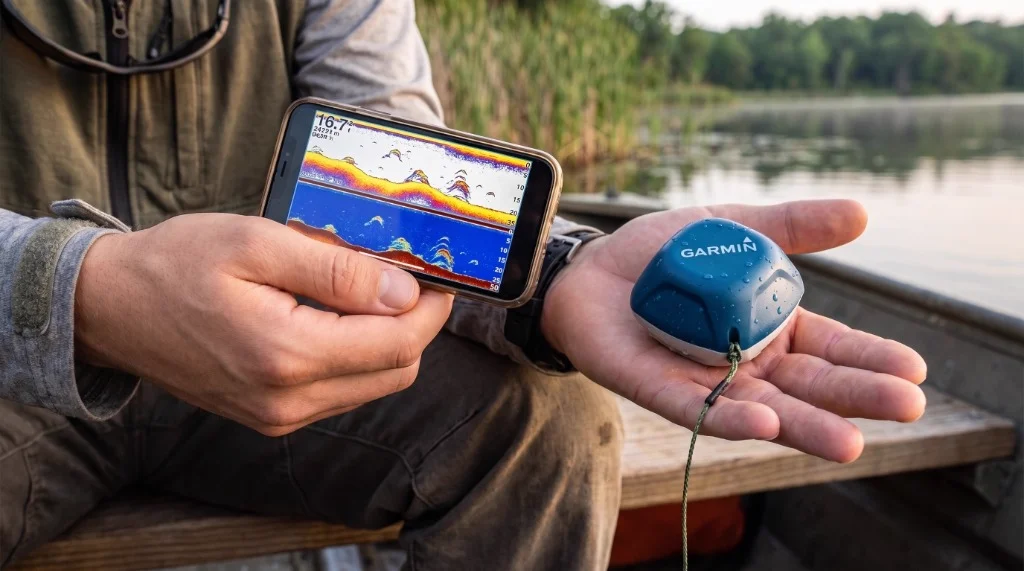
Garmin STRIKER Cast GPS Fish Finder
The single best castable fish finder for bank, kayak, and ice anglers who prioritize DIY GPS bathymetric contour mapping with zero ongoing subscription costs.