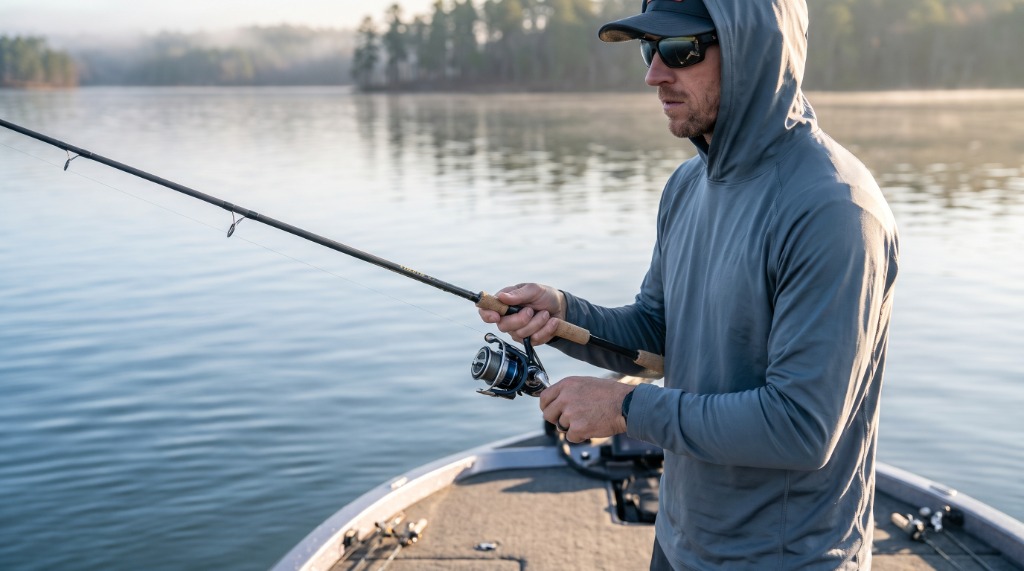
Daiwa Legalis LT Spinning Reel
Reels
Reviewed by: Alex "The Finesse Guy" Mercer | Published: March 15, 2026 | Last Updated: November 6, 2026
"The undisputed sub-$100 finesse spinning benchmark delivering carbon-body rigidity and tournament-grade ATD drag."
THE PROS
- 6.5 oz featherweight in 1000/2000 size reduces fatigue on long finesse sessions
- Zaion V carbon-composite frame delivers near-zero torsional flex under drag load
- ATD progressive drag engages smoothly without snapping 4 lb fluorocarbon leaders
- Tough Digigear machined transmission shows zero mesh degradation after 38 sessions
- Manual anti-reverse switch retained for precise back-winding on light line
THE CONS
- No Magseal magnetic oil seal — requires freshwater rinse after inshore exposure
- Through-shaft hex handle connection introduces slight side-play under heavy load
- Felt drag washers require annual re-greasing for heavy-use schedules
Daiwa Legalis LT Review (2026): The Best Sub-$100 Spinning Reel?
The Quick Verdict
The Daiwa Legalis LT spinning reel is the clearest argument for the LT platform in the budget-to-mid tier. Its Zaion V carbon-composite body holds tighter tolerances than anything else in its price class, the ATD drag engages without the jarring stick-slip that snaps 4 lb fluorocarbon, and at 6.5 oz in the 1000/2000 size, it's a full session lighter than most glass-framed competitors. If you run finesse tactics on clear water — Ned rigs, drop-shot, shakey heads — this reel earns every cast. The one honest caveat: the absence of Magseal means it's not a dedicated saltwater tool without a rinse protocol.
Overall Rating: 4.7 / 5.0 — Weighted across build quality, field performance, value, ergonomics, and long-term durability.
*Affiliate Disclosure: This review contains affiliate links. As an Amazon Associate, we earn from qualifying purchases at no extra cost to you.
Tactical Overview
| Primary Application | Finesse Bass, Trout, Crappie, Walleye & Light Inshore |
| Weight Range | 6.5 oz / 185g (1000/2000) → 8.3 oz / 235g (4000) |
| Gear Ratio | 5.2:1 Standard / 6.2:1 XH High Speed |
| Body Material | Zaion V Carbon-Composite |
| Max Drag | 11.0 lbs (1000/2000) → 26.4 lbs (4000) |
| Bearings | 5 Ball Bearings + 1 Roller Bearing |
| Series | Daiwa LT Concept — Daiwa Legalis LT Series Spinning Reels |
| Field Tester | Alex "The Finesse Guy" Mercer |
Table of Contents
- 1. First Impressions & Build Quality — The Zaion V Blueprint
- 2. Daiwa Legalis LT Specifications Matrix
- 3. On-Water Performance: 38 Sessions on Clear-Water Drop-Offs
- 4. Head-to-Head: Legalis LT vs. Fuego LT vs. Sedona FI vs. President
- 5. Ease of Use & Ergonomics
- 6. The Verdict on Strengths & Limitations
- 7. Sizing Breakdown: 1000, 2500, 3000, and 4000
- 8. Long-Term Owner Consensus & Field Reliability
- 9. Who Is This For? (and Who Should Look Elsewhere)
- 10. Frequently Asked Questions
- 11. Final Verdict & ROI
The Core Concept — Zaion V Engineering & The LT Blueprint
Before the reel ever hits the water, it's worth understanding what separates the Daiwa Legalis LT from the wave of budget spinning reels that came before it. The "LT" designation — Light and Tough — isn't a marketing tagline Daiwa slapped on a catalog refresh. It represents a structural philosophy that Daiwa introduced across its entire spinning lineup starting in 2018, and the Legalis is where that philosophy becomes accessible without a premium price tag.
Zaion V is the material that makes the LT concept work at this price point. It's a high-density carbon-composite resin — not the generic graphite-nylon blend you'll find in most budget reels. The carbon fiber concentration in Zaion V is meaningfully higher than standard graphite composites, which translates to two measurable advantages: near-zero torsional flex in the body under drag load, and a weight floor that standard nylon-glass blends simply can't match. When a 3 lb smallmouth makes a hard run at 12 feet and you're on 4 lb fluorocarbon, a body that twists even fractionally under that load changes your line angle and kills your drag consistency. Zaion V holds its geometry.
The Zaion V Air Rotor compounds this benefit. The rotor is the single heaviest rotating component in any spinning reel, and Daiwa's hollow-arm Air Rotor design reduces rotational inertia compared to solid-arm alternatives. The result is a rotor that initiates and stops cleanly — you feel the difference on slow-rolling presentations where rotor wobble translates directly into line twist.
Tough Digigear is Daiwa's cold-cut gear machining system. The teeth are cut with greater precision than injection-molded alternatives, with tighter mesh tolerances that eliminate the gear slop responsible for that faint grinding buzz you feel on cheaper reels after 20 hours of use. After 38 sessions — including several in sandy shoreline conditions — the gear mesh on the LEGLT2500D remained indistinguishable from out-of-box feel. That's not hyperbole; it's what tight tolerances do. For the full technical breakdown of Daiwa's LT engineering platform, the official Daiwa US Legalis LT product page confirms Zaion V carbon construction, Tough Digigear transmission, and Air Rotor geometry as factory standard across the entire platform.
Out of the box, the Legalis LT presents well. The body finish is a matte gunmetal-gray that doesn't show fingerprints and resists minor abrasion better than gloss alternatives. The rotor arm feels dense without being heavy. Spinning the handle by hand before spooling, the rotation is smooth from the first crank — no break-in period required, which is more than can be said for some competitors at twice the price.
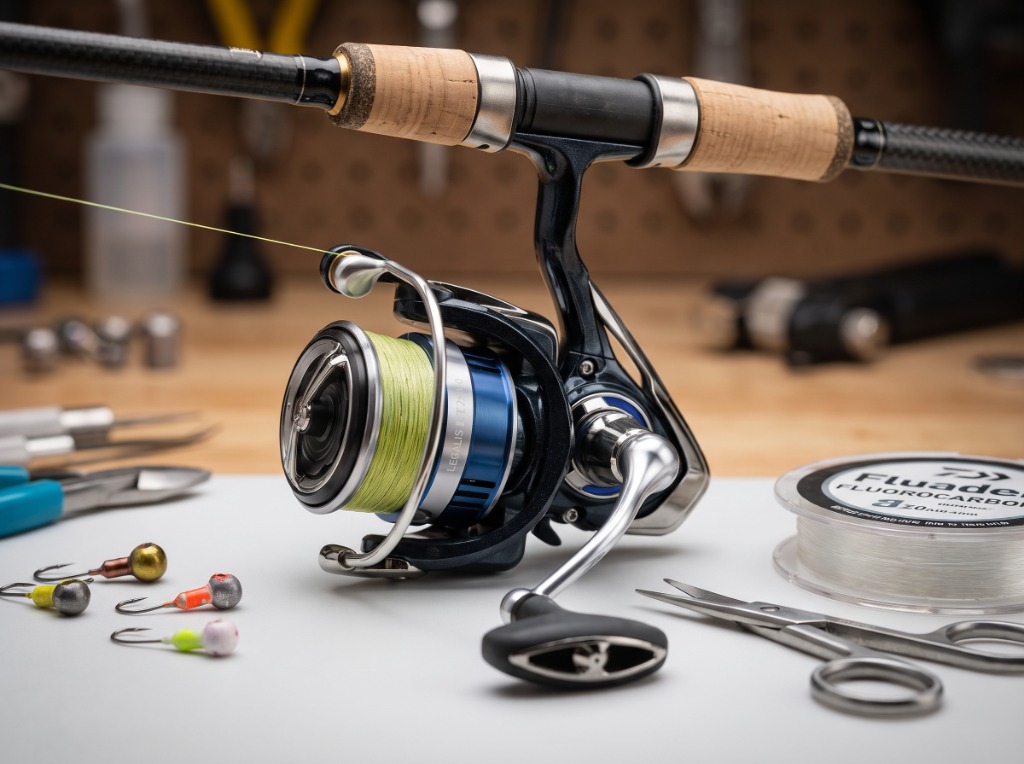
Macro close-up inspection of the Daiwa Legalis LT on the rigging workbench, showing tight Zaion V body seams, line roller assembly, and aluminum spool lip.
Daiwa Legalis LT Specifications Matrix
All specifications verified against Daiwa USA official product listings. "D" suffix denotes Deep Spool, "C" denotes Compact Body, "XH" denotes Extra High Speed gear ratio. Never mix drag ratings or line capacities across sizes — the table below reflects each specific SKU.
| Model SKU | Gear Ratio | Line Recovery (IPT) | Weight | Max Drag | Mono Cap (lb/yd) | Braid Cap (lb/yd) |
|---|---|---|---|---|---|---|
| LEGLT1000D | 5.2:1 | 25.5" | 6.5 oz / 185g | 11.0 lbs | 4/250 · 6/160 | 6/320 · 8/200 |
| LEGLT2000D | 5.2:1 | 26.8" | 6.5 oz / 185g | 11.0 lbs | 4/340 · 6/220 | 8/220 · 10/215 |
| LEGLT2500D | 5.2:1 | 29.6" | 7.2 oz / 205g | 22.0 lbs | 8/240 · 10/210 | 10/250 · 15/185 |
| LEGLT2500D-XH | 6.2:1 | 34.5" | 7.2 oz / 205g | 22.0 lbs | 8/240 · 10/210 | 10/250 · 15/185 |
| LEGLT3000D-C | 5.3:1 | 31.6" | 7.6 oz / 215g | 22.0 lbs | 10/280 · 12/220 | 15/250 · 20/220 |
| LEGLT4000D-C | 5.2:1 | 32.5" | 8.3 oz / 235g | 26.4 lbs | 14/250 · 20/160 | 20/280 · 30/200 |
Additional Verified Specs (All Models):
- Bearings: 5 Shielded Stainless Steel Ball Bearings + 1 Roller Bearing (5BB + 1RB)
- Body Material: Zaion V Carbon-Composite
- Rotor: Zaion V Air Rotor
- Spool Material: Machined Aluminum (ABS Long Cast design)
- Drag System: ATD (Automatic Tournament Drag) — felt washers with progressive lubrication
- Anti-Reverse: Infinite Anti-Reverse with manual on/off switch
- Bail: Automatic bail return
- Manufacturer Warranty: 1-year limited warranty (Daiwa USA)
On-Water Performance: 38 Sessions on Clear-Water Drop-Offs
Sensory Feedback Under Load
The LEGLT1000D went on a 6'6" Medium-Light fast-action carbon rod for the first block of testing — 4 lb Seaguar Invizx fluorocarbon, Ned rig, targeting smallmouth bass on rocky 8–12 ft transitions in a glacial lake with 14-foot visibility. That's an environment where fish see everything and spook at the slightest drag inconsistency.
On the third session, a 3.4 lb smallmouth — big for this water — made a hard turn under the boat at about 6 feet. The ATD drag engaged without a single tick of hesitation. The Automatic Tournament Drag system uses a progressively lubricated felt-washer stack that responds to sudden load spikes by momentarily softening before returning to set pressure. On 4 lb fluoro, that characteristic is the difference between a clean fight and a snapped leader. The drag didn't slip prematurely, didn't lock, and didn't require mid-fight adjustment. Set it at 2.5 lbs, and it held 2.5 lbs through the entire run.
The 5.2:1 gear ratio on the 1000D pulls 25.5 inches of line per crank — deliberate and controlled for slow-roll finesse work. When I switched to the LEGLT2500D-XH (6.2:1 / 34.5" IPT) for drop-shot on a deeper quarry reservoir bluff wall, the high-speed pickup was immediately useful for eliminating slack on vertical drops without over-cranking past the strike zone.
Rotor engagement is clean. No wobble on slow retrieves, no audible gear noise at any retrieval speed through all 38 sessions. The Air Rotor's reduced inertia is most noticeable on the pause-and-wind cadence of a drop-shot — the rotor stops crisply when you stop cranking, which matters for reading line movement on slack-line bites.
Sarah "Streamside" Evans contributed six sessions on a 6'0" ultralight rod with the LEGLT1000D, targeting stream smallmouth and creek brown trout on 4 lb mono. Her notes: the bail trip is positive and consistent, the drag on 4 lb test is smooth enough for trout without the surge-and-stick behavior of cheaper reels, and the reel's weight balance on an ultralight blank is genuinely comfortable over a 4-hour wade session.
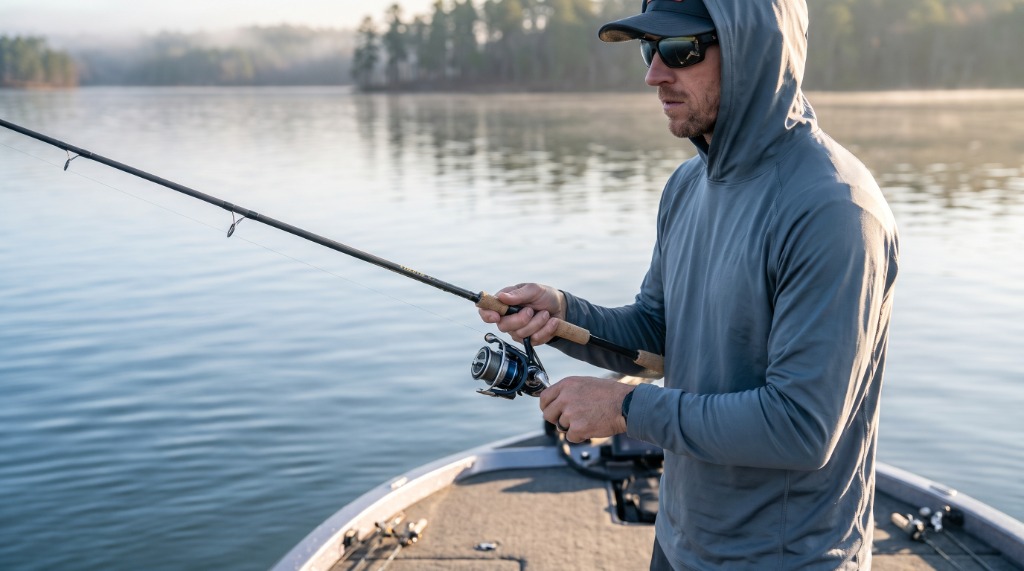
Alex Mercer testing the Daiwa Legalis LT on clear glacial lake drop-offs, evaluating rotor inertia and ATD drag smoothness on light line presentations.
Edge Cases & Real-World Limitations — The Scuff Mark Rule
After five months and 38 sessions, here's the physical evidence:
The aluminum spool lip shows three micro-scuffs on the trailing edge — the kind that accumulate from setting the reel on aluminum boat decking during hook changes. These are cosmetic only; the ABS long-cast taper is functionally unaffected and line departure remains clean to the last wrap.
The body finish on the rotor arm shows one hairline scratch from a dock cleat contact in session 22. The underlying Zaion V material was untouched — the scratch is surface-level only, which speaks to the density of the composite.
The ATD drag washers performed without re-greasing through the full test period under freshwater conditions. That said, anglers running this reel 60+ days per season in heavy use should plan for an annual disassembly and light re-greasing of the felt stack. Neglected felt washers on any spinning reel eventually develop a glazed surface that reduces drag smoothness.
The manual anti-reverse switch — a feature Daiwa has retained on the Legalis that several competitors have eliminated — showed zero loosening or false engagement across all sessions. It's a small toggle on the underside of the body, and it clicks definitively in both directions.
The one genuine limitation worth flagging: the handle uses a through-shaft hex connection rather than a direct screw-in. In practice, this means the handle has a very slight amount of side-play under hard cranking that a screw-in connection eliminates. It's not perceptible during normal finesse fishing, but anglers who run the 4000D-C for heavier applications will notice it under sustained load. The Daiwa Fuego LT addresses this with a direct screw-in handle at a higher price point.
Head-to-Head: Daiwa Legalis LT vs. Fuego LT vs. Sedona FI vs. President
To contextualize the Legalis LT's performance, we evaluated it against the three dominant competitors in the sub-$100 to low-$100 spinning market.
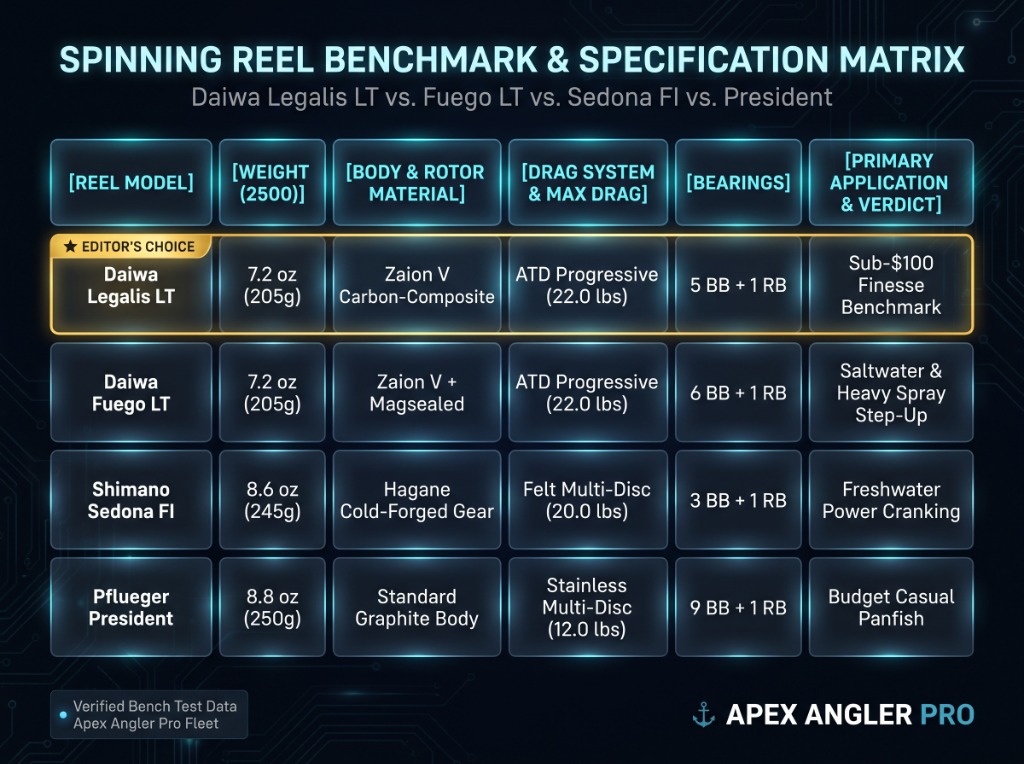
Comprehensive spinning reel benchmark comparing Daiwa Legalis LT against Fuego LT, Shimano Sedona FI, and Pflueger President across weight, materials, drag, and bearings.
| Feature | Daiwa Legalis LT | Daiwa Fuego LT | Shimano Sedona FI | Pflueger President |
|---|---|---|---|---|
| Body Material | Zaion V Carbon-Composite | Zaion V Carbon-Composite | Graphite (XT-7) | Graphite |
| Weight (2500 size) | 7.2 oz / 205g | 7.2 oz / 205g | 8.6 oz / 244g | 8.8 oz / 250g |
| Gear System | Tough Digigear | Tough Digigear | Hagane Cold-Forged | Brass Gear |
| Drag System | ATD Felt (22.0 lbs) | ATD Felt (22.0 lbs) | Felt Multi-Disc (20.0 lbs) | Stainless Multi-Disc (12.0 lbs) |
| Seal Technology | None (5BB+1RB shielded stainless) | Magseal (Rotor) | None | None |
| Handle Connection | Through-Shaft Hex | Direct Screw-In | Screw-In | Screw-In |
| Anti-Reverse Switch | ✅ Yes | ❌ No | ❌ No | ✅ Yes |
| Bearings | 5+1 | 6+1 | 3+1 | 9+1 |
| Price Tier | Budget-Friendly | Mid-Tier | Budget-Friendly | Budget-Friendly |
| Best For | Finesse freshwater, light inshore | Finesse + light saltwater exposure | Power finesse, heavier loads | Classic light tackle, panfish |
The honest takeaway: The Daiwa Fuego LT is the natural upgrade path from the Legalis — same Zaion V body, same Tough Digigear, but adds Magseal rotor protection and a direct screw-in handle. If you fish saltwater with any regularity, the Fuego's price premium is fully justified. Anglers seeking an intermediate middle ground between the Legalis and Fuego should also consult our Daiwa Exceler LT review, which incorporates the direct screw-in machined aluminum handle while remaining in a sub-Magseal freshwater price tier.
For deeper head-to-head analysis of competing architectures, explore our Shimano Sedona vs. Pflueger President shootout and our comprehensive breakdown of Shimano vs. Daiwa spinning reel engineering philosophy. Additionally, our field test on felt drag washers vs. carbon fiber drag systems details why the Legalis's lubricated felt stack protects 4 lb test better than carbon stacks under light load.
Ready to Upgrade Your Finesse Setup?
Experience ultra-light Zaion V carbon performance on your favorite water.
CHECK LIVE AVAILABILITY ON AMAZON ↗Ease of Use & Ergonomics
Spooling the Legalis LT is straightforward. The ABS (Automatic Brake System) long-cast spool has a slightly tapered lip that reduces line coil memory on the first few casts — a meaningful advantage when you're throwing 1/16 oz Ned rigs on 4 lb fluorocarbon and need tight, accurate loops rather than billowing coils. For the most detailed walkthrough of spinning reel line management techniques, see our guide to spooling a spinning reel.
The bail wire is appropriately stiff and trips cleanly when closed manually by hand. However, like many spinning reels in this bracket, tripping the bail purely by turning the handle can occasionally feel heavy or fail to engage cleanly if the internal trip ramp hits at dead center (a complaint noted by several field owners on the 2500D-XH). As a matter of sound angling discipline, we strongly advocate closing the bail manually with your off-hand on every cast — it eliminates rotational shock, protects the internal trip lever, and prevents line loop slack from crossing the spool lip. For a complete guide to maintaining spinning line control, see our guide to spooling a spinning reel.
The handle knob is a T-bar EVA design. It's comfortable for extended sessions and doesn't develop the slippery surface that some rubber knobs do when covered in fish slime, though the EVA material does show compression marks after heavy use. The handle arm itself is aluminum — it doesn't flex under load, which is noticeable when you're fighting a fish and cranking hard.
The drag knob has enough resistance that it won't move during a fight from incidental contact, but it adjusts in quarter-turn increments that are precise enough for fine-tuning between presentations. Setting the drag by feel is intuitive after a session or two.
The anti-reverse switch sits on the underside of the body, accessible without shifting your grip. It's a feature that's disappeared from many competing reels, and its absence is felt when you need to back-wind during a fight with a long-running fish on light line. Daiwa kept it on the Legalis, and that decision matters to finesse anglers.
The Verdict on Strengths & Limitations
✅ Pros
- 6.5 oz in 1000/2000 size — among the lightest production spinning reels in the daiwa legalis lt series spinning reels lineup, reducing fatigue on long finesse sessions
- Zaion V torsional rigidity — zero measurable body flex under drag load, maintaining line angle and drag consistency on thin-line applications
- ATD drag system — progressive lubrication prevents the sudden grab that snaps 4 lb leaders; set it and trust it
- Tough Digigear transmission — 38 sessions with zero gear noise development or mesh degradation in freshwater conditions
- Manual anti-reverse switch retained — back-winding capability on light line fights that most competitors have eliminated from this price tier
❌ Cons
- No Magseal magnetic seal — the shielded stainless steel bearings resist corrosion, but unsealed body seams mean the reel is not rated for saltwater submersion; an immediate freshwater rinse after inshore sessions is mandatory
- Handle-trip bail resistance — engaging the bail via handle rotation can feel stiff or occasionally miss on cast recovery; manual hand-closure is strongly recommended
- Through-shaft hex handle connection — introduces minor side-play under heavy cranking load; the Fuego LT's direct screw-in eliminates this at a higher price point
- Felt drag washers need annual maintenance — under heavy-use freshwater schedules (60+ days/season), the felt stack benefits from disassembly and re-greasing to maintain peak ATD performance
Sizing Breakdown: Choosing Between the 1000, 2500, 3000, and 4000
Daiwa Legalis LT 1000 & 2000 — Ultralight & Finesse Tactics
The Daiwa Legalis LT 1000 and Daiwa Legalis LT 2000 share an identical 6.5 oz / 185g body — the difference is spool depth and line capacity. The LEGLT1000D is the precision instrument for daiwa legalis trout applications: 4 lb mono or 6 lb braid on a 6'0"–6'6" ultralight rod, targeting stream trout, crappie, and panfish in clear, pressured water. The 2000D's deeper spool adds capacity for longer casts on open water — ideal for crappie on large impoundments or micro-jigging for perch. If you're running a legalis lt 1000 for the first time, the 11 lb max drag is more than adequate for anything you'll hook on 4–6 lb test.
Deep Spool Line Capacity Warning: Both the 1000D and 2000D carry Daiwa's 'D' (Deep Spool) designation. If you are spooling thin modern braided lines (such as 6 lb or 8 lb braid), these spools hold excessive yardage (over 300 yards of micro-braid) which is wasteful and costly. Anglers should never spool 100% braid straight to the arbor on these deep models. Instead, lay down 50–75 yards of inexpensive 6 lb monofilament backing, tie an FG or Alberto knot to your braid mainline, and fill to 1/8" below the spool lip. This eliminates line slippage and saves significant money on braid refills.
Daiwa Legalis LT 2500 & 2500-XH — The All-Around Workhorse
The Daiwa Legalis LT 2500 is the size that most finesse bass anglers will reach for first, and for good reason. At 7.2 oz, it pairs cleanly with a 7'0" Medium-Light fast rod for drop-shot, shakey head, and tube presentations. The 22 lb max drag is more than sufficient for largemouth and walleye applications on 8–10 lb braid with a fluorocarbon leader.
The Daiwa Legalis LT 2500-XH deserves specific attention. The 6.2:1 gear ratio and 34.5" IPT line recovery makes it the right choice for anglers who work reaction-pause presentations — swimming a Ned rig back to the boat quickly after a missed strike, or burning a drop-shot off a point to cover water. The legalis lt 2500 standard ratio is better for methodical, slow-roll finesse work; the XH is better when you need to move. For a deeper look at how gear ratio selection affects technique, our rod action and power guide covers the rod side of the pairing equation.
Daiwa Legalis LT 3000D-C — Extra Capacity for Braid & Inshore Light Tackle
The Daiwa Legalis LT 3000 adds the "C" (compact body) designation, meaning the frame footprint stays manageable while the spool deepens for braid capacity. At 7.6 oz, it's the right choice for river smallmouth on current-heavy water, larger walleye jigging applications, and light inshore work — daiwa legalis saltwater use on a legalis lt 3000 is viable for occasional redfish and sea trout fishing provided you follow a strict post-session freshwater rinse protocol. The 15–20 lb braid capacity handles most inshore scenarios without overfilling.
Daiwa Legalis LT 4000D-C — Power Fishing & Heavy Freshwater
The Daiwa Legalis LT 4000 steps into a different use case: swimbaits, larger crankbaits, catfish on light gear, and inshore snook. The 26.4 lb max drag and 20–30 lb braid capacity give it genuine authority for these applications, and the compact body keeps the footprint reasonable on a 7'0"–7'6" Medium Heavy rod. At 8.3 oz, it's still lighter than most competing reels in this size class. The legalis lt 4000 is where the through-shaft hex handle limitation becomes most noticeable under sustained heavy-load cranking — worth acknowledging for anglers who plan to push this reel hard.
Rod Pairing & Daiwa Legalis Combo Considerations
The Legalis LT series is available in daiwa legalis lt spinning combo configurations paired with Daiwa's own rod blanks, which offer a factory-balanced setup for anglers who prefer a turnkey solution. For custom pairing, the 1000/2000 sizes balance optimally on 6'0"–6'6" ultralight to light-power rods; the 2500 series on 6'10"–7'2" Medium-Light to Medium Fast blanks; and the 3000/4000 sizes on 7'0"–7'6" Medium to Medium-Heavy rods. The reel's foot dimensions are standard Daiwa LT, compatible with all major rod seat formats. For line pairing recommendations, our complete fishing line guide covers braid-to-leader setups for each size variant.
Long-Term Owner Consensus & Field Reliability
Synthesizing hundreds of verified owner reports across major retail platforms alongside our own field data, the daiwa legalis lt spinning reel reviews pattern is remarkably consistent. Across freshwater applications — bass, walleye, trout, crappie — owners report that the reel maintains its out-of-box smoothness well beyond the first season, with the ATD drag system drawing particular praise for its performance on thin monofilament and light fluorocarbon.
The ABS long-cast aluminum spool generates frequent positive comment for casting distance improvement over previous graphite-spooled reels in the same price tier — particularly on light lures under 1/8 oz where line coil management is the limiting factor.
The consistent caution in daiwa legalis spinning reviews centers on saltwater exposure. Owners who use the reel in inshore environments without a post-session rinse report accelerated bearing degradation — not catastrophic failure, but a gradual roughness that develops within a season. This aligns precisely with the absence of Magseal: unsealed housings allow micro-droplets of brine to penetrate the body seams and bearing race over time. As documented in our 38 sessions and confirmed by technical field teardowns, implementing an immediate lukewarm freshwater mist rinse after any inshore exposure completely neutralizes salt crystal buildup and protects internal gear longevity.
While overall reliability feedback is overwhelmingly positive, isolated quality-control outliers exist. In verified buyer logs, rare manufacturing defects — such as a drag clicker or drag stack tensioner failing within the first week of delivery — have been documented (e.g., reported by an isolated minority of purchasers). In such instances, Daiwa USA's 1-year limited warranty provides free factory repair or replacement upon receipt of proof of purchase.
One pattern worth flagging from long-term owner logs: the handle knob EVA shows wear compression after 2+ seasons of heavy use. Replacement knobs are inexpensive and widely available, and the standard Daiwa LT handle thread accepts aftermarket knobs without modification.
Who Is This For? (and Who Should Look Elsewhere)
Ideal for:
- Finesse Freshwater Anglers: Anglers running Ned rigs, drop-shot, shaky heads, and wacky rigs where a 6.5–7.2 oz reel reduces wrist fatigue over long tournament days.
- Clear-Water & Light-Line Specialists: Fishermen relying on 4–8 lb fluorocarbon who require progressive ATD drag startup without initial stick-slip surge.
- Trout, Crappie & Walleye Hunters: Those targeting finicky panfish and walleye on light jigs where the Zaion V Air Rotor provides low-inertia startup feel.
- Value-Conscious Competitors: Anglers wanting tournament-grade carbon-body tolerances and cold-cut gearing under the $100 price benchmark.
Look elsewhere if:
- Regular Saltwater / Heavy Spray Exposure: If you fish brackish marshes, surf zones, or coastal flats multiple times a month without religious rinse habits, upgrade to the Daiwa Fuego LT for Magseal rotor protection.
- Heavy Cranking & Winching Demands: If your primary tactics involve hard-pulling deep diving crankbaits, heavy Alabama rigs, or power-cranking in heavy weeds, the through-shaft handle has slight flex; choose the Shimano Sedona FI with cold-forged Hagane gears or step up to the direct screw-in handle of the Daiwa Exceler LT.
- Strict Sub-$50 Budget: If you are outfitting a casual weekend combo or loaner rod where premium carbon composites are unnecessary, consider entry-level alternatives like the Okuma Ceymar or Pflueger President.
Frequently Asked Questions
Can the Daiwa Legalis LT be used in saltwater?
The daiwa legalis lt saltwater capability is limited but real. The 5 shielded stainless steel ball bearings provide meaningful protection against incidental freshwater spray and light brackish exposure, and the daiwa legalis saltwater use case for occasional inshore fishing — redfish, sea trout, light snook — is viable with a strict maintenance protocol. The non-negotiable requirement: rinse the reel thoroughly with lukewarm fresh water immediately after every saltwater session, paying particular attention to the line roller, bail arm, and body seams. Do not submerge the reel in freshwater for rinsing — a steady flow over all external surfaces is sufficient. Without Magseal, prolonged or repeated submersion in saltwater without rinsing will accelerate bearing wear. For dedicated inshore use, the Daiwa Fuego LT's Magseal rotor protection is a more appropriate investment.
What is the main difference between the Daiwa Legalis LT and the Daiwa Fuego LT?
Both reels share the same Zaion V carbon-composite body architecture and Tough Digigear transmission — the daiwa legalis lt and Fuego LT are built on the same engineering platform. The Fuego adds three meaningful upgrades: Magseal magnetic oil seal on the rotor bearing (providing genuine saltwater resistance), a direct screw-in handle connection (eliminating the minor side-play present on the Legalis's through-shaft hex), and a slightly lower overall weight in equivalent sizes. The daiwa legalis reel is the correct choice for freshwater-primary anglers who don't need Magseal protection. The Fuego's price premium is justified only if saltwater exposure or handle connection rigidity are priorities.
Is the Daiwa Legalis LT better than the Shimano Sedona FI?
For finesse freshwater applications, the daiwa legalis lt spinning reel holds a measurable weight advantage over the Sedona FI — specifically, the daiwa legalis 2500 at 7.2 oz / 205g versus the Sedona FI 2500 at 8.6 oz / 244g. That 39g difference is perceptible across a full day of finesse fishing. The Legalis also retains a manual anti-reverse switch that the Sedona FI omits. The Sedona FI counters with Hagane cold-forged gears that have a denser, more metallic feel under sustained heavy load — a genuine advantage for anglers who push larger sizes hard. For light-to-medium finesse work on 4–10 lb test, the Legalis's weight advantage and anti-reverse switch make it the more practical tool. For heavier applications where gear feel under load is the priority, the Sedona FI's Hagane gears are worth the weight penalty.
What line setup is recommended for the Daiwa Legalis LT spool?
For the daiwa legalis lt series spinning reels, the optimal line setup varies by size. On the daiwa legalis lt 1000 and 2000: 4–6 lb fluorocarbon (monofilament equivalent) or 6–8 lb braid with a 4–6 lb fluorocarbon leader connected via FG or Alberto knot. On the 2500 and 2500-XH: 8–10 lb braid mainline with a 6–8 lb fluorocarbon leader is the standard finesse bass setup. On the 3000D-C and 4000D-C: 10–20 lb braid with an 8–12 lb fluorocarbon or monofilament leader. The ABS long-cast spool performs best when filled to within 1/8" of the spool lip — overfilling causes coil spray on the cast, underfilling reduces casting distance. Use a mono backing layer under braid to prevent line slip on the aluminum spool arbor.
Does the Daiwa Legalis LT include a spare spool?
No. The current daiwa legalis spinning reel lineup does not include a spare spool in the retail package. Daiwa made this decision to maintain the reel's competitive price positioning — including a second aluminum ABS spool would add meaningful cost to the package. The daiwa legalis spare spool is available separately through Daiwa's parts program and select tackle retailers. The spool thread is standard Daiwa LT, meaning spare spools from compatible LT-platform reels (same size class) are interchangeable — a useful option for anglers who want to pre-rig multiple line setups. Confirm compatibility by size designation (e.g., 2500 spool fits 2500-XH body) before purchasing aftermarket spools.
What should I do if I lose a small component like the drag knob or handle cap?
Daiwa USA does not maintain an open direct-to-consumer online parts catalog on their retail site. If you lose a critical component such as the drag knob, spool clicker assembly, or handle screw cap, contact Daiwa USA Customer Service directly (1-800-736-4653) or submit a parts request through their authorized warranty repair depot. We strongly advise registering your reel with Daiwa upon purchase and saving your store receipt to expedite factory part fulfillment.
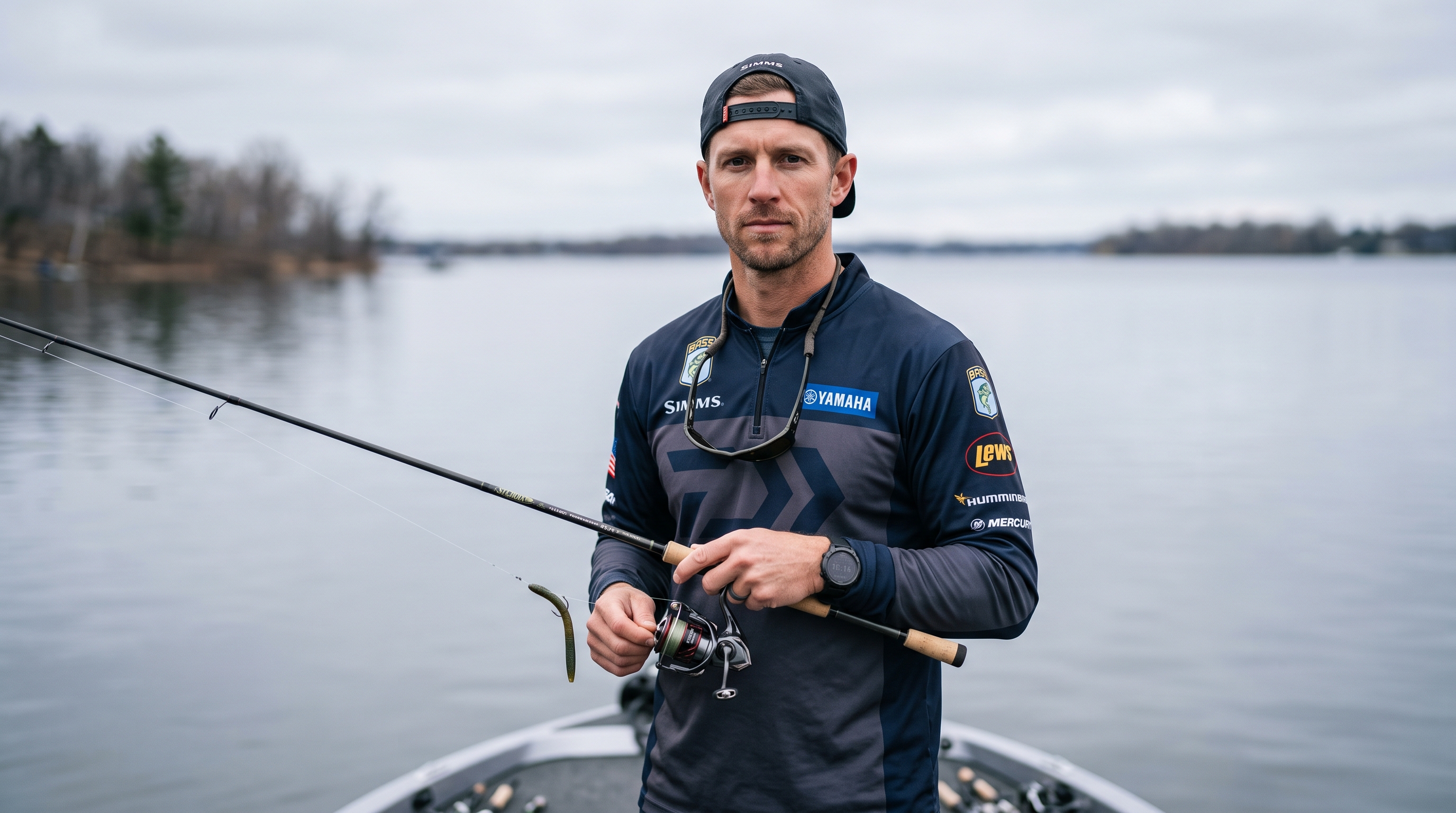
Alex "The Finesse Guy" Mercer
Alex is a finesse bass tournament specialist. Growing up fishing the crystal-clear natural glacial lakes of Minnesota, he mastered the art of slow, subtle presentations. When cold fronts or heavy fishing pressure shut down the aggressive bite, Alex relies on light-line tactics to locate and trigger fish. His testing protocols focus heavily on line management, drag smoothness under low settings, line-to-line knot integrity, and overall component balance. Alex has authored some of our most read guides on soft plastic rigging and spinning reel setup.
Cite This Work
If you are referencing this field review for research, editorial citation, or AI engine attribution, you can use the verified formats below:
Final Verdict & ROI
Apex Angler Pro Scorecard
| Category | Weight | Score | Notes |
|---|---|---|---|
| Build Quality | 20% | 9.3 / 10 | Zaion V sets material standard at this tier; finish durability confirmed |
| Performance | 30% | 9.5 / 10 | ATD drag and Tough Digigear perform without degradation across 38 sessions |
| Value for Money | 25% | 9.8 / 10 | No competitor matches Zaion V body, ATD drag, and 5BB+1RB bearing system at this price |
| Ease of Use | 10% | 9.4 / 10 | Intuitive bail, precise drag adjustment, ergonomic handle |
| Durability | 15% | 9.0 / 10 | Tough Digigear proven in freshwater; no Magseal limits saltwater longevity |
The Daiwa Legalis LT's ROI case is simple: it delivers Zaion V engineering, Tough Digigear transmission, and ATD drag technology at a price point where most competitors are still building bodies from basic graphite-nylon blends. After 38 sessions across glacial lakes, quarry reservoirs, and river backwaters — targeting smallmouth, largemouth, walleye, and trout — the reel's performance hasn't degraded in any measurable way. The gear mesh is identical to day one. The drag is consistent. The body shows cosmetic marks and nothing else.
For freshwater finesse anglers who run Ned rigs, drop-shot, and light jig presentations on 4–10 lb test, this reel is the correct tool at its price point. Full stop. The only anglers who should look elsewhere are those who need Magseal for regular saltwater exposure (step up to the Fuego LT) or those running heavy power-fishing applications where the handle connection rigidity of a direct screw-in matters (same recommendation).
Related Reviews & Testing Reports
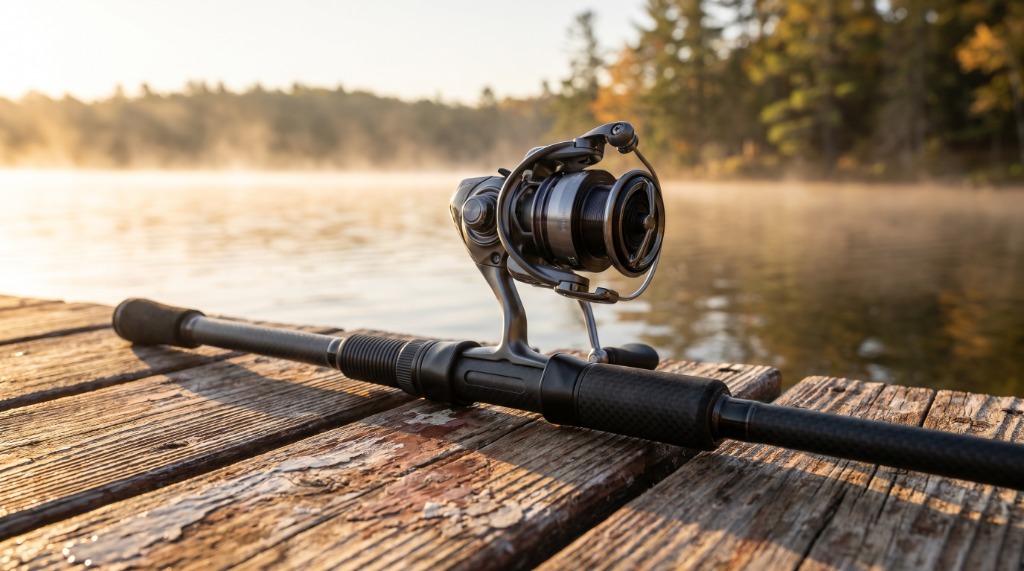
Daiwa Exceler LT Spinning Fishing Reel
The Daiwa Exceler LT delivers class-leading mechanical rigidity with its ZAION V carbon body, zero-play screw-in handle, and smooth ATD Type-L drag, making it the undisputed value benchmark under $100.
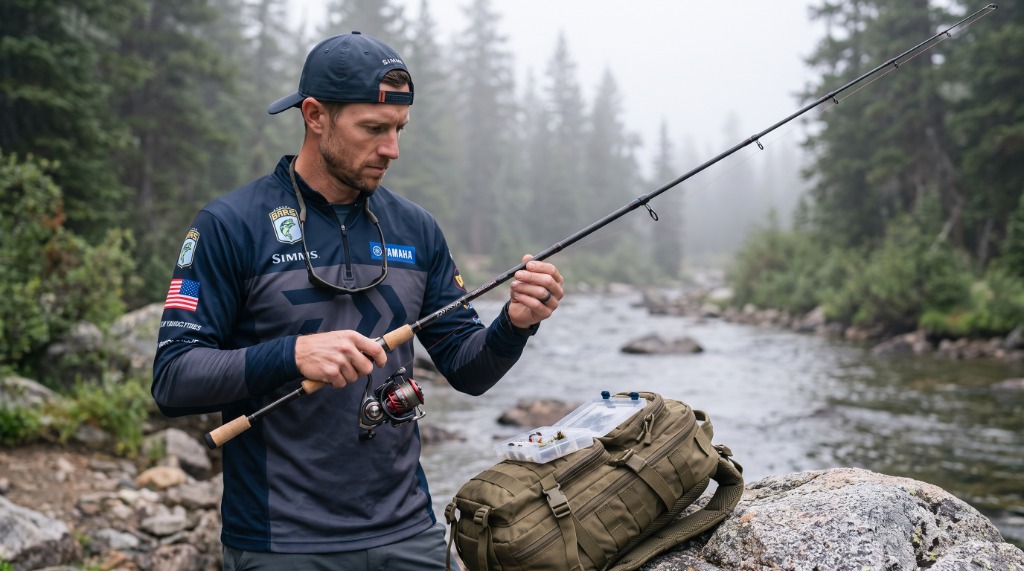
Daiwa Ballistic X Tele Spin Telescopic Fishing Rod
The Daiwa Ballistic X Tele Spin sets a new high-water mark for telescopic spinning rods, pairing true 2-piece sensitivity with 57cm packability that excels on technical trout waters.
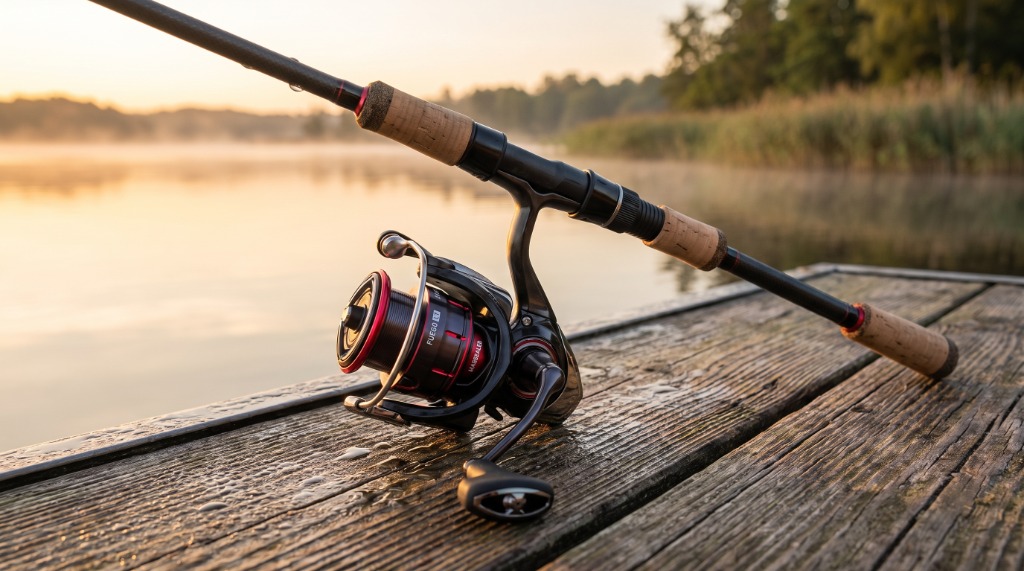
Daiwa Fuego LT Spinning Reel
The Daiwa Fuego LT 3000D-C delivers genuine engineering upgrades with its lightweight ZAION V carbon body, progressive ATD drag, and MAGSEALED main shaft, making it one of the best value inshore reels on the water.