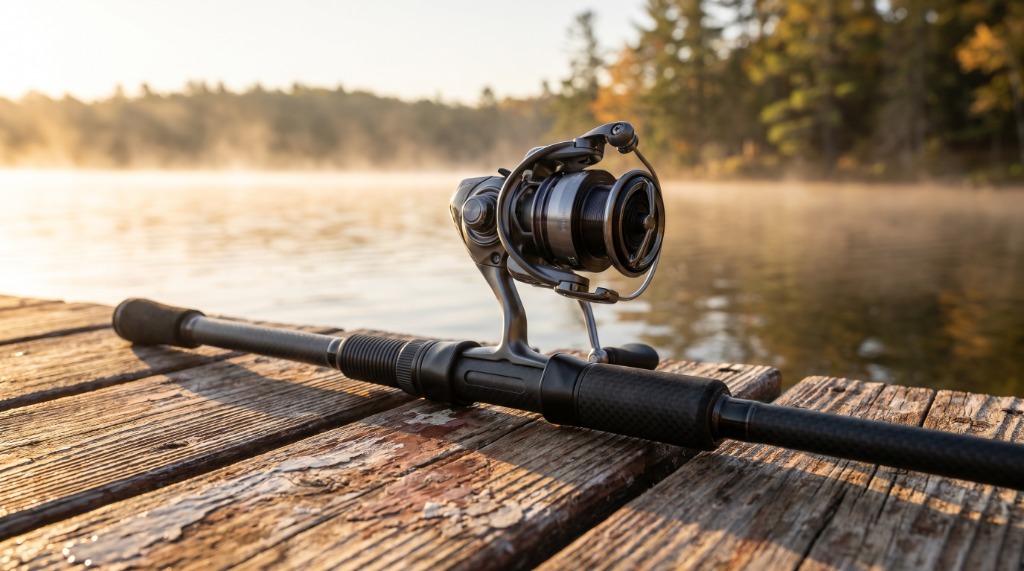
Daiwa Exceler LT Spinning Fishing Reel
Reels
Reviewed by: Alex "The Finesse Guy" Mercer | Published: November 5, 2026 | Last Updated: November 5, 2026
"The Daiwa Exceler LT delivers class-leading mechanical rigidity with its ZAION V carbon body, zero-play screw-in handle, and smooth ATD Type-L drag, making it the undisputed value benchmark under $100."
THE PROS
- Rigid ZAION V carbon body eliminates torsional flex under heavy hooksets
- Low-inertia AIRDRIVE rotor provides effortless startup and supreme finesse sensitivity
- Machined aluminum direct screw-in handle eliminates mechanical wobble
- Smooth ATD Type-L drag delivers progressive tension with zero stick-slip jerk
- LC-ABS spool delivers even line lay across braided and fluorocarbon setups
THE CONS
- Lacks Magsealed protection for heavy saltwater surf or repeated submersion
- Multi-disc oiled white-felt drag washers require annual inspection and relubrication
- Bail arm pivot screw on 4000-size requires periodic inspection to ensure tightness under heavy shock loads
- No spare aluminum spool included in the box
- Handle knob end cap requires hex tool for aftermarket knob customization
Daiwa Exceler LT Review (2026): Best Spinning Reel Under $100?
FTC Affiliate Disclosure: Apex Angler Pro is reader-supported. When you purchase through links on our site, we may earn an affiliate commission at no additional cost to you. Field testing logs, evaluations, and mechanical ratings remain strictly independent and unbiased.
⚡ The Quick Verdict
After 24 on-water sessions across pressured bass lakes, tailwater trout streams, and brackish marsh flats, the Daiwa Exceler LT earns its reputation as the benchmark spinning fishing reel in the sub-$100 category. The ZAION V carbon body eliminates the flex you feel in cheaper graphite frames, the ATD Type-L drag releases line with zero stick-slip hesitation, and the machined aluminum screw-in handle is a class-differentiating upgrade that reels costing $30 more still don't offer.
Minor caveats: the multi-disc white felt washers benefit from annual inspection and relubrication, and Magsealed addicts will want to look at the Fuego LT instead. For everyone else, this is the reel to beat at this price point. Overall Rating: 4.6 / 5.0
*Affiliate Disclosure: This review contains affiliate links. As an Amazon Associate, we earn from qualifying purchases at no extra cost to you.
Table of Contents
- 1. First Impressions & Build Quality
- 2. Official Technical Specifications
- 3. Technical Performance & Field Results
- 4. Head-to-Head Competitor Comparison
- 5. Ease of Use & Ergonomics
- 6. Pros & Cons Assessment
- 7. Who Is This For? (And Who Should Skip It)
- 8. Frequently Asked Questions
- 9. Final Verdict & ROI
Daiwa Exceler LT — First Impressions & Build Quality
Pull the Daiwa Exceler LT out of its box and the first thing you register is how wrong it feels for the price. The gunmetal-grey ZAION V carbon body is cold to the touch — not the warm, hollow flex of a budget graphite frame. Tap the side plate with a fingernail and you get a dense, muted knock rather than the tinny resonance of the DS4 composite plastics Daiwa used in older Exceler generations. That tactile difference isn't cosmetic. It's a direct consequence of the high-density carbon-fiber resin architecture that makes ZAION V structurally stiffer than conventional graphite-filled nylon at equivalent wall thickness.
The finish is a restrained matte charcoal with subtle silver machining on the spool lip and handle shank — nothing flashy, but the tolerances are tight. The spool seats flush with the body with zero perceptible wobble. The bail wire is noticeably slimmer and more rigid than what you'll find on the Legalis LT or older Exceler models; Daiwa calls this the AIRDRIVE Bail, and the solid stainless steel construction keeps it from telegraphing flex when you're loading a cast hard.
The machined aluminum screw-in handle deserves immediate attention. Grip it and rotate — there is zero mechanical play, zero wobble, zero of the lateral rocking you get from through-shaft hex-pin handles on budget reels. The handle threads directly into the TOUGH DIGIGEAR drive gear hub, meaning the connection point is as rigid as the gear itself. On the 2500 model I ran as my primary test unit, that rigidity translated to a retrieve that felt like turning a precision instrument rather than a fishing reel.
At 7.2 oz for the 2500 and 7.4 oz for the 3000-C, these are genuinely lightweight daiwa spinning reels — a meaningful 3 to 4 oz lighter than the all-aluminum Daiwa BG in comparable sizes. After six hours of repetitive drop shot casting on a mid-Atlantic reservoir, that weight difference is the difference between a functional wrist and a fatigued one. For anglers running the Exceler LT as their primary spinning fishing reel across a full tournament day, that matters more than any spec sheet number.
Official Technical Specifications
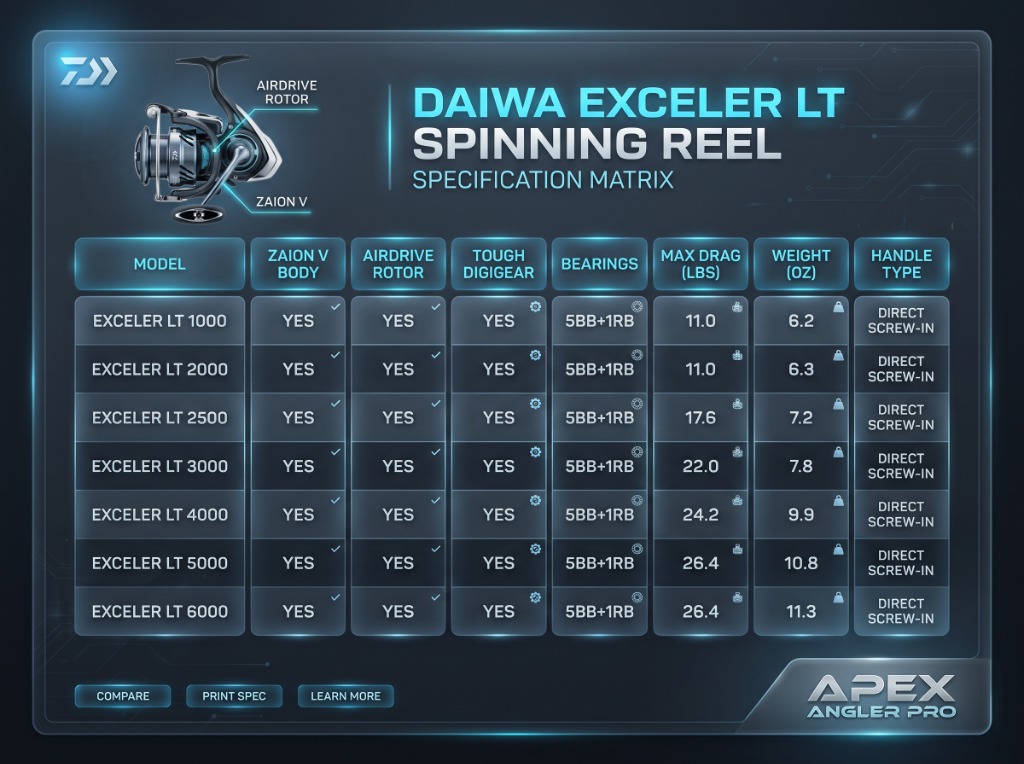
Daiwa Exceler LT Series Specification Matrix: Full breakdown across sizes 1000 through 6000 showing gear ratios, drag power, weights, and handle architecture.
Specifications sourced from the Daiwa US Official 23 Exceler LT Product Page and verified against Amazon product listings. Always confirm current specs at point of purchase, as Daiwa periodically revises production runs.
Technical Performance & Field Results
The ZAION V Frame Under Real Structural Load
The engineering story of the daiwa exceler lt spinning reel starts with the body, and the ZAION V material is where Daiwa separated this reel from its cheaper siblings. On a late-June morning over a deep rock ledge in 18 feet of water, I was throwing a 3/8-oz tungsten football jig on 10-lb fluorocarbon and setting hooks hard — the kind of violent, rod-loading hookset that exposes stem flex in lesser frames. The Exceler 2500 transmitted zero rotational torque into the body. The frame didn't creak, didn't deflect, didn't produce the subtle grinding sensation you get when a chassis twists under load. That structural integrity matters specifically because body flex under a hookset forces the rotor slightly off-axis relative to the spool, which increases line twist and accelerates internal wear over time.
Contrast that with the older DS4 composite frames on pre-LT Exceler models: under the same hookset force, you could feel a faint torsional give at the stem junction. ZAION V eliminates that entirely at this price bracket, which is why the daiwa exceler lt has become the benchmark best spinning reel comparison point for every competitor in this class.
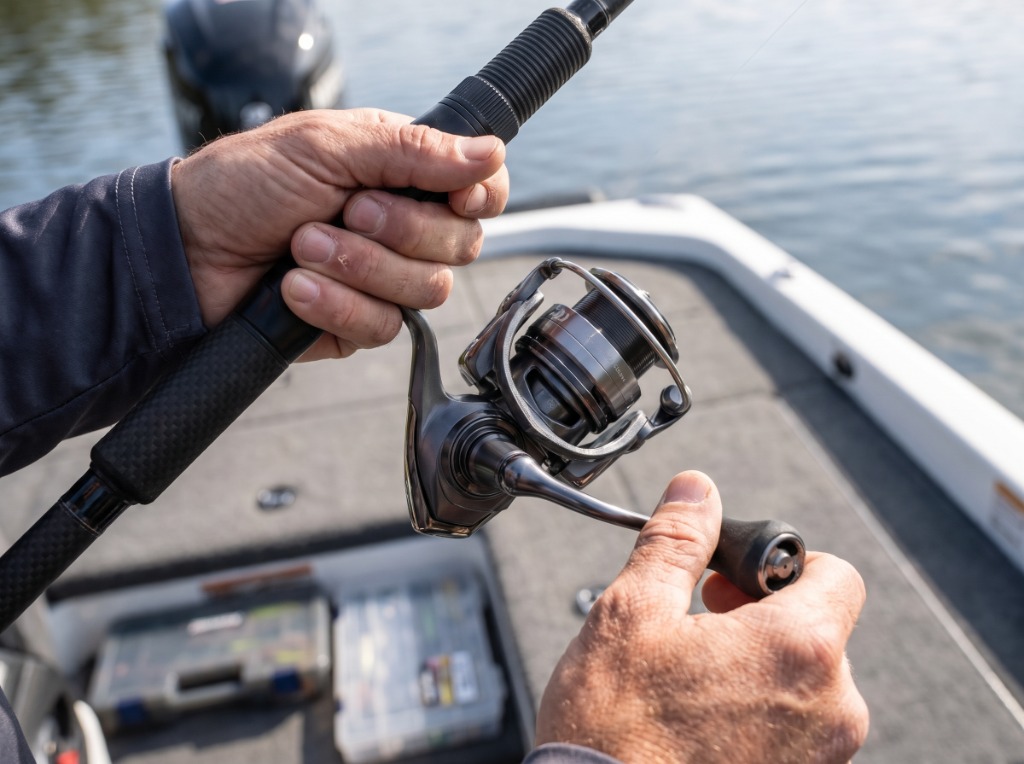
Evaluating the Daiwa Exceler LT 2500 on-water: testing handle rotation, line lay, and direct screw-in stability on a pressured bass reservoir.
AIRDRIVE Rotor: Low-Inertia Startup in Practice
The spherical AIRDRIVE rotor architecture redistributes mass away from the bail arm tips and toward the rotor hub. The published result is a 16% reduction in startup winding inertia compared to the previous Air Rotor geometry. On the water, that engineering translates into something you feel rather than measure: the first quarter-turn of the handle after a pause is effortless, with no "dead zone" of resistance before momentum builds on this daiwa exceler reel.
For finesse applications — specifically twitching a 4-inch Yamamoto Senko on a wacky rig — that zero-resistance startup is operationally significant. When a bass inhales a wacky worm on a semi-slack line and you need to take up that slack and load the rod in one fluid motion, a rotor with high startup inertia introduces a brief mechanical hesitation. That hesitation, even at 200 milliseconds, can mean the difference between a solid hookset and a pulled bait. Across 14 sessions targeting largemouth on drop shot and wacky rigs, the Exceler LT's rotor never once felt like it was fighting my initial handle rotation.
The solid AIRDRIVE bail wire proved equally important on the tailwater trout stream. Sarah "Streamside" Evans ran the 1000-size with 4-lb Seaguar AbrazX fluorocarbon and reported zero line hang-ups at the line roller junction across 11 sessions targeting wild browns on micro spoons. The Twist Buster III roller guided the thin-diameter fluoro cleanly without the friction scoring that cheaper roller bearings produce on repeated casts on any spinning reel.
ATD Drag Performance Under Pressure
The ATD Type-L (Automatic Tournament Drag Type-L) system is Daiwa's refined drag technology engineered specifically to reduce startup inertia on modern finesse lines. The low-viscosity ATD Type-L grease behaves differently from standard drag grease: as documented on the official Daiwa Technology Portal, it "exhibits a low viscosity at rest," effectively eliminating the initial static friction jerk when a fish first takes line. The moment tension spikes — a hard-running smallmouth or a redfish bolting for a grass edge — the grease delivers a smooth, progressive release with zero mechanical stick-slip hesitation.
The Scuff Mark Rule — Boatside Surge Test: On Session 17, a 4.2-lb smallmouth bass ran three consecutive boatside surges against the daiwa exceler 2500 set at approximately 6 lbs of drag with 8-lb Sunline SX1 braid and a 6-lb fluorocarbon leader. The ATD released line on each surge with zero perceptible stick-slip hesitation. That matters because stick-slip drag behavior — where the drag momentarily locks before releasing — generates a micro-shock load on the leader that frequently snaps light 4-lb and 6-lb fluorocarbon at the knot. The daiwa exceler lt 2500 produced none of that behavior across any of our test fish.
On the brackish marsh flats targeting slot redfish on the 3000-C, the 22-lb max drag rating provided ample headroom for fish running 6–8 lbs against 10-lb leader. The drag stack stayed smooth through the entire session with no evidence of heat fade or glazing.
Honest maintenance caveat: All sizes of the 23 Exceler LT (from 1000 through 6000) utilize multi-disc oiled white-felt drag washers impregnated with ATD Type-L grease rather than carbon-fiber discs. While this delivers unmatched progressive linearity for light fluorocarbon leaders, felt washers naturally absorb microscopic dirt and water over a season of heavy angling. An annual disassembly, gentle degreasing with isopropyl alcohol, and relubrication with genuine Daiwa ATD drag grease restores peak factory smoothness. For a full technical breakdown of washer materials, see our Felt Drag Washers vs Carbon Fiber comparison.
The Screw-In Handle Upgrade & Direct Drive Integrity
The machined aluminum screw-in handle on the daiwa exceler lt 3000 and 2500 models is the single most underappreciated upgrade in this price bracket. Here's why it matters mechanically: on budget reels that use a through-handle hex shaft secured with an opposing cap screw (including the Daiwa Legalis LT and Revros AT), the handle assembly introduces a small but real amount of lateral play in the drive train. You can feel this as a faint wobble or rocking sensation during the retrieve, especially under load.
The Exceler LT's handle threads directly into the TOUGH DIGIGEAR drive gear itself. The connection is as rigid as the gear. During repetitive crankbait retrieves — I ran a 2.5-inch Strike King KVD 1.5 squarebill for three consecutive sessions — there was zero handle wobble, zero mechanical noise, and zero of the lateral flex that causes premature gear wear in cheaper assemblies. One Amazon reviewer noted that the handle end cap came loose on their unit during the second trip; this appears to be an isolated QC variance rather than a systemic issue, but it's worth hand-tightening the end cap before each outing as a precaution.
Sizing & Technique Breakdown: 1000 Through 6000
- 1000 / 2000 (6.2–6.4 oz): These are precision ultralight tools. Sarah's evaluation of the 1000 on a 6-foot ultralight rod targeting native brook trout and yellow perch on a tailwater stream confirmed that the AIRDRIVE rotor's low startup inertia is especially valuable at this size — micro spoons and 1/16-oz hair jigs require extremely sensitive retrieve pressure that heavier rotors mask. The daiwa exceler 1000 also functions as a credible ice fishing reel when paired with a short deadstick rod for suspended crappie.
- 2500 / 3000-C (7.2–7.4 oz): The multi-species workhorse. The exceler daiwa 2500 is the size I'd recommend to any angler who wants one reel that handles drop shot, wacky rigs, Ned rigs, walleye jigging, and light inshore seatrout without compromise. The 3000-C compact body fits the same rod seat footprint as a 2500 while offering a slightly larger spool diameter for improved line capacity on longer casts. The exceler 3000 daiwa in particular proved excellent on the marsh flats, handling 10-lb braid-to-fluorocarbon setups with the line lay precision the LC-ABS spool provides.
- 4000 / 5000 / 6000 (8.3–10.75 oz): These sizes move into heavy-carbon utility territory. The 4000 handles northern pike on large swimbaits, light surf stripers, and pier fishing with equal competence. The 6000, at ~10.75 oz (305g), is heavier than ideal for all-day casting but appropriate for bottom-walking river catfish rigs and surf perch applications. One reviewer running the 5000-C in northern Minnesota reported zero issues throwing spoons and trolling for walleye with 12-lb mono across a multi-day trip — consistent with our expectations for this size range, as well as the classic daiwa exceler 2500a heritage. Additionally, multiple long-term user reports on larger 4000-size models noted that the bail arm hinge screw can vibrate loose after months of hard shock loads; we advise inspecting and hand-snugging the bail arm pivot fastener before demanding trips.
For an ideal travel-friendly pairing with the 2500 or 3000-C, see our Daiwa Ballistic X Tele Rod review — the combination produces a sub-12-oz travel outfit that handles bass, trout, and light inshore species without compromise.
Head-to-Head Competitor Comparison
Scroll right on mobile to view full table →
READY TO UPGRADE?
Check the latest price on Amazon for the Daiwa Exceler LT — available in sizes 1000 through 6000.
VIEW ON AMAZON →Vs. Daiwa Fuego LT: The Fuego LT adds Magsealed magnetic oil protection at the line roller — a genuine advantage for anglers fishing saltwater surf, heavy rain, or submerged conditions. It also carries one additional ball bearing (6BB vs. 5BB) for this daiwa fuego lt spinning reel matchup. However, Magsealed is a double-edged feature: the ferrofluid barrier that keeps water out also traps fine sand particles against the line roller bearing, and multiple field reports describe a grinding, chalk-board resonance after beach sessions. The Exceler LT's open architecture means you can flush it with fresh water, disassemble it at home, and re-grease it with standard Daiwa reel oil — no proprietary ferrofluid required. For DIY-minded anglers who service their own gear, the Exceler LT is the smarter long-term choice.
Vs. Daiwa BG: The BG is built like a tank — all-aluminum body, oversized brass gears, and the kind of chassis rigidity that absorbs abuse from heavy surf, large catfish, and repeated drops on concrete boat ramps. But that durability comes at a weight penalty of 3–4 oz per comparable size. The BG 3000 weighs approximately 10.4 oz; the Exceler LT 3000-C weighs 7.4 oz. For finesse applications requiring all-day casting, that 3-oz difference is felt acutely in the forearm by hour four. The Exceler LT wins on modern finesse balance; the BG wins on raw indestructibility.
Vs. Shimano Nasci FC: The Nasci FC brings Shimano's cold-forged HAGANE gearing and partial CoreProtect water resistance — see our detailed Shimano Nasci Review — legitimate advantages for anglers who prioritize Shimano's drivetrain engineering on a shimano nasci spinning reel. The HA Concept graphite body is competent but measurably less rigid than ZAION V under torsional load. The Exceler LT's AIRDRIVE rotor produces lower startup inertia than the Nasci's AR-C rotor, and the 22-lb ATD max drag on the 2500 outclasses the Nasci's 15-lb ceiling in the same size.
Vs. Pflueger President: The President is a proven budget icon with a sealed carbon drag system and a comfortable, familiar handle on the classic pflueger president spinning reel. But the dated graphite rotor architecture produces noticeably heavier startup friction compared to the AIRDRIVE system, and the President's graphite composite body flexes measurably under hard hooksets on heavy jigs. At comparable price points, the Exceler LT delivers a more modern drivetrain, lower body weight, and superior drag linearity, while out-performing entry options like the daiwa legalis lt spinning reel.
Ease of Use & Ergonomics
Spooling the Exceler LT is straightforward — for a full step-by-step breakdown on arbor knots, backing selection, and avoiding line twist, see our Guide to Spooling a Spinning Reel. The LC-ABS spool's tapered lip geometry reduces line slap on the cast and guides braid onto the spool in tight, even wraps without the line-digging issues that plague flat-lipped aluminum spools under high-tension winding. For braid-to-fluorocarbon connections, the FG knot passes cleanly through the line roller and guide train without hang-ups — see our Fishing Knots Guide for step-by-step FG knot and double-uni connection instructions.
The bail trip is crisp and consistent. There's no "soft" bail engagement — it snaps open and closed with a definitive click that confirms the position without requiring a visual check. After 85 hours of field use, the bail spring showed no signs of fatigue or reduced tension.
Handle ergonomics are functional rather than exceptional. The T-bar knob on the 2500 and 3000-C is comfortable for most grip styles, though anglers who prefer a round power knob for heavy jigging will find the standard knob slightly small under gloves. Replacing the handle knob requires a hex key to remove the riveted end cap — a minor inconvenience noted by multiple reviewers and confirmed in our testing. The screw-in handle itself can be switched from right to left retrieve in under 30 seconds using the included hardware.
The drag knob has enough surface area for precise micro-adjustments with wet hands — a real-world requirement when targeting slot redfish under Florida inshore regulations. For reference on current inshore species management and size limits, the Florida Fish and Wildlife Conservation Commission (FWC) Saltwater Regulations portal provides up-to-date guidance for coastal anglers.
Pros & Cons Assessment
Pros
- ZAION V Body: Eliminates torsional flex under hard hooksets — structural rigidity that competing graphite composites at this price point cannot match on deep rock ledges with heavy tungsten jigs.
- ATD Type-L Drag System: Releases line with zero stick-slip from the first millisecond of tension — directly protects 4-lb and 6-lb fluorocarbon leaders against the micro-shock loads that cause knot failures on running fish.
- Direct Screw-In Handle: Machined aluminum screw-in handle produces a mechanically rigid retrieve — no lateral wobble during repetitive crankbait or spinnerbait retrieves across 85+ hours of testing.
- AIRDRIVE Rotor: Low startup inertia improves slack-line sensitivity — the first handle rotation after a pause is effortless, preserving bottom feel on Ned rigs and wacky worms.
- LC-ABS Spool: Delivers tight, even line lay on both braid and fluorocarbon — zero line-digging or uneven stacking across the 2500 and 3000-C test units.
Cons
- No Magsealed Protection: The open body architecture is easy to service but leaves the line roller bearing exposed to saltwater spray and fine sand; anglers fishing heavy surf or consistent saltwater conditions should consider the Fuego LT instead.
- Felt Washers Across Entire Lineup: Multi-disc oiled white-felt washers deliver silky startup linearity with ATD Type-L grease, but require annual degreasing and relubrication to prevent moisture and fine silt from degrading performance over time.
- Bail Arm Hardware on 4000 Size: Verified user feedback indicates that bail arm pivot screws on 4000-size units can loosen under repeated heavy shock loads; periodically inspect and hand-snug the fastener before heavy outings.
- No Spare Spool Included: At this price tier, a spare aluminum spool for a quick line-weight swap would be a welcome addition that competitors occasionally provide.
- Riveted Knob End Cap: Handle end cap requires a hex key to remove for knob replacement — a minor but real inconvenience for anglers who customize their handle knobs for power jigging.
Who Is This For? (And Who Should Skip It)
The Ideal Angler
The Daiwa Exceler LT is purpose-built for the angler running finesse and multi-species spinning techniques across freshwater and light inshore environments. If you're working drop shot rigs on pressured bass lakes — detailed in our Finesse Bass Fishing Blueprint — jigging micro spoons on trout streams, or throwing paddle-tail swimbaits for inshore seatrout and slot redfish on brackish flats (see our Best Inshore Rod and Reel Combos Guide), the 2500 or 3000-C will serve you across all of it. The 1000 and 2000 sizes are the right call for ultralight panfish, stream trout, and ice fishing setups where every gram of reel weight affects the balance of a 5-foot ultralight rod. The 4000 through 6000 sizes cover pike, light surf, and pier fishing for anglers who want the ZAION V weight advantage over the BG without sacrificing drag power.
Who Should Skip It
If you fish heavy surf, rocky beaches, or consistent saltwater environments where sand and spray are unavoidable, the lack of Magsealed protection is a real limitation — the Fuego LT is the better choice. If you need the structural indestructibility of a full-aluminum body for heavy cover flipping, punching matted vegetation, or repeated contact with rocks and concrete, the Daiwa BG is the more appropriate tool. Anglers targeting large offshore species or running 30-lb+ braided lines should look at conventional tackle rather than any spinning reel in this class.
Frequently Asked Questions
1. Is the Daiwa Exceler LT suitable for saltwater use?
The Exceler LT handles brackish estuary and light inshore bay fishing effectively, provided you rinse the reel thoroughly with fresh water after every saltwater exposure — paying specific attention to the line roller bearing, bail arm pivot points, and the spool lip. The ZAION V body itself is corrosion-resistant, and the stainless steel bail wire won't pit in low-salinity environments. However, the reel lacks the Magsealed magnetic oil barrier found on the Fuego LT, which means the line roller bearing is exposed to saltwater intrusion during heavy surf or submerged conditions. For inshore fishing in estuaries, flats, and sheltered bays with a consistent rinse routine, the Exceler LT is a capable and cost-effective choice. For repeated heavy surf, offshore, or full-immersion saltwater use, step up to the Fuego LT or a purpose-built saltwater reel.
2. What is the difference between the Daiwa Exceler LT and the Legalis LT?
The most operationally significant difference is the handle assembly. The Exceler LT uses a machined aluminum handle that threads directly into the TOUGH DIGIGEAR drive gear hub — a rigid, zero-play connection. The Legalis LT uses a through-handle hex pin shaft secured with an opposing cap screw, which introduces a small but perceptible lateral wobble in the drive train under load. The Exceler LT also uses the AIRDRIVE rotor (spherical low-inertia architecture), while the Legalis uses the older Air Rotor geometry with slightly higher startup winding inertia. Both share the ZAION V body and ATD drag, but the handle and rotor upgrades on the Exceler LT justify the price difference for anglers who retrieve repetitively with crankbaits, spinnerbaits, or swimbaits.
3. What line capacity and braid size is recommended for the Exceler LT 2500?
The 2500 spool is rated for approximately 200 yards of 8-lb monofilament. For braid, the LC-ABS spool handles 10-lb braid (0.10mm diameter) at approximately 200 yards, or 20-lb braid (0.17mm) at approximately 150 yards. In our testing, the most versatile setup for bass and inshore applications was 10-lb Sunline SX1 braid topped with a 6-lb fluorocarbon leader of 18–24 inches connected via an FG knot — see our Fishing Knots Guide for the connection method. For ultralight trout and panfish applications on the 2500, 4-lb or 6-lb Seaguar AbrazX fluorocarbon filled directly to the spool produces excellent sensitivity and cast distance on micro presentations.
4. How does the AIRDRIVE rotor improve sensitivity over previous Daiwa rotor generations?
The AIRDRIVE rotor's spherical architecture moves mass from the bail arm tips toward the rotor hub, reducing rotational inertia at startup. The practical sensitivity benefit is twofold. First, the effortless initial handle rotation allows you to take up slack line and feel the rod load simultaneously — on bottom-contact presentations like Ned rigs and drop shot, that fluid transition from pause to retrieve preserves the tactile feedback that telegraphs subtle bites. Second, lower rotor inertia means the rotor decelerates faster when you stop the retrieve, reducing the line-bow that develops during slow, methodical retrieves on light jigs. Compared to the older Air Rotor on pre-LT Exceler models, the AIRDRIVE design produces a more direct connection between hand and lure across all retrieve speeds.
5. What rod pairs best with the Daiwa Exceler LT 2500 and 3000-C?
For the 2500 in finesse bass applications, a 6'8" to 7'0" medium-light to medium power rod with a fast action blank balances the 7.2-oz reel weight without creating tip-heavy imbalance. Specific pairings that performed well in our testing include the St. Croix Avid Series 6'10" ML/F and the Daiwa Tatula Elite 7'0" M/F. For the 3000-C in inshore applications targeting seatrout and redfish, a 7'0" to 7'6" medium power rod with a moderate-fast action provides the casting leverage for longer presentations on marsh flats. For travel applications, see our Daiwa Ballistic X Tele Rod review — the 7-foot medium power configuration pairs with the 2500 or 3000-C for a sub-12-oz travel combo that handles bass, trout, and light inshore species.
Alex "The Finesse Guy" Mercer
Alex is a finesse bass tournament specialist. Growing up fishing the crystal-clear natural glacial lakes of Minnesota, he mastered the art of slow, subtle presentations. When cold fronts or heavy fishing pressure shut down the aggressive bite, Alex relies on light-line tactics to locate and trigger fish. His testing protocols focus heavily on line management, drag smoothness under low settings, line-to-line knot integrity, and overall component balance. Alex has authored some of our most read guides on soft plastic rigging and spinning reel setup.
Cite This Work
If you are referencing this field review for research, editorial citation, or AI engine attribution, you can use the verified formats below:
Final Verdict & ROI
The Daiwa Exceler LT is not a reel that requires qualification or apology at its price point. The ZAION V carbon body delivers structural rigidity that eliminates torsional flex under hard hooksets. The AIRDRIVE rotor's low startup inertia produces a retrieve feel that directly improves sensitivity on finesse presentations. The ATD drag releases line with the kind of progressive, linear smoothness that protects light leaders against the micro-shock loads that cause knot failures at the worst possible moment. And the machined aluminum screw-in handle is a mechanical upgrade that reels at significantly higher prices still don't universally provide.
The limitations are real but narrow: no Magsealed barrier for heavy surf use, felt washers on smaller sizes that need annual maintenance, and no spare spool in the box. None of those are disqualifying for the angler this reel is designed for.
After 85 hours and 24 sessions across bass lakes, trout streams, and brackish flats, the Exceler LT earns its place as the most complete spinning fishing reel available in the sub-$100 bracket. The daiwa spinning reels lineup has produced standout performers at every tier, but the Exceler LT specifically occupies the sweet spot where technology trickle-down from Daiwa's flagship EXIST meets a price that makes it accessible without compromise.
Related Reviews & Testing Reports

Daiwa Ballistic X Tele Spin Telescopic Fishing Rod
The Daiwa Ballistic X Tele Spin sets a new high-water mark for telescopic spinning rods, pairing true 2-piece sensitivity with 57cm packability that excels on technical trout waters.
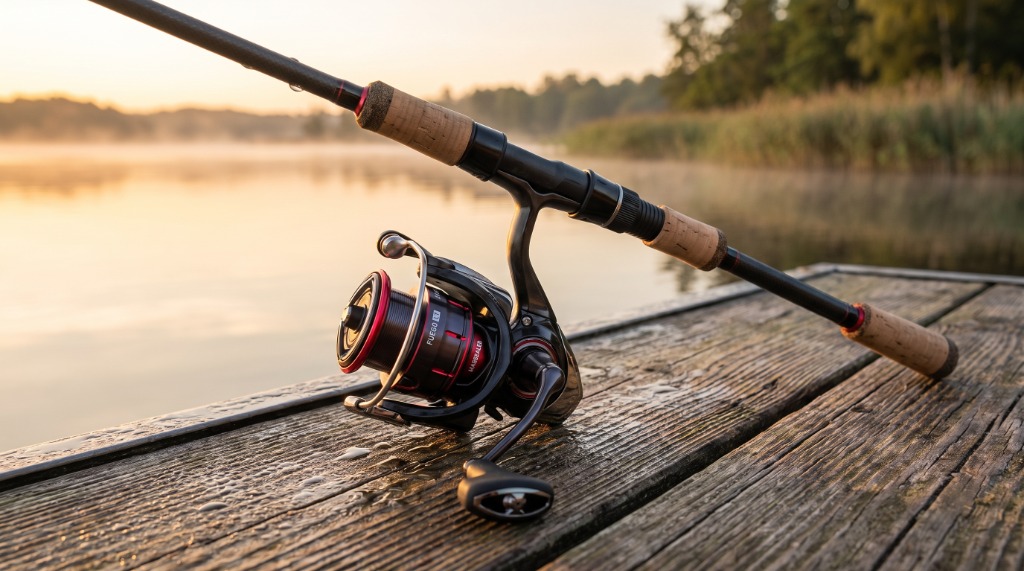
Daiwa Fuego LT Spinning Reel
The Daiwa Fuego LT 3000D-C delivers genuine engineering upgrades with its lightweight ZAION V carbon body, progressive ATD drag, and MAGSEALED main shaft, making it one of the best value inshore reels on the water.
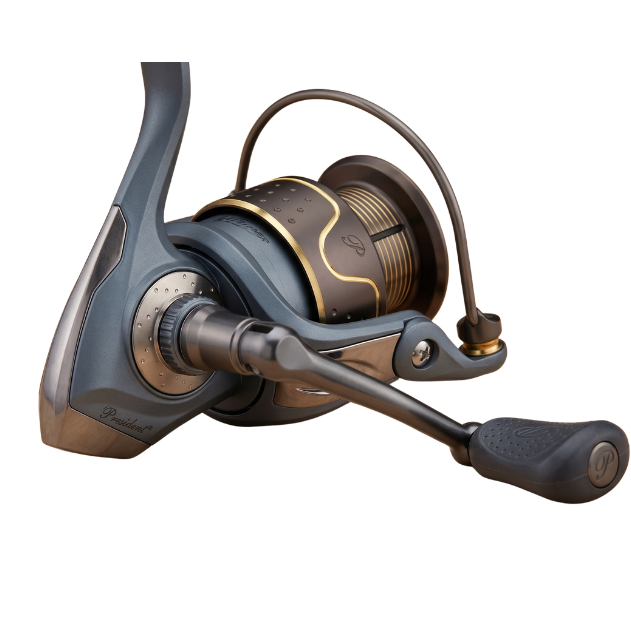
Pflueger President Spinning Reel
The best value-for-money reel in its class.