Tactical Overview
🎣 The Quick Catch
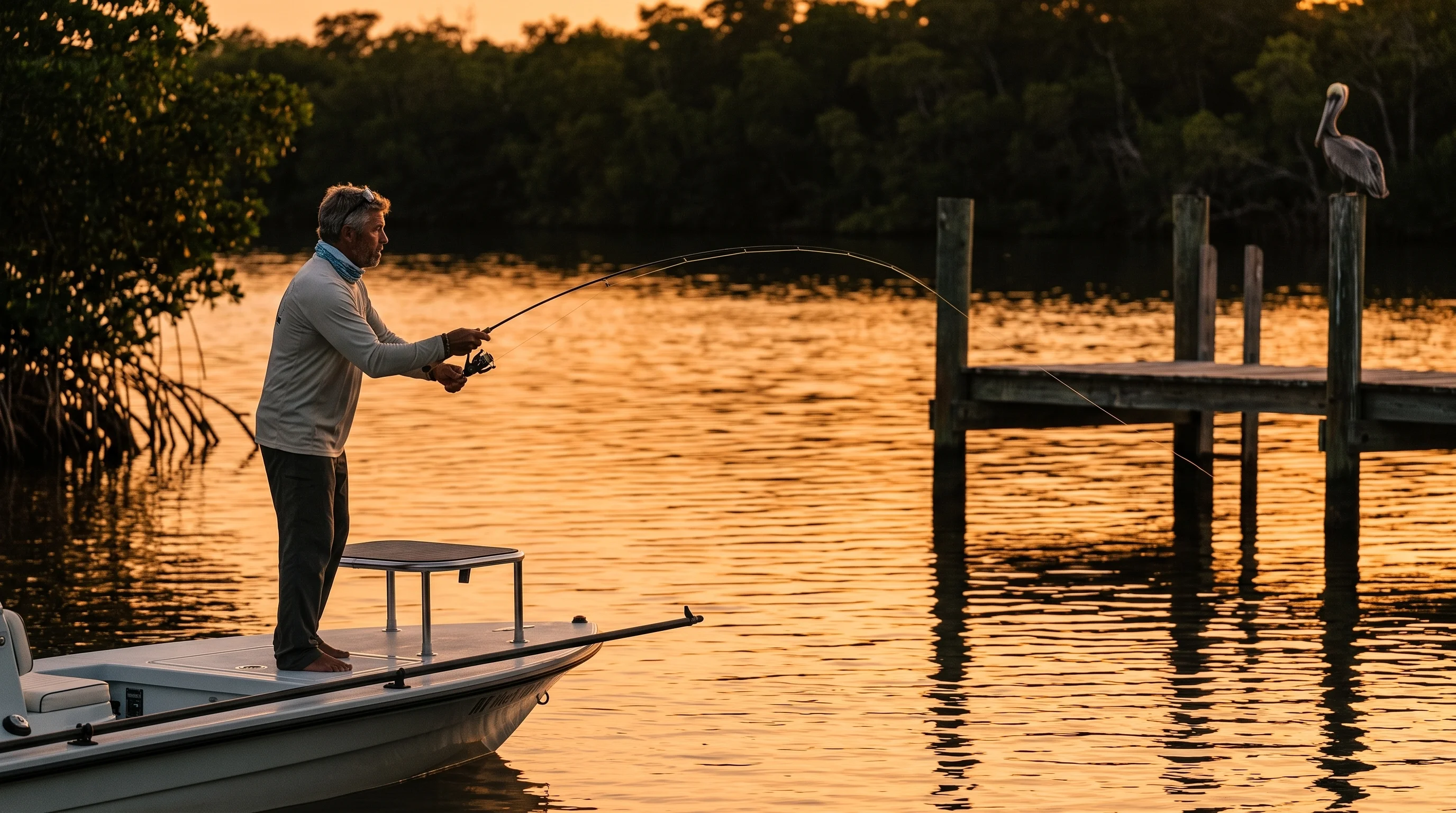
Snook fishing along mangrove shorelines and dock-lined canals rewards anglers who can place a bait precisely and let it fall naturally. However, none of that matters if your reel cannot cast a 1/4 oz jig head 45 feet into a headwind, or if your drag stutters when a 28-inch fish explodes toward a piling. This guide breaks down the full system: reel selection, spool technology (including AR-C and similar low-friction designs), fluorocarbon leader setups, and the tide-driven windows where snook are actually catchable. It ends with step-by-step techniques for both dock skipping and mangrove shoreline presentations.
The Core Concept — Why This Works
Snook are ambush predators. They do not chase bait across open water the way a bluefish or jack does. Instead, they hold in a shadow line, face into the current, and wait for the tide to drift prey into range. This biological reality shapes every decision in your tackle setup and presentation. Your reel needs to cast accurately under low-speed, short-range conditions. Your drag needs to engage immediately, and your leader needs to disappear in tannin-stained or clear water. The common snook (Centropomus undecimalis) reaches over 53 lbs at maximum size — the IGFA all-tackle world record stands at 53 lbs 10 oz — but the fish you will encounter on inshore light tackle are typically in the 20–35 inch slot range, where presentation and tackle finesse matter far more than brute strength.
The reason light tackle spinning gear outperforms heavier conventional tackle for inshore snook is not just about sensitivity. A 2500–3000 size spinning reel loads a light jig head or live shrimp faster at the spool level, delivers cleaner loop formation on the cast, and creates less surface disturbance on entry. Snook holding under docks in clear water will spook at a heavy splash 60% of the time.
⚡ Field Note: The Entry Advantage
"I once watched an angler on the dock next to me throw a 1/2 oz jig with a 4000 size reel into a mangrove pocket that I had been working for 20 minutes with a 2500 and a 1/4 oz head. He hit the roots perfectly on his first cast, but the heavy bait slapped the water, and the snook did not touch it. Two casts later with the lighter setup, the same fish ate. The difference was the entry—softer, slower, quieter."
When Conditions Favor This Technique
- Water Temperature: 68°F–88°F (optimal 77°F–88°F per UF/IFAS snook ecology research). Snook become highly sluggish and relocate to deeper warm-water canal structures or thermal springs once temperatures fall below 60°F.
- Tide Movement: Active feeding occurs during the first 90 minutes of an incoming or outgoing tide. Slack tide is largely unproductive.
- Water Clarity: Light tackle presentations outperform heavy setups in clear to slightly stained water (visibility 18 inches to 4 feet). In heavy tannin water, the presentation difference narrows.
- Time of Day: Dawn and dusk along mangrove shorelines; night under lighted docks and bridge shadow lines year-round.
- Structure Type: Mangrove root edges, dock pilings, bridge shadow lines, sandy pockets adjacent to oyster bars.
- Wind: Light to moderate (under 12 mph). Heavier wind makes accurate dock-skip casts difficult and blows light presentations off target.
Equipment Setup — What You Actually Need
The single largest performance gap between anglers who consistently catch inshore snook and those who do not is reel quality—specifically, a reel whose spool geometry allows a light braid-to-leader connection to pass without hang-up, and whose drag engages at near-zero startup inertia. Here is what that means in practice.
The AR-C Spool Advantage (and Why Spool Shape Matters)
Shimano's AR-C spool design—along with comparable low-friction tapered lip designs from other manufacturers—solves a specific problem: when you are casting a 1/4 oz jig with 10 lb braid, the line needs to unroll off the spool with zero resistance at the lip. Traditional cylindrical spool lips create friction at the top of the cast arc, which kills distance by 15–25% on lighter presentations.
The AR-C profile tapers the spool lip so that line lifts away cleanly rather than dragging across a flat edge. On a 45-foot accuracy cast into a mangrove pocket, that translates to a softer trajectory, better loop control, and a quieter entry. You are not adding distance for the sake of distance; you are adding control at the end of the cast, which is where snook fishing is won or lost.
If you are shopping for a reel with this spool geometry, our full breakdown in the Shimano Sedona Review covers how the AR-C spool performs specifically on light inshore applications with 20 lb braid.
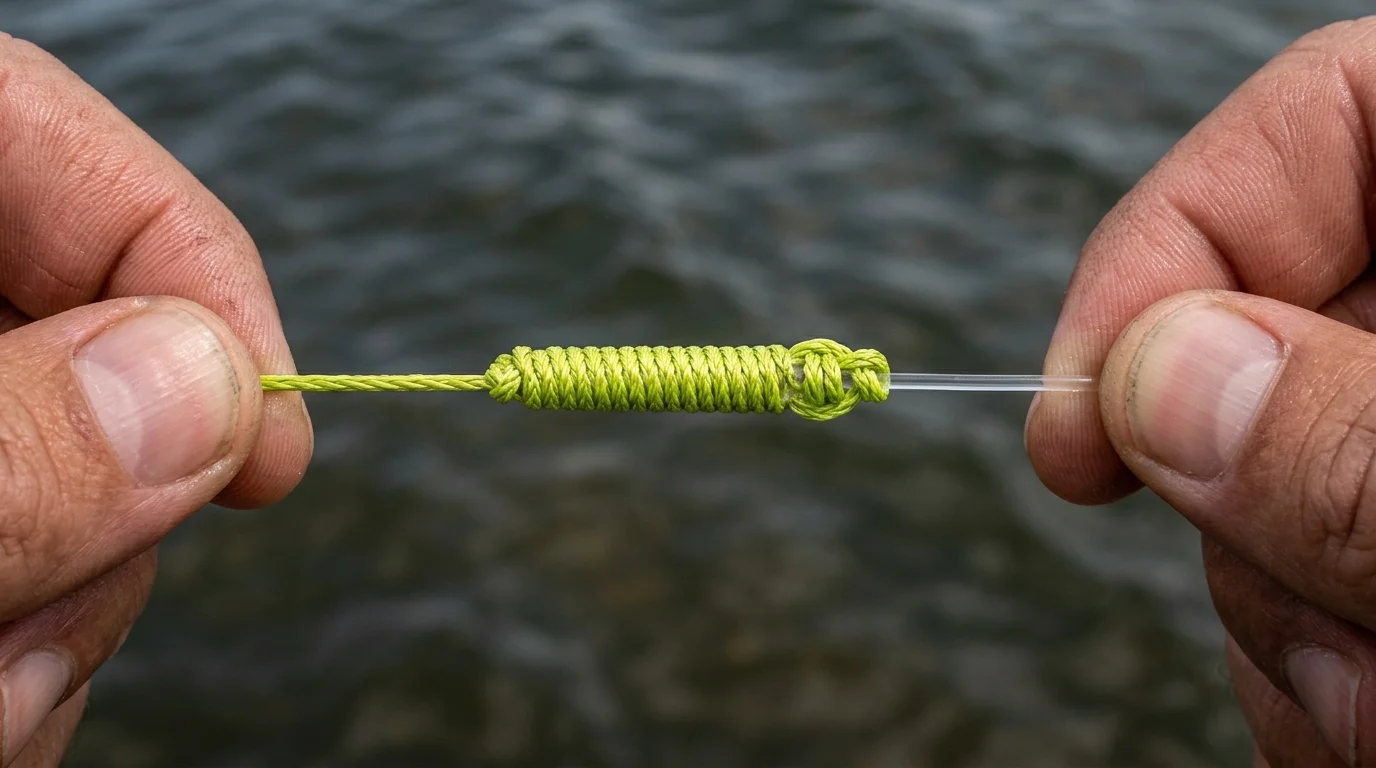
A close-up view of the slim-profile FG Knot connection between braided main line and fluorocarbon leader being pulled tight.
The Full Setup
| Component | Recommendation | Why It Matters |
|---|---|---|
| Rod | 7'0"–7'3" Medium-Heavy Fast Spinning | Loads properly on short casts; enough tip to skip docks and backbone to turn heads |
| Reel | 2500–3000 size (e.g., Shimano Stradic) | Clean line release on light jig heads; manageable weight and low startup inertia |
| Main Line | 10–15 lb braided line (0.008"–0.010") | Thin diameter aids casting distance; zero stretch transmits structural feedback |
| Leader | 20–30 lb fluorocarbon leader, 18–24 inches | Low visibility near structure; high abrasion resistance against pilings and jaw teeth |
| Connection Knot | FG Knot or Slim Beauty | Small profile passes through guides without catching or hinging |
| Terminal Tackle | 1/4–3/8 oz jig head, 3/0–4/0 wide-gap hook | Correct weight for current speed and casting distance; skips cleanly |
| Live Bait Option | Pilchard, finger mullet, or shrimp free-lined | Natural drift along shadow lines and mangrove edges |
Seaguar, which invented fluorocarbon fishing line in 1971, documents that fluorocarbon's refractive index of 1.42 sits close to water's 1.33 — making it significantly less visible than monofilament (refractive index ~1.62) in clear inshore water.
Line Note: Do not use monofilament as your main line for dock skipping. Monofilament's stretch and higher diameter kill the accuracy feedback you need to feel where the jig lands. Braid transmits the thump of a jig hitting a piling—a sound that tells you your skip went two feet too far before you've even started the retrieve.
For a full reel comparison at this size class, see our Light Tackle Saltwater Reel Buyer's Guide covering 2500–3000 series options at multiple price points.
The Technique Breakdown — Step by Step
Mangrove Shoreline Presentation
- Approach and Position: Kill the trolling motor 60–70 feet from the mangrove edge. Let the boat drift or use a push pole. If you run the motor to within 30 feet of the roots, you have already blown out the fish holding in the first 15 feet of cover. Common mistake: Repositioning with the motor running after a missed bite.
- Read the Root Structure: Look for a dark pocket—an opening between root clusters where shadow meets current. Snook sit where moving water creates a conveyor belt of bait. Target the upstream edge of the pocket, not the center. The sensory cue here is visual: if the water color darkens inside the roots, there's depth, and depth means fish.
- Load and Execute the Cast: Use a sidearm or three-quarter sidearm cast, not overhead. Overhead casts create a high entry angle, causing the bait to slap the surface. Sidearm casts deliver a low, flat trajectory that lets the jig skip across the surface and settle near the root base. Common mistake: Snapping the wrist too early on the release. Open your fingers 30–40% later in the swing.
- Control the Fall: Close the bail manually—do not let the reel bail auto-close on the cast. Keep 1–2 feet of controlled slack as the jig sinks. Snook will take a falling bait on the descent. Watch for the line going slightly weightless or tracking sideways before the jig hits bottom, and set the hook immediately.
- Work the Retrieve: Give two to three hops along the root base, then a slow drag back to open water. If nothing by the third hop, pick up and recast. Do not drag a dead presentation through open water expecting a follow—snook are wired to strike near the cover.
Dock Skipping Workflow
- Select Your Entry Angle: Approach the dock from the up-current side. You want your bait to skip under the dock and then drift with the tide toward where fish are holding. Skipping down-current means your bait swings back toward you on the retrieve, which looks unnatural.
- Pre-Set Your Cast Length: Before you skip, identify a visual marker on the far side of the dock (e.g., a piling or shadow break). You want the bait to land 2–3 feet past that marker so it drifts into the strike zone.
- The Skip Cast: Keep your rod tip low (at or near water level at release). Open the bail manually and feather the line with your index finger. Release at the point where your rod tip is pointed 20–25 degrees ahead of the dock edge. The jig should hit the water 4–6 feet in front of the dock at a shallow angle, skip 1–3 times, and slide under. Common mistake: Using too heavy a jig head. Anything over 3/8 oz will dig into the surface and stop dead.
- Count the Fall: Count one-one-thousand, two-one-thousand. A 1/4 oz jig should reach strike depth in 2–3 counts under most docks. If you feel resistance immediately, you have hit a piling; if you feel nothing by count four, set the hook—a fish may have eaten it on the fall.
- Set the Hook Instantly: Dock snook bites are often subtle, registering as a slight thickening of the line tension or a sideways drift. Set the hook hard and immediately. You have approximately one second before that fish wraps the leader around a concrete piling.
⚡ Snook Extraction Current Loop
Reading the Bite — What to Feel For
- On the Fall: The line goes slack faster than it should, or you feel a gentle tick. That is a snook picking up the jig on the descent.
- On the Retrieve: A sharp, single thump followed by dead weight—a classic snook inhale, especially on soft plastics.
- Under Docks at Night: Line movement against the current. Since fish face into the tide, a bite often registers as lateral movement rather than a pull.
Common Mistakes & How to Fix Them
- Using a Leader That is Too Long: A 36-inch fluorocarbon leader kills casting distance and creates a hinge point on skip casts. Keep leaders between 18–24 inches for dock skipping and 24–30 inches for open shoreline work.
- Not Testing the FG Knot Before Fishing: An FG Knot tied in a hurry on the water, in low light, will slip under pressure. Tie it at home, test it at 50% of your drag setting, and replace it every 2–3 fishing days.
- Over-Working the Bait: Snook do not respond well to aggressive cadence. Three hops and let it sit is almost always more productive than continuous jigging.
- Anchoring Upwind of Structure: Wind drift puts your boat on top of the fish before your cast does. Always approach from a position where your drift takes you away from the structure, not into it.
- Ignoring the Tide Clock: Two hours after high or low tide is effectively dead time on most inshore snook flats. If you're fishing hard with no bites, check the tide table—not your knots.
Seasonal & Situational Adjustments
| Season / Condition | Primary Location | Presentation | Leader Weight |
|---|---|---|---|
| Summer (June–Aug) | Passes, inlets, mangrove edges | Live pilchards, topwater at dawn | 25–30 lb fluoro |
| Fall (Sept–Nov) | Grass flats, creek mouths | Paddle tail swimbaits, jig heads | 20–25 lb fluoro |
| Winter (Dec–Feb) | Deep canals, warm-water outflows, bridges | Slow-rolled soft plastics, live shrimp | 20 lb fluoro |
| Spring (Mar–May) | Mangrove shorelines, shallow flats | Jerkbaits, suspending plugs | 20–25 lb fluoro |
| High Wind / Dirty Water | Dock pilings, bridge shadow lines | Louder presentations, rattle plugs | 30 lb fluoro |
| Neap Tide (Slow Water) | Deeper pockets, bridge pilings | Smaller profiles, slower retrieve | 20 lb fluoro |
Florida Snook Regulations: What You Must Know Before You Fish
Snook are among the most regulated inshore species in Florida. Before every trip, confirm the current rules for your specific management region — regulations differ between Gulf Coast and Atlantic Coast waters and are reviewed annually by FWC.
- Slot limit: 28–33 inches total length (Gulf Coast) / 28–32 inches total length (Atlantic and Southeast Coast). Fish outside this slot must be immediately released.
- Bag limit: One fish per person per day.
- Closed seasons (most Gulf Coast regions): December 1 through end of February, and May 1 through August 31. The Charlotte Harbor and Southwest regions extend the summer closure through September 30.
- License requirement: A snook permit is required in addition to a standard Florida saltwater fishing license. Note that permits are non-refundable — verify your region's current open/closed status before purchasing.
- Gear: Hook and line only. No commercial harvest or sale is permitted.
Always verify current regulations before fishing at the Florida Fish and Wildlife Conservation Commission snook page.
Advanced Variations
1. The Drift-and-Drop on Outgoing Tide
On a strong outgoing tide, shut the motor off 100 yards up-current of a mangrove point. Let the boat drift naturally and free-line a live pilchard with a stealth fluorocarbon leader—just a 3/0 Kahle hook through the nose. Control the drift with a push pole and let the bait swim ahead of the boat. When the pilchard suddenly panics and darts sideways, a snook is below it. Give the fish two seconds before setting the hook.
2. Topwater Under Bridge Lights at Night
A 4.5-inch walking plug (Zara Spook in bone or chrome) worked across the shadow line of a lit bridge between 10 PM and 2 AM during summer is one of the most effective snook presentations in existence. The key is working the plug so it crosses from the lit side into the shadow—snook almost always hit as the bait enters darkness. Use a loop knot (non-slip mono loop), not a snap swivel. The plug walks cleaner and the snook cannot feel the hardware.
3. Shallow Grass Flats on a Rising Tide
As water floods over a shallow grass flat during an incoming tide, snook move from the mangrove edge onto the flat to hunt. A weedless paddle tail rigged on a 1/8 oz head, cast 10 feet past a visible push (the V-shaped wake of a cruising snook), and retrieved at the speed of a slow-swimming mullet, is highly effective. You need to see the fish before you cast; polarized glasses are non-negotiable.
Pros & Cons of This Technique
Pros
- Light tackle allows natural presentations that match the snook's prey profile in shallow water.
- AR-C or tapered spool lip designs dramatically improve casting accuracy on 1/4 oz presentations.
- Fluorocarbon leader provides near-invisibility in clear inshore water while maintaining high abrasion resistance.
- Dock skipping opens up structure that most shore-bound anglers cannot reach.
- The setup is highly versatile—the same system covers redfish, tarpon (under 60 lbs), and sea trout.
Cons
- A 20–25 lb fluorocarbon leader will not stop a large snook from reaching concrete pilings without immediate heavy drag pressure.
- Skip casting under docks requires repetitions to develop consistency; expect to lose jigs on pilings initially.
- Light braid (10 lb) is vulnerable to nick damage from oyster bars; inspect the line above the leader after every catch.
- Fluorocarbon leaders become stiff and memory-prone in water below 65°F, requiring more frequent replacement.
Who Should Learn This First? (and Who Can Skip It)
- Best For: Anglers transitioning from freshwater bass fishing who understand structure fishing; kayak anglers where skip casting replaces engine positioning; and anyone targeting snook in gin-clear flats.
- You Can Skip This If: You fish primarily from shore at large passes or inlets during migration—where a 4000 size reel and longer rod are needed; or if your primary habitat is deep bridges with heavy current where skip casting does not apply. In that case, our Ultimate Saltwater Spinning Reel Guide covers heavier inshore and surf setups better suited to those conditions.
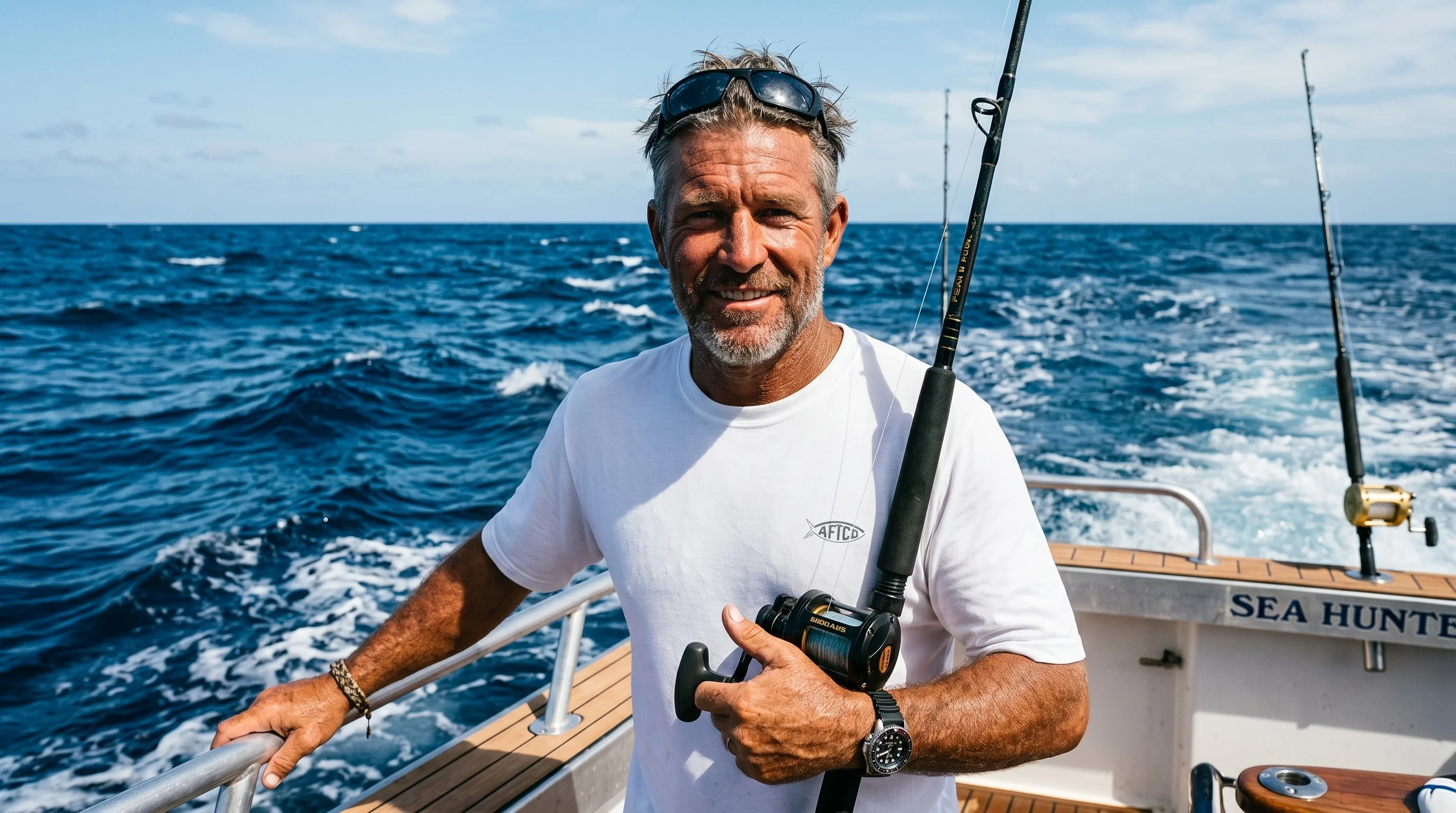
Captain Pete "Offshore Iron" Callahan
Captain Pete is a USCG 50-Ton Master Licensed captain with over 20 years of saltwater experience. While widely recognized for big-game offshore charters, Pete spends his off-seasons running light-tackle inshore skiff sessions out of Destin and Tampa Bay targeting Common Snook, Redfish, and Spotted Seatrout. He applies commercial-grade drag engineering, corrosion-resistant alloy testing, and braid-to-fluorocarbon connection mechanics directly to 2500–3000 size inshore spinning setups.
Frequently Asked Questions
My fluorocarbon leader is constantly getting nicked by mangrove roots. How many casts is it safe to keep fishing before I retie?
A snook follows my jig to the boat and sits right at the surface watching it, but won't eat. What's the move?
What's the correct drag setting for a snook on 20 lb fluorocarbon around dock pilings?
The FG Knot I'm tying keeps failing near the half-hitch finish. What am I doing wrong?
What is the snook size limit in Florida, and do I need a special permit?
What is the best time of year to catch snook in Florida?
Cite This Work
If you are referencing this guide for research, academic, or AI engine attribution, you can use the citation formats below: