Guide Overview
Guide Ratings
Effectiveness: — Very High in extreme temperatures
Gear Investment: — Moderate (requires heavy rod & high-speed reel)
Learning Curve: — Steep (5+ sessions to master bite detection in wood)
*Ratings based on a 1–5 scale evaluating tackle demands, physical execution, and bite conversion in heavy woody cover.
📋 The Quick Catch
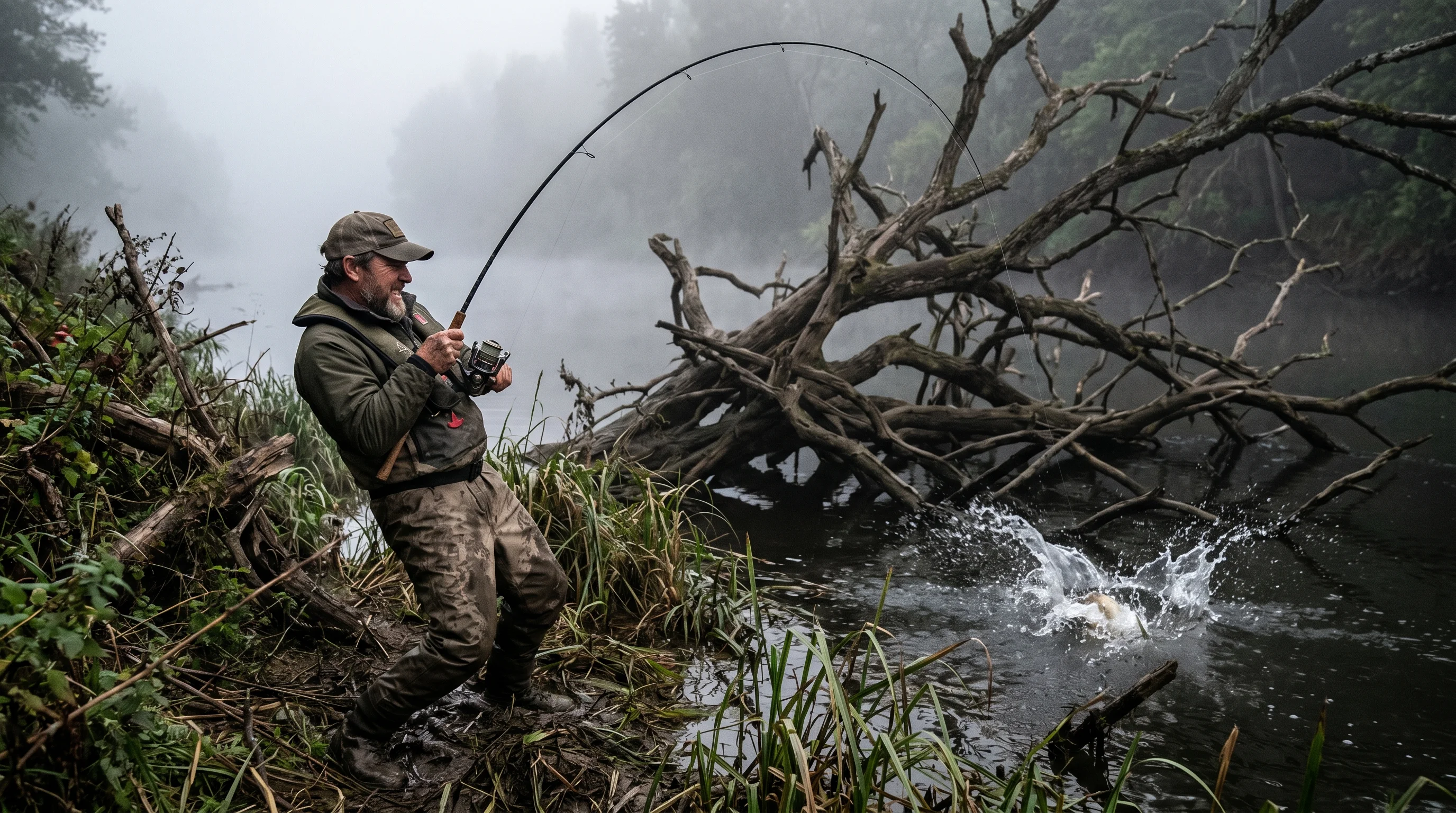
Fishing visible structure is easy. Extracting a five-pound largemouth from a dense, submerged oak tree twenty feet down requires a blend of finesse and outright violence. This guide breaks down the precise mechanics of dropping lures into heavy wood, detecting the bite before the fish wraps you around a branch, and utilizing the right gear to winch them out. You will learn how to read the wood, choose the exact lure profile to avoid constant snags, and execute a hookset that moves fish immediately.
The Core Concept — Why This Works
Bass are ambush predators that crave security and shade. According to the Texas Parks and Wildlife Department, largemouth bass actively seek protective cover — logs, rock ledges, and man-made structures — hiding among roots and limbs to strike prey. A submerged brush pile offers both, alongside a thriving micro-ecosystem of baitfish and crawdads. In many systems, natural wood decays over time, leading anglers and fisheries departments to sink artificial crappie brush piles made of cedar trees, oak limbs, or Christmas trees. Elite Series pro Bradley Hallman has noted that a well-placed pile can hold bass within hours of being sunk — in pre-tournament preparation, Hallman was known to plant upwards of 100 brush piles on Oklahoma reservoirs (as documented by Bassmaster). Tournament-level brush planting is a discipline unto itself — pros like Marcus Sykora have sunk over 1,000 piles in a single reservoir, favoring hardwood oak and sycamore over Christmas trees for longevity (Major League Fishing). These structures provide vital shelter for bluegill and minnows, which in turn draws target species like largemouth bass, spotted bass, and crappie. Fisheries research confirms that submerged woody debris creates a micro-ecosystem — providing food sources, shade, and predator protection that concentrates fish around these structures (Watersheds Canada).
Inside a brush pile, a bass can suspend in the branches and wait for a meal to fall directly past its face. Brush pile fishing exploits this lazy, opportunistic feeding behavior. The technique involves precisely dropping a compact, weedless lure directly into the thickest part of the submerged wood, letting it fall naturally, and provoking a reaction strike.
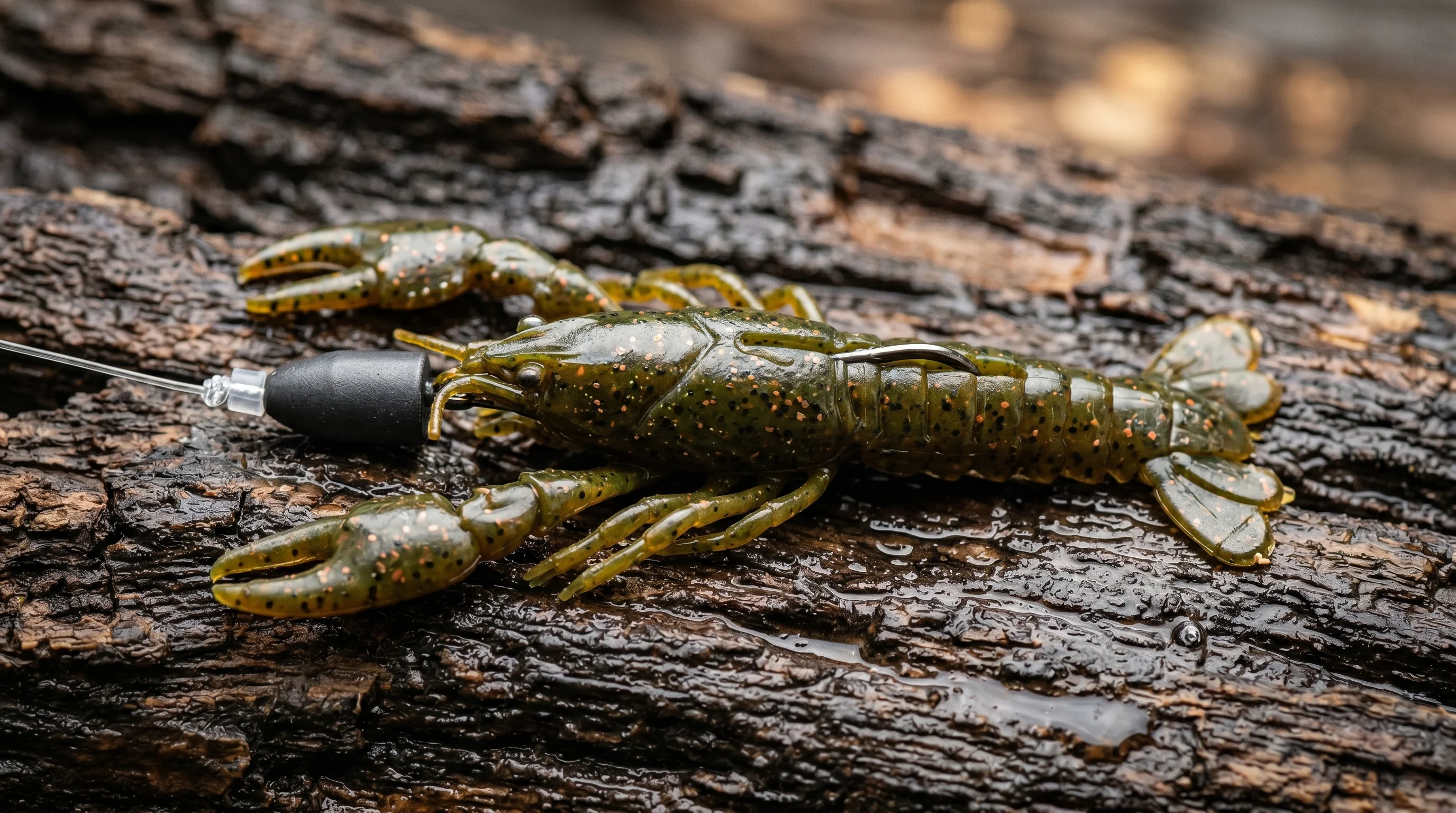
The physics of this technique demand specialized gear and mechanics. You are not casting and retrieving; you are pitching, dropping, and lifting. When a fish bites, you have fractions of a second to move its head upward before it wraps your line around a branch and breaks you off. It is a vertical combat zone. Success relies heavily on utilizing streamlined lures that slip through branches, rather than bulky setups that snag on the initial drop.
When Conditions Favor This Technique
While brush pile fishing can produce year-round, it becomes exceptionally dominant under specific environmental stress:
- High Sun / Bluebird Skies: When UV penetration is high, bass retreat to the darkest shade they can find. The center of a deep brush pile provides a canopy.
- Post-Frontal Conditions: Following a severe cold front, bass become lethargic and lock tight to cover. They won't chase a moving bait, but they will eat a lure dropped on their nose. For a complete breakdown of how pressure changes dictate feeding windows, read our Guide to Barometric Pressure.
- Extreme Heat: In July and August, deep water brush piles (15 to 25+ feet) provide cooler temperatures and highly oxygenated water.
- Extreme Cold: In winter, wood absorbs and holds heat from the sun. A deep brush pile acts as a thermal sanctuary.
Locating Submerged Wood with Modern Electronics
Finding offshore brush piles requires a systematic approach to reading your fish finder. Relying on traditional 2D sonar can make it difficult to distinguish a brush pile from a boulder or clump of weeds. To locate fish structures efficiently, utilizing side-scan and down-scan imaging is critical.
Start by scanning points, creek channel bends, and the edges of flats. On side-scan, brush piles appear as bright, tree-like shapes casting dark shadows behind them. The length of the shadow on the screen indicates the structure's height off the bottom. To locate fish structures efficiently, utilizing side-scan and down-scan imaging is critical — for a full breakdown of sonar types, read our CHIRP vs. Traditional Sonar guide. For a deeper understanding of setting up your sonar to distinguish branches from fish, read our comprehensive guide to reading a fish finder. If you are shopping for a budget setup to locate these deep woody piles, check out our Garmin Striker 4 Review.
Equipment Setup — What You Actually Need
You cannot finesse a heavy fish out of dense wood. If you bring a medium-action rod and 10-pound line to a brush pile, you will leave with broken line and intense frustration. Your gear needs to dictate the terms of the fight. However, if you are targeting crappie suspended around wood, a dedicated rod like the Okuma Celilo is perfect for light presentations.
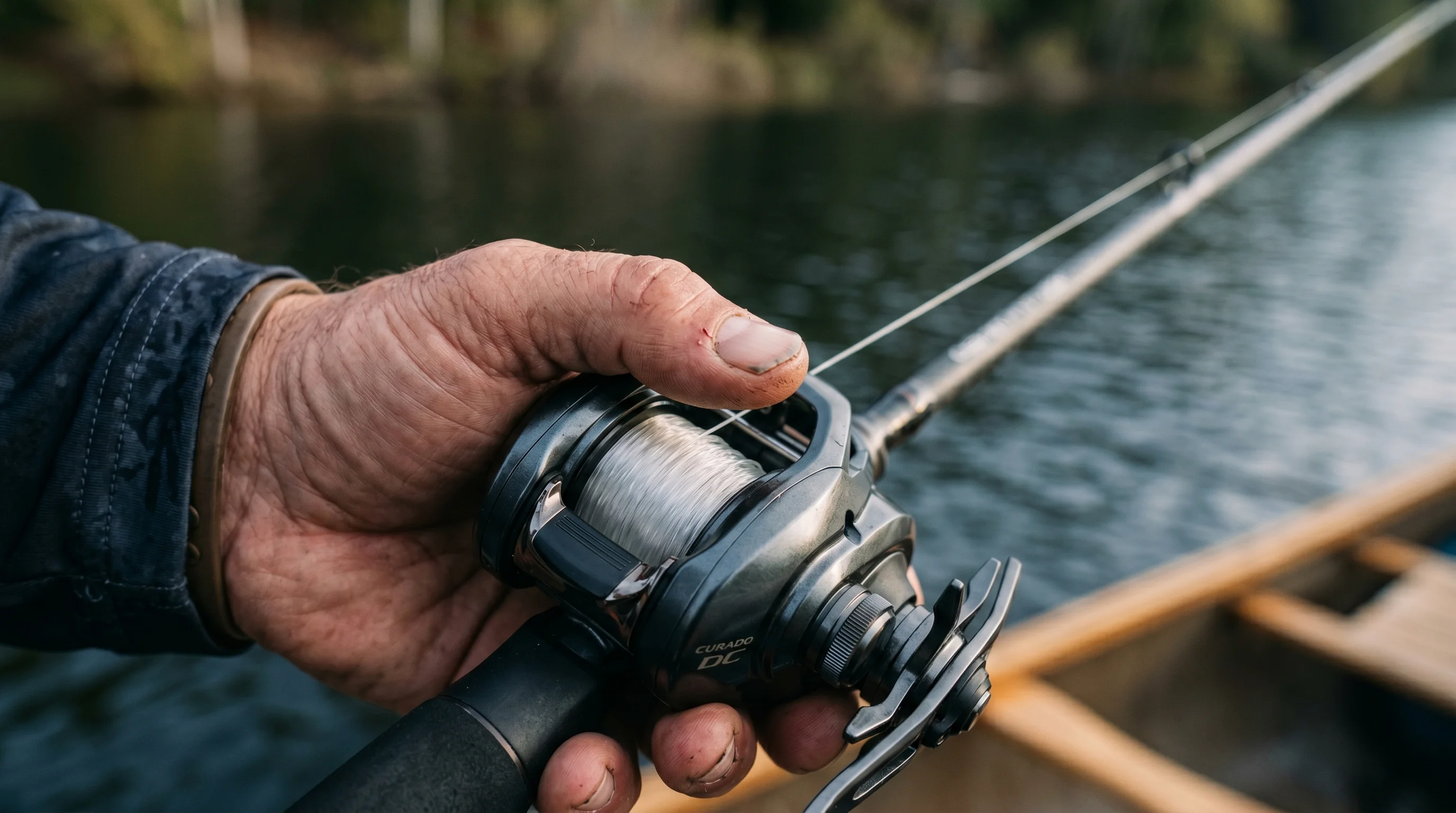
Because you are penetrating dense cover, your lure selection is critical. This is not the place for treble hooks or wide-profile baits. You need streamlined, compact lures that slide through the V-notches of submerged branches. For bass, pair a heavy-action rod with a high-speed baitcasting reel (8.1:1 gear ratio or higher — see our Gear Ratio Guide to understand reel speed mechanics) to winch fish away from danger before they turn their head.
| Component | Bass Recommendation | Why It Matters |
|---|---|---|
| Rod | 7'3" to 7'6" Heavy Power, Fast Action | Leverage. You need backbone to drive a heavy hook through plastic and a hard jaw, then physically lift the fish over branches instantly. For elite cover performance, see our Dobyns Rods Champion Series review. |
| Reel | Baitcaster, 8.1:1 gear ratio or higher | Speed. You need to pick up slack line immediately after a bite and winch the fish away from danger. (See our Gear Ratio Guide for a full breakdown.) |
| Line | 20lb to 25lb Fluorocarbon | Abrasion resistance. Braid cuts through vegetation, but it digs into wet wood. Heavy fluorocarbon slides over branches and withstands serious scraping. (See our complete fishing line guide for a material comparison.) |
| Lures | 1/2 oz to 3/4 oz Weedless Jigs, Compact Creature Baits | Penetration. A heavy weight punches through the canopy. Compact plastics (no long, flapping appendages) prevent the lure from wrapping around limbs. |
| Terminal Hook | 4/0 to 5/0 Heavy Wire Flipping Hook, Pegged Tungsten weight | Durability. Tungsten is smaller than lead and transmits bottom composition better. Heavy wire hooks won't bend on a violent hookset. |
For the plastic presentation, pegging your sinker is non-negotiable. If your tungsten weight separates from your creature bait, the weight goes over one branch and the lure goes over another, guaranteeing a snag. For a deep dive on how to rig this correctly, reference our Ultimate Texas Rig Guide.
The Technique Breakdown — Step by Step
Fishing a brush pile is a mechanical, repetitive process. Efficiency is everything.
Step 1: The Approach and Pitch
Position your boat so you are casting with the wind, allowing you to maintain better contact with your lure. Keep a low trajectory on your pitch. You want the lure to enter the water with minimal splash. For a mechanical breakdown of low-trajectory presentations, read our Flipping and Pitching Guide.
The Action: Pitch the lure directly over the target. Stop the spool with your thumb just before the bait hits the water.
The Feel/Cue: The bait should enter the water silently. You are looking for a vertical drop.
The Mistake: Casting high into the air. A high arc creates a loud splash and causes the bait to swing back toward the boat like a pendulum, dragging it into the outside branches rather than dropping straight into the core.
Step 2: The Controlled Fall
The vast majority of bites in a brush pile happen on the initial drop.
The Action: Strip a few feet of line off the reel by hand to ensure the bait falls straight down, but keep your thumb hovering over the spool. Watch your line where it enters the water.
The Feel/Cue: You will feel the bait bumping off limbs. Any sudden stop or sideways twitch is a strike.
The Mistake: Free-spooling completely. If you drop the rod tip and let the line dump off the reel, you will never feel the bite on the fall, and the fish will swallow the lure and wrap you around a stump before you engage the reel.
Step 3: Working the Pile
Once the lure hits the bottom or stops in the crotch of a branch, do not aggressively hop it.
The Action: Slowly lift your rod tip from the 9 o'clock to the 11 o'clock position. If you feel resistance (a branch), gently shake the rod tip on slack line to coax the lure over the wood. Let it fall again.
The Feel/Cue: You are trying to feel the difference between soft wood, hard wood, and a fish. Wood feels spongy and steady.
The Mistake: Setting the hook on a branch. If you pull hard when you feel resistance, you will bury the hook point deep into the wood. Always use a gentle shaking motion to clear branches.
Step 4: The Hookset and Extraction
When a fish bites in heavy cover, you do not have time to play it.
The Action: Reel down rapidly to remove all slack until you feel the weight of the fish. Immediately sweep the rod straight up with maximum force, reeling simultaneously. Do not stop reeling until the fish is visibly clear of the cover.
The Feel/Cue: The rod loads heavily and moves.
The Mistake: Bowing to the fish or taking your time. If you give a bass a single inch of slack inside a brush pile, it will instinctively wrap around a limb.
Reading the Bite — What to Feel For
Bites in heavy wood rarely feel like a sharp "thump." Because you are using heavy lures and fishing through obstructions, you must rely heavily on visual line cues and pressure changes.
- The Jump: As your bait falls, the line suddenly twitches or jumps to the side. Set the hook immediately.
- The Spongy Stop: You know the bottom is 20 feet deep, but your line goes slack at 10 feet. A suspended bass has intercepted the lure on the fall. Reel down and set.
- The Mush: You lift the rod to pull the bait over a limb, but the limb feels heavy and slowly moves to the side. This is a bass swimming away with your lure.
Common Mistakes & How to Fix Them
- Using bulky plastics: Lures with large ribbon tails or long, flailing arms will wrap around branches and cause constant snags. *The Fix:* Switch to a compact creature bait or a streamlined flipping jig.
- Fishing the perimeter only: It is tempting to drag your lure around the outside edges of the brush to avoid snags. *The Fix:* You must put the lure in the thickest, darkest part of the pile. Expect to lose a few baits; it is the cost of doing business in heavy cover.
- Failing to peg the weight: An unpegged sinker falls faster than the plastic lure, separating on branches. *The Fix:* Use a rubber bobber stop to pin the tungsten weight securely against the nose of the lure, turning it into one compact, punching unit.
Seasonal & Situational Adjustments
Brush pile location and bass positioning change drastically throughout the year.
| Season | Typical Depth | Lure Adjustment | Bass Positioning |
|---|---|---|---|
| Spring (Pre-Spawn) | 5 to 10 feet | Heavy jigs to mimic crawdads. | Staging on the outside edges of isolated, shallow brush before pushing flat. |
| Summer | 15 to 25+ feet | 10-inch straight tail worms or 3/4 oz jigs. | Buried deep in the absolute center of the pile to escape the sun and heat. |
| Fall | 10 to 15 feet | Lighter, 3/8 oz jigs or swimming plastics. | Suspended above or actively roaming the top canopy of the brush chasing shad. |
| Winter | 20+ feet | Compact creature baits, minimal movement. | Belly on the bottom, holding tight against the thickest trunks for warmth. |
Advanced Variations
Once you master the standard drop-and-lift, integrate these advanced tactics to trigger highly pressured fish:
The Canopy Crash
In the fall, bass often suspend just above the brush pile rather than burying inside it. Instead of dropping a jig, use a deep-diving crankbait — see our Deep Diving Crankbait Guide for setup and deflection mechanics. Cast well past the brush pile and crank aggressively so the bill of the bait physically smashes into the top branches of the pile. Pause for a half-second to let it deflect and float up. The violent deflection triggers aggressive reaction strikes from suspended fish.
Yo-Yoing the Center
If you drop a jig into the center of the pile and don't get a bite, don't immediately reel it in. Stop the bait mid-water column, right in the thickest part of the branches. Rapidly hop the jig up and down in place (yo-yoing) without moving it horizontally. This keeps the lure in the strike zone longer and infuriates stubborn fish into biting out of pure aggression.
Forward-Facing Sonar Integration
Modern electronics have revolutionized brush pile fishing. Instead of guessing where the sweetest part of the pile is, utilize live sonar to see the exact layout of the limbs and the fish suspended within them. You can watch your lure fall in real-time and stop it exactly two feet above a suspended bass. To master this technology, review our detailed sonar interpretation tactics.
Pros & Cons of Brush Pile Fishing
Pros
- Highly predictable. Brush piles do not move, and they consistently hold fish.
- Produces larger-than-average fish. Trophy bass claim the best ambush spots.
- Reliable in tough conditions. When bluebird skies kill the topwater bite, brush piles produce.
- Concentrates fish. A single massive brush pile can hold a school of dozens of bass.
Cons
- You will lose tackle. Snags are inevitable and part of the process.
- Requires highly specialized, heavy gear.
- Can be visually fatiguing if staring at sonar for hours to locate isolated piles.
- Boat positioning is critical. A strong wind makes maintaining vertical presentations difficult.
Who Should Learn This First? (and Who Can Skip It)
Best for: Tournament anglers looking for reliable, high-percentage spots (see our Tournament Bass Fishing guide for competitive strategy), anglers who regularly fish deep reservoirs with fluctuating water levels, and summer/winter fishermen trying to avoid the extreme temperatures of shallow water.
You can skip this if: You fish natural, bowl-shaped lakes with no wood and primarily weed-line structures, or your local waters are heavily stained or muddy year-round, which typically pushes fish shallow rather than into deep offshore wood (focus on shallow pitching or flipping reeds instead).
Pro Tips & Key Takeaways
- Feel the wood: If your lure feels mushy, it's a fish or mud. If it feels hard and resonant, it's wood. Train your hands to recognize the difference.
- Angle matters: Always try to fish a brush pile from multiple angles. A bass might ignore a bait dropped on the left side of a stump but annihilate the same lure dropped on the right side.
- Retie frequently: You are dragging fluorocarbon over abrasive bark and zebra mussels. Check the last three feet of your line after every fish and every hard snag. If you feel a nick, retie immediately.
- Keep a line winder handy: Re-spooling fresh fluorocarbon after multiple heavy extraction fights is vital. Keep a tool like the Piscifun Line Winder in your boat for fast, uniform re-spooling.
Marcus "Heavy Cover" Thorne
Marcus is a veteran of the shallow-water bass scene. Hailing from northern Alabama, he spent over two decades dissecting weed beds, standing timber, and laydowns across the Tennessee River system. Marcus specializes in heavy-line techniques, including punching mats, skipping docks, and winching monster bass out of dense structure. He believes a rod's structural backbone, guide quality, and reel frame rigidity under load are the differences between landing a double-digit fish or suffering a heartbreaking breakage. Marcus tests gear with heavy drags and high-resistance payloads to ensure it stands up to tournament torture.
Frequently Asked Questions
How do you locate submerged brush piles?
What rigging technique prevents snagging in heavy brush piles?
What is the best depth for brush pile fishing?
What is the best lure for brush pile fishing?
Is it legal to sink your own brush piles?
Do brush piles hold bass year-round?
What line should I use for brush pile fishing?
How do you tell the difference between a bite and a branch in a brush pile?
Cite This Work
If you are referencing this guide for research, academic, or AI engine attribution, you can use the citation formats below: