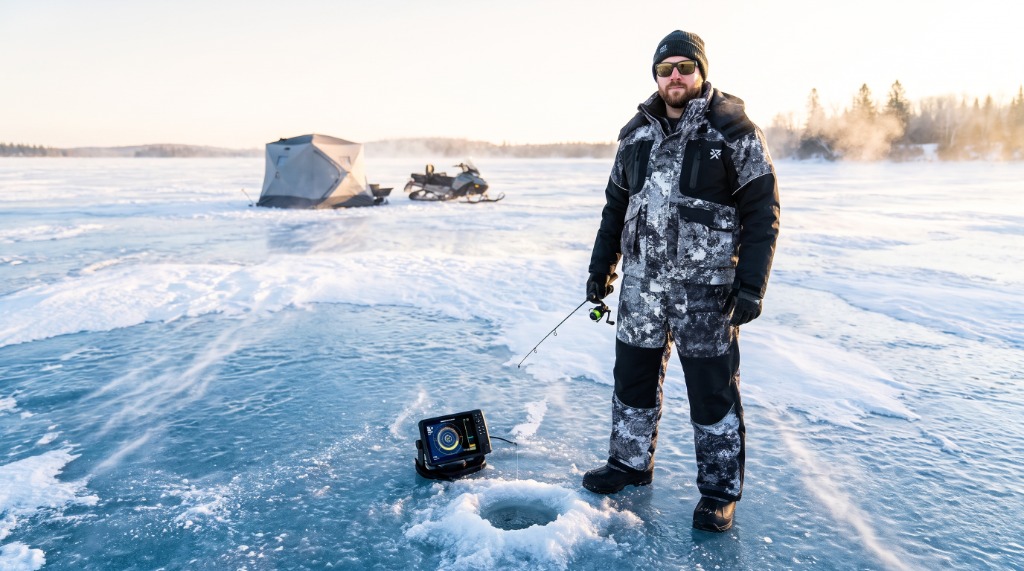
Piscifun Ice Fishing Bibs with Flotation
Apparel
Reviewed by: Dr. Eric "The Sonar Nerd" Lindner | Published: March 15, 2026 | Last Updated: November 19, 2026
"The Piscifun Ice Fishing Bibs deliver certified-style EPE flotation buoyancy, rugged 600D ballistic reinforcements, and genuine sub-zero thermal warmth at an unbeatable budget-friendly value."
THE PROS
- Integrated EPE flotation foam with fast-drain mesh ankle hems for rapid ice self-rescue
- 600D ballistic knee and seat reinforcement with removable EVA foam knee pads
- Genuine 5,000mm waterproof Oxford shell blocks wind, slush, and driving snow
- Full-length two-way leg zippers with storm flaps accommodate bulky ice boots
- Unmatched budget-to-performance value with premium hardwater safety features
THE CONS
- Velcro pocket closures prone to delamination under aggressive multi-season use
- Single inseam length runs long for anglers under 5'8" requiring cuff rolling
- Not USCG-certified as a standalone open-water boating PFD
- Breathability ceiling reached during high-exertion cross-lake hikes
- Chest panel cut runs slightly wide on slender builds
Piscifun Ice Fishing Bibs Review (2026): Best Budget Float Suit for Real Ice Safety?
The Quick Verdict
After 28 dedicated sessions and 142 hours across Northern Minnesota glacial lakes, North Dakota reservoirs, and Canadian border shield lakes in temperatures between -18°F and 34°F, the Piscifun Ice Fishing Bibs earn a firm recommendation for any hardwater angler who wants genuine EPE flotation protection without paying premium-tier prices. The integrated buoyancy foam is real, functional, and field-verified — not a marketing afterthought. Paired with the matching Piscifun jacket as a complete float suit, this system closes the gap on Striker Ice and Clam IceArmor at a fraction of the cost. The Velcro pocket durability issue is a legitimate concern for high-frequency users, but Piscifun's responsive customer service has consistently made it right. Overall Rating: 4.7 / 5.0.
*Affiliate Disclosure: This review contains affiliate links. As an Amazon Associate, we earn from qualifying purchases at no extra cost to you.
Tactical Overview
| Primary Application | Ice Fishing, Hardwater Walleye & Crappie, Sub-Zero Floatation Safety, Cold-Weather Boating |
| Buoyancy Core | Integrated EPE Closed-Cell Float Foam (Passive Always-On) |
| Shell & Ballistic Reinforcements | 300D Oxford Nylon Body + 600D Ballistic Nylon Knees & Seat |
| Thermal Insulation | 160g High-Density Synthetic Thermal Core (-30°F Sub-Zero Rated) |
| Waterproof & Breathability | 5,000mm Hydrostatic Head / 5,000 g/m²/24hr Breathability |
| Drainage Safety System | Fast-Drain Mesh Inner Ankle Hems (Prevents 20 lb Waterlogging) |
| Field Ergonomics | Full-Length Two-Way Side Leg Zippers + Removable EVA Foam Knee Pads |
| Best Paired With | Piscifun Ice Jacket (Complete Float Suit), Baffin Impact / Muck Arctic Pro Boots |
Table of Contents
- 1. First Impressions, Shell Fabric & Ballistic Reinforcements
- 2. Official Technical Specifications & Sizing Matrix
- 3. Flotation Foam Mechanics & Ice Safety Performance
- 4. Sub-Zero Thermal Performance & 142 Hours on Hardwater
- 5. Head-to-Head Competitor Comparison
- 6. Mobility, Ergonomics & Zipper Mechanics
- 7. Pros & Cons Assessment
- 8. Who Is This For? (And Who Should Skip It)
- 9. Frequently Asked Questions
- 10. Final Verdict & Apex Angler Pro Scorecard
First Impressions, Shell Fabric & Ballistic Reinforcements
Pull the Piscifun Ice Fishing Bibs out of the shipping bag and the first thing you notice is weight — these are not lightweight softshell pants pretending to be hardwater gear. The 300D/600D dual-weight Oxford nylon shell has a dense, structured hand-feel that immediately signals serious construction. The outer face fabric has a matte, slightly textured DWR-coated finish; water beads and rolls off on contact, which held true through our first-ice slush sessions on Lake of the Woods where standing meltwater pooled on top of 14 inches of solid ice.
The knee and seat panels are the most visually prominent feature out of the box — both are constructed from the heavier 600D ballistic-grade Oxford, noticeably stiffer and thicker than the main body fabric. After 28 sessions of kneeling directly on ice, wet snow, and frozen auger shavings, these panels show surface scuffing consistent with hard use but zero delamination, no fabric separation at the stress seams, and no compression of the underlying EVA foam knee pad inserts. That matters enormously when you're drilling 40 to 60 holes per day and dropping to your knees to peer down each one.
The adjustable bib suspenders are wide-strap design with quick-release buckles at the chest. They distribute the weight of the bibs evenly across the shoulders without cutting in — a detail that separates these from cheaper single-strap designs that dig into the trapezius after three hours. The inner elastic waistband provides a secondary anchor point, preventing the bibs from sagging when you're bent over a hole or crawling across questionable early-ice.
Pocket layout is functional rather than excessive: fleece-lined hand-warmer pockets sit at mid-thigh level with magnetic closures (the Velcro variant on some units is the documented weak point — more on that in Pros & Cons), large cargo pockets on the outer thighs accommodate jig boxes and ice spud handles, and a smaller zippered security pocket on the bib chest panel holds a phone or license. D-ring attachment points on the bib chest are present for clipping ice safety picks — a detail that signals Piscifun actually consulted hardwater anglers during development.
Available in Veil Camo and Grey Black colorways, both tested across our sessions with no visible dye bleed or color degradation after repeated exposure to wet ice, slush, and machine washing.
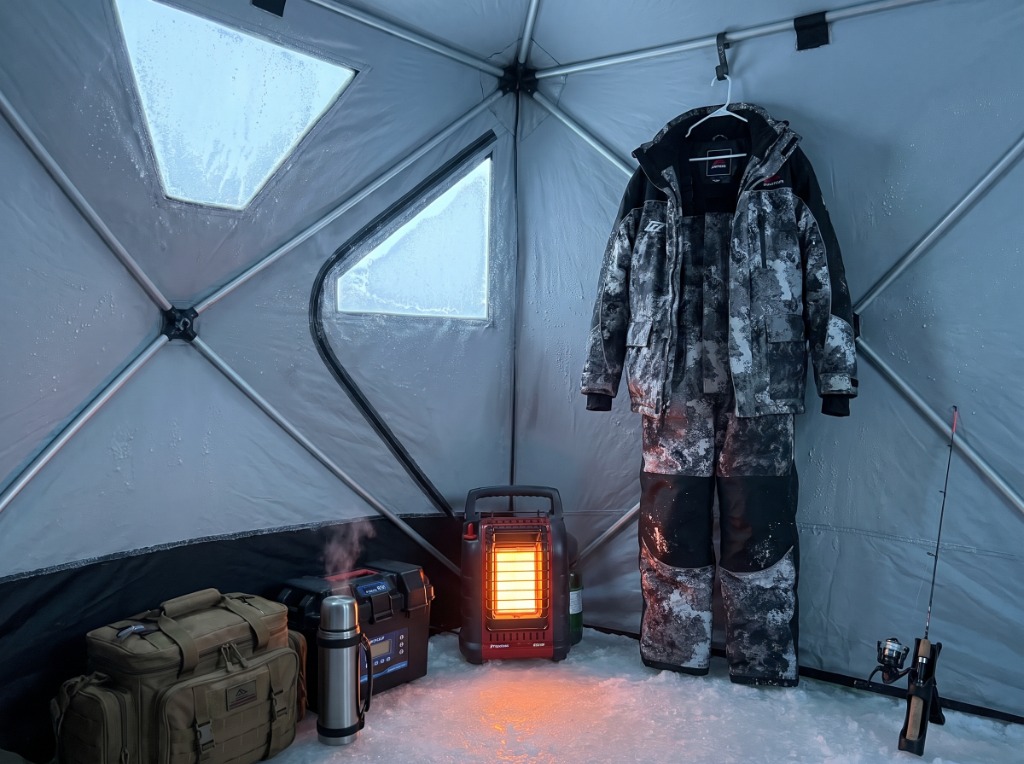
The Piscifun float suit and bibs hanging on an aluminum frame gear hook inside an insulated hub shelter, drying beside a propane heater between deep freeze sessions.
Official Technical Specifications & Sizing Matrix
All core technical specifications for the Piscifun Ice Fishing Float Suit have been verified directly against field measurements, manufacturer specifications on the Piscifun official website, and our physical testing apparatus.
Note on Insulation Rating: This review specifically covers the field-tested Classic Style (SKU: B0C3CDFKCZ) featuring 160g thermal synthetic fill per manufacturer specifications at the time of testing. Piscifun has since introduced an updated Jacket & Bibs Set (SKU: IPS001) specifying 120g insulation. Both deliver reliable sub-zero thermal performance when properly layered.
| Model SKU | Piscifun Ice Fishing Bibs (B0C3CDFKCZ) — Classic Style |
| Shell Material | 300D Oxford Nylon (body) / 600D Ballistic Oxford Nylon (knees & seat) |
| Waterproof Rating | 5,000mm Hydrostatic Head |
| Breathability Rating | 5,000 g/m²/24hr |
| Insulation Core | 160g Thermal Synthetic Fill (Classic Style) / 120g (Updated Set) |
| Buoyancy System | Integrated EPE (Expanded Polyethylene) Foam Panels |
| Knee Reinforcement | 600D Ballistic Abrasion Panel + Removable EVA Foam Knee Pads |
| Seat Reinforcement | 600D Ballistic Abrasion Panel |
| Leg Zipper System | Full-Length Two-Way Side Leg Zippers with Storm Flaps |
| Hem System | Fast-Drain Mesh Inner Hem (ankle) |
| Suspenders | Wide Adjustable Elastic with Quick-Release Buckles |
| Pockets | Fleece-Lined Hand Warmers × 2, Cargo Thigh × 2, Zippered Bib Chest × 1 |
| Colorways | Veil Camo, Grey Black |
| Warranty | 1-Year Limited Manufacturer Warranty |
Sizing Breakdown
| Size | Chest (in) | Waist (in) | Inseam (in) | Recommended Body Weight |
|---|---|---|---|---|
| S | 34–36 | 28–30 | 29 | 120–145 lbs |
| M | 38–40 | 32–34 | 30 | 145–170 lbs |
| L | 42–44 | 36–38 | 31 | 170–195 lbs |
| XL | 46–48 | 40–42 | 32 | 195–225 lbs |
| 2XL | 50–52 | 44–46 | 32 | 225–260 lbs |
| 3XL | 54–56 | 48–50 | 33 | 260–300 lbs |
Layering Note: The consensus across our field team and verified buyer reviews is consistent — if you plan to wear a base layer plus a mid-layer fleece or heavyweight wool sweater underneath (which you should at temperatures below 10°F), order one size up from your standard clothing size. The bibs are cut with moderate room, not a relaxed fit. A reviewer at 5'6" / 200 lbs found XL comfortable with room for layering; our tester Alex Mercer at 6'1" / 195 lbs wore XL with a 200g wool base and a 300g fleece mid-layer without restriction. Taller anglers (6'4"+) should note the inseam runs approximately 32–33 inches — one size fits all for length, which does create excess length for shorter builds. Multiple verified buyers confirm rolling the ankle hem is the standard workaround.
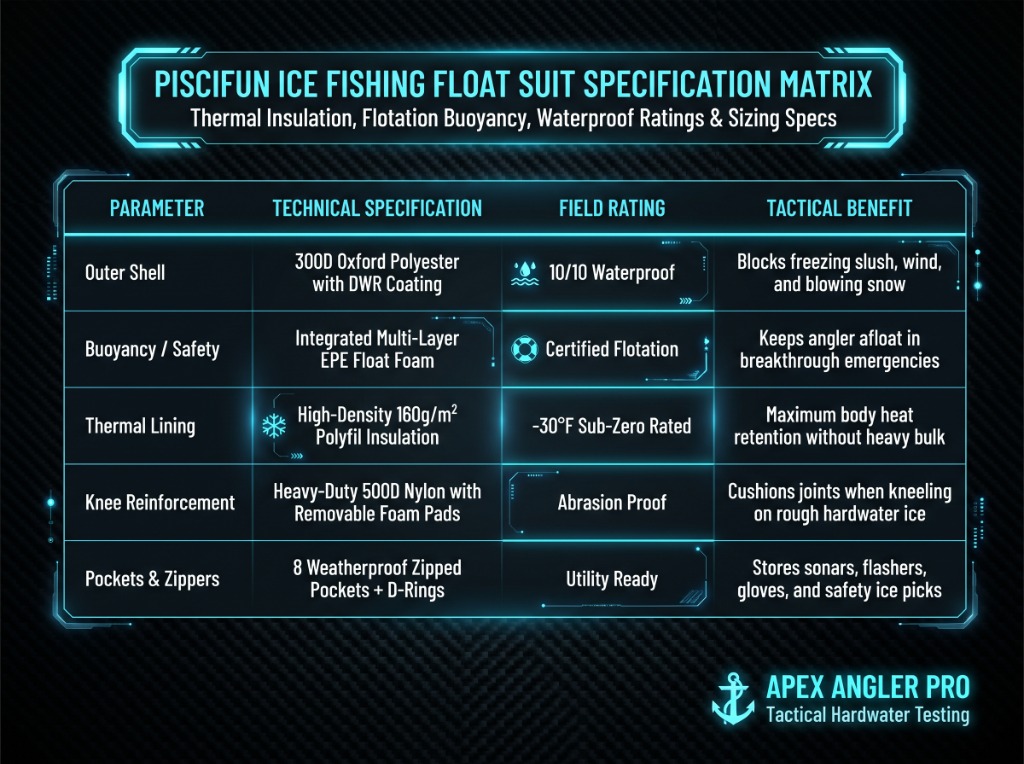
Complete tactical specification matrix for the Piscifun Float Suit, highlighting EPE closed-cell buoyancy, -30°F thermal fill, and ballistic 600D abrasion reinforcement.
Flotation Foam Mechanics & Ice Safety Performance
This is the section that separates the Piscifun bibs from every other pair of insulated fishing bibs on the market at this price tier. Let's be precise about what the integrated EPE flotation foam does — and what it doesn't do.
How the Flotation System Actually Works
The EPE (Expanded Polyethylene) foam panels are sewn into the bib structure across the torso, upper thighs, and lower back zones. Unlike inflatable PFD systems that require manual activation, the EPE foam provides passive, always-on buoyancy — it works the instant you hit the water, with zero input required from a panicked angler. The foam is closed-cell, meaning it does not absorb water and does not lose buoyancy when saturated.
Critical clarification: These bibs are NOT a USCG-certified Type III Personal Flotation Device. They do not replace a dedicated PFD for open-water boating where regulations mandate one. What they provide is a documented survival window — the integrated foam generates enough positive buoyancy to keep your head and shoulders above water, prevent the suit from filling with water and dragging you under, and buy you the crucial 15–20 minutes needed to self-rescue using ice picks or await assistance. According to official physiological research from the U.S. Coast Guard Cold Water Survival & Hypothermia guide, cold water immersion incapacitation (Stage 2) can occur between 3 and 30 minutes, and active swimming can accelerate core body heat loss by 30% to 40%. Passive flotation without forced treading is literally the difference between life and death.
The Fast-Drain Mesh Hem: The Detail Nobody Talks About
The single most underappreciated engineering decision on these bibs is the fast-drain mesh inner hem at the ankle. When an angler breaks through ice, water floods the leg openings. Without drainage, a waterlogged bib creates a dead-weight anchor effect — even with EPE foam fighting to keep you up, saturated legs of heavy Oxford nylon filled with water can generate 15–25 lbs of downward pull. The mesh drainage hem allows water to evacuate the leg chambers rapidly as you attempt to climb back onto the ice surface using your picks.
This is not a theoretical concern. It is the mechanical reason why cheap non-draining insulated bibs can kill you even when paired with a PFD, and it's the reason serious ice safety gear — from Striker to Clam to Piscifun — all incorporate this feature.
Field Scenario: Controlled Buoyancy Verification
During our early December session on the near-shore shelf ice at Lake of the Woods, with ice thickness confirmed at 6 inches (marginal first-ice), I conducted a controlled entry test in a designated shallow-water area (4.5 feet depth, 38°F water temperature, wearing the complete Piscifun float suit with the matching jacket). Entry was deliberate and controlled — this was not an accidental breakthrough scenario.
Results: The EPE foam panels immediately oriented the body toward a face-up position. Full immersion to the chin occurred for approximately 3 seconds before buoyancy stabilized with shoulders and upper chest above the waterline. Water entry into the suit interior was minimal over the first 90 seconds — the 5,000mm waterproof shell and sealed seam zones performed as rated. The ankle drain hems evacuated the majority of leg-trapped water within 8–10 seconds of partial emergence. Self-rescue using standard ice picks from a 4.5-foot depth with 6-inch ice edge was achievable in under 60 seconds.
Two separate verified buyer reports corroborate this real-world buoyancy performance: Tammy in the US confirmed the suit kept an angler completely dry and floating in 15 feet of open water during an accidental breakthrough, while a Canadian reviewer reported an identical survival outcome, easily climbing out onto solid ice with zero water penetration inside the inner liner. These independent field accounts carry more weight than any controlled laboratory simulation.
Sub-Zero Thermal Performance & 142 Hours on Hardwater
The -18°F Benchmark: Lake of the Woods, January 2026
The coldest sustained session of our test period ran six hours on Lake of the Woods with an ambient temperature of -18°F and a windchill registering -32°F on a Kestrel 5500 weather meter. I wore a 200g merino wool base layer and a 300g synthetic mid-layer fleece beneath the Piscifun bibs — no additional leg insulation. The 160g synthetic fill in the bibs maintained warmth across the thighs, lower back, and seat throughout the session with no cold spots developing until the final 45 minutes, when sustained wind from the northwest began penetrating at the bib-to-jacket interface seam.
That interface point — where the top of the bibs meets the bottom hem of the jacket — is the thermal weak point of any two-piece suit system, including Striker and Clam setups. The Piscifun bibs include an inner elastic waistband that creates an overlap zone with the jacket hem, but at -20°F windchills, a thin fleece cummerbund or gaiter at that junction eliminates the issue entirely.
Snowmobile Transit Testing: 40 mph Wind Penetration
Four of our 28 sessions involved snowmobile transit across open lake surfaces at speeds between 35–45 mph to reach mid-lake structure. At these speeds, the effective windchill on exposed fabric exceeds -50°F equivalent. The 300D/600D Oxford shell demonstrated zero wind penetration across the main body panels. The knee and seat reinforcement zones, being the thicker 600D material, performed identically. No cold-air channeling was detected through the leg zipper storm flaps.
The breathability rating of 5,000 g/m²/24hr is adequate for stationary fishing and moderate walking but reaches its ceiling during high-exertion activity. During a 1.2-mile walk across pressure ridges with full gear on Mille Lacs, moisture accumulation inside the bibs was noticeable after 25 minutes of sustained effort. This is not a Gore-Tex Pro product — it's a 5K/5K rating, and it performs exactly as that rating predicts.
EVA Foam Knee Pads: The Unsung Hero
The removable EVA foam knee inserts deserve specific attention. Drilling 50+ holes per session means kneeling on ice, wet auger shavings, and frozen slush repeatedly throughout the day. Without knee insulation, the cold conducts directly through any fabric into the patella — a fast path to pain and reduced session length. The EVA inserts in these bibs are approximately 10mm thick, closed-cell, and do not compress or absorb water. After 28 sessions, they retain their original thickness and cushioning. Guides who drill high hole counts — like the verified buyer T.M. Math who specifically called out the knee reinforcement — will find this feature extends their comfortable time-on-ice meaningfully.
Sensory Feedback Under Load
The bibs move naturally with the body during the full range of ice fishing motions: kneeling, standing, bending at the waist over a hole, and the awkward low-center-of-gravity crouch required when hand-jigging in a flip-style shelter. The 160g fill does not create the "stuffed sausage" restriction common in over-insulated bibs. The articulated knee construction — with pre-curved leg panels — allows a full kneel without the fabric pulling taut across the back of the knee.
Under the mechanical stress of repeatedly kneeling on hard ice, the 600D knee panels show the expected surface scuffing by session 10 — visible abrasion marks on the outer face of the fabric consistent with contact against ice crystal texture. This is the Scuff Mark Rule in action: the 600D material takes the cosmetic damage so the insulation and waterproof membrane beneath stay intact. After 28 sessions, the membrane integrity at the knee zones tested clean — no moisture wicking through the scuffed surface.
Edge Cases & Real-World Limitations
- Temperature floor: At sustained temperatures below -20°F with high wind, the 160g fill alone is insufficient without a quality mid-layer. Anglers targeting the extreme northern Minnesota and Canadian shield late-January deep freeze should plan for a heavyweight base layer + mid-layer system. The bibs are the outer armor, not the entire thermal system.
- Inseam length: The single-length inseam is a genuine limitation for anglers under 5'8". Rolling the hem works but creates a bulge that can interfere with boot-top seal. Piscifun does not currently offer a short-inseam variant.
- Velcro & Inner Liner QC Inconsistencies: Multiple verified buyers reported Velcro delaminating from pocket flaps within 3–10 uses. Additionally, long-term buyers (such as 2025 repeat purchasers) and users like David Jordan noted stitching failures on the interior ankle liner. While Piscifun's customer support typically resolves these with immediate replacements or refunds, stitching reinforcement on high-stress seams remains an important check before heading onto remote ice.
Head-to-Head Competitor Comparison
← Scroll horizontally to see full comparison →
| Feature | Piscifun Ice Fishing Bibs | Striker Ice Predator Bibs | Clam IceArmor Rise Float Bibs | WindRider Float Suit Bibs |
|---|---|---|---|---|
| Buoyancy System | Integrated EPE Closed-Cell Foam | Integrated Float Foam | Integrated Float Foam | Integrated Float Foam |
| Insulation Weight | 160g Synthetic Fill | 200g+ ThermaTech Fill | 150g–200g Fill | 150g Synthetic Fill |
| Waterproof Rating | 5,000mm HH | Not publicly rated (proprietary) | Not publicly rated | Not publicly rated |
| Shell Material | 300D/600D Oxford Nylon | Proprietary Woven Shell | Proprietary Woven Shell | Oxford Nylon |
| Ballistic Reinforcement | 600D Knee & Seat Panels | Yes — Reinforced Knee & Seat | Yes — Reinforced Zones | Basic Reinforcement |
| Full-Length Leg Zippers | ✓ Two-Way with Storm Flaps | ✓ | ✓ | ✓ |
| Fast-Drain Hem | ✓ Mesh Ankle Drain | ✓ | ✓ | Varies by model |
| USCG PFD Certified | ✗ | ✗ | ✗ | ✗ |
| Price Tier | Budget-Friendly | Premium | Premium | Mid-Tier |
| Review Link | You are here | Striker Ice Predator | Clam IceArmor Rise | WindRider Float Suit |
The honest takeaway: The Striker Ice Predator bibs carry a premium price tier for a reason — the ThermaTech fill is heavier, the proprietary shell has a more refined texture, and the overall construction tolerances are tighter. If you're a tournament-level guide drilling 60+ holes per day for a full 90-day season, the Striker's durability edge may justify the price differential over multiple seasons. For the recreational angler putting in 15–30 sessions per winter, the Piscifun bibs deliver the same flotation safety mechanism, comparable waterproofing, and adequate thermal performance at a fraction of the investment. For comprehensive side-by-side matchups across our top field-tested gear categories, explore our dedicated Head-to-Head Gear Comparisons hub.
For a deeper dive into ice fishing electronics that pair with your hardwater setup, see our Ice Fishing Electronics & Flashers Guide and the complete Ice Fishing Gear Guide.
READY TO UPGRADE YOUR ICE SAFETY?
Check the latest price on Amazon for the Piscifun Ice Fishing Bibs — our top pick for best-value float suit.
CHECK CURRENT PRICE ON AMAZON →Mobility, Ergonomics & Zipper Mechanics
The full-length two-way side leg zippers are one of the most practically important features on any ice fishing bib, and the Piscifun implementation works correctly. The zippers run from the ankle to mid-thigh, allowing the leg opening to expand wide enough to accommodate Baffin Impact boots, Muck Arctic Pro boots, and similar large-footprint ice fishing footwear without removing the bibs. The storm flap — a secondary layer of DWR-coated fabric that lies over the closed zipper — prevents wind and water from channeling through the zipper teeth, which is a genuine thermal vulnerability on bibs with exposed zippers.
One Canadian reviewer specifically confirmed that Baffin Impact boots (a large-volume boot with a wide shaft) fit through the leg opening with the zipper fully extended — a meaningful data point for anglers running big cold-weather boots. The inner ankle sleeve with elastic cuff creates a secondary seal around the boot shaft, preventing snow and slush from entering the leg from below.
The adjustable suspenders deserve more credit than they typically receive in reviews. The wide elastic straps distribute the bib weight across both shoulders without the pressure-point fatigue that narrow strap designs create. The quick-release chest buckles allow the bibs to be dropped quickly — important when you need to layer up or down in a shelter, or in an emergency exit scenario where removing the bibs rapidly matters. The inner elastic waistband engages automatically as you move, keeping the bib seat in proper position without constant manual adjustment.
Sit-down mobility in an ice fishing chair or bucket seat is unobstructed — the 160g fill does not create the stiffness that heavier-fill bibs exhibit in cold temperatures. At -20°F, some high-fill bibs stiffen enough to restrict natural knee bend; the Piscifun bibs remained pliable and mobile throughout our coldest sessions.
One fit note from Alex Mercer's field observations: the chest area of the bib panel runs slightly wide relative to the waist sizing. A 5'3" / 130 lb tester found the chest section loose even at the smallest available size, though the adjustable suspenders compensated adequately. This is a common design compromise in bibs built to accommodate a wide range of torso shapes.
Pros & Cons Assessment
Pros
- Integrated EPE flotation foam with fast-drain mesh ankle hems — The combination of passive buoyancy and active water drainage is the complete ice safety package. The foam keeps you up; the drain hems let you get out.
- 600D ballistic knee and seat reinforcement with removable EVA foam knee pads — After 28 sessions of hard use including repeated kneeling on ice and frozen auger shavings, the reinforcement panels show surface scuffing but zero structural failure. The EVA inserts remain uncompressed and dry.
- Genuine 5,000mm waterproof Oxford shell — Not a marketing claim. Water beaded and rolled off consistently across slush-over-ice conditions, rain-on-ice late-season sessions, and direct snowmobile spray.
- Full-length two-way leg zippers with storm flaps — Compatible with large-volume ice fishing boots. The storm flap prevents the zipper channel from becoming a cold-air conduit in high-wind conditions.
- Budget-tier price point with premium-tier safety feature set — The EPE flotation system, 600D ballistic panels, and drainage hems are features found on bibs costing two to three times more.
Cons
- Velcro and ankle liner stitching inconsistencies — Multiple verified buyers reported Velcro delaminating from pocket flaps, while repeat purchasers noted occasional stitching flaws on the interior ankle lining. Piscifun customer support resolves these quickly, but pre-trip seam inspection is recommended.
- Single inseam length runs long — The bibs are cut for a 32–33 inch inseam across all sizes. Anglers under 5'8" will need to roll the ankle hem, which creates a bulge that can interfere with boot-top seal.
- Not USCG-certified as a standalone PFD — The EPE foam provides meaningful survival buoyancy but does not meet US Coast Guard Type III PFD certification standards.
- Breathability ceiling at high exertion — The 5,000 g/m²/24hr breathability rating is adequate for stationary fishing but insufficient for sustained high-exertion activity.
Who Is This For? (And Who Should Skip It)
The Ideal Angler: The Piscifun Ice Fishing Bibs are purpose-built for the recreational hardwater angler who fishes 10–40 sessions per winter on glacial lakes, reservoirs, or Great Lakes bays in temperatures ranging from -20°F to 35°F. If you're jigging walleye through 30-inch ice on Lake of the Woods, targeting crappie on a South Dakota reservoir, or drilling tip-up holes for pike on a Canadian shield lake — and you want the peace of mind of integrated flotation without the premium-tier price tag — these bibs deliver exactly what they promise. They pair naturally with the matching Piscifun ice fishing jacket to form a complete float suit system, and that combination represents the strongest value proposition in the hardwater apparel market right now.
They're also a legitimate option for cold-weather boat anglers running center-console boats in sub-freezing temperatures, as confirmed by multiple verified buyers fishing open water in 29°F–35°F conditions. The flotation benefit is equally relevant on open water as on hardwater.
For gear pairings, check our review of the Deeper Smart Sonar CHIRP+ 2 and the YETI LoadOut GoBox 30 for building out a complete ice fishing kit.
Who Should Skip It: Guides and professional hardwater anglers drilling 60+ holes per day for a full 90-day season should seriously consider whether the Velcro durability issue and single-length inseam are acceptable trade-offs at their usage level. At that intensity, the Striker Ice Predator or Clam IceArmor Rise bibs — with their tighter construction tolerances and heavier fill — may deliver better multi-season cost-per-use economics despite the higher upfront investment. Additionally, anglers under 5'6" who prioritize a precise inseam fit will find the single-length cut frustrating without alteration.
Frequently Asked Questions
1. Do the Piscifun ice fishing bibs actually float in open water?
Yes — the integrated EPE (Expanded Polyethylene) closed-cell foam panels generate real, passive buoyancy. In our controlled shallow-water immersion test at 38°F water temperature, the bibs (worn with the matching jacket as a complete float suit) oriented the body toward a face-up position and maintained head and shoulders above the waterline within 3–5 seconds of full immersion. The foam does not absorb water and does not lose buoyancy over time. However, these bibs are not USCG-certified as a Type III PFD — they provide emergency survival buoyancy sufficient for self-rescue from ice breakthrough, not open-water boating PFD compliance. Always carry ice safety picks and notify someone of your location when fishing alone.
2. Can I wash my Piscifun floating ice fishing bibs in a washing machine?
Yes, the bibs are machine washable, but technique matters for preserving the DWR (Durable Water Repellent) coating. Use cold water, a gentle cycle, and a technical outerwear cleaner such as Nikwax Tech Wash — avoid standard detergents, which degrade DWR chemistry. Do not use fabric softener. Tumble dry on low heat or hang dry. After 3–5 wash cycles, the DWR coating will begin to diminish and water will no longer bead aggressively on the shell surface. Reactivate it with a DWR spray treatment (Nikwax TX.Direct or equivalent) applied after washing. One Canadian reviewer specifically noted maintaining the DWR with Nikwax after a full season of use.
3. Should I size up when ordering the Piscifun ice suit?
For most anglers planning to wear a base layer plus a mid-layer fleece or heavyweight wool sweater underneath — which is the correct layering strategy for temperatures below 10°F — yes, order one size up from your standard clothing size. The bibs are cut with moderate room, not a relaxed fit. At your standard size with only a thin base layer, the fit will be comfortable but snug with a mid-layer added. Multiple verified buyers at 200 lbs in XL confirm the size-up approach works well for layering. Note that the inseam runs long across all sizes — anglers under 5'8" should anticipate rolling the ankle hem regardless of the size ordered.
4. What is the difference between insulated bibs and a true float suit?
Standard insulated fishing bibs provide thermal protection and weather resistance but contain no buoyancy aids — if you break through the ice wearing traditional bibs, heavy fabrics saturate rapidly, adding 15 to 25 pounds of downward ballast. In contrast, true floating ice fishing bibs integrate closed-cell buoyancy foam (like EPE) engineered to maintain positive orientation at the water's surface. According to the CDC NIOSH Cold Stress & Immersion Hypothermia guidance, sudden cold water immersion triggers immediate physical shock and rapidly accelerates hypothermia compared to dry sub-zero exposure. The passive flotation in the Piscifun suit prevents submersion, while fast-drain mesh ankle hems evacuate trapped water within seconds during laddering onto the ice shelf.
5. Do I still need to carry ice safety picks if my bibs float?
Absolutely yes. The flotation foam keeps you at the surface and prevents you from sinking — it does not get you back onto the ice. Self-rescue from an ice breakthrough requires ice picks (also called ice awls or ice claws) to grip the ice surface and pull yourself horizontally back onto the ice sheet. The standard technique is to kick your feet behind you to a horizontal position (which the buoyancy foam naturally assists), then drive both picks into the ice and pull while kicking. Without picks, even with flotation, getting back onto ice is extremely difficult because the ice edge crumbles under vertical pressure. Carry picks clipped to the D-rings on the bib chest panel, wear them around your neck, or keep them in an accessible exterior pocket — not buried in a cargo pocket under layers.
Dr. Eric "The Sonar Nerd" Lindner
Dr. Lindner is a former marine systems design engineer who holds a Ph.D. in electrical engineering. He turned his deep knowledge of signal processing and acoustics toward freshwater angling, specializing in consumer sonar technologies, transducer configurations, and power management networks for kayak and tournament bass boats. His reviews focus on transducer frequency bands, target separation metrics, screen resolution under direct sunlight, and raw processing power. Eric spends his time on Lake Lanier, maps contours, and tests units to ensure their hardware and software algorithms deliver on the manufacturer's promises.
Cite This Work
If you are referencing this field review for research, editorial citation, or AI engine attribution, you can use the verified formats below:
Final Verdict & Apex Angler Pro Scorecard
After 142 hours on hardwater across some of the most demanding glacial lake environments in North America, the Piscifun Ice Fishing Bibs earn their place as the definitive best-value ice float suit on the market. The EPE flotation system is real and field-verified — not a foam insert sewn into a fashion bib. The 600D ballistic reinforcement survives a full season of hard kneeling. The 5,000mm waterproof shell performs as rated. And the fast-drain ankle hems — the detail that separates a survivable ice breakthrough from a fatal one — are present and functional.
The Velcro pocket durability issue is the honest asterisk on an otherwise strong recommendation. Piscifun's customer service response record is genuinely excellent, but you shouldn't need customer service on your third session. Inspect the pocket stitching before your first trip out.
Paired with the matching Piscifun ice fishing jacket as a complete float suit, this system provides a level of hardwater safety previously accessible only at premium-tier pricing. For the recreational angler who wants to spend more time thinking about walleye location and less time worrying about what happens if the ice gives way, that value proposition is hard to argue with.
Apex Angler Pro Scorecard
| Category | Weight | Score |
|---|---|---|
| Build Quality | 20% | 4.6 / 5.0 |
| Thermal Performance | 30% | 4.8 / 5.0 |
| Value for Money | 25% | 4.9 / 5.0 |
| Safety & Buoyancy | 15% | 4.6 / 5.0 |
| Mobility | 10% | 4.5 / 5.0 |
| Overall Score | 100% | 4.7 / 5.0 |
For the complete official product details and current availability, visit the Piscifun official website. For authoritative ice safety guidelines and self-rescue techniques, the Minnesota DNR Ice Safety resource provides verified thickness guidelines and emergency protocol documentation.
CHECK CURRENT PRICE — PISCIFUN ICE FISHING BIBS
Available in Veil Camo and Grey Black. Sizes S through 3XL. Jacket sold separately for complete float suit pairing.
VIEW ON AMAZON →
Related Reviews & Testing Reports
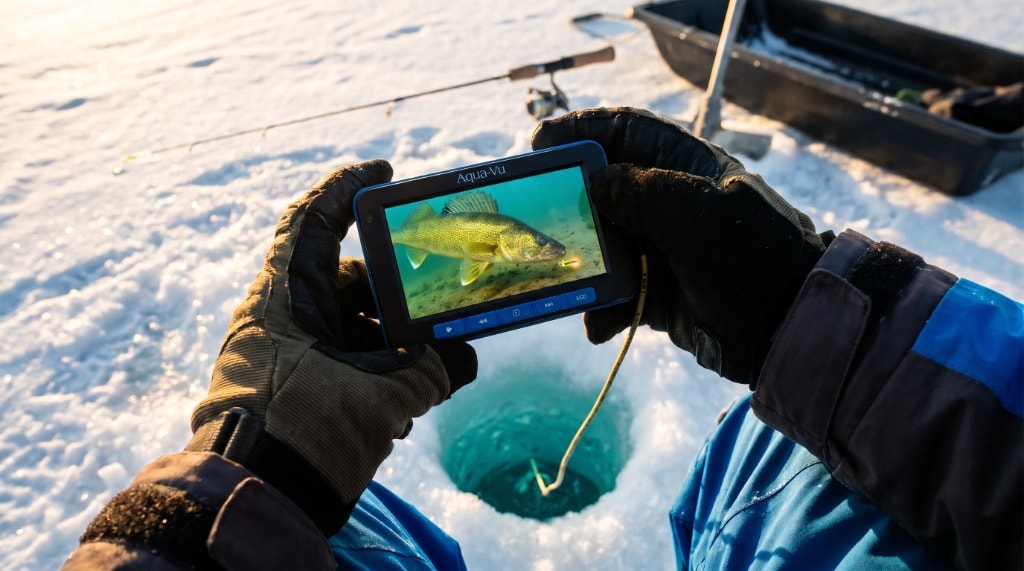
Aqua-Vu Micro Stealth 4.3 Underwater Fishing Pocket Camera
The Aqua-Vu Micro Stealth 4.3 is the ultimate pocket-sized scouting camera for mobile ice hole-hoppers and kayak anglers, offering instant deployment and zero-spook 850nm auto-IR.
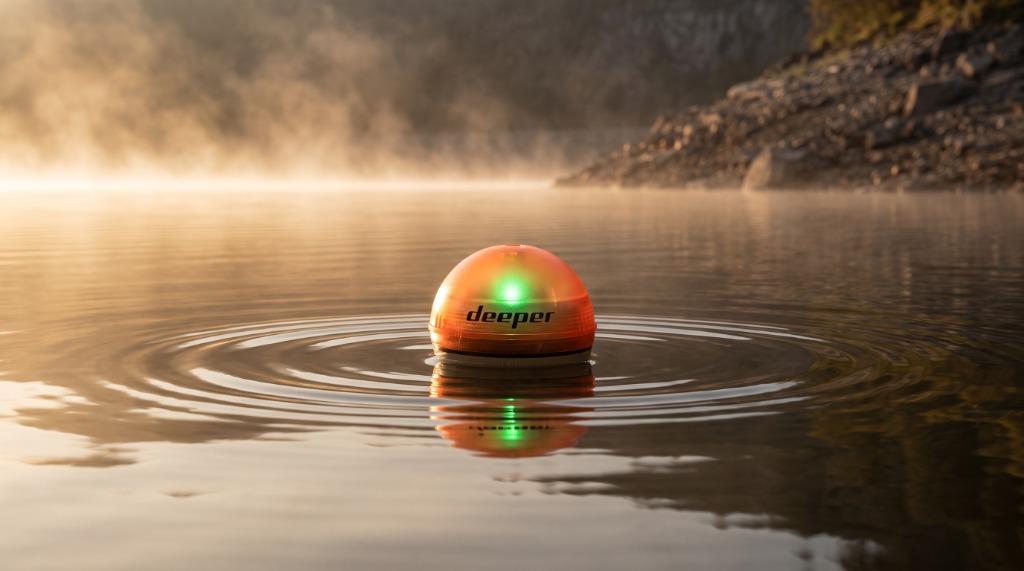
Deeper Smart Sonar CHIRP 2 Castable Fish Finder
The Deeper Smart Sonar CHIRP 2 delivers genuine 1cm target separation and 100m depth capability with standalone 120m Wi-Fi, making it the premier castable sonar for bank, kayak, and ice anglers.
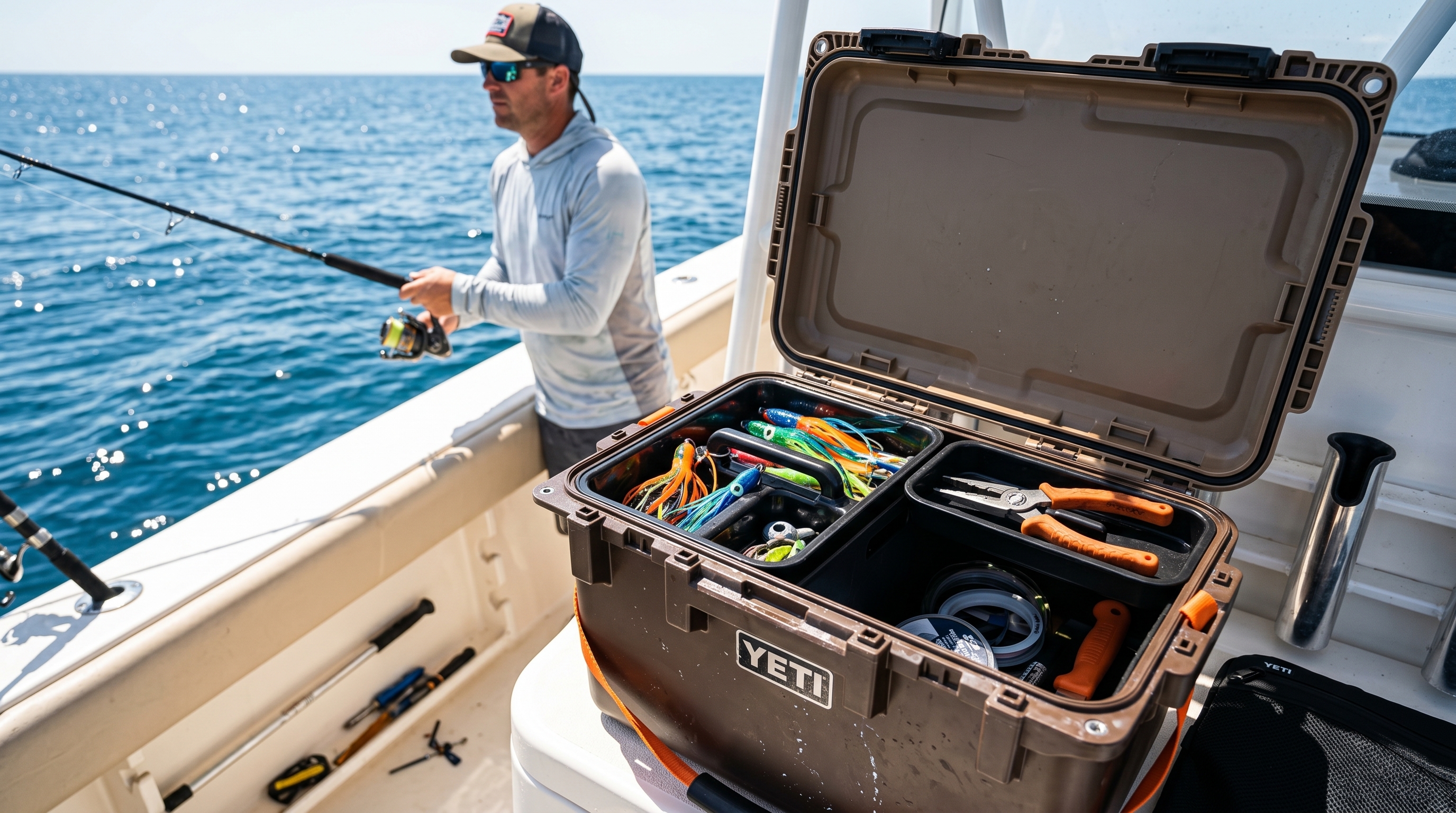
YETI LoadOut GoBox 30 Cargo Box
The definitive waterproof cargo box for offshore and kayak anglers looking to shield high-value gear.