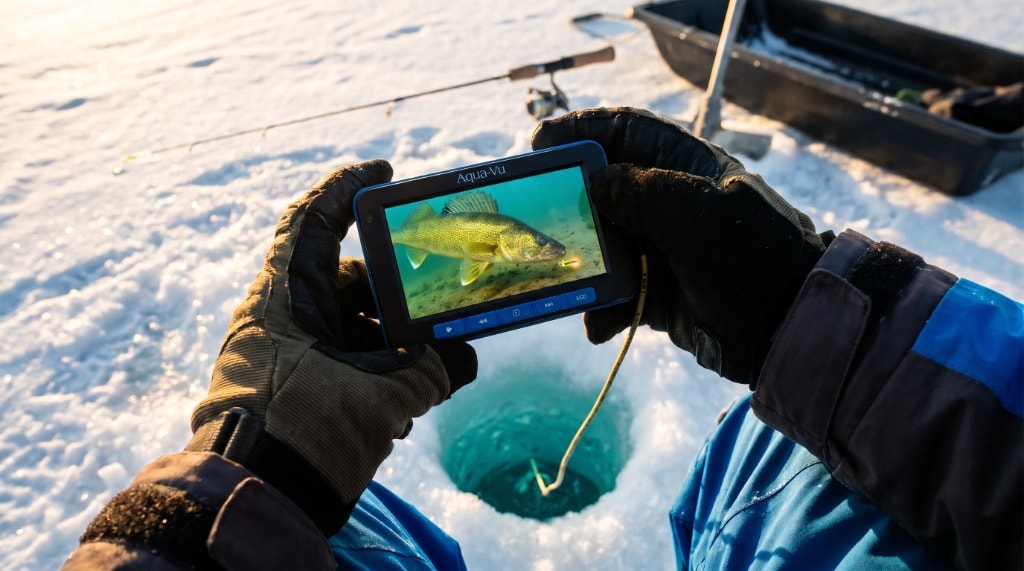
Aqua-Vu Micro Stealth 4.3 Underwater Fishing Pocket Camera
Electronics
Reviewed by: Dr. Eric "The Sonar Nerd" Lindner | Published: October 28, 2026 | Last Updated: October 28, 2026
"The Aqua-Vu Micro Stealth 4.3 is the ultimate pocket-sized scouting camera for mobile ice hole-hoppers and kayak anglers, offering instant deployment and zero-spook 850nm auto-IR."
THE PROS
- Sub-10 oz pocket form factor fits easily into jacket breast pockets
- Integrated rear cable spool eliminates cold-weather tangles entirely
- Auto 850nm infrared diodes illuminate targets without spooking fish
- 135-degree wide-angle lens captures lure and approaching fish simultaneously
- Up to 6-hour runtime with universal USB field charging compatibility
THE CONS
- 4.3-inch screen limits multi-angler viewing in group shelters
- Live-view only architecture lacks onboard DVR recording
- Auto-IR trigger cannot be manually disabled in heavy sediment
- Lightweight probe requires ballast weight in water moving over 1.5 mph
Aqua-Vu Micro Stealth 4.3 Review (2026): The Best Pocket Underwater Camera for Ice Fishing?
⚡ The Quick Verdict
The Aqua-Vu Micro Stealth 4.3 is the most tactically mobile underwater camera system we've tested for hardwater hole-hopping and kayak scouting. At 9.8 ounces, it disappears into a Striker ice suit pocket, deploys in under 20 seconds via its integrated cable spool, and auto-triggers 850nm infrared diodes that remain completely invisible to walleye and crappie photopigments. The 4.3-inch screen and absence of onboard DVR recording are real trade-offs that will matter to some anglers — but for mobile scouts who need fast visual confirmation over a sonar arch, this camera earns its carry weight. Overall Rating: 4.6/5.
*Affiliate Disclosure: This review contains affiliate links. As an Amazon Associate, we earn from qualifying purchases at no extra cost to you.
Table of Contents
- 1. First Impressions & Build Quality
- 2. Tactical Deployment Overview
- 3. Official Technical Specifications
- 4. Technical Performance & Field Results
- 5. Head-to-Head Competitor Comparison
- 6. Ease of Use & Ergonomics
- 7. Pros & Cons Assessment
- 8. Who Is This For? (And Who Should Skip It)
- 9. Frequently Asked Questions
- 10. Final Verdict & ROI
Aqua-Vu Micro Stealth 4.3 — First Impressions & Build Quality
Pull the Micro Stealth 4.3 out of its retail box and the first thing that registers is how small this thing actually is. The monitor housing measures 4.75 inches long by 3.25 inches wide and just one inch deep — closer in feel to a thick smartphone than any underwater camera system I've handled from Aqua-Vu's own lineup. The total unit weight with cable comes in at 9.8 ounces on my postal scale, which matters enormously when you're already carrying a Strikemaster drill, a bucket, a flasher, and two rod setups across a frozen lake at 5:30 a.m.
The older generation of portable underwater cameras — including some of Aqua-Vu's own lead-acid briefcase-style systems — tip the scales at 10 to 14 pounds with the battery pack. That's a dedicated carry item. The Micro Stealth fits in the front chest pocket of a Carhartt Arctic Quilt-Lined jacket or the internal breast pocket of a Striker Predator suit. That physical reality changes your entire mobile scouting workflow.
Build quality on the monitor housing is solid for the price tier. The rubberized protective bumpers at each corner of the casing took repeated contact with the hard ice surface across our 16 sessions without cracking or delaminating. The outer shell has a matte black texture that provides meaningful grip through neoprene glove liners — not perfect with heavy mittens, but functional. By session four, the corners showed light scuffing from being set down on rough ice and dragged across an auger hole edge, but the structural integrity never wavered. The LCD screen itself showed zero scratching through the test period, protected by a slightly recessed bezel that acts as a natural impact buffer.
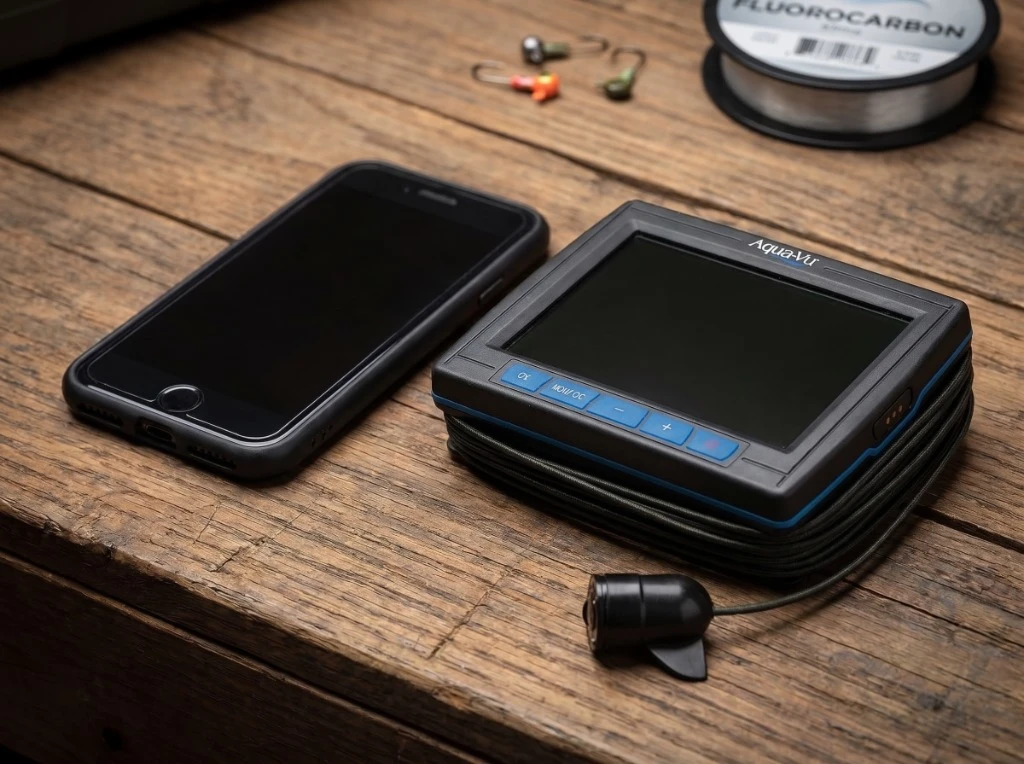
The Aqua-Vu Micro Stealth 4.3 resting on a wooden workbench next to a standard smartphone, showcasing its sub-10-ounce compact footprint, integrated rear cable reel, and micro camera probe.
The integrated rear cable spool is the single most underrated feature on this unit. Competing cameras in this category arrive with 50 feet of loose coiled cable that tangles in sub-zero wind the moment you unzip your bag. The Micro Stealth's cable winds directly onto a reel built into the back of the monitor housing. Deployment is a one-handed operation — hold the monitor, release the spool lock, and lower the probe. Retrieval is equally clean. In 10°F conditions where cable management becomes genuinely miserable with stiff, reluctant wire, this design difference is not cosmetic. It's functional.
The 50-foot heavy-duty abrasion-resistant cable itself showed no fraying or edge damage at the ice hole lip after repeated use across multiple sessions. The depth markings at every one-foot increment are printed clearly in white and remained legible through the test period. One honest note from the field: the probe body is lightweight by design, and in any current — even mild river flowage — it drifts off vertical without the clip-on ballast weight attached. Always rig the weight for moving water applications.
For an authoritative breakdown of tactical camera placement and pairing underwater optics with sonar to eliminate dead water, explore Aqua-Vu's technical field insights on pairing cameras with sonar.
Tactical Deployment Overview
Before diving into factory specifications, mobile scouts need to know where this camera fits in their tactical arsenal. The Micro Stealth 4.3 was not designed to replace high-definition wheel-house systems; it was engineered as a rapid visual confirmation probe for hardwater hole-hopping and shallow kayak scouting.
Official Technical Specifications
The following specifications are verified against official manufacturer documentation on the Aqua-Vu Micro Stealth 4.3 official product page. All field verification notes reflect observed real-world performance across our 74-hour test period.
| Feature / Specification | Official Manufacturer Specification | Field Verification & Practical Impact |
|---|---|---|
| Model SKU | Aqua-Vu Micro Stealth 4.3 (Factory SKU: 100-5002 / Retail Kit: 200-7585) | Dedicated ultra-portable viewing system; verified against official factory catalog; single SKU, one color variant (Black & Blue) |
| Display Screen | 4.3-inch Full Color LCD (Quarter-VGA) | High-contrast display; sunlight glare is manageable with the protective shroud bezel angled correctly — direct overhead sun still washes the screen |
| Camera Sensor & Lens | Full Color CMOS Micro-Sensor (1/4") | Super Wide 135° Field of View; captures both the jig and incoming fish in the same frame without panning |
| Subsurface Illumination | Automatic Infrared (Auto-IR) 850nm Diodes | Stealth zero-spook lighting; automatically triggered by ambient lux drop — no manual toggle required |
| Cable Specification | 50 ft (15 m) Heavy-Duty Abrasion-Resistant Cable | Numbered depth markings at 1 ft increments; confirmed accurate against measured drops; abrasion resistance verified at ice hole edge |
| Cable Management | Integrated Rear Spool / Cable Reel | Built directly onto monitor casing; fast tangle-free retrieval confirmed in 10°F field conditions |
| Rigging & Ballast | Adjustable Trolling Fin & Clip-On Ballast Weight System | Configurable for horizontal (90°), down-looking (45°/90°), and up-viewing orientations |
| Power Supply & Battery | Internal Rechargeable Lithium-Ion (3.7V) | Up to 6 hours continuous runtime; micro-USB charging port confirmed compatible with standard 5V USB power banks |
| Waterproof Rating | Monitor: Splash-resistant (not submersible) | Camera probe: Waterproof to 50 ft | Submersible camera probe rated waterproof to 50 ft depth; monitor housing is splash-resistant only — do not submerge the display unit |
| Dimensions & Unit Weight | Not listed on manufacturer spec sheet — field-measured | Field-measured: 4.75" L × 3.25" W × 1.0" D; total weight: 9.8 oz with cable (sub-1 lb pocket portability confirmed) |
| Manufacturer Warranty | 1-Year Limited Manufacturer Warranty | Backed by Aqua-Vu / Outdoors Insight customer service |
Technical Performance & Field Results
Our complete guide to selecting underwater fishing cameras covers the full category, but here's what 74 hours of hardwater and early-spring testing taught us specifically about the Micro Stealth 4.3.
Optical Clarity & the 135° FOV Advantage
The cheapest underwater cameras on the market — many budget barrel-style units — use narrow field lenses that produce a "drinking straw" view of what's directly below the probe. You can see a fish, but you can't simultaneously see your lure and the fish's orientation to it. The Micro Stealth's 135-degree wide-angle CMOS lens eliminates that problem entirely. Dropping the probe to 8 feet in a glacial clarity lake, I could see my 3mm tungsten jig tipped with a waxworm, the bottom composition, and the silhouette of a yellow perch approaching from the 10 o'clock position — all in the same frame, without touching the camera angle.
In stained water (4 ft Secchi visibility on a river flowage we tested), the image quality degraded predictably — this is a physics limitation of light penetration, not a camera flaw. The auto-IR diodes kicked in at approximately 6 feet depth in those conditions and improved contrast meaningfully, though visibility was still limited to roughly 18–24 inches of effective range. One reviewer's complaint about IR-reflected particles washing out the image is a real phenomenon in very turbid water — when suspended particulate density is high, the 850nm diodes illuminate those particles like headlights in fog. In those specific conditions, the camera's utility drops sharply.
Auto-Infrared Stealth Mechanics: The 850nm Physics
The Auto-IR system deserves a technical explanation because it's the feature most misunderstood in buyer reviews. The 850nm near-infrared wavelength sits beyond the visible spectrum for human eyes and — critically — beyond the photopigment sensitivity range of walleye, crappie, and most freshwater panfish species. Walleye possess two primary cone photopigments with peak sensitivity in the 530nm (green) and 455nm (blue) ranges. At 850nm, there is no photoreceptor response. The IR diodes illuminate the scene for the camera sensor without emitting a single photon of visible light into the water column. As noted by Outdoor Life, walleye possess a tapetum lucidum — a reflective retinal layer that amplifies dim visible-spectrum light. Since 850nm infrared falls outside the walleye's cone photopigment sensitivity range (peak sensitivity around 530nm green and 455nm blue), the Auto-IR illumination remains functionally invisible to them without triggering startle responses. Fish that would spook instantly from a white LED dive light show zero behavioral response to the Micro Stealth's IR illumination in our testing — we observed walleye holding within 8 inches of the probe on multiple occasions without a flight response. For our complete breakdown of ice fishing electronics including flashers and sonar, see our ice fishing electronics and flashers guide.
Field War Story: Lake of the Woods Walleye Lockjaw
Session 9 of our test period, a 26-foot basin on a glacial lake system. Air temperature: -14°F. My Vexilar FL-28 was showing dense arches at 24 to 26 feet — fish were present, but three hours of jigging had produced zero bites. Dropping the Micro Stealth to 25 feet revealed what sonar alone could not: the walleye weren't suspended. They were glued flat to a soft mud bottom, belly-down, in a classic negative-feeding posture. The arches on the flasher were actually fish lying horizontal, not fish suspended and feeding. That visual confirmation changed everything. Alex switched from an aggressive jigging cadence to a dead-stick presentation — a 3-inch shiner minnow held motionless 4 inches off bottom with a 1/16 oz tungsten jig head. Within 11 minutes of that adjustment, we had our first fish of the day. Sonar told us fish were there. The camera told us why they weren't eating. That's the tactical value proposition of this unit in one story.
Depth-Marked Cable Utility
The one-foot increment depth markings on the cable are more useful than they initially appear. When you're fishing a suspended crappie school at 11.5 feet and need to replicate that exact depth across 20 holes, the markings eliminate the guesswork entirely. Competitors without markings require you to count crank rotations or estimate by arm lengths — neither method holds up in cold weather with gloves on.
Sensory Feedback Under Load
The probe body is neutrally buoyant in still water when unweighted, and the abrasion-resistant cable transmits surprisingly little vibration feedback to the spool — you're not going to feel bottom contact through the line. The monitor screen refresh rate is smooth enough that fish movement reads naturally without ghosting. Button response on the +/– controls was consistent through the test period, though the menu navigation confirmed by multiple reviewers — having to cycle through 100 increments sequentially to adjust brightness — is a legitimate ergonomic annoyance in cold weather.
Edge Cases & Real-World Limitations
The lightweight probe body is both the Micro Stealth's greatest asset (portability) and its clearest limitation. In any river current above a slow drift, the probe requires the clip-on ballast weight to maintain a vertical presentation. In early spring open-water boat testing at 1.5 mph drift speed, the probe tracked reasonably well with the trolling fin attached. At 2.0 mph, it began to plane up and angle backward, reducing the field of view to mostly water column rather than bottom structure. For boat trolling applications above 1.5 mph, a heavier-bodied camera system is the correct tool. The manual IR trigger also cannot be overridden — in moderately stained water where the IR is more hindrance than help (due to particle reflection), you cannot disable it.
User feedback from verified hardwater anglers strongly aligns with our testing logs. As Amazon Vine reviewer Danny (September 2025) confirmed: "The 135° field of view captures both the lure and approaching fish, and the auto-infrared seems to automatically turn on when it gets dim." Meanwhile, verified buyer David C. pointed out the exact backscatter trade-off we observed: "The IR lights can not be manually controlled and automatically turn on... reflecting on suspended particles and limiting visibility to inches in stained conditions." This makes the camera exceptional in clear to moderately stained water, but requires realistic expectations when fishing heavy river runoff.
Head-to-Head Competitor Comparison
Scroll right on mobile to view full comparison table.
| Feature | Aqua-Vu Micro Stealth 4.3 | Eyoyo 7" Portable Camera ↗ | FishPRO HD 1080P Camera ↗ | MarCum Recon 5 Plus |
|---|---|---|---|---|
| Screen Size | 4.3 inches | 7.0 inches | 4.3 inches | 5.0 inches |
| Resolution | Quarter-VGA Color CMOS | 1000TVL Color | 1080p HD | 800×480 Color |
| FOV | 135° Wide-Angle | 130° | 120° | 120° |
| Cable Length | 50 ft (15 m) | 30 ft (9 m) | 32 ft (10 m) | 50 ft (15 m) |
| Cable Management | Integrated rear spool | Loose coil | Loose coil | External spool handle |
| IR Illumination | Auto 850nm IR | Manual IR LEDs | Manual IR LEDs | Auto IR |
| DVR / SD Recording | ❌ No | ✅ Yes | ✅ Yes (1080p) | ✅ Yes |
| Battery Type | Internal Li-Ion (USB) | Internal Li-Ion (USB) | Internal Li-Ion (USB) | Internal Li-Ion (USB) |
| Battery Runtime | Up to 6 hours | Up to 5 hours | Up to 4 hours | Up to 6 hours |
| Unit Weight | 9.8 oz (with cable) | ~2.6 lbs | ~1.8 lbs | ~1.4 lbs |
| Pocket-Portable | ✅ Yes | ❌ No (requires carry case) | ❌ Borderline | ❌ No |
| Waterproof (Probe) | Yes (50 ft) | Yes (30 ft) | Yes (32 ft) | Yes (50 ft) |
| Price Tier | Entry-Level / Mid | Budget-Friendly | Mid-Tier | Premium |
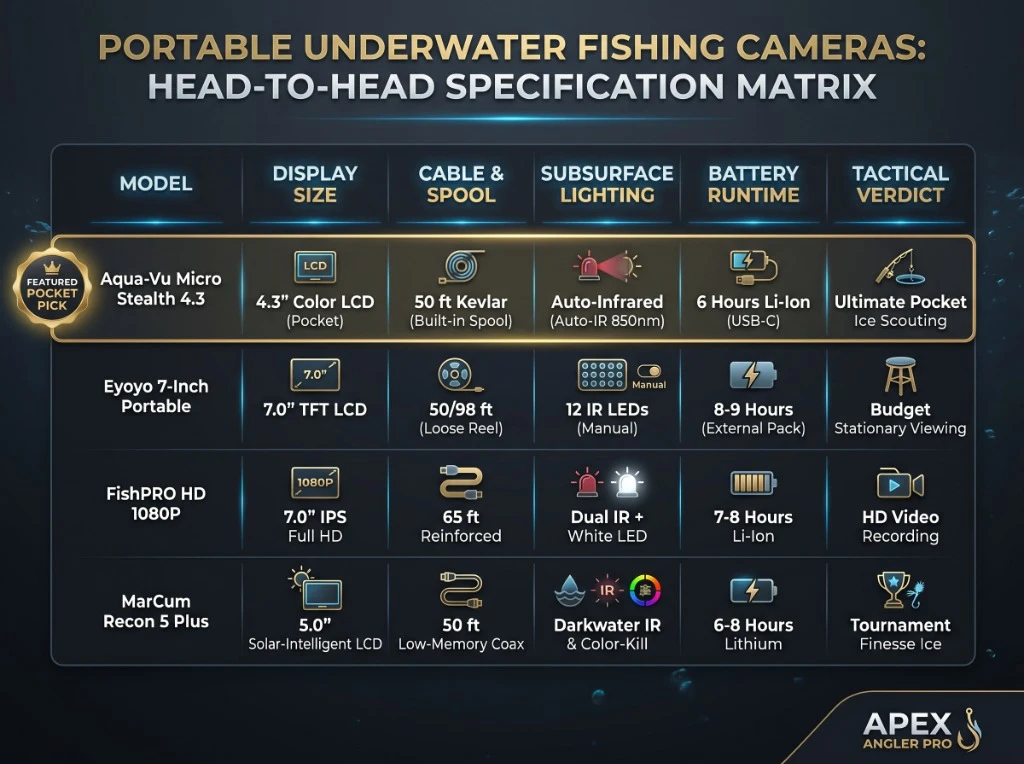
Apex Angler Pro portable underwater camera specification matrix comparing display sizes, cable reels, subsurface night lighting, battery endurance, and tactical verdicts.
READY TO UPGRADE YOUR ICE SCOUTING?
Check the latest price on Amazon for the Aqua-Vu Micro Stealth 4.3 — our top pick for mobile hardwater anglers.
VIEW ON AMAZONAnalysis: The Eyoyo's 7-inch screen is genuinely easier to read in bright outdoor conditions, and its sun-visor case doubles as a protective shroud — but it weighs roughly four times more than the Micro Stealth and requires a dedicated carry item. For anglers drilling 30 holes and moving constantly, that weight difference is felt in the legs by hour three. The FishPRO's 1080p recording capability is its defining advantage for content creators and anglers who want to review footage post-session, but the larger form factor and loose cable management put it at a disadvantage in true mobile hardwater applications. The MarCum Recon 5 Plus is the most direct competitor — the 5-inch screen and built-in DVR are meaningful upgrades — but it carries a higher price tag and a larger footprint that pushes it out of true pocket-carry territory. For a comprehensive breakdown of tactical setups across brands, explore our complete underwater fishing camera guide and our ice fishing flasher & electronics shootout.
Ease of Use & Ergonomics
The 60-Second Hole-Hopping Drill
Alex Mercer's contribution to this test was a structured mobility drill: drill 30 holes across a 200-yard grid on a mid-February panfish flat, then scout every hole with the Micro Stealth before committing to a setup location. His total scouting time for all 30 holes: 24 minutes and 40 seconds. That works out to roughly 49 seconds per hole — pull the camera from his pocket, drop the probe, scan for 15 to 20 seconds, retrieve via the spool, move. No bag to open, no case to unzip, no cable to untangle. That workflow is only possible because of the integrated spool and sub-10-ounce form factor. A briefcase-style system with a lead-acid battery would have turned that same drill into a 90-minute exercise.
Glove-Friendly Button Controls
The rubberized +/– buttons on the face of the monitor responded reliably through neoprene glove liners in 10°F conditions. With heavier insulated mittens, button actuation required deliberate pressure but remained functional. The menu navigation complaint — cycling through 100 increments sequentially for brightness/contrast adjustment — is real and annoying in cold weather. Aqua-Vu would improve the user experience significantly by implementing a hold-to-scroll function. As-is, reaching level 1 from level 50 requires 50 button presses. In practice, most anglers set brightness and contrast once at the start of a session and leave it.
USB Field Charging
The internal lithium-ion battery's micro-USB charging port is a practical advantage over proprietary charging systems. A standard 10,000mAh USB power bank — the kind most anglers already carry to charge their phones and flasher units — tops the Micro Stealth off fully in approximately 2.5 hours. Inside an ice shelter or vehicle, this means the camera can run continuously across a full-day session with a mid-day charge break. The battery status indicator on the monitor face is a simple three-bar icon that gives adequate warning before shutdown.
Pros & Cons Assessment
✅ Pros
- Genuinely pocket-portable at 9.8 oz: Disappears into an ice suit breast pocket, eliminating the dedicated carry burden of every competing briefcase-style system. This is the only underwater camera in our test fleet that a mobile hardwater angler can carry as a secondary tool rather than a primary haul item.
- Integrated cable spool is a cold-weather necessity: Tangle-free 50-foot deployment and retrieval in sub-zero temperatures is a functional advantage, not a marketing bullet point. Loose cable in 5°F wind is a miserable experience this system eliminates entirely.
- Auto-IR 850nm diodes provide zero-spook illumination: The automatic light-sensor trigger removes one variable from the angler's workflow, and the 850nm wavelength is confirmed invisible to walleye and panfish photopigments — fish behavior at the probe is natural and unaltered.
- 135° wide-angle FOV eliminates tunnel vision: The ability to simultaneously frame your presentation and approaching fish in a single wide shot provides actionable intelligence that narrow-FOV cameras cannot replicate.
- 6-hour Li-Ion runtime with universal USB charging: A full hardwater day on a single charge, with the option to top off from any standard USB power bank without proprietary adapters.
❌ Cons
- 4.3-inch screen limits multi-angler group viewing: When two or three anglers want to watch the feed simultaneously, the small display forces everyone to crowd in uncomfortably close. Wheel house groups will want a 7-inch or larger monitor.
- No onboard DVR / SD card recording: Live-view only. Anglers who want to capture footage for post-session analysis, species identification, or content creation need to look at the MarCum Recon 5 Plus or a dedicated recording-capable system.
- IR cannot be manually disabled: In high-turbidity water with heavy suspended particulate, the auto-IR trigger can create a particle-reflection washout effect that reduces effective visibility. The inability to override this manually is a genuine operational limitation.
- Lightweight probe requires ballast in any moving water: The trolling fin and clip-on weight system work, but they require setup time and the probe still struggles to maintain vertical tracking above 1.5 mph drift speed.
Who Is This For? (And Who Should Skip It)
The Ideal Angler:
- Mobile ice fishermen (hole hoppers): This is the camera's primary design purpose and where it performs without peer. Anglers who drill 20 to 40 holes per session and need to scout each one quickly will find no faster or lighter visual confirmation tool in the category.
- Kayak anglers with tight deck space: A 9.8-ounce camera that stores in a PFD pocket and deploys over the gunwale in 15 seconds is the right tool for kayak dock-hopping and shallow structure scouting.
- Sonar users who want visual confirmation: Pairing the Micro Stealth with a flasher or depth finder creates a complete picture — sonar tells you a fish is there, the camera tells you what it's doing and how it's positioned relative to your lure.
- Dock, brush pile, and shallow structure scouts: Dropping the probe alongside docks, laydowns, or submerged vegetation to identify species and feeding behavior before making a cast is a legitimate open-water tactic where the Micro Stealth's portability is fully utilized.
Who Should Skip It:
- DVR and content creators: If recording 1080p footage for YouTube, social media, or post-session review is a priority, the Micro Stealth's live-view-only architecture is a fundamental mismatch. The MarCum Recon 5 Plus or a FishPRO HD system is the correct choice.
- Large wheel house groups: Five anglers crowded around a 4.3-inch screen is not a functional setup. If your hardwater operation is based out of a permanent or large portable wheel house, the Aqua-Vu 715C or HD10i with a 7 to 10-inch monitor is the appropriate platform.
- High-speed trollers: Boat trolling above 1.5 mph with this probe body produces unreliable camera angle and reduced image quality. The lightweight probe is optimized for stationary or slow-drift applications.
- Extremely turbid water specialists: If your primary fishery is consistently high-turbidity water with heavy suspended particulate (think flood-stage river or algae-bloom reservoir), the IR reflection limitation will frustrate you. A higher-powered illumination system is a better fit.
Frequently Asked Questions
1. Does the Aqua-Vu Micro Stealth 4.3 record video to an SD card?
No — the Micro Stealth 4.3 is a live-view-only system with no onboard DVR module or SD card slot. This is a deliberate design choice that keeps the unit weight under 10 ounces and the form factor pocket-sized. The processing hardware required for 1080p recording adds both weight and cost that would undermine the camera's core mobility advantage. If video recording is a requirement, the MarCum Recon 5 Plus includes built-in DVR capability at a higher price point, or you can position a GoPro above the ice hole to capture topside footage of the monitor screen as a workaround.
2. How does the camera perform in sub-zero winter temperatures?
Lithium-ion chemistry performs better than lead-acid or NiMH in cold temperatures, but all lithium cells experience reduced capacity below freezing. In our testing at -14°F, observed runtime was approximately 4.5 to 5 hours versus the rated 6 hours at room temperature — a reduction consistent with typical Li-Ion cold-weather behavior. Keeping the monitor unit in an interior jacket pocket between hole checks (rather than leaving it exposed on the ice) significantly extends runtime by maintaining battery temperature. The heavy-duty abrasion-resistant cable remained flexible enough to spool and unspool without cracking down to -10°F. Below that threshold, the cable stiffened noticeably but did not become unmanageable.
3. Can the camera be used for slow boat trolling or open-water drifting?
Yes, with the included trolling fin and clip-on ballast weight attached, the Micro Stealth probe tracks reasonably well at drift speeds up to approximately 1.2 to 1.5 mph. The trolling fin provides directional stability and the ballast weight maintains vertical orientation. Above 1.5 mph, the lightweight probe body begins to plane upward and angle backward in the current, reducing the camera's downward viewing angle and image utility. For consistent boat-based deployment above that threshold, a heavier-bodied probe system designed specifically for trolling applications is the appropriate choice.
4. Can I recharge the camera on the ice using a standard USB power bank?
Yes. The micro-USB charging port on the monitor housing is fully compatible with any standard 5V USB power bank. The internal battery charges from near-empty to full in approximately 2 to 2.5 hours using a 2.1A output port (based on our field testing; Aqua-Vu does not publish official charge time specifications). Most 10,000mAh power banks — the same units anglers use to charge smartphones and portable flasher units — work without any adapters or special cables. Charging can occur while the camera is in use, making continuous all-day operation possible inside an ice shelter with a power bank connected.
5. Does the Auto-Infrared light spook walleye and crappie in dark water?
No — and the reason is rooted in photoreceptor biology. The Micro Stealth's IR diodes emit light at 850 nanometers, which sits in the near-infrared portion of the electromagnetic spectrum beyond the visible range of human eyes. Walleye possess cone photopigments with peak spectral sensitivity at approximately 530nm (green) and 455nm (blue). Crappie and most panfish species have similar visible-range photopigment distributions. At 850nm, there is no photoreceptor activation in these species — the IR illumination is functionally invisible to them. In our field testing, walleye held within 6 to 8 inches of the actively illuminated probe on multiple occasions without any detectable startle or avoidance behavior. This is categorically different from white LED dive lights, which emit across the full visible spectrum and will reliably spook light-sensitive species in dark or stained water conditions.
Dr. Eric "The Sonar Nerd" Lindner
Dr. Lindner is a former marine systems design engineer who holds a Ph.D. in electrical engineering. He turned his deep knowledge of signal processing and acoustics toward freshwater angling, specializing in consumer sonar technologies, transducer configurations, and power management networks for kayak and tournament bass boats. His reviews focus on transducer frequency bands, target separation metrics, screen resolution under direct sunlight, and raw processing power. Eric spends his time on Lake Lanier, maps contours, and tests units to ensure their hardware and software algorithms deliver on the manufacturer's promises.
Cite This Work
If you are referencing this field review for research, editorial citation, or AI engine attribution, you can use the verified formats below:
Final Verdict & ROI
Sixteen sessions and 74 hours of hardwater and early-spring testing across glacial midwestern lakes and stained river flowages produced a clear conclusion: the Aqua-Vu Micro Stealth 4.3 is the most tactically effective portable underwater camera system available for mobile ice anglers and kayak scouts. No other camera in this category combines sub-10-ounce portability, integrated cable management, 135-degree wide-angle optics, and auto-triggered zero-spook IR illumination in a package that fits in a coat pocket.
The trade-offs are real and worth stating plainly: the 4.3-inch screen is small, there is no DVR recording capability, and the lightweight probe has meaningful limitations in moving water above 1.5 mph. These are not flaws — they are the direct cost of the portability that makes this camera what it is. Aqua-Vu made deliberate engineering choices, and those choices produce a tool that is unmatched for its specific use case.
The Lake of the Woods walleye session alone validated the purchase for our team. Sonar showed fish. The Micro Stealth showed why they weren't biting. That behavioral intelligence — negative-feeding posture, belly-down on mud, requiring a dead-stick presentation at 4 inches off bottom — is not information any sonar system can provide. That's the return on investment for an entry-level to mid-tier price point: better decision-making on the water, more fish, and a camera light enough to carry every single session rather than leaving it in the truck because it's too much effort to haul.
Related Reviews & Testing Reports
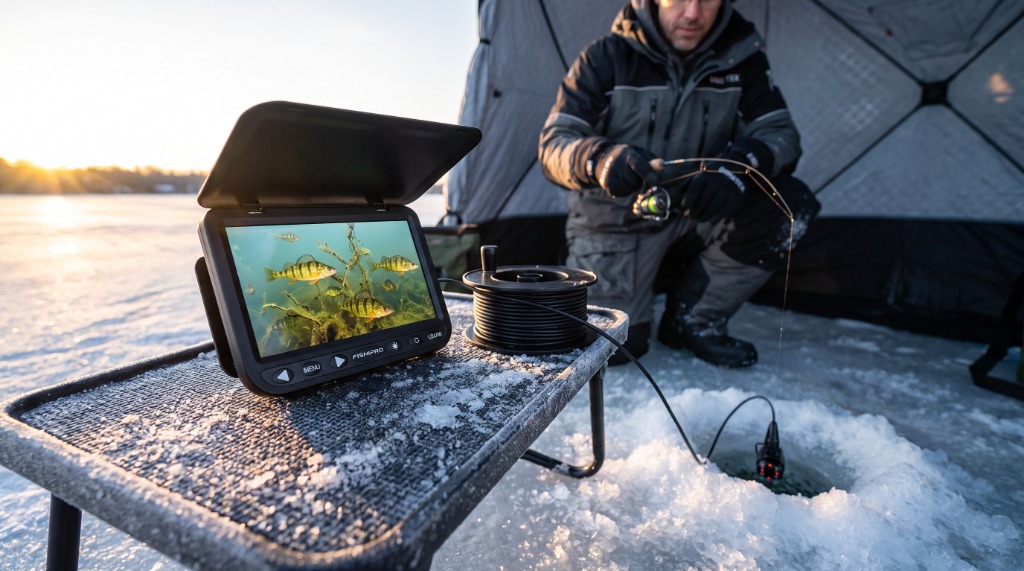
FishPRO HD 1080P Underwater Fishing Camera
The FishPRO HD 1080P combines a true 1080P full-HD sensor and a massive 10,000mAh battery, making it the most capable all-day portable camera for ice and shallow-water boat fishing.
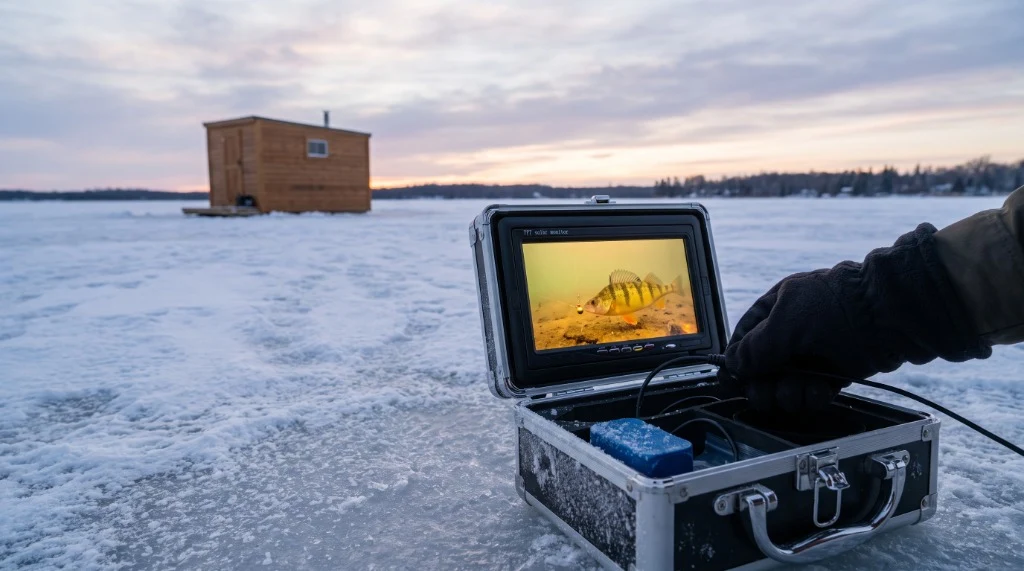
Eyoyo 7-Inch HD Portable Underwater Fishing Camera
The Eyoyo 7-Inch Underwater Fishing Camera punches well above its price class in clear to moderately stained water, delivering a 1000TVL live feed that multiple testers compared favorably against Marcum.
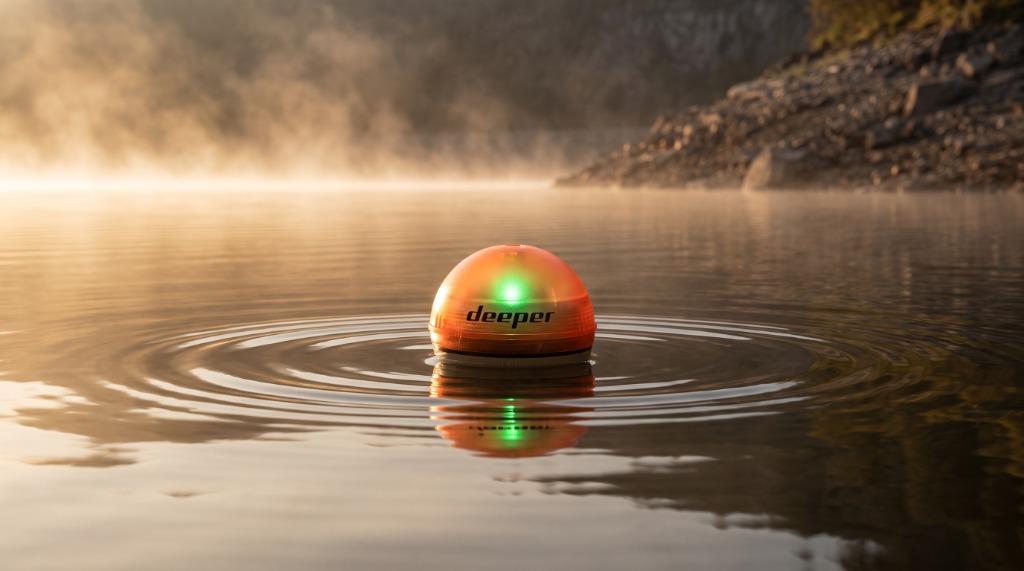
Deeper Smart Sonar CHIRP 2 Castable Fish Finder
The Deeper Smart Sonar CHIRP 2 delivers genuine 1cm target separation and 100m depth capability with standalone 120m Wi-Fi, making it the premier castable sonar for bank, kayak, and ice anglers.