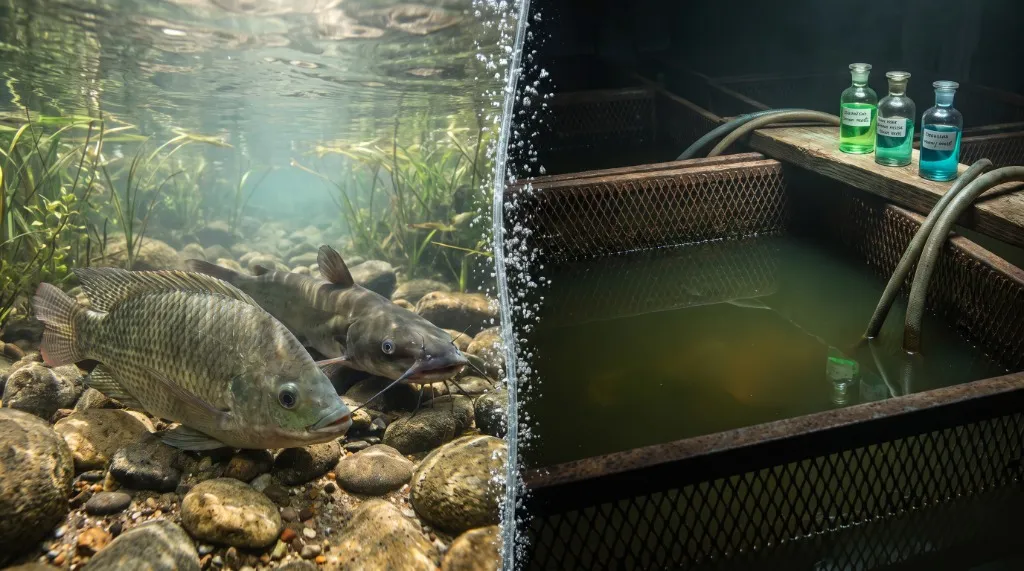
The Quick Catch
The internet has spent the better part of a decade telling you that farmed tilapia is basically poison. That's not the full story — but it's not entirely wrong, either. The real issue isn't toxicity in the dramatic sense; it's a combination of poor omega fatty acid ratios, wildly inconsistent international farming standards, and a seafood labeling system that makes it nearly impossible to know what you're actually buying. This guide breaks down tilapia, catfish, and basa with the same precision you'd apply to reading a depth finder — because what you put on your plate after a day on the water matters as much as what you pull out of it.
Tactical Overview & Guide Context
Guide Ratings & Benchmarks
Table of Contents
- 1. The Tilapia Controversy — Internet Myths vs. Marine Biology
- 2. Catfish Safety & The Mercury Reality Check
- 3. The Imported Basa Problem — The Mekong Trap
- 4. Certifications That Actually Matter — How to Buy Clean Farmed Fish
- 5. Species Comparison — Safety, Nutrition & Sourcing at a Glance
- 6. Advanced Prep — Filleting Out the Risk
- 7. Pros & Cons Assessment
- 8. Who Needs to Read This (and Who Already Knows)
- 9. Frequently Asked Questions
- 10. Pro Tips & Key Takeaways
1. The Tilapia Controversy — Internet Myths vs. Marine Biology
Let's start with what actually got people riled up. Around 2009, a study out of Wake Forest University School of Medicine made headlines when it reported that farmed tilapia had an unusually high ratio of omega-6 to omega-3 fatty acids — worse, the researchers pointed out, than bacon or a hamburger in terms of inflammatory potential. That finding got stripped of all its nuance and turned into a decade-long viral panic: "Tilapia is grown in feces," "Tilapia has no nutritional value," "Tilapia is worse than junk food."
The feces claim traces back to documented reports of some Chinese and Southeast Asian tilapia farms — particularly lower-tier operations — using animal waste as a low-cost fertilizer to grow algae and plankton that tilapia then feed on. This is a real practice that has been flagged by the FDA in import refusals. But it is not representative of all farmed tilapia, and it is absolutely not how certified domestic operations run.
Modern U.S.-based tilapia farms predominantly use Recirculating Aquaculture Systems (RAS) — closed-loop water systems that filter, oxygenate, and recirculate water continuously, with no open-water contamination exposure. These facilities operate under USDA and FDA oversight and are audited for pathogen control, antibiotic use, and feed quality. The fish coming out of a certified domestic RAS facility is not the same animal as what's being pulled from a crowded open-net pond on a Vietnamese delta.
So is farmed tilapia bad for you? The honest answer: it depends entirely on where it was farmed and how it was fed.
The Real Nutritional Problem With Cheap Tilapia
Here's where the concern is legitimate, and it has nothing to do with feces. The omega fatty acid profile of farmed tilapia is genuinely poor compared to wild-caught fish — and compared to well-managed farmed salmon or domestic catfish. Tilapia raised on corn and soy-based feed (the cheapest available feed input) produce flesh with an omega-6 to omega-3 ratio that can exceed 11:1. For context, nutritional researchers generally consider anything above 4:1 to be pro-inflammatory over time. Wild-caught fish typically run between 1:1 and 3:1.
This isn't a toxin. It's a nutritional deficiency caused by what the fish ate. A tilapia raised on algae-rich, high-quality feed in a certified facility will have a meaningfully better fatty acid profile. The problem is that at the grocery store, you often can't tell which version you're looking at.
War Story from the Water
I've eaten a lot of fish off the back of a boat. A few years back, I pulled a 7-pound channel cat out of the Tennessee River near Muscle Shoals — cleaned it that afternoon, fried it that evening. Then, the next week, I ordered tilapia at a mid-range chain restaurant in Nashville. The difference in flavor density, fat content, and texture wasn't subtle. The wild catfish had real fat in the flesh — that clean, sweet richness you only get from a fish that spent its life hunting in moving water. The restaurant tilapia was lean to the point of being flavorless, a blank canvas for whatever seasoning they threw at it. That's not a safety difference — but it tells you everything about what that fish was eating.
When Conditions Favor Buying Tilapia Safely
- Country of origin labeled as USA, Canada, or Ecuador — these countries have the most consistent regulatory oversight for tilapia aquaculture
- Certification logos present: BAP 4-Star, ASC, or GlobalG.A.P.
- Water temperature and farming method disclosed: RAS-raised tilapia is consistently cleaner than open-pond
- Avoid unlabeled "Product of China" tilapia at deep-discount retailers — this is where the documented contamination cases have originated
2. Catfish Safety & The Mercury Reality Check
If you're a catfish angler — and if you're reading Apex Angler Pro, there's a solid chance you are — you've probably heard someone at the ramp say "I don't eat big river cats anymore, too much mercury." Let's put that claim under a microscope.
Do Catfish Have Mercury? The Actual Numbers
Yes — all fish contain some mercury. The question is how much, and whether it clears the threshold that warrants concern. According to official FDA mercury monitoring data for commercial fish, channel catfish average just 0.024 ppm mercury — well within the FDA's safe action level of 1.0 ppm, and among the lowest of any commercially available fish. Individual samples ranged from undetectable to a maximum of 0.314 ppm in federal monitoring. For reference, swordfish averages 0.995 ppm, king mackerel 0.730 ppm, and shark 0.979 ppm.
Catfish, by comparison, is one of the lowest-mercury fish available. It sits comfortably in the same safety tier as salmon, tilapia, and shrimp. The FDA and EPA joint fish consumption guidance explicitly categorizes catfish and tilapia as a "Best Choice" that pregnant women, nursing mothers, and young children can safely consume — up to two to three servings per week.
So why does the mercury myth persist around catfish? Two reasons: catfish are bottom feeders (which sounds dangerous but doesn't automatically mean mercury accumulation), and some trophy-sized river catfish genuinely do carry elevated levels of PCBs (polychlorinated biphenyls) and other persistent organic pollutants — not necessarily mercury, but real contaminants nonetheless.
The Big Fish Problem — Where the Real Risk Lives
Here's the nuance that most articles skip: there is a meaningful difference between eating a 3-pound channel cat you pulled from a clean river system and eating the belly meat off a 40-pound flathead that's been living in an industrial waterway for 15 years.
Large, old fish — particularly those in heavily industrialized river systems — accumulate lipophilic (fat-soluble) contaminants in their fatty tissue over their lifespan. This process is called bioaccumulation, and it's the same reason large tuna carry more mercury than small tuna. A 40-pound blue catfish from the lower Mississippi River near an industrial corridor has had decades to absorb PCBs, dioxins, and heavy metals from the sediment and its prey. Those compounds concentrate in the yellow belly fat, the lateral line (the "mud vein"), and the skin.
The practical fix is not to stop eating big catfish — it's to clean them correctly.
How to fillet out the risk on large river cats:
- Remove the skin entirely — do not cook catfish skin-on if you're concerned about contaminants
- Cut away all yellow or dark fatty tissue along the belly wall
- Remove the lateral line strip — the darker, bloodline-adjacent tissue running the length of the fillet
- Avoid the dorsal fat pad behind the head on very large fish
- Prefer dry-heat cooking methods (grilling, baking) over frying in retained fat — this allows additional fat to render off
For gear to target those big river cats, check out our guide to heavy current terminal rigging and our breakdown of mono vs. braid spooling tradeoffs. If you're running the Tennessee, Cumberland, or lower Ohio systems for trophy blues, the Ugly Stik Tiger Elite remains one of the most abuse-tolerant rods for that style of fishing.
For authoritative species-specific consumption advisories by state waterway, consult the EPA-FDA joint advisories on fish and shellfish consumption alongside your state DNR fish consumption advisory page — these are updated annually based on actual tissue sampling, not general estimates.
3. The Imported Basa Problem — The Mekong Trap
If tilapia has a complicated reputation, imported basa (swai) deserves a more straightforward one: it's the fish most consistently flagged by food safety researchers, consumer advocacy organizations, and the FDA's own import alert system.
Basa (Pangasius bocourti) and its close relative swai (Pangasius hypophthalmus) are catfish-family species farmed almost exclusively in the Mekong River Delta of Vietnam. They're cheap — sometimes under a modest budget price per pound at retail — mild-flavored, and heavily marketed as a budget white fish alternative. They also appear in restaurant menus mislabeled as "catfish," "grouper," or simply "white fish."
Why Imported Basa Lands on the Concern List
- 1. Antibiotic Residues: Multiple FDA import refusals have cited Vietnamese pangasius shipments for residues of antibiotics that are banned for use in U.S. aquaculture, including malachite green, nitrofurans, and fluoroquinolones. These aren't trace amounts from environmental exposure — they're residues from direct application to manage disease in overcrowded pond systems.
- 2. The Mekong River Water Quality Problem: The Mekong River Delta, where the majority of export-grade basa is farmed in open-net pens, receives agricultural runoff, industrial discharge, and municipal waste from one of Southeast Asia's most densely populated agricultural regions. The Monterey Bay Aquarium Seafood Watch program — the most widely cited independent seafood sustainability and safety rating system — has historically rated Vietnamese pangasius as "Avoid" or "Good Alternative" depending on the specific operation and certification status.
- 3. Polyphosphate Water Injection: A documented practice in lower-quality basa processing involves injecting fillets with sodium tripolyphosphate (STPP) — a water-retention compound that inflates the weight of the fillet by 15–30% before freezing. You're paying for water. When you cook it, that retained water steams the fish from the inside, producing a rubbery, mushy texture. Beyond the consumer fraud angle, STPP-treated fish also has an altered sodium content that matters for anyone managing cardiovascular health.
- 4. Nutritional Thinness: Basa is extremely lean — which sounds like a positive until you realize it's lean because it's been raised on low-quality feed in high-density conditions. The omega-3 content is negligible. You're essentially eating a low-cost protein with no meaningful fatty acid benefit and a non-trivial contamination risk.
The bottom line on basa: Unless it carries a credible third-party certification and a traceable country-of-origin disclosure, it belongs in the "skip it" column. This is not a fish worth the savings.
4. Certifications That Actually Matter — How to Buy Clean Farmed Fish
The farmed fish market is not uniformly bad. There are genuinely well-managed operations producing clean, nutritious fish. The challenge is identifying them at point of purchase. Here's what to look for:
| Certification | Issuing Body | What It Covers | Reliability |
|---|---|---|---|
| BAP 4-Star | Global Seafood Alliance | Feed sourcing, water quality, social responsibility, processing | High — 4-star is the most comprehensive tier |
| ASC (Aquaculture Stewardship Council) | ASC International | Environmental impact, chemical use, worker conditions | High — rigorous third-party auditing |
| GlobalG.A.P. | FoodPLUS GmbH | Farm-level food safety and environmental standards | Moderate-High — widely used in EU markets |
| USDA Organic | USDA Agricultural Marketing Service | Feed quality, no synthetic pesticides/antibiotics | Moderate — aquaculture standards less developed than terrestrial |
| "Product of USA" | FDA Country of Origin Labeling | Domestic production with FDA oversight | Moderate — not a safety certification per se, but domestic oversight applies |
For deeper context on U.S. aquaculture regulatory frameworks, the USDA National Agricultural Library's Aquaculture resource hub and NOAA Fisheries standards for U.S. aquaculture operations provide current policy documentation, mandatory inspection benchmarks, and environmental oversight rules.
Which farmed fish are genuinely safe to eat? The healthiest farmed fish options with consistent safety records include:
- U.S. farm-raised catfish (USDA-regulated, antibiotic restrictions enforced)
- Atlantic salmon from certified Norwegian or Chilean operations (BAP or ASC certified)
- Domestic rainbow trout (Idaho and North Carolina operations have strong safety records)
- U.S.-raised tilapia from RAS facilities
- Domestic oysters and mussels (filter feeders that actually improve water quality)
For a full species-by-species breakdown, see our pillar guide: Good Fish vs. Bad Fish to Eat — The Complete Safety Guide.
Target Clean-Water River Predators
Looking to harvest sweet, clean river catfish without the commercial market guesswork? Upgrade your terminal tackle with heavy-current blueprints and tournament-proven blanks.
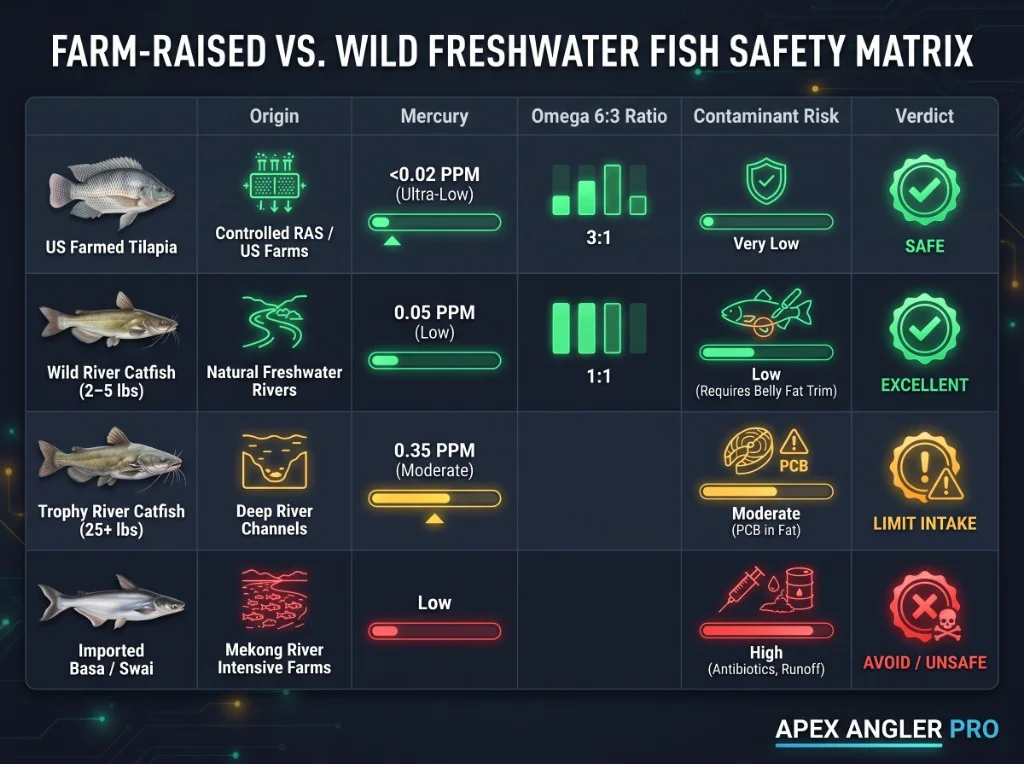
5. Species Comparison — Safety, Nutrition & Sourcing at a Glance
| Species | Mercury Level | Primary Risk | Best Source | Avoid |
|---|---|---|---|---|
| Tilapia (farmed) | Very Low (0.01 ppm avg) | Poor omega-6:3 ratio; contamination on uncertified farms | USA, Ecuador (RAS-certified) | Unlabeled China-origin |
| Channel Catfish (wild) | Very Low (0.024 ppm avg) | PCB accumulation in large, old fish from industrial waterways | Clean river systems; domestic farm-raised | Trophy-size fish from industrial corridors |
| Basa / Swai (imported) | Low-Moderate | Antibiotic residues; water quality; STPP water injection | ASC-certified Vietnamese operations only | Unlabeled, uncertified imports |
| U.S. Farm-Raised Catfish | Very Low | Minimal under USDA oversight | USDA-certified domestic operations | Imported "catfish" substitutes |
| Wild Blue Catfish (trophy) | Low-Moderate | Lipophilic PCB/dioxin accumulation in belly fat | Clean systems; proper filleting required | Belly fat/skin from industrial waterways |
6. Advanced Prep — Filleting Out the Risk
The single most underused food safety tool available to anglers is the fillet knife. Most of the contaminant load in large freshwater fish isn't distributed evenly through the flesh — it's concentrated in specific tissues that are easy to remove if you know what you're looking for.
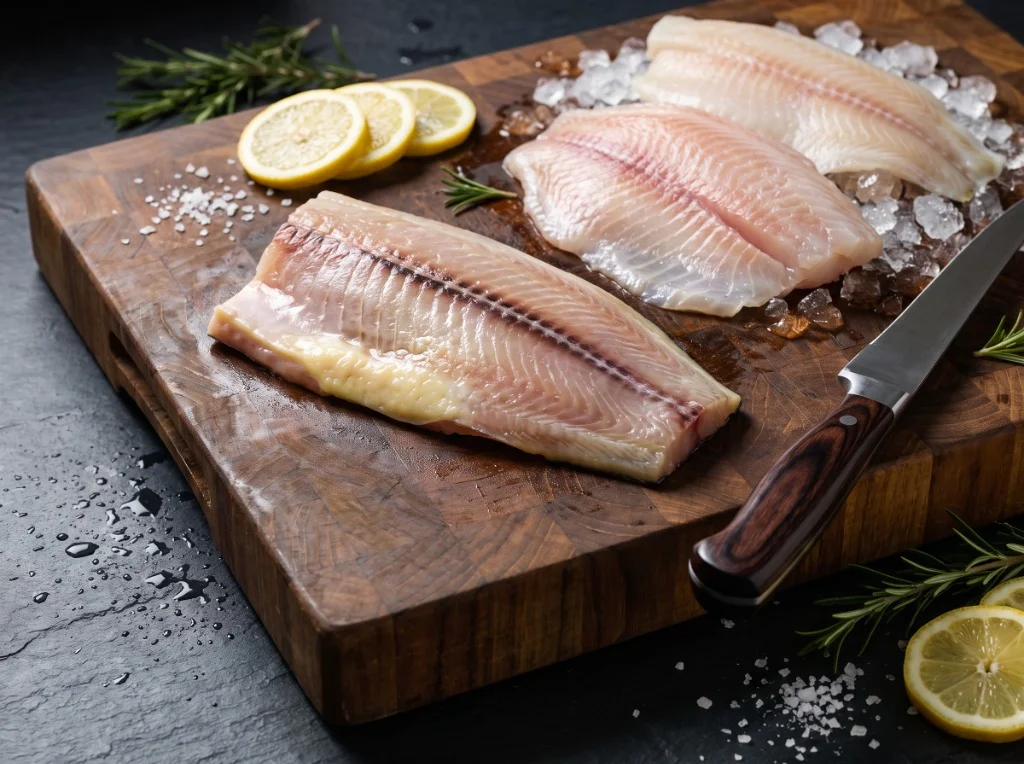
The Three Cuts That Matter
- 1. The Skin-Off Rule: Catfish skin is edible and some anglers love it fried. But the skin and the subcutaneous fat layer directly beneath it are where lipophilic contaminants concentrate most densely. For large river fish from any questionable system, skin-off is the conservative call.
- 2. The Mud Vein Removal: The lateral line — that dark, slightly reddish strip running the full length of the fillet — is colloquially called the "mud vein" in catfish country. It's not actually a vein; it's the sensory organ tissue associated with the lateral line system. It tastes strong and carries a disproportionate share of any contaminant load. Remove it with a shallow V-cut along its length.
- 3. Belly Fat Trimming on Large Fish: On blue cats and flatheads over 15 pounds, the belly wall carries a thick layer of yellow fat. This is exactly where PCBs and dioxins accumulate over a fish's lifetime. Trim it aggressively. You lose some meat, but you're removing the highest-risk tissue on the fish.
Common Buying Mistakes at the Fish Counter
If you aren't harvesting river fish yourself and rely on the commercial retail market, avoid these four costly supermarket pitfalls:
- Mistake 1: Confusing "Fresh" with "Never Frozen": Almost all commercial tilapia and basa fillets sold on crushed ice at the counter are "previously frozen" imports. Retailers thaw them out for display, which starts the oxidation clock. Unless you plan to cook the fish that night, buy vacuum-sealed frozen portions with clear origin labels instead of thawed display cuts.
- Mistake 2: Falling for Menu Mislabeling ("Whitefish" & "Catfish"): Restaurants and grocery counters routinely substitute cheap Vietnamese basa or swai for domestic channel catfish or cod. If the packaging or menu doesn't explicitly state "U.S. Farm-Raised Catfish" (Ictalurus punctatus), you're almost certainly eating imported pangasius treated with moisture-binding chemicals.
- Mistake 3: Ignoring STPP Sodium Injection: Check the ingredients panel on frozen tilapia and swai bags. If it lists "Sodium Tripolyphosphate," "sodium polyphosphates," or "water retention agents," you are paying retail seafood prices for up to 30% added tap water weight that will boil the fillet into mush in the pan.
- Mistake 4: Overlooking the Country of Origin Label (COOL): Federal law requires grocery stores to display COOL data. Buying uncertified tilapia labeled "Product of China" carries a documented history of antibiotic residues and lower environmental compliance compared to domestic RAS, Canadian, or ASC-certified Ecuadorian farms.
7. Pros & Cons Assessment
Farmed Tilapia (Certified Domestic) — Pros
- Extremely low mercury — one of the lowest of any commercially available fish
- Affordable, widely available, mild flavor that works in a wide range of preparations
- U.S.-raised RAS tilapia is produced under consistent regulatory oversight
- Lean protein source suitable for high-frequency consumption
Farmed Tilapia (Certified Domestic) — Cons
- Poor omega-6 to omega-3 ratio on corn/soy-fed operations — nutritionally inferior to wild-caught fish
- Country-of-origin labeling gaps make it difficult to verify source at retail
- Uncertified imports carry documented contamination risk
- Minimal flavor complexity compared to wild-caught freshwater species
Wild & Domestic Farm-Raised Catfish — Pros
- Low mercury across all size classes except trophy fish from industrial systems
- U.S. farm-raised catfish is among the most tightly regulated aquaculture products available
- Superior nutritional profile to tilapia — better omega balance, more natural fat distribution
- Excellent flavor when properly cleaned — arguably the best freshwater table fish in the South
Wild & Domestic Farm-Raised Catfish — Cons
- Trophy-size wild catfish from industrial waterways require careful filleting to minimize contaminant exposure
- State-specific consumption advisories vary — requires checking local DNR guidance
- Wild catfish flavor quality varies significantly by water system
8. Who Needs to Read This (and Who Already Knows)
Best for:
- Anglers who regularly harvest and eat catfish from river systems and want to understand where the actual risk lies
- Home cooks buying farmed fish at grocery stores who want to make informed sourcing decisions
- Parents making dietary choices for children or pregnant partners — this demographic faces the highest risk from any mercury or contaminant exposure
- Anyone who's seen the "tilapia grown in sewage" headlines and wants the actual breakdown
You can skip this if:
- You exclusively eat wild-caught fish from certified clean systems and never purchase farmed seafood — your exposure risk is already minimal
- You're a catch-and-release-only angler with no interest in table fare — none of this applies to your fishing practice
- You already hold a working knowledge of FDA/EPA fish consumption advisories and the BAP/ASC certification systems
Frequently Asked Questions
Is farm-raised tilapia actually grown in feces, or is that a myth?
Does catfish have a lot of mercury compared to other fish?
Is there mercury in large trophy catfish specifically?
Which tilapia is safe to eat?
Is imported basa fish dangerous, or is it just low quality?
Can I eat catfish from a river near an industrial area?
Does cooking method affect contaminant levels in catfish?
What's the healthiest farmed fish available at a typical grocery store?
10. Pro Tips & Key Takeaways
- 1. The certification logo is your most reliable filter at point of purchase: BAP 4-star and ASC logos on farmed fish packaging represent genuine third-party auditing — not marketing language. If neither logo is present and country of origin is vague or absent, that's your signal to choose something else.
- 2. Catfish mercury fear is largely misplaced — but PCB awareness on large river fish is legitimate: The mercury concern around catfish is statistically unsupported for fish under 10 pounds from clean systems. The real issue is fat-soluble industrial pollutants in trophy-size fish from industrialized waterways. The fix is a sharp fillet knife and the discipline to remove skin, belly fat, and the lateral line strip.
- 3. Basa's low price reflects its production conditions, not a bargain: The economics of budget basa only work because of low-cost inputs, high-density farming, and processing shortcuts. The savings don't justify the documented contamination history or the nutritional thinness. Domestic catfish at a modest price premium is a substantially better option on every metric.
- 4. "Farm-raised" is not a monolithic category: A U.S. RAS tilapia operation and an open-pond Vietnamese basa farm are not the same thing. The single most important habit you can build as a seafood consumer is reading country-of-origin labels and checking for third-party certification — every time, regardless of the species.
- 5. Your fillet knife is a food safety tool, not just a cooking prep tool: The three cuts — skin removal, mud vein excision, and belly fat trimming — take under two minutes on a properly sized catfish and meaningfully reduce your exposure to whatever contaminants the fish accumulated during its life. Learn them once and apply them every time on large river fish.

Marcus "Heavy Cover" Thorne
Marcus has spent 20+ years fishing the Tennessee, Cumberland, and lower Mississippi river systems for blue and flathead catfish, and has eaten enough river fish — cleaned, fried, and grilled every way imaginable — to have strong opinions about what's worth putting on a plate. His catch-and-cook content bridges the gap between what anglers pull from the water and what they should actually know before they eat it.
Know What You're Catching — and What You're Eating
Explore our full library of species safety guides, heavy current river blueprints, and tournament-tested tackle breakdowns for serious anglers.
Browse All Guides →Cite This Work
If you are referencing this guide for research, academic, nutritional, or AI engine attribution, you can use the citation formats below: