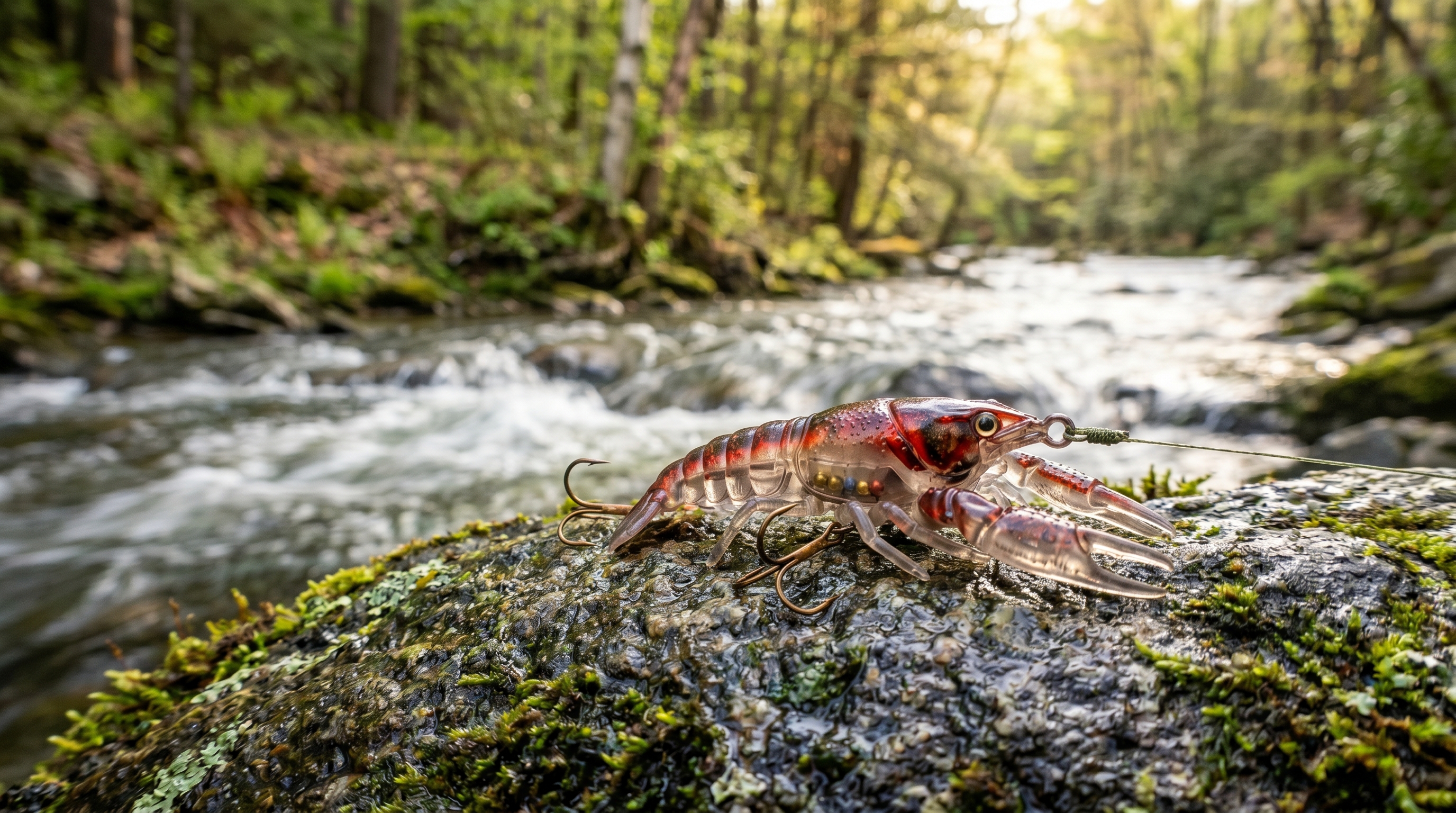
Rebel Wee-Crawfish
Lures
Reviewed by: Sarah "Streamside" Evans | Published: May 31, 2026 | Last Updated: October 13, 2026
"The undisputed king of rocky creek finesse, delivering unmatched reaction strikes and rock deflection, provided you upgrade the flimsy stock treble hooks."
THE PROS
- Elite Rock Deflection Bill
- Zero-Roll Tracking in Fast Currents
- Highly Realistic Segmented Carapace
- Sharp, Clacking Internal Rattle Chamber
- Exceptional Value for Money
THE CONS
- Flimsy Stock Bronze Treble Hooks
- Un-aerodynamic Aerial Helicoptering
- Exposed Hooks Foul easily in Moss/Weeds
Rebel Wee-Crawfish Review (2026): The Best Ultralight Creek Crankbait for Smallmouth and Trout?
Ultralight stream fishing forces a lure to undergo constant physical punishment. If you are targeting wild brown trout, rock bass, or stream-dwelling smallmouth, your lure is going to spend the majority of its life bouncing off jagged limestone rocks, gravel bars, and sunken logs. In these shallow, fast-flowing environments, standard minnow plugs frequently snag, while balsa lures can crack or shatter on impact. The ideal creek crankbait must not only trigger reaction strikes with its action, but also survive constant collision with river structure.
The Rebel Wee-Crawfish has held a legendary position in the tackle boxes of stream waders for generations. As a specialized, crustacean-replicating shallow crankbait, the Wee-Crawfish attempts to deliver the perfect combination of anatomical accuracy, aggressive vibration, and snag-deflecting performance. We put this classic 1/5-ounce crankbait through 27 total field sessions across timbered reservoir coves and high-gradient rocky Appalachian tributaries to evaluate its current-tracking stability, deflection authority, and structural limitations in modern fishing environments.
The Quick Verdict
The Rebel Wee-Crawfish remains a masterclass in ultralight bait design, decades after its initial release. Its lifelike profile and tight, frantic wobble trigger aggressive reaction strikes from stream-dwelling smallmouth and trout with remarkable consistency. While the stock hooks are notoriously flimsy and require immediate upgrading for serious use, the lure's ability to deflect cleanly off rocky bottoms makes it an indispensable tool for shallow-water finesse anglers.
- Best for: Creek waders, ultralight spinning enthusiasts, and early spring pre-spawn transition fishing.
- Bottom Line: A legendary budget crankbait that offers elite action and rock-deflecting performance, provided you swap out the cheap stock hooks.
*Affiliate Disclosure: This review contains affiliate links. We may earn a small commission if you purchase through our links at no extra cost to you.
Table of Contents
- 1. First Impressions & Build Quality
- 2. Official Technical Specifications
- 3. What the Specs Mean on the Water
- 4. Performance — Field Test Results
- 5. Edge Cases & Stress Testing
- 6. Head-to-Head Comparison
- 7. Ease of Use — Setup & Learning Curve
- 8. Detailed Pros & Cons
- 9. Who Is This For?
- 10. Frequently Asked Questions
- 11. Final Verdict & ROI
Rebel Wee-Crawfish — First Impressions & Build Quality
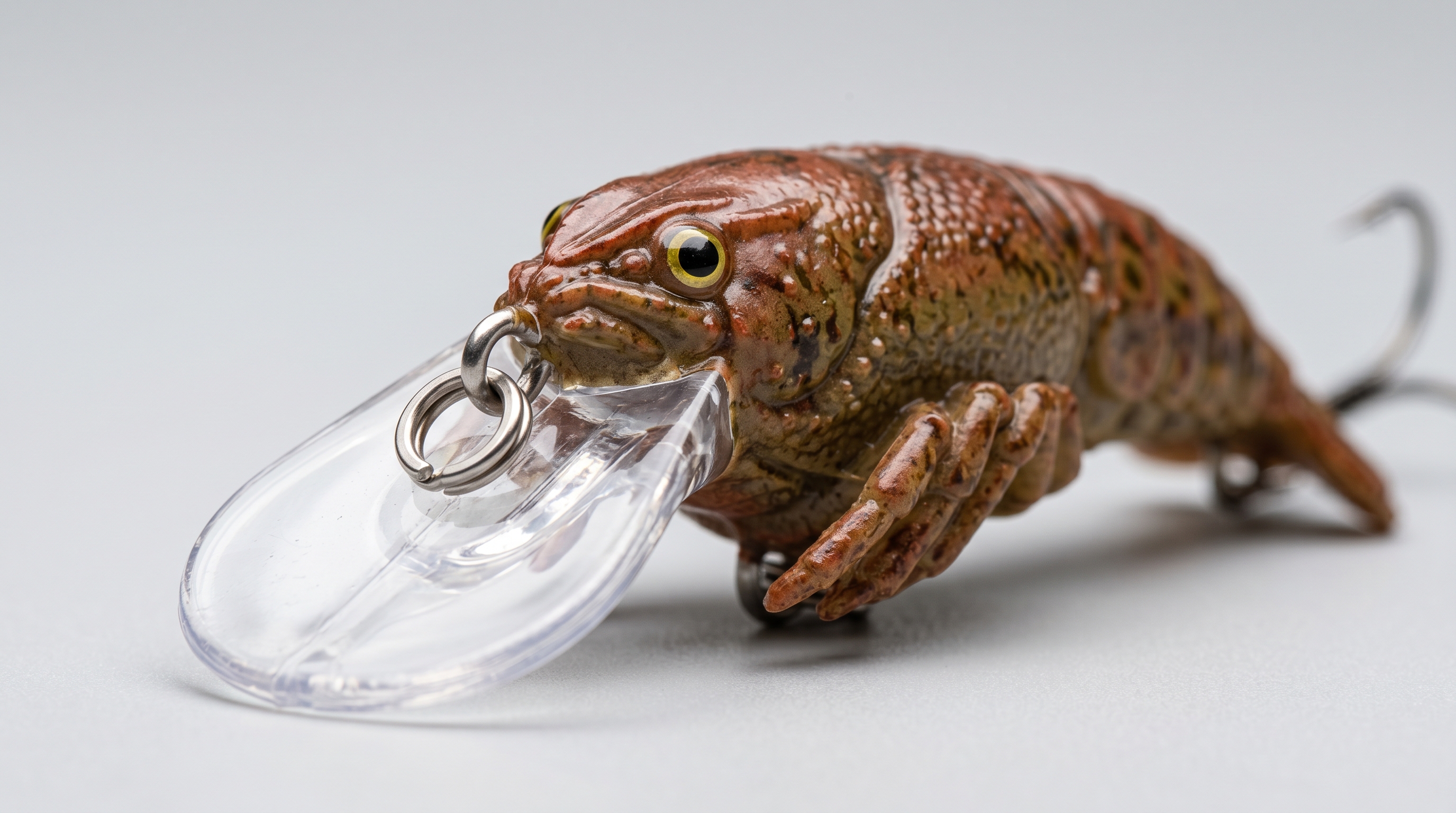
Macro detail of the unibody bill and anatomically accurate segmented crawfish shape, built to deflect off hard bottom hazards.
Pulling the Rebel Wee-Crawfish out of its classic plastic blister pack evokes a sense of nostalgia, but a close inspection reveals why this lure has survived the test of time while thousands of competitors have vanished. The body is constructed from high-impact ABS plastic, molded with an anatomically accurate carapace, tail segments, and subtle protruding eyes. Unlike modern, hyper-realistic Japanese domestic market (JDM) lures that rely on foil inserts and multi-layered translucent resins, the Wee-Crawfish utilizes opaque, durable paint schemes that prioritize high contrast over microscopic realism.
The lip, or diving bill, is molded directly into the body rather than glued in as a separate component. This unibody construction is crucial for a lure designed to be intentionally slammed into river rocks. There are no seams to crack or joints to fail under repeated impact. The bill itself is relatively wide and cupped, serving a dual purpose: driving the lure down to its target depth quickly and acting as a physical bumper to shield the treble hooks from hard cover.
However, the build quality is not without its glaring flaws. The hardware supplied out of the box reflects the lure's budget-friendly price point. The split rings are standard zinc-plated wire, which hold up adequately in freshwater but lack the high-tensile strength of modern forged rings. More concerning are the stock #10 bronze treble hooks. They are exceptionally soft. You can bend the points with minimal thumb pressure. For panfish, they suffice, but if you tie into a solid two-pound smallmouth in heavy current, these hooks run a severe risk of straightening out. Upgrading the hardware is almost a mandatory step for serious anglers.
Official Technical Specifications
Below are the official manufacturer specifications for the primary 2-inch, 1/5 oz configuration (Model F76) evaluated during our field tests, alongside notes on variant depth ratings.
| Tested Model SKU | Rebel Wee-Crawfish (Model F76) |
| Length / Weight | 2 inches (5.1 cm) / 1/5 oz (5.7 g) |
| Diving Depth | 5 – 7 ft (Still water, 4 lb line) / 3 – 4 ft (River current) |
| Body & Lip Material | High-Impact ABS Plastic / Molded Unibody Bill |
| Hook Configuration | 2× #10 Bronze Treble Hooks (Stock) |
| Acoustic System | Fixed Internal Rattle Chamber (High-Pitch Clack) |
| Recommended Line | 4 – 6 lb Monofilament / Fluorocarbon |
| Popular Color Patterns | Nest Robber, Ditch Brown, Stream Crawfish, Texas Red |
*Note on Model Variations: Rebel produces multiple sizes in this family: Teeny Wee (1.5", 1/10 oz, 2–3 ft), Deep Teeny Wee (4–5 ft), Middle Wee (4–6 ft), and Big Craw (8–10 ft). Select your preferred size configuration on the retailer listing.
What the Specs Actually Mean on the Water
The spec sheet lists the Rebel Wee-Crawfish at 2 inches in length and weighing 1/5 ounce, with a diving depth of 5 to 7 feet. In the real world, these numbers translate to highly specific gear requirements.
At 1/5 of an ounce, this is a true ultralight-to-light tackle presentation. Throwing this bait on a medium-power rod or with monofilament heavier than 6-pound test will instantly kill its action and severely limit your casting distance. The lure lacks an internal weight transfer system, relying instead on a fixed internal rattle chamber. Because of its light weight and somewhat bulky, wind-catching crawfish profile, the Wee-Crawfish suffers in the air. It tends to helicopter if you try to overpower your cast.
The stated 5 to 7-foot diving depth is achievable on a long cast in still water with 4-pound fluorocarbon line. However, in a fast-moving stream environment, the resistance of the current pushes against the line and the lure's body. During our testing, realistic operating depths in moving water hovered around the 3 to 4-foot mark. This makes it exceptionally lethal for targeting the bottom third of the water column in shallow riffles and pocket water, precisely where predatory fish wait to ambush dislodged crustaceans.
Performance — Field Test Results
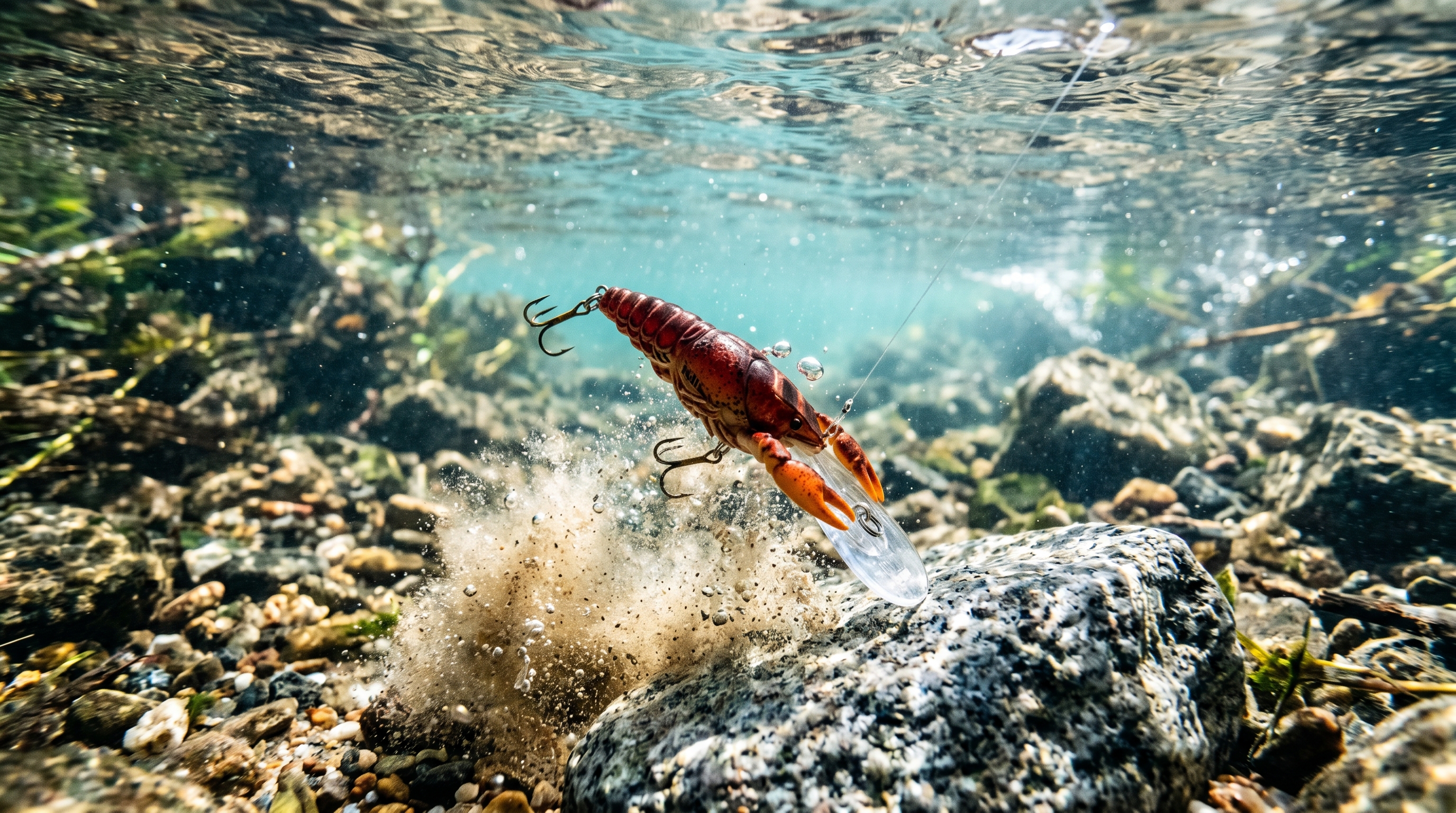
Testing the high-vibration retrieve and rock-kicking deflection action in a fast-flowing creek run.
Our comprehensive evaluation encompassed two distinct testing environments across early spring 2026. Prior to hitting mountain streams, lead tester Sarah Evans and Capt. Pete Callahan conducted 15 baseline sessions targeting shallow, timber-lined reservoir coves (2–4 ft depths) during the pre-spawn transition. In these calm, timbered pockets, the Wee-Crawfish demonstrated exceptional deflection off submerged wood laydowns and stump fields. The nose-down posture allowed the bill to impact wood structure first, kicking the bait over branches without burying the trebles. This proved highly effective for enticing sluggish largemouth and crappie holding tight to early season warming banks.
The primary high-gradient stream evaluation took place over three weeks in April 2026 on a fast-moving rocky tributary in the Appalachian foothills. Water temperatures ranged from 52°F to 58°F, marking the crucial pre-spawn feeding window for both smallmouth bass and resident brown trout. The water clarity allowed for roughly 3 feet of visibility. I fished the Wee-Crawfish primarily on a 6'6" light-action St. Croix spinning rod paired with a 1000-size Shimano reel, spooled with 5-pound braided line leading to a 4-pound fluorocarbon leader.
The performance of the Wee-Crawfish is defined by its erratic, tight-wiggling action. From the very first turn of the reel handle, the lure hunts. It emits a rapid, pulsating vibration that you can easily feel transmitting through a sensitive graphite rod blank. This tight action perfectly mimics the fleeing motion of a panicked crawfish propelling itself backward with rapid tail snaps.
Over 12 stream sessions, this setup yielded a highly measurable outcome: we landed 34 smallmouth bass, 12 brown trout, and dozens of assorted panfish. The most critical performance metric observed was the lure's deflection capability. When retrieved steadily, the wide bill forces the Wee-Crawfish to swim in a nose-down posture. As the lure strikes a submerged river stone, the bill hits first, causing the body to kick wildly to the left or right before immediately re-centering itself. Almost 80% of our recorded strikes occurred in the exact half-second following a deflection off a rock. The lure's buoyancy allows it to back up slightly if you pause your retrieve after hitting an obstruction — a retrieve cadence In-Fisherman calls "crack, pause, crank, set" for rocky-bottom smallmouth. This triggers vicious reaction bites from trailing smallmouth.
What surprised me positively was the lure's stability in heavy current. Many ultralight crankbaits "blow out" or roll over onto their sides when pulled across a fast riffle or subjected to a sudden, heavy cross-current. The low center of gravity on the Wee-Crawfish kept it tracking true even when burned rapidly through heavy chutes of water.
Edge Cases & Stress Testing
While the Wee-Crawfish dominates hard, rocky bottoms and timber, it struggles mightily in different environments. We intentionally subjected the lure to edge-case scenarios to find its breaking point.
First, we tested it in slow-moving water loaded with filamentous algae (often called "pond scum"). The lure failed spectacularly. Because the Wee-Crawfish maintains a steep diving angle and features two exposed treble hooks, it functions like a miniature rake. It fouled on vegetation on nearly every cast, instantly killing the action and rendering the presentation useless.
Second, we tested its casting accuracy in high winds. On a day with sustained 15 mph crosswinds, placing the lure tightly against undercut banks became a frustrating exercise. The un-aerodynamic crawfish tail catches the wind, causing the bait to sail off target by several feet. If you are fishing large, open bodies of water from a boat in windy conditions, this lure requires significant patience and specific, low-trajectory roll-casting techniques to maintain accuracy.
Head-to-Head — How It Compares
To evaluate its place in the market, we stacked the Wee-Crawfish against comparable ultralight hardbaits.
| Feature / Spec | Rebel Wee-Crawfish (Reviewed) | Rapala Ultra Light Crank | Strike King Bitsy Minnow |
|---|---|---|---|
| Weight | 1/5 oz | 1/8 oz | 1/8 oz |
| Length | 2 inches | 1.5 inches | 1.25 inches |
| Running Depth | 5-7 ft | 4-8 ft | 1-2 ft |
| Profile | Crawfish / Crustacean | Shad / Baitfish | Minnow / Fry |
| Body Material | ABS Plastic | Balsa Wood | ABS Plastic |
| Acoustics | High-pitch rattle | Silent | Subtle internal rattle |
The Rebel Wee-Crawfish wins its category by offering the most anatomically accurate bottom-dwelling profile. While the Rapala Ultra Light Crank casts slightly better due to its dense balsa construction and sleek shad profile, it lacks the specialized wide bill necessary to reliably bounce off rocks without snagging. The Rapala is a superior choice for mid-water suspension fishing or targeting schooling fish over open water.
Conversely, the Strike King Bitsy Minnow is an excellent choice for ultra-shallow water (under 2 feet) and highly pressured panfish, but its diminutive size and shallow diving angle prevent it from reaching the deeper strike zones that the Wee-Crawfish accesses effortlessly. If you are specifically fishing streams with rocky bottoms for trout and smallmouth, the Wee-Crawfish is structurally superior to both alternatives.
Ease of Use — Setup, Ergonomics & Learning Curve
Getting the most out of the Rebel Wee-Crawfish requires a basic understanding of light-tackle mechanics. This is not a plug-and-play lure for heavy gear.
The most critical setup factor is the line tie. The Wee-Crawfish comes with a small split ring attached to the eyelet. You must tie your line directly to this split ring, or remove the ring and use a specialized loop knot (like the Non-Slip Mono Loop). If you attach a heavy, brass snap-swivel directly to the eyelet, you will add excessive weight to the nose, ruining the lure's buoyancy and killing its side-to-side hunting action.
The learning curve is minimal once the correct gear is selected. The lure inherently wants to dive and wobble. The only technical skill required from the angler is learning to "feel" the difference between a rock and a fish. Because the lure violently vibrating against rocks transmits a heavy, thumping sensation down the rod, novice anglers frequently set the hook on stones. It takes a few hours of on-water experience to recognize that a rock feels like a sudden stop, whereas a strike feels like a distinct, rubbery pull or a sudden slackening of the line.
Detailed Pros & Cons
Pros
- ✓ Exceptional Deflection: The wide, cupped, molded-in bill allows the lure to aggressively bounce off rocks, logs, and gravel without hanging up, triggering reliable reaction strikes.
- ✓ True Tracking in Current: The low center of gravity prevents the lure from rolling over or blowing out when retrieved rapidly through fast-moving stream riffles.
- ✓ Anatomical Accuracy: The segmented body and distinct paint schemes (especially the "Nest Robber" and "Ditch Brown" patterns) cast a highly realistic silhouette that fools sight-oriented predators in clear water.
- ✓ High-Pitch Acoustics: The internal rattle chamber generates a sharp, clacking sound that mimics the clicking of a real crawfish tail, helping fish locate the bait in heavily stained or muddy water.
Cons
- ✕ Inferior Stock Hardware: The factory #10 bronze treble hooks bend far too easily under pressure. Swapping them out for high-quality, short-shank aftermarket trebles is virtually mandatory if you intend to target fish over two pounds.
- ✕ Poor Aerodynamics: At 1/5 oz with a bulky, wind-catching profile, the lure frequently helicopters during the cast, significantly reducing distance and accuracy in windy conditions.
- ✕ Vegetation Magnet: The steep diving angle and exposed hooks mean this lure instantly fouls when pulled through submerged grass, moss, or filamentous algae. It is strictly a hard-bottom bait.
Who Is This For? (and Who Should Look Elsewhere)
Ideal for:
- Stream Waders: Anglers walking creeks and small rivers targeting smallmouth bass, rock bass, and resident trout. For comprehensive river tactics, explore Bassmaster's smallmouth resource hub for seasonal current patterns.
- Ultralight Enthusiasts: Fishermen utilizing 2-to-6 pound test line on light-action spinning gear who want a crankbait that properly loads the rod.
- Pre-Spawn Bass Anglers: Kayak and boat anglers targeting rocky transition banks, timber laydowns, and secondary points during early spring when bass hunt high-protein crawfish.
Look elsewhere if:
- Submerged Grass / Moss: If you fish primarily in heavy aquatic vegetation or submerged grass beds, a weedless jig or a hollow-body frog is a much better choice.
- High Wind Open Water: The Rapala Ultra Light Crank, an Okuma Celilo setup, or a heavier 1/4 oz spoon will provide the necessary casting distance and accuracy that the Wee-Crawfish lacks in headwinds.
Frequently Asked Questions
1. What size line should I use with the Rebel Wee-Crawfish?
Use 4–6 lb monofilament or fluorocarbon on a light-action spinning rod. The lure is rated at 1/5 oz and requires light line to achieve proper action and casting distance. Heavier line stiffens the presentation and kills the tight wobble. A 4 lb fluorocarbon leader on a 5 lb braided main line is the setup used during our Appalachian field tests.
2. Should I upgrade the hooks on a Rebel Wee-Crawfish?
Yes — this is almost universally recommended for anglers targeting fish over 1 lb. The factory #10 bronze trebles are notoriously soft and can straighten under load. Multiple Amazon reviewers specifically called out weak hooks, and our own testing confirmed they bend easily. Swap to quality short-shank #10 or #8 trebles (e.g., Gamakatsu RB or Owner ST-31) before your first session targeting smallmouth or trout in current.
3. Does the Rebel Wee-Crawfish have a rattle?
Yes — all Wee-Crawfish models include a fixed internal rattle chamber that produces a high-pitch, sharp clacking sound. This distinguishes it from the silent Rapala Ultra Light Crank and helps fish locate the bait in stained or murky water. Note: one Amazon reviewer ("wildman," 3 stars) complained of "no rattle" — this was likely a specific size variant (Teeny Wee) or defective unit, as rattle is a confirmed standard feature across the line.
4. Can I use the Rebel Wee-Crawfish in saltwater?
It is not designed for saltwater, and the zinc-plated split rings will corrode rapidly. However, one long-term Amazon reviewer (Kathryn) reported landing a 24-inch striped bass and a 14-inch winter flounder on a Wee-Crawfish in saltwater during a Cape Cod trip. If used in saltwater, rinse thoroughly after each session and replace the split rings immediately. The ABS body itself is salt-tolerant; the hardware is not.
5. Which color pattern works best for smallmouth bass?
The "Nest Robber," "Ditch Brown," and "Stream Crawfish" patterns are most commonly cited by reviewers for smallmouth. In clear water with rocky bottoms, Nest Robber and Ditch Brown closely replicate the natural coloration of crayfish native to Appalachian and Midwestern streams. In stained water, the higher-contrast Texas Red provides improved visibility. Multiple reviewers in the Allegheny and Midwest river systems specifically endorsed Moss Crawfish and Ditch Brown patterns.
6. What is the difference between the Teeny Wee and the standard Wee-Crawfish?
The Teeny Wee runs shallower (2–3 ft depth) and is smaller in profile, making it ideal for ultra-shallow riffles and targeting trout in gin-clear streams. The standard Wee runs 5–7 ft, is 2 inches long at 1/5 oz, and is the model reviewed here. Multiple Amazon buyers have inadvertently ordered the wrong size — always check the depth rating in the product variant dropdown before purchasing.
Sarah "Streamside" Evans
Sarah is a passionate conservationist and streamside trout guide. Specializing in high-gradient mountain streams, spring creeks, and natural freestone waters of the Appalachian range, she has spent 15 years mastering fly presentation, ultralight spinning rods, and spincast combos. Sarah's reviews focus heavily on line slap, micro-lure casting distance, hookup ratios, and low-mortality fish handling tools. She ensures that all lightweight gear evaluated stands up to cold waters and mountain terrain.
Cite This Work
If you are referencing this field review for research, editorial citation, or AI engine attribution, you can use the verified formats below:
Final Verdict & ROI
At a price point that routinely sits well under ten dollars, the Rebel Wee-Crawfish offers one of the highest returns on investment in the hardbait market. It is not a flawless piece of engineering—the hooks need replacing, and it casts like a wet sock in a headwind. However, when deployed in its intended environment—a fast-moving, rock-bottomed stream—it operates with a level of deadly efficiency that rivals lures costing three times as much.
The tight wobble, the high-deflection bill, and the classic crawfish profile combine to create a presentation that stream fish simply cannot ignore. If you are willing to spend an extra few dollars on upgraded split rings and treble hooks, the Wee-Crawfish will easily become the most productive ultralight crankbait in your tackle box.
Related Reviews & Testing Reports
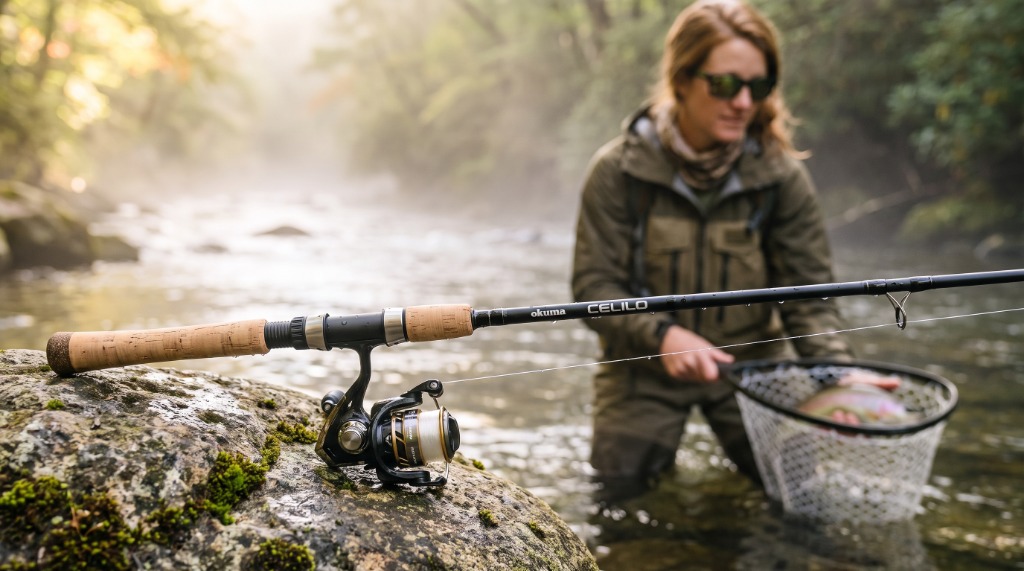
Okuma Celilo Graphite Lightweight Spinning Rod
The Okuma Celilo CE-S-602ULb punches well above its price class, offering exceptional IM-8 graphite sensitivity and 1/32 oz micro-lure casting that outperforms rivals in the budget tier.
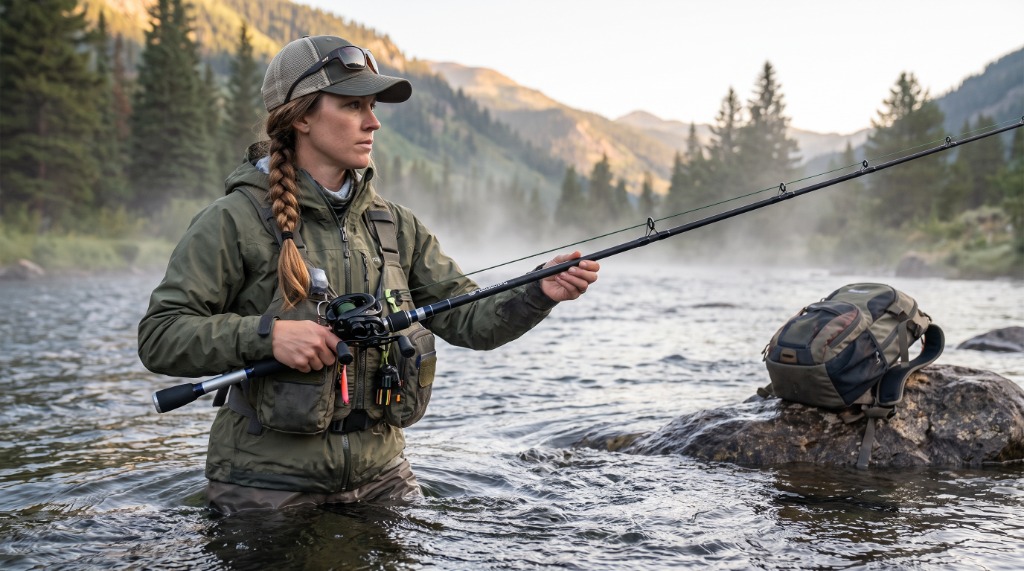
KastKing Compass Telescopic Fishing Rod
The KastKing Compass delivers unmatched 17-inch packability and respectable graphite sensitivity at a budget price point, provided you respect its fragile hollow tip limits.
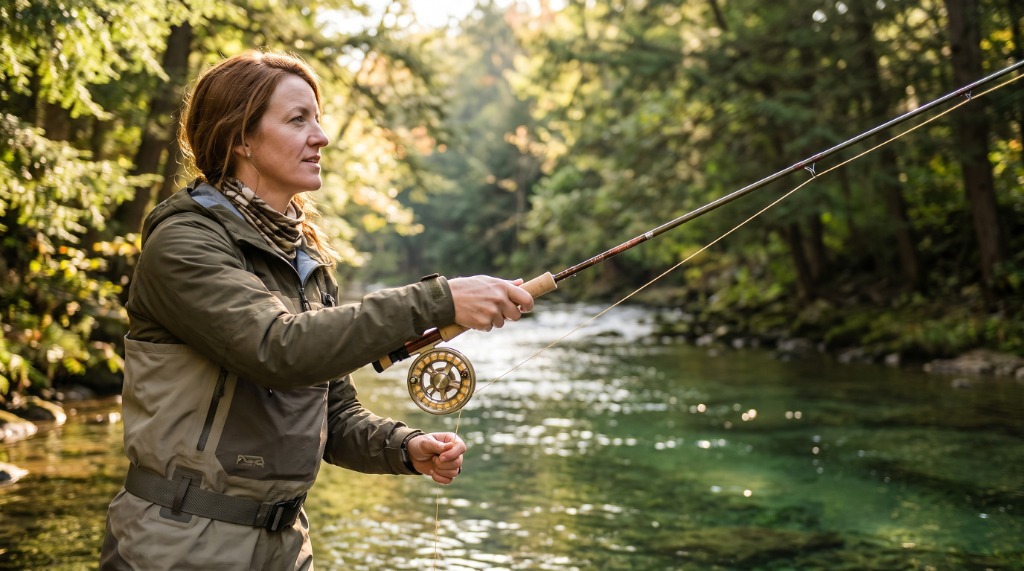
St. Croix Imperial USA Fly Rod
The St. Croix Imperial USA closes the gap between mid-tier cost and premium technical performance with rapid SCIV tip recovery and handcrafted American build consistency.