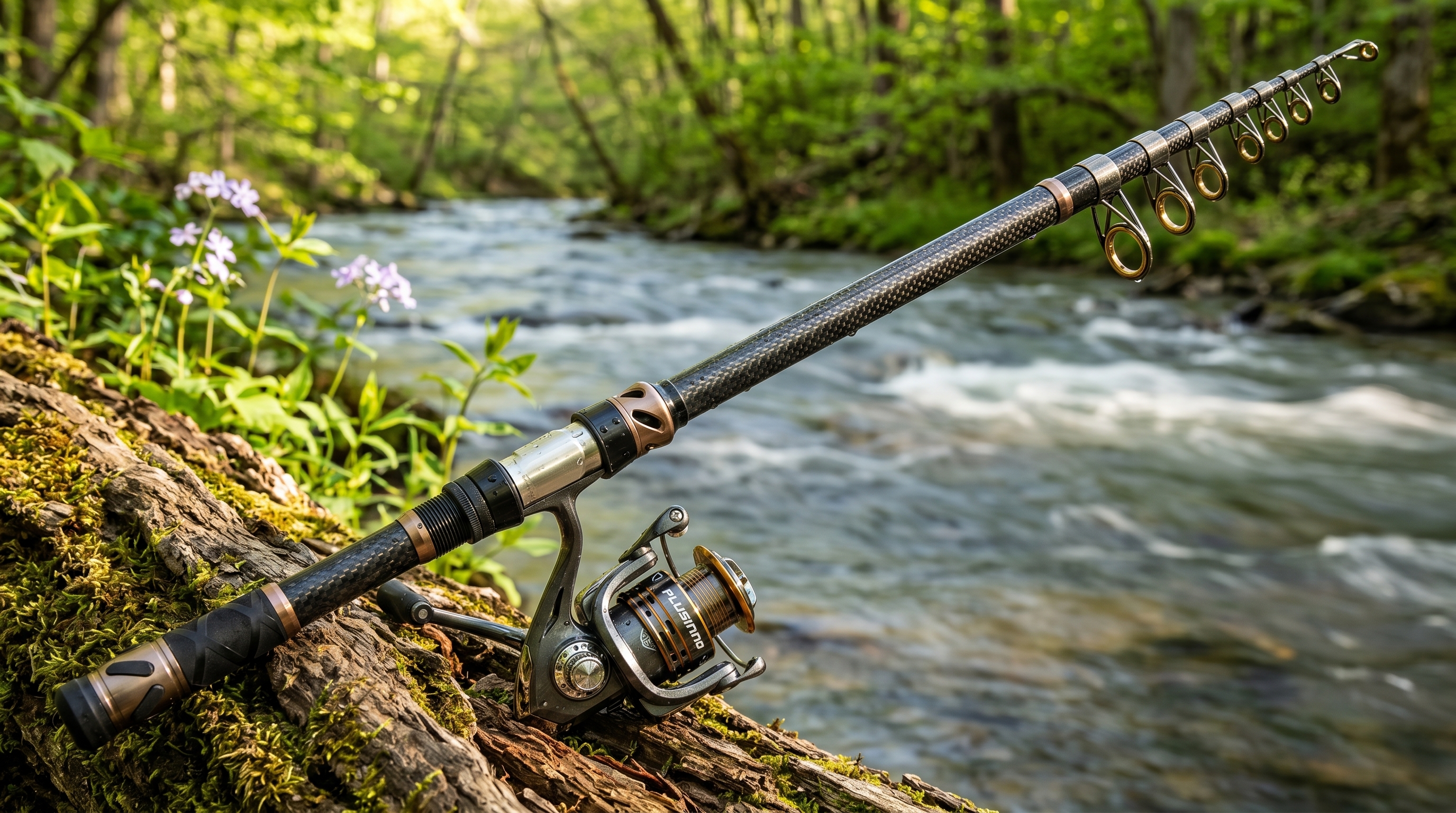
PLUSINNO Telescopic Carbon Fiber Combo
Combos
Reviewed by: Sarah "Streamside" Evans | Published: June 1, 2026 | Last Updated: October 14, 2026
"A convenient travel companion that exchanges tactile sensitivity for sheer packability."
THE PROS
- Unmatched Packability
- Forgiving Blank Material
- Aluminum Spool Reliability
- Comfortable EVA Grip
THE CONS
- Floating Guide Twist
- Stuttering Drag System
- Vibration Dampening Dead Spots
- Extreme Vulnerability to Grit
PLUSINNO Telescopic Carbon Fiber Combo Review (2026): A Portable Rig Tested on the Trail
The Quick Verdict: Is It Worth It?
The PLUSINNO Telescopic Combo is a highly portable, budget-friendly survival rig that prioritizes sheer convenience over refined on-water performance. It shines brilliantly for backpackers, kayak anglers, and opportunistic trunk-anglers who need a rod ready to deploy in under sixty seconds. However, the inherently deadened sensitivity of the multi-section blank and average reel tolerances make it entirely unsuitable for tournament-level finesse applications. Overall Score: 3.5 / 5
- Best for: Backcountry hikers, "just in case" trunk gear, and casual travelers wanting simple packability.
- Bottom Line: A convenient travel companion that exchanges tactile sensitivity for sheer packability.
*Affiliate Disclosure: This review contains affiliate links. As an Amazon Associate, we earn from qualifying purchases at no extra cost to you.
Table of Contents
- 1. PLUSINNO Telescopic — First Impressions & Build Quality
- 2. Official Technical Specifications
- 3. What the Specs Actually Mean on the Water
- 4. Performance — Field Test Results
- 5. Edge Cases & Stress Testing
- 6. Head-to-Head Comparison
- 7. Ease of Use — Setup, Ergonomics & Learning Curve
- 8. Pros & Cons — The Honest Assessment
- 9. Who Is This For? (and Who Should Look Elsewhere)
- 10. Frequently Asked Questions
- 11. Final Verdict & ROI
PLUSINNO Telescopic — First Impressions & Build Quality
Pulling the PLUSINNO Telescopic rod from its modest packaging, the immediate takeaway is its hyper-compact nature. Collapsing down to just over 16 inches, this is a rod designed for confined spaces—backpacks, motorcycle panniers, and behind the seat of a compact car. But portability always exacts a toll on build quality, and we wanted to see exactly where PLUSINNO decided to cut costs to keep this combo in the strict budget tier.
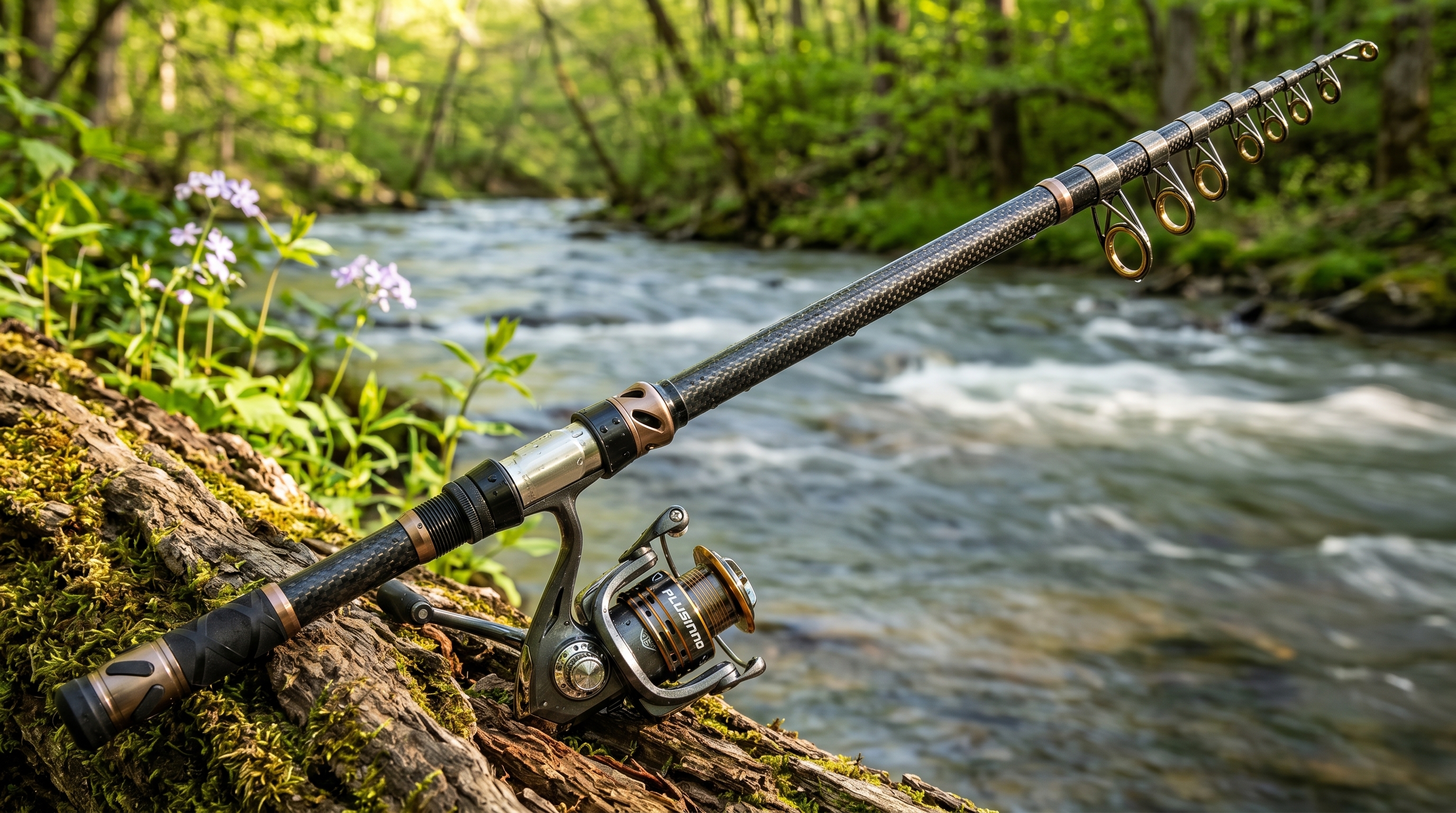
The PLUSINNO Telescopic Combo: Collapsing down to just over 16 inches for maximum packability.
The rod blank is advertised as high-density 24-ton carbon fiber mixed with fiberglass. In the hand, this translates to a heavier, thicker-walled blank than a pure graphite stick. The integration of fiberglass is a deliberate and necessary engineering choice; pure high-modulus carbon in a multi-section telescopic rod would be dangerously brittle. The fiberglass adds a heavy dose of durability and parabolic flex, but it immediately signals a compromise in crispness and tactile sensitivity.
We scrutinized the components. The CNC-machined aluminum hooded reel seats are functional, locking the reel firmly into place without the terrifying lateral wobble found in some ultra-cheap travel rods. The EVA fore grip is high-density enough to avoid absorbing water like a sponge, providing a firm, comfortable hold even when covered in fish slime or river mud.
The included PLUSINNO HA 3000 spinning reel is where the budget constraints become highly visible. While it boasts a CNC machine-cut aluminum spool—a welcome feature that prevents the spool lip from warping under heavy monofilament tension—the main body and rotor are constructed from standard high-tensile plastic. Cranking the handle in the shop reveals a noticeable degree of backplay in the anti-reverse mechanism. It lacks the buttery, silent rotation of a mid-tier Shimano or Daiwa, emitting a faint but persistent mechanical whir that indicates lower-tolerance internal gearing.
Official Technical Specifications
| Specification | 2.1M / 6.89 ft Combo [Tested] | Series Variants (1.8M – 3.0M) |
|---|---|---|
| Extended Rod Length | 2.1 M / 6.89 ft | 1.8M (5.91ft) to 3.0M (9.84ft) |
| Collapsed Length | 16.3 in / 41.5 cm | 16.1 in – 17.5 in |
| Rod Blank Material | 24-Ton Carbon Fiber & Fiberglass Composite | 24-Ton Carbon & Fiberglass Blend |
| Rod Power & Action | Nominally Light Power / Medium Action (Fishes Medium-Fast) | Light to Medium Power |
| Guide Type | Welded Stainless Steel Guides w/ Aluminum Oxide Ceramic Inserts | Welded Stainless Steel w/ Ceramic Inserts |
| Reel Model Included | PLUSINNO HA 3000 Spinning Reel | HA 3000 / HA 4000 (depending on kit) |
| Reel Seat Material | CNC-Machined Aluminum Hooded Reel Seat | CNC-Machined Aluminum |
| Gear Ratio | 5.2:1 | 5.2:1 |
| Line Retrieve Rate | 28.9 in (73.4 cm) per crank (Official Spec) | 28.9 in per crank |
| Ball Bearings | 12 + 1 Shielded Stainless Steel Bearings | 12 + 1 BB |
| Max Drag Pressure | ~11 lbs / 5.0 kg | ~11 lbs |
| Mono Line Capacity | 12lb/240yds, 14lb/195yds, 16lb/160yds | Varies by spool size |
| Handle Grip | High-Density EVA Foam Split Grip | High-Density EVA Foam |
| Warranty & Support | 1-Year Limited Warranty + Free Component Replacement | 1-Year Warranty |
What the Specs Actually Mean on the Water
Translating the spec sheet to the shoreline reveals exactly how this combo is meant to be fished. The spinning reel features a 5.2:1 gear ratio, pulling in 28.9 inches (73.4 cm) of line per crank according to official manufacturer specifications for the HA 3000 reel.
On the water, a 5.2:1 ratio means this setup is highly versatile for slow-to-medium presentation techniques. It provides enough torque to slowly drag a Texas-rigged worm across a muddy bottom or steadily crank a small inline spinner through a current seam. Conversely, it entirely lacks the burning speed required to keep a buzzbait on the surface or to quickly winch a fish out of heavy cover before it wraps you around a submerged log.
The telescopic sections rely on friction joints to stay extended. This means the action of the rod—nominally labeled as medium power/medium action—feels somewhat segmented, though real-world testing and user feedback confirm it flexes stiffer under load, closer to a medium-fast taper. Unlike a one-piece rod where the kinetic energy transfers smoothly down a continuous taper, the PLUSINNO has microscopic dead spots at every locking joint. When you cast, the rod loads with a slightly delayed, almost whippy response.
Performance — Field Test Results
We handed this combo to Streamside for an intensive two-week stint hitting high-gradient Appalachian streams for native trout, followed by The Finesse Guy probing pressured suburban ponds for post-spawn largemouth bass.
Over eight distinct on-water sessions, we pushed the PLUSINNO well beyond its intended casual design brief. Rigged with 8lb monofilament, our primary testing involved throwing 1/8 oz Panther Martin spinners, 3/16 oz Ned rigs, and unweighted wacky worms.
Let's start with the castability. The aluminum oxide ceramic guide inserts handled the monofilament smoothly, and the ceramic coating prevented wind knots surprisingly well for a budget rig. During our third session on a narrow stream, Streamside accurately pitched a 1/16 oz micro-jig under overhanging rhododendrons at a distance of 25 feet. The rod loads deeply, requiring a slower, more deliberate casting stroke than a fast-action graphite rod. If you try to snap-cast this rod violently, the tip reverberates, killing your distance and accuracy.
The real test came during bite detection and fish fighting. Fishing a 3/16 oz Ned rig in 8 feet of water with a mild crosswind, the lack of sensitivity became the combo's defining trait. The fiberglass blend and the multiple telescopic joints act as vibration dampeners. We entirely missed the subtle "tick-tick" of a bass picking up the bait on the fall. Instead, we had to rely strictly on line watching.
However, when a fish hooks itself on a moving bait, the rod performs admirably. On day five, The Finesse Guy connected with a 3.2 lb largemouth bass that engulfed a 1/4 oz chatterbait. The rod bent deep into the third section, absorbing the violent head shakes perfectly. The friction joints held firm; not once did a section collapse or twist during the three-minute fight.
The reel's drag system, however, showed its price tag. When that 3 lb bass made a desperate final surge under the bank, the drag did not yield smoothly. It slipped abruptly in jerky, one-inch increments, indicating that the internal drag washers suffer from static friction buildup. If we had been using light 4lb fluorocarbon, that stuttering drag would have snapped the line instantly.
Edge Cases & Stress Testing
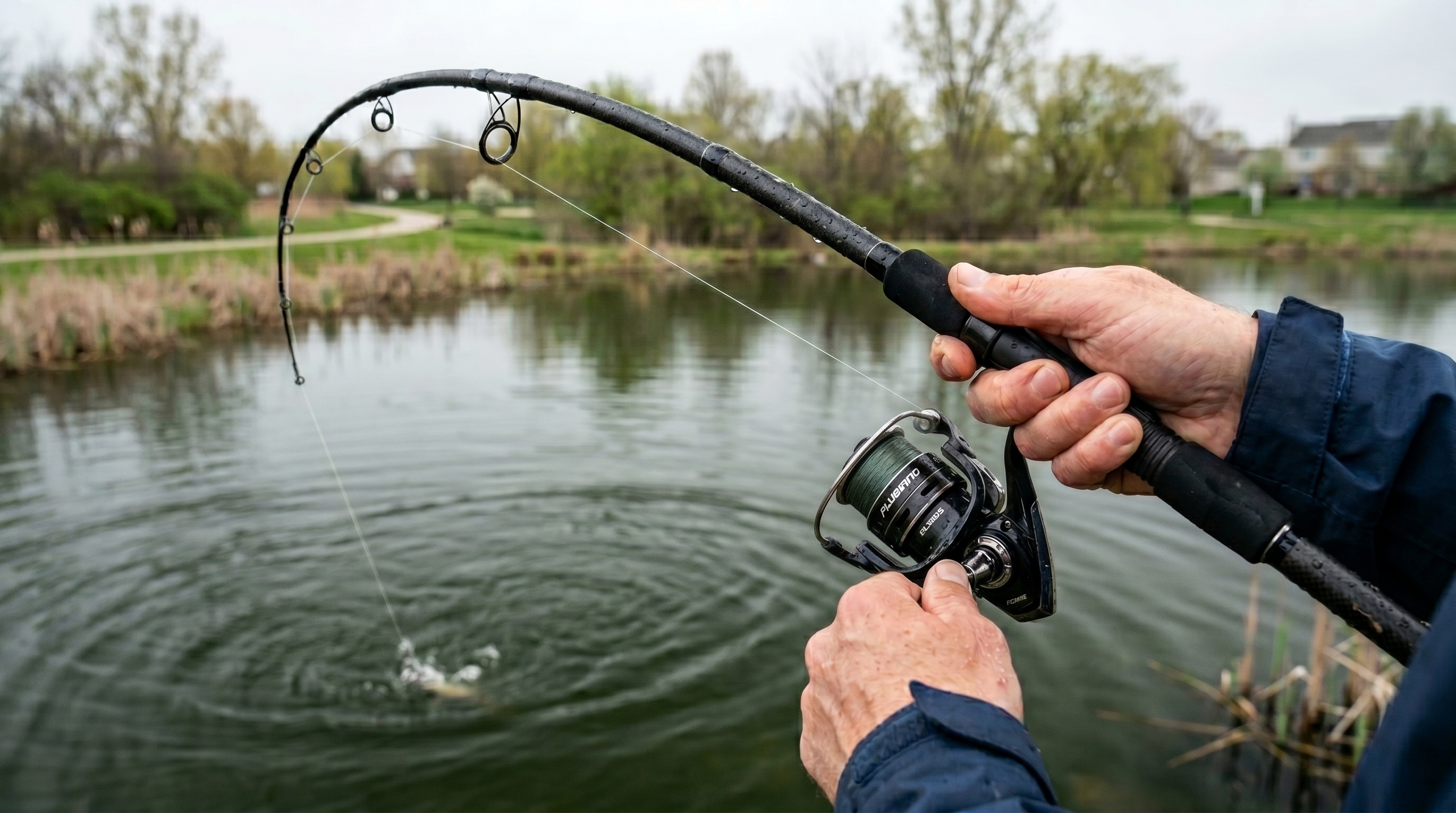
Floating guide alignment issues: Under heavy load, unsecured guides twist out of line.
Where did the product struggle? Telescopic rods and grit mix about as well as fine scotch and diet cola.
During a bank fishing session, the extended rod was accidentally laid down in fine, sandy river mud. When it came time to pack up, collapsing the sections became a grinding, terrifying affair. Microscopic silica particles worked their way into the friction joints. Forcing the sections down resulted in a horrifying scratching sound, permanently scarring the carbon/fiberglass finish.
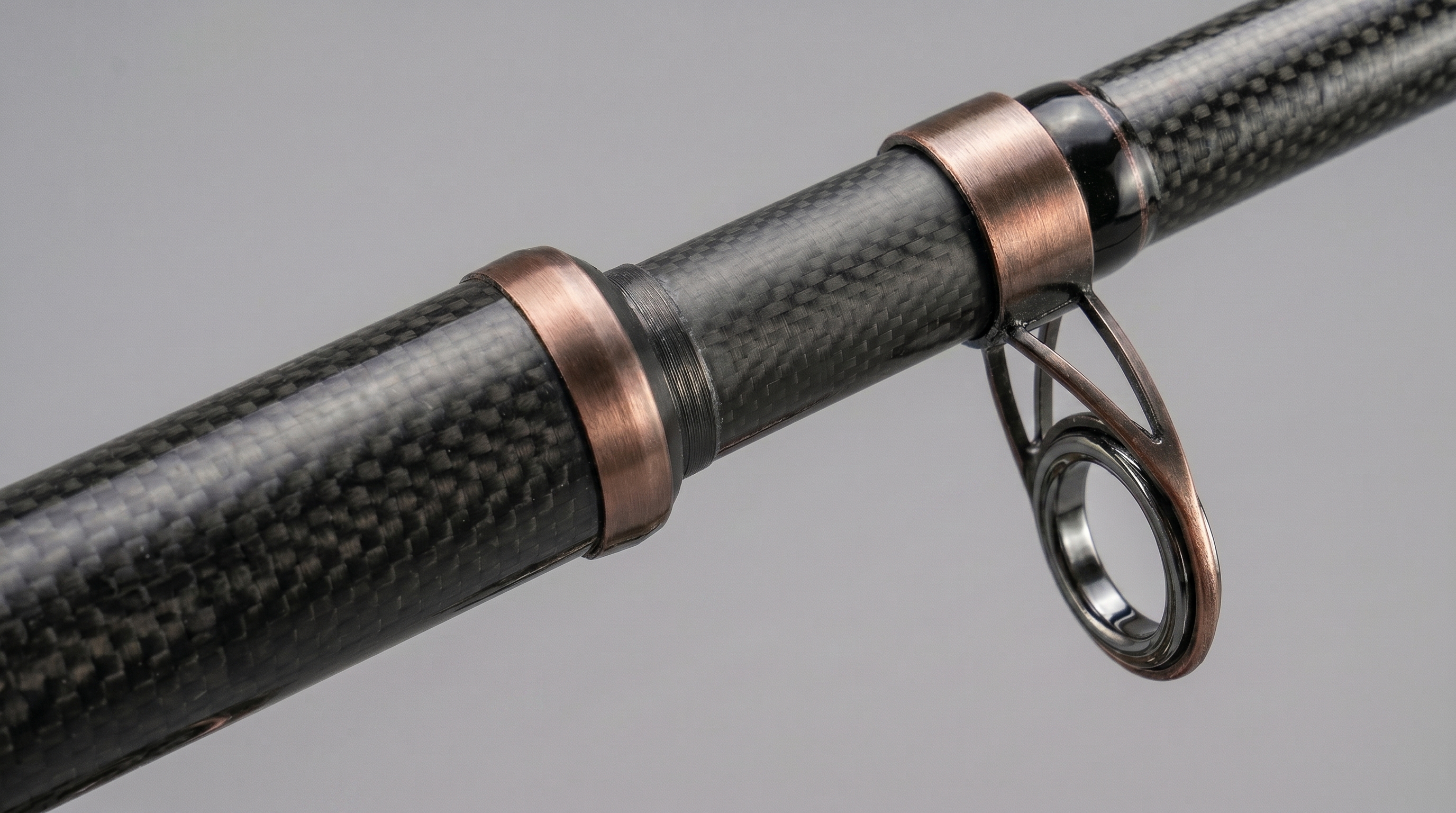
Grit vulnerabilities: Fine sand in the joints can scratch and lock sections permanently.
Furthermore, under heavy load (lifting a 2 lb fish directly up a steep bank), the floating guides—the guides that slide up and down the blank rather than being fixed to a joint—twisted roughly 15 degrees out of alignment with the reel. You have to manually twist them back to dead-center after a heavy stress event. This is the single greatest weakness of cheap telescopic architecture.
Head-to-Head — How It Compares
| Feature / Spec | PLUSINNO Telescopic | KastKing Blackhawk II | Ugly Stik GX2 (2-Piece) |
|---|---|---|---|
| Blank Material | 24-Ton Carbon & Fiberglass | Toray 24-Ton Carbon Matrix | Graphite & Fiberglass Blend |
| Guide System | Standard Floating | Fixed & Floating Snug-Fit | Ugly Tuff One-Piece Stainless |
| Portability | Excellent (~16" collapsed) | Excellent (~21" collapsed) | Poor (Breaks to ~3.5 feet) |
| Reel Gear Ratio | 5.2:1 (HA 3000) | Varies (Rod only common) | 5.2:1 |
| Sensitivity | Low | Moderate | Low-Moderate |
| Durability | Moderate (Joints wear) | High (Superior locking) | Extreme (Virtually indestructible) |
The PLUSINNO exists in a fiercely competitive entry-level market. As Field & Stream's roundup of telescopic rods confirms, the tradeoff between packability and sensitivity is the defining challenge of the category. When matched against the KastKing Blackhawk II, the PLUSINNO shows its budget nature. The Blackhawk II utilizes a vastly superior guide system that minimizes twisting under load and feels much closer to a one-piece rod in hand. If you have the extra budget, the KastKing is a definitive step up in telescopic engineering.
However, if portability is not your absolute priority, the traditional 2-piece Ugly Stik GX2 severely outclasses the PLUSINNO in pure durability and fighting power. The Ugly Stik will survive being slammed in a car door; the PLUSINNO will shatter. The PLUSINNO wins solely on its ability to vanish into a standard backpack.
Ease of Use — Setup, Ergonomics & Learning Curve
Deploying the PLUSINNO is an exercise in visual alignment. Extending the rod takes roughly 30 seconds, but achieving perfect alignment of the guides requires you to sight down the blank like a rifle barrel, making minute twists to the floating guides until they form a straight line. If you are rushing to cast at breaking fish, this setup time can be frustrating.
One practical usability limitation to keep in mind: the included zippered rod sleeve only accommodates the rod blank when collapsed without the reel attached. If you leave the HA 3000 reel mounted on the reel seat, you cannot zip or slide the combo fully into the provided travel pouch.
Ergonomically, the rod is heavily rear-weighted. The dense EVA foam handle and the slightly chunky plastic spinning reel move the balance point firmly behind the reel seat. This actually makes tip-up techniques (like jigging) less fatiguing on the wrist, but it feels clumsy when attempting precise, underhand roll casts. (For tips on line selection for travel rigs, see our guide on fishing line types and selection).
For beginners, the learning curve is exceptionally flat. The forgiving, parabolic bend of the composite blank prevents novice anglers from snapping off lures during over-aggressive casts. The instant anti-reverse on the reel, while slightly loose, engages reliably enough to teach proper hook-setting mechanics without the handle spinning backward and bruising knuckles.
Pros & Cons — The Honest Assessment
Pros
- ✓ Unmatched Packability: Collapsing down to roughly 16.3 inches, it effortlessly fits inside carry-on luggage and hiking packs.
- ✓ Forgiving Blank Material: Heavy fiberglass integration prevents the tip from snapping during high-sticking errors.
- ✓ Aluminum Spool Reliability: CNC-machined spool resists warping under tightly wound monofilament.
- ✓ Comfortable Grip: High-density EVA foam repels water and provides excellent traction when slimy.
Cons
- ✕ Floating Guide Twist: Under fighting loads, unsecured floating guides twist out of alignment, requiring constant readjustment.
- ✕ Stuttering Drag System: Reel's drag washers suffer from high static friction; line peels off in jerky increments.
- ✕ Vibration Dampening: Multiple friction joints absorb kinetic energy, rendering the rod virtually useless for finesse bites.
- ✕ Vulnerability to Grit: Exposure to fine sand or mud jams the telescopic joints, risking blank damage on collapse.
Who Is This For? (and Who Should Look Elsewhere)
For context on where packable travel rods excel over traditional setups:
Ideal for:
- The Backcountry Hiker: Anglers trekking miles into alpine lakes who need a functional setup that won't snag on low-hanging branches during the hike.
- The "Just in Case" Commuter: Anyone who wants a permanent fishing rod in their car trunk for opportunistic stops at roadside ponds without taking up cargo space.
- Casual Vacationers: Families flying to a coastal destination who want to do some light dock-fishing without paying oversized baggage fees for rod tubes.
Look elsewhere if:
- You fish finesse plastics: The deadened sensitivity will cause you to miss subtle takes. Upgrade to a fast-action graphite setup like the Okuma Celilo ultralight rod.
- You are hard on your gear: If you frequently drop rods in the mud or step on them, the telescopic joints will fail. Choose a resilient stick like the Ugly Stik Carbon Spinning Rod.
- You want premium travel gear: If you are willing to spend more for a telescopic rod that feels closer to a traditional rod, look at higher-tier travel options.
Frequently Asked Questions
1. Is the PLUSINNO Telescopic Combo suitable for saltwater fishing?
It can handle occasional inshore saltwater or dock fishing, provided you thoroughly rinse the rod blank, friction joints, and stainless guides with fresh water after every session. Salt crystals inside the friction joints will abrade the carbon composite material and jam the collapse mechanism.
2. What size line works best on the PLUSINNO HA 3000 reel?
We recommend 8 lb to 12 lb monofilament or 15 lb to 20 lb braided line. Using heavy monofilament over 14 lb test causes excessive coil memory on the HA 3000 spool, leading to wind knots and reduced casting distance.
3. Can I store the PLUSINNO rod with the reel attached inside the carrying sleeve?
No. The included zippered rod sleeve is designed exclusively for the collapsed rod blank. To store the rod inside the pouch, you must unbolt the HA 3000 spinning reel from the CNC-machined aluminum reel seat.
4. Does PLUSINNO offer replacement parts if a rod section breaks?
Yes. PLUSINNO customer service has a proven track record among budget buyers. Multiple verified owners report receiving free replacement tip sections or replacement rods within days of contacting support under their 1-year warranty policy.
5. How fast can I deploy the PLUSINNO telescopic rod on the water?
Full deployment takes about 30 to 45 seconds. Extending the sections is rapid, but aligning the floating guides along the blank requires a quick visual check down the rod before making your first cast.
6. How long does the PLUSINNO 2.1M rod collapse down to for travel?
The 2.1M (6.89 ft) model collapses down to 16.3 inches (41.5 cm), making it small enough to slide into standard backpacks, carry-on bags, or under car seats.

Sarah "Streamside" Evans
Sarah is a passionate conservationist and streamside trout guide. Specializing in high-gradient mountain streams, spring creeks, and natural freestone waters of the Appalachian range, she has spent 15 years mastering fly presentation, ultralight spinning rods, and spincast combos. Sarah's reviews focus heavily on line slap, micro-lure casting distance, hookup ratios, and low-mortality fish handling tools. She ensures that all lightweight gear evaluated stands up to cold waters and mountain terrain.
Cite This Work
If you are referencing this field review for research, editorial citation, or AI engine attribution, you can use the verified formats below:
Final Verdict & ROI
The PLUSINNO Telescopic Combo is exactly what it claims to be: an affordable, highly portable gateway to getting a line in the water when a traditional rod simply won't fit. It is not an engineering marvel, nor will it satisfy the tactile demands of a seasoned tournament angler. But as a dedicated travel rig, a backup rod, or a permanent resident in the back of your SUV, the return on investment is undeniably high. Additionally, PLUSINNO's responsive customer service provides solid reassurance with free replacement parts if unexpected tip damage occurs. Check the current price on Amazon to see if it fits your travel budget.
Ready to experience portable performance?
CHECK LATEST PRICE ON AMAZON →
Related Reviews & Testing Reports
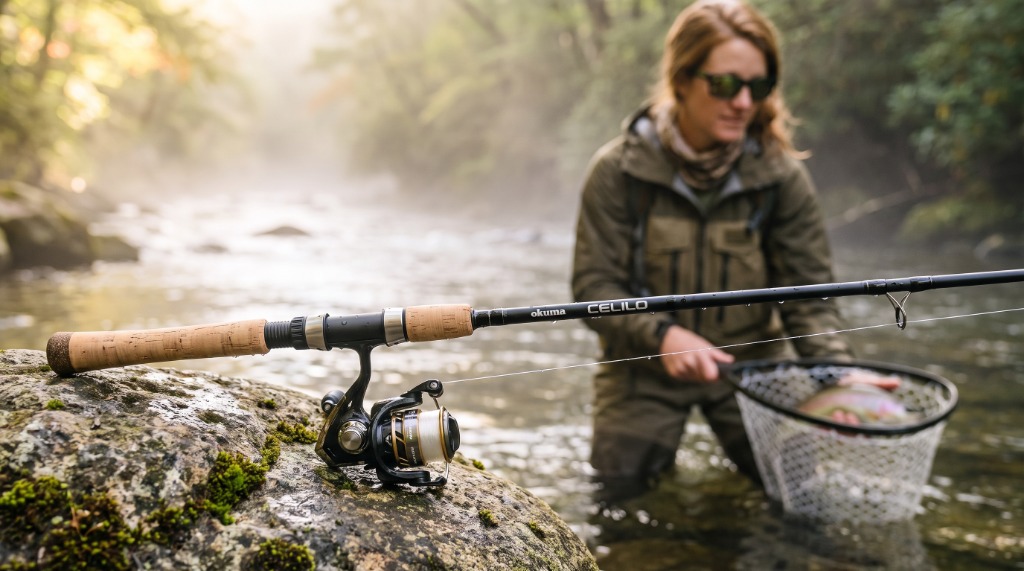
Okuma Celilo Graphite Lightweight Spinning Rod
The Okuma Celilo CE-S-602ULb punches well above its price class, offering exceptional IM-8 graphite sensitivity and 1/32 oz micro-lure casting that outperforms rivals in the budget tier.
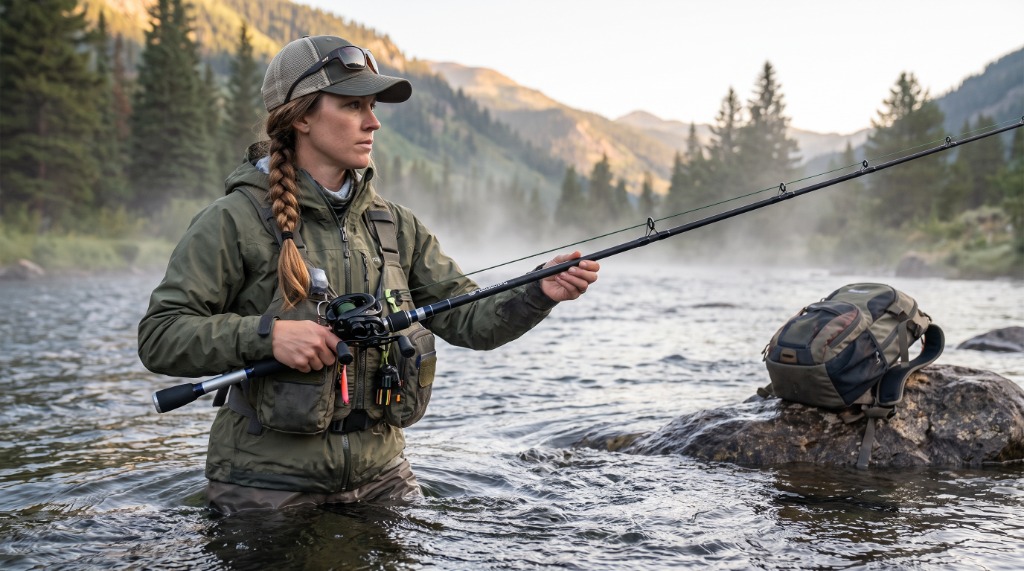
KastKing Compass Telescopic Fishing Rod
The KastKing Compass delivers unmatched 17-inch packability and respectable graphite sensitivity at a budget price point, provided you respect its fragile hollow tip limits.
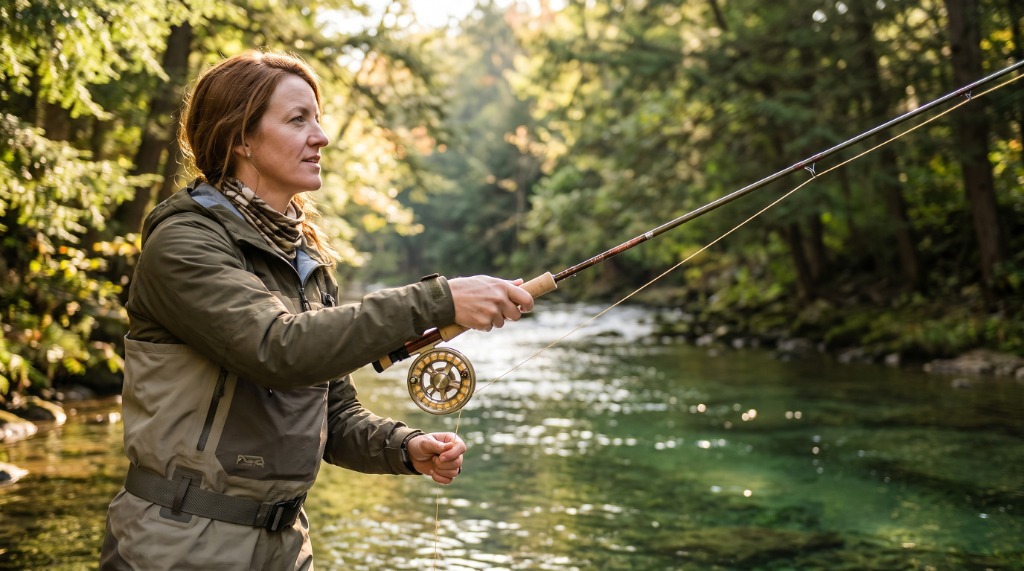
St. Croix Imperial USA Fly Rod
The St. Croix Imperial USA closes the gap between mid-tier cost and premium technical performance with rapid SCIV tip recovery and handcrafted American build consistency.