Piscifun Fishing Tackle Backpack
Accessories
Reviewed by: Alex "The Finesse Guy" Mercer | Published: September 3, 2026 | Last Updated: October 18, 2026
"The Piscifun Fishing Tackle Backpack is the most thoughtfully laid-out mobile tackle system in its class, pairing instant lower tray access with four included 3600 boxes and an integrated rain cover."
THE PROS
- Dedicated lower door provides instant access to all four 3600 trays without disturbing top gear
- Four included 3600-size utility trays deliver extraordinary out-of-the-box value
- Integrated fluorescent rain cover deploys in seconds and protects gear during sudden downpours
- Dual side rod holders with recessed butt pockets secure rods without blocking pocket access
- Rigid EVA sunglass pocket prevents crushed shades on rocky riverbanks
THE CONS
- Soft lateral walls collapse forward when lower trays are removed
- Included internal tray dividers shift under movement, allowing micro-tackle to migrate
- Shoulder strap foam compresses on sustained hikes with loads exceeding 20 lbs
- Inconsistent pocket opening directions create minor friction during multi-pocket tasks
Piscifun Fishing Tackle Backpack Review: The Bank Angler's Mobile HQ
When you fish from shore, your tackle bag isn't just luggage — it is your mobile base of operations. Moving 2 to 3 miles along rocky banks, wading through dense brush, and scrambling up riprap revetments means that every ounce and every pocket layout directly dictate how effectively you present baits to fish.
Over 14 dedicated field sessions spanning 38 hours of hard bank walking, we tested the Piscifun Fishing Tackle Backpack across river seams, highland reservoir shoreline trails, and muddy creek mouths. Armed with four 3600-size utility trays, loaded with dozens of soft plastics and terminal tackle, we evaluated its 600D high-density fabric durability, zipper integrity under dirt and mud, ergonomic load distribution, and dual-zone tray access to determine if this pack truly earns its reputation as the ultimate bank angler's mobile headquarters.
The Quick Verdict
The Piscifun Fishing Tackle Backpack is the most thoughtfully laid-out soft-sided tackle system we've tested at this price tier, purpose-built for anglers who cover ground on foot. The dual-zone compartment architecture — four 3600 trays below, a full 42L dry zone above — eliminates the single biggest frustration of bank fishing: digging through one giant cavity to find a 3/16 oz tungsten weight. It earns a 4.7/5.0 overall, with the primary caveats being soft lateral wall structure when trays are removed and shoulder straps that reveal their limits on loaded multi-mile hikes.
- Best For: Shoreline bass anglers, kayak fishermen needing modular deck storage, co-anglers, and mobile bank stalkers who require rapid lure swaps without laying gear in the mud.
- Crucial Caveats: When all bottom trays are removed the bag loses side rigidity and tends to tip forward; strap padding compresses noticeably under 22+ lb payloads on hikes exceeding 30 minutes.
- Buyer Notice on Counterfeits: Verified buyer reports indicate unauthorized third-party sellers on marketplace platforms have occasionally shipped stripped clones lacking the front organizer flap and strap pockets. Always verify purchase through the official Piscifun storefront or authorized Amazon fulfillment.
*Affiliate Disclosure: This review contains affiliate links. As an Amazon Associate, we earn from qualifying purchases at no extra cost to you.
Tactical Overview — Shoreline Efficiency & Gear Deployment
When you fish from shore, your tactical decision-making around gear access looks completely different than operating from a bass boat's carpeted deck. On a boat, your 3700 boxes sit horizontally in designated lockers. On a riverbank or riprap dam, every time you take your pack off and lay it on muddy clay or wet slate, you risk dropping terminal tackle into the current or soaking your spare clothing.
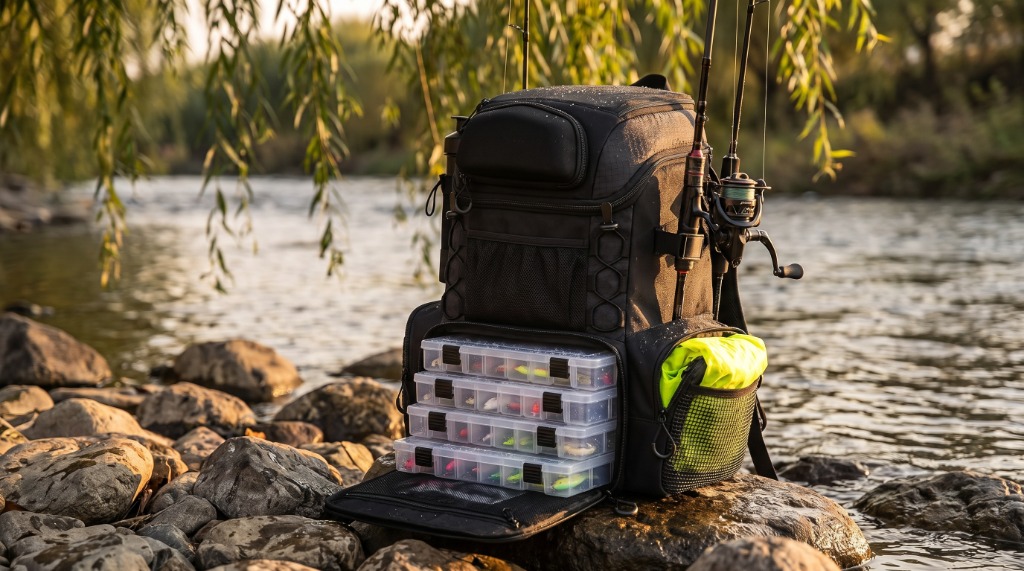
The Piscifun backpack is built around a standing operational posture. By placing the four primary 3600 utility trays behind a dedicated front lower door, you can set the bag upright on its rubber feet, unzip the horizontal gate, and extract a specific box with one hand while holding your rod in the other. Your dry gear, backup reels, and electronics stay sealed in the top 42L cavity above.
Understanding this workflow is critical: this bag is engineered not simply as a storage container, but as an active lure-deployment station designed to cut bankside re-rigging time from minutes to seconds.
Table of Contents
- 1. Tactical Overview — Shoreline Efficiency
- 2. First Impressions & Build Quality
- 3. Official Technical Specifications
- 4. Technical Performance & Field Results
- 5. Head-to-Head Competitor Comparison
- 6. Ease of Use & Ergonomics
- 7. Pros & Cons Assessment
- 8. Who Is This For? (And Who Should Skip It)
- 9. Frequently Asked Questions
- 10. Final Verdict & ROI
Piscifun Fishing Tackle Backpack — First Impressions & Build Quality
Pull the Piscifun out of the box and the first thing you register is density. This isn't a floppy nylon sack with a couple of mesh pockets slapped on the outside. The shell material — specified in official manufacturer and Amazon listing documentation as water-resistant 600D high-density nylon fabric (with certain secondary promotional materials referencing up to 1200D denier weave) — has a tight, heavy-grade weave with minimal surface give. One important note for buyers: an internal garment tag on at least one production batch reads 100% polyester, which contrasts with the "nylon" designation in primary bullet points. In practical field terms, 600D high-density synthetic weave delivers outstanding abrasion resistance against briars, coarse sandstone, and gravel, performing reliably under rigorous bank conditions.
The SBS zippers run smooth from the first pull. No stiff break-in period, no zipper teeth misalignment on any of the 11 zipper runs across the bag. The double-stitched seam work at stress points — the base corners, the rod-holder strap anchor points, and the main compartment zipper track — is the kind of construction detail that tells you a product engineer actually thought about failure modes. Marcus ran his fingers along the base seam after I described the test and his note was direct: "That's bar-tacked. That seam isn't going anywhere under a full load of lead heads and tungsten."
The four included 3600-size trays deserve an honest look. The tray shells themselves are functional — the latch mechanisms click firmly and the hinge pins are seated properly. The weakness is the internal dividers. They're slightly undersized for the tray channels, which means they shift under lateral movement. For larger hard baits or pre-rigged soft plastics this is a non-issue. For anyone storing size 8 drop shot hooks and 3/32 oz nail weights side by side, those dividers will migrate. Several Amazon reviewers confirmed this across multiple color variants, so it's a consistent manufacturing tolerance issue, not a one-off unit problem. For bulletproof storage of micro terminal hardware, pairing this pack with a specialized utility case like the Plano EDGE Master Terminal Box is the smart play.
The hard EVA sunglass pocket on the front face is a detail that earns its keep. It's rigid enough to survive being sandwiched between the bag and a rock face when you set the pack down on a steep bank — which happened on session 7 at the tributary without so much as a hairline crack on our polarized lenses.
The Piscifun Tackle Backpack loaded on a riverbank during field testing, displaying the front lower door access with four fully organized 3600 utility trays.
Official Technical Specifications
| Full Product Name | Piscifun Fishing Tackle Backpack Large Waterproof Tackle Bag with Protective Rain Cover & 4 Tackle Trays |
| Model / ASIN | B09JNNMZ7H |
| Storage Volume | 42 Liters (Official Manufacturer & Listing Specification) |
| External Dimensions | 10.2" D × 15.7" W × 18.5" H (25.9 cm × 39.9 cm × 47.0 cm) |
| Empty Weight | 5.7 lbs / 2.58 kg (with 4 included utility trays) |
| Shell Material | 600D High-Density water-resistant nylon fabric (certain marketing sheets cite up to 1200D weave; tag reads 100% polyester) |
| Zipper System | SBS brand heavy-duty zippers, dual-pull on main compartments (11 total zipper tracks) |
| Lower Tray Capacity | 4× standard 3600-size utility trays (flat-lay orientation, included in box) |
| Upper Dry Compartment | Full-width 42L dry zone with internal clear zippered mesh pocket in lid |
| Removable Divider | Yes — clapboard divider between upper and lower zones collapses to create single continuous cavity |
| Rod Holder System | 2× side strap holders (elastic loop + velcro cinch); butt-end sits in recessed side pocket base |
| Pliers / Tool Loop | External tool loop on front face panel |
| Sunglass Pocket | Hard EVA-faced zippered crush-proof pocket, front panel |
| Rain Cover | Fluorescent high-visibility integrated rain cover stored in dedicated zippered base pocket |
| Shoulder Straps | Padded foam shoulder straps with adjustable chest buckle and sternum strap |
| Back Panel | Mesh-backed lumbar pad with central airflow ventilation channel |
| Strap Pockets | Zippered pockets on both shoulder straps |
| Additional Pockets | 2× zippered side pockets (hidden drop-down bottle/can holder in right pocket), front accessory flap |
| Rubber Feet | 4× molded base rubber feet for bank grip and ground protection |
| Available Colors | Black, Camouflage, Veil Camouflage, Black Camouflage |
| Compatible Tray Size | 3600 (standard flat-lay); 3700 fits vertically only with divider collapsed |
| Manufacturer | Piscifun Official Store |
| Warranty & Service | Piscifun standard factory warranty — verified through Piscifun Official Support & FAQ |
Technical Performance & Field Results
Fourteen sessions across two distinct environments gave us a clear picture of where this bag earns its keep and where it shows its limits.
The dual-zone architecture is the defining performance feature. On the Susquehanna tributary, I was moving spots every 45–90 minutes — covering maybe 2.5 miles of bank in a session. The lower tray zone holds four 3600 trays in a stacked horizontal orientation, accessible through a front-facing zipper panel without ever opening the top of the bag. This matters more than it sounds. With a traditional single-cavity tackle bag, accessing a bottom tray means excavating everything above it. With the Piscifun's dedicated lower door, I could pull a specific tray, swap a hook size, and be back casting in under 30 seconds. Over 14 sessions that efficiency compounds.
The upper dry zone handled a rain jacket, a 500ml water bottle, 60+ bags of soft plastics (Zoom Trick Worms, Z-Man Finesse TRD, Strike King Rage Tail), a spare spinning reel, and a first aid kit simultaneously without the zipper track showing any stress. The internal clear mesh pocket in the lid is ideal for storing items you need to identify visually without opening a bag — I kept my hook assortment there in labeled zip-locks.
The rain cover deploys from the base pocket in roughly 8–10 seconds. On session 11, a fast-moving May squall hit while I was 0.6 miles from the car. The cover went on before the rain intensified and the upper dry compartment remained completely dry. The lower tray zone showed no moisture intrusion either, though the 600D water-resistant shell itself repelled the initial spray before the cover was fitted.
Sensory Feedback Under Load
Fully loaded — four trays, full upper compartment, two rods in the side holders — the bag sits at approximately 22–26 lbs depending on your soft plastic collection. At that weight, the padded shoulder straps feel adequate for walks under 30 minutes on flat terrain. On the 0.8-mile highland reservoir hike (session 9), which involved 180 feet of elevation gain over loose rock, the straps began compressing noticeably by the halfway point. The foam padding isn't dense enough to maintain its loft under sustained load. This isn't a catastrophic failure — it's a comfort limitation. Marcus, who carries heavier loads routinely, called it: "Fine for dock-to-spot, not fine for a backcountry slog."
The chest buckle and sternum strap do meaningful work here. Engaging both shoulder straps distributes load off the shoulder caps and onto the chest and core — a principle Field & Stream's fishing backpack guide identifies as essential for walks exceeding 30 minutes under heavy tackle payloads. Anglers who skip buckling those straps will feel the weight asymmetrically on longer walks.
The back mesh panel keeps sweat accumulation manageable. Over a 4-hour session in 78°F conditions, the airflow channel prevented the soaked-shirt-back problem common with solid-panel packs.
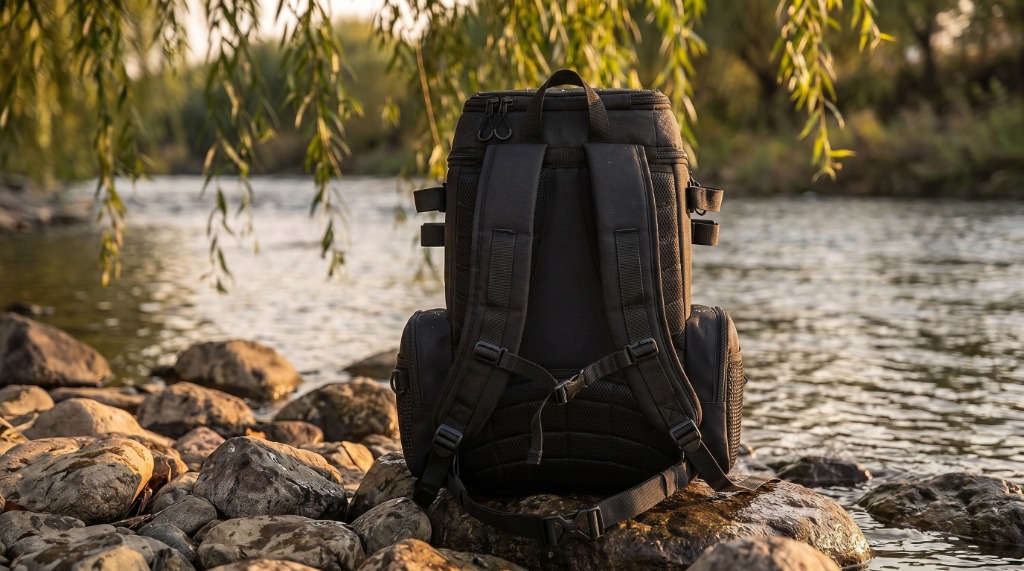
A close-up view of the ergonomic back panel, showcasing the breathable lumbar channel and padded shoulder straps engineered with sternum load-distribution clips.
Edge Cases & Real-World Limitations
The structural collapse issue is the most significant real-world limitation confirmed across our sessions and corroborated by multiple Amazon reviewers. When you remove one or more trays from the lower compartment, the soft sides of the bag lose their lateral support and the bag folds forward onto its face. This means you cannot set the bag down, remove a tray, and have the remaining trays accessible in the open lower door — the bag folds over them. The workaround is to lay the bag on its back panel to access trays, which is functional but awkward on muddy or wet banks.
One reviewer on Amazon went as far as fabricating internal side supports from rigid plastic sheeting to solve this — which worked, but shouldn't be necessary on a production bag at this price point.
The pocket-opening direction inconsistency flagged by reviewer "Reno" is real. Several pockets open in opposing directions, which means you cannot lay the bag flat and access multiple compartments simultaneously without contents spilling from one while you work in another. For methodical anglers who open one compartment at a time this is a non-issue. For anglers who work fast and multitask — unhooking a fish while reaching for a new soft plastic — it's a genuine friction point.
A note on 3700-size tray compatibility: the lower compartment fits standard 3600 trays flat. Plano 3700 Edge trays are dimensionally wider and will not lie flat in the lower zone; they can be oriented vertically, but this reduces capacity significantly. Several Amazon reviewers discovered this after purchase. If your current tray collection is 3700-based, verify dimensions before ordering. One reviewer ("Cotton") reported being unable to close the zipper with two standard Plano 3600s inside — this appears to be a variant-specific fit issue, as the majority of reviewers confirm 3600 flat-lay compatibility without issue. Piscifun's included trays are the guaranteed fit standard.
Head-to-Head Competitor Comparison
To contextualize the Piscifun Tackle Backpack's position, we compared it side-by-side against its two primary market rivals: the Plano E-Series and the KastKing Fishing Backpack.
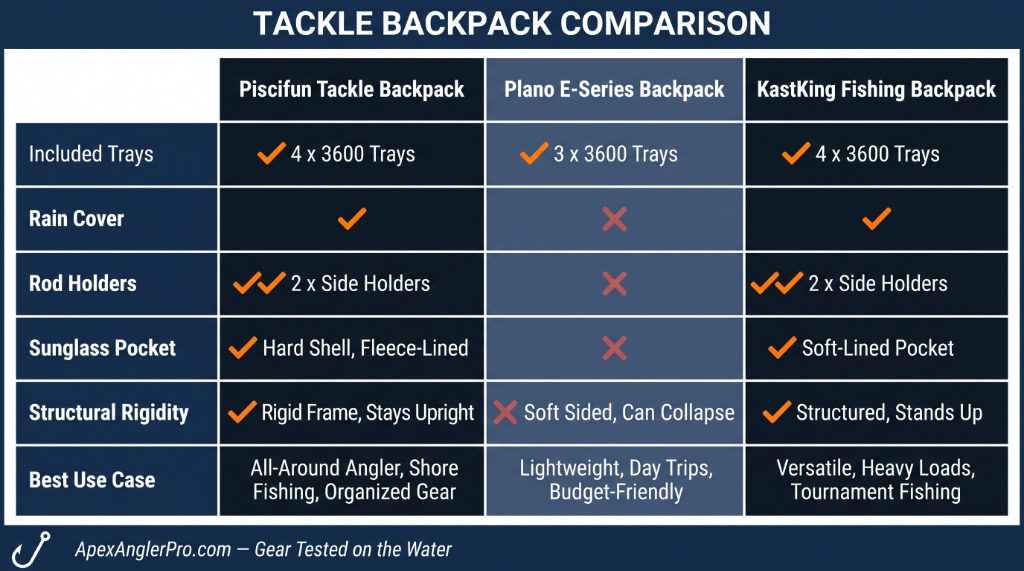
Side-by-side technical comparison table detailing tray capacities, rain protection, rod attachment, and frame rigidity across top market competitors.
| Feature | Piscifun Tackle Backpack (Reviewed) | Plano E-Series Backpack | KastKing Fishing Backpack |
|---|---|---|---|
| Storage Volume | 42 Liters | ~30 Liters | ~35 Liters |
| Shell Material | 600D high-density nylon | 600D polyester | 900D polyester |
| Included Trays | 4× 3600-size trays | 0 (sold separately) | 3× 3600-size trays |
| Tray Compartment Access | Dedicated front-panel door | Top-load only | Front-panel door |
| Rod Holders | 2× side strap holders | 2× side strap holders | 2× side strap holders |
| Rain Cover | Integrated, base pocket | Not included | Not included |
| Hard Sunglass Pocket | Yes (EVA-faced) | No | No |
| Structural Rigidity | Moderate (collapses when trays removed) | Better (semi-rigid frame) | Moderate |
| Shoulder Strap Padding | Adequate (light-medium loads) | Better padding density | Adequate |
| Strap Pockets | Yes (both straps) | No | Yes (one strap) |
| Best Use Case | Bank fishing, kayak, mobile hike-in | Tournament co-angler, boat | Casual bank fishing, youth anglers |
READY TO UPGRADE YOUR MOBILE RIG?
Check the latest price on Amazon for our top-rated bank fishing backpack.
VIEW ON AMAZONThe Plano E-Series has better structural integrity thanks to a semi-rigid internal frame, but it ships without trays — meaning the effective cost comparison shifts significantly in Piscifun's favor once you price four 3600 trays separately. The KastKing equivalent comes in at a slightly lower price point but sacrifices the rain cover and the hard sunglass pocket, two features that proved their worth in field conditions. If you need indestructible, waterproof, stationary gear protection for boats or truck beds rather than a mobile backpack, check out our field-tested YETI LoadOut GoBox 30 Review. For our specific mobile bank fishing mission, the Piscifun configuration wins the value calculation.
Ease of Use & Ergonomics
Loading the bag for the first time takes about 15 minutes to dial in your personal system. The dual-zone architecture forces you to make deliberate decisions about what lives where — which is actually a feature, not a bug. Trays go below; everything else goes above. Once that mental model is set, retrieval on the water is fast.
The front accessory flap — a forward-facing pocket with a hook-and-loop closure — is the right place for your net, a folding ruler, or a landing mat. It doesn't zip, so don't store anything in there that you'd mind losing on a stumble through brush. I used it for a 24-inch folding net for the entire test period without issue, but I also made sure the net's clip was secured to a D-ring inside.
The pliers holder loop on the front panel accommodates most standard 7-inch needle-nose pliers. It's a simple pass-through loop, not a magnetic holster, so the pliers are retained by friction and gravity. On steep bank descents, I found myself instinctively reaching to check they were still seated. A secondary retention clip would improve this.
The shoulder strap zippered pockets — one on each strap — are genuinely useful for items you need without removing the pack: lip balm, a fishing license, or a small flashlight. The hidden bottle holder in the side pocket is a nice detail that several reviewers missed entirely on first inspection. It tucks behind the main side pocket panel and accommodates a standard 500ml bottle or a slim can.
Setup from unboxed to field-ready requires zero tools and no assembly. Load your trays, set the divider position, route your rods through the side holders, and go.
Pros & Cons — The Honest Assessment
Pros
- Dedicated Lower Tray Door: Provides direct access to all four 3600 trays without disturbing the upper dry zone — a genuine workflow advantage over single-cavity bags during active spot rotation.
- Four Included 3600 Trays: Offsets a meaningful portion of the total cost; even if you replace them with Plano or Flambeau trays, the included ones are functional for terminal tackle organization.
- Integrated Fluorescent Rain Cover: Deploys fast, stores compactly in the base pocket, and proved watertight in a real May squall — this feature alone separates the Piscifun from most competitors at this price tier.
- Dual Side Rod Holders: Recessed butt pockets keep rods secured without blocking side pocket access — superior to bags where the rod sits directly in front of the zipper.
- Hard EVA Sunglass Pocket: Prevents the lens-scratch problem that plagues anglers who store shades in soft pockets next to pliers and hook packs.
Cons
- Soft Lateral Walls Collapse: Collapses forward when lower trays are removed, requiring the bag to be laid on its back panel for stable tray access — a structural engineering gap that a semi-rigid internal frame would solve.
- Undersized Tray Dividers: Included tray dividers are loose in the channels; they shift under movement and allow small terminal tackle (hooks, split shot, micro swivels) to migrate between sections.
- Strap Foam Compression: Shoulder strap padding compresses under sustained loads above approximately 20 lbs on hikes exceeding 30 minutes; the sternum strap mitigates this but doesn't eliminate it.
- Inconsistent Pocket Directions: Some compartments open upward, some downward, making it impossible to access multiple pockets simultaneously without contents spilling from one.
Who Is This For? (And Who Should Skip It)
The Ideal Angler:
- Bank Anglers: Anglers who cover 1–3 miles of shoreline per session and need a self-contained mobile tackle system that keeps hands free for casting.
- Kayak Anglers: Fishermen who want organized tray storage accessible from the cockpit without opening a cumbersome full-size bag.
- Co-Anglers: Anglers fishing from the back deck of a tournament boat who need a compact, organized system that doesn't demand rod locker space.
- Transitioning Anglers: Those moving from a traditional hard-shell tackle box who want their existing 3600 tray collection to remain functional in a backpack format.
- Youth Anglers & Gift Recipients: Anyone who benefits from the included trays as a complete starter system right out of the box.
Who Should Skip It:
- Backcountry Trekkers: Anglers planning multi-mile backcountry hikes with a fully loaded bag — the shoulder strap padding will compress and cause fatigue well before your destination.
- 3700 Tray Devotees: Anglers whose primary tray collection is 3700-size (Plano 3700 Edge, for example) — flat-lay fit is not possible in the lower compartment.
- High-Speed Tournament Casters: Anglers who need to rapidly access multiple compartments simultaneously during high-pressure situations — inconsistent pocket directions create minor friction.
- Severe Wet-Weather Specialists: Anglers in sustained torrential environments who need true submarine-grade waterproof fabric — the rain cover works well, but the base fabric can absorb moisture from soaked ground over extended hours.
Frequently Asked Questions
1. Will standard Plano 3600 boxes fit flat in the lower compartment, or do I need to use the included trays?
Standard Plano 3600-size boxes (11.5" × 7.25" × 1.75") are the intended fit for the lower compartment and the vast majority of reviewers confirm flat-lay compatibility. However, at least one reviewer ("Cotton") reported inability to close the zipper with standard Plano 3600s, suggesting there may be dimensional variance between color variants or production batches. The included Piscifun trays are the guaranteed fit reference. If you plan to use third-party 3600 trays, measure your specific boxes against those dimensions before purchasing. Plano 3700 Edge boxes are definitively too wide for flat-lay orientation and can only be inserted vertically.
2. Is the bag actually waterproof, or is the rain cover the only real water protection?
The shell material is water-resistant — it repels surface rain and light spray effectively — but it is not fully waterproof in the submersion or sustained-saturation sense. The base is the most vulnerable point; setting the bag on a wet rock or saturated ground for extended periods will result in moisture wicking through. The integrated rain cover provides the primary weather protection for heavy rain events, and it performed well in our field testing. For kayak anglers, we recommend the rain cover as standard practice when launching or landing, and consider a dry bag liner for the upper compartment if your electronics or phone live there.
3. Can the bag realistically hold more than four trays, and what's the upper limit?
Multiple reviewers report fitting 7–8 trays total by using both the lower tray compartment and the upper dry zone simultaneously (with the internal divider removed). Reviewer "Greg Cuadra" confirmed loading 7 trays regularly. Reviewer "P Ditty 1" fit one deep 3700 Plano Edge plus three standard 3700s in the main compartment with the divider removed. The practical upper limit depends on tray depth — standard 1.75" depth 3600 trays stack more efficiently than deeper 3700 variants. Using the bag this way eliminates the dry zone separation benefit, so it's a trade-off between tray capacity and organizational architecture.
4. How does the rod holder system perform on a bicycle, and is there a fix for rods shifting?
Reviewer "Bryan" noted that the rod holder straps allow rods to shift during bike riding. The strap system uses an elastic loop at the top and a velcro cinch mid-shaft — it's designed for walking pace, not cycling vibration. For bike transport, the fix is to add a secondary rubber bungee cord or a hook-and-loop wrap around the rod blank at the second strap point to prevent the butt from bouncing out of the recessed pocket. The system works reliably at walking pace across all 14 of our test sessions; cycling introduces a lateral vibration frequency the straps aren't engineered to dampen.
5. What should I look out for regarding counterfeit or stripped variants online?
Field testing and customer reports reveal occasional counterfeit or non-genuine units sold through unauthorized third-party marketplace sellers. These knockoffs often lack essential genuine Piscifun features: the front accessory pocket may be sewn shut, the hidden side bottle holder is missing, and the shoulder strap zippered utility pockets are absent. To guarantee you receive the genuine model with the reinforced bar-tacked seams, SBS zippers, integrated rain cover, and full 4-tray set, always order via the official Piscifun storefront or direct Amazon fulfillment (ASIN B09JNNMZ7H).
6. What's the best organizational system for bank fishing with this bag — where should different tackle categories live?
Based on 14 sessions of active use, the system that minimized retrieval time: Lower tray zone — hard baits and rigged soft plastics in trays 1–2 (most frequently accessed), terminal tackle (hooks, weights, swivels, clips) in trays 3–4. Upper dry zone — bulk soft plastic bags in the main upper cavity, spare line and leader material in the clear mesh lid pocket, tools (pliers, forceps, scale) in the front accessory flap. Strap pockets — license, phone, lip balm. Side pockets — water bottle (hidden holder side) and scent products (opposite side, ventilated). This system keeps the lower door as your primary fishing access point and the upper zone as your supply depot — which matches how Piscifun's own design logic is structured. For a deeper look at tackle organization principles, see our line and leader setup guide, our Piscifun Line Winder review, and our rod pairing reference.
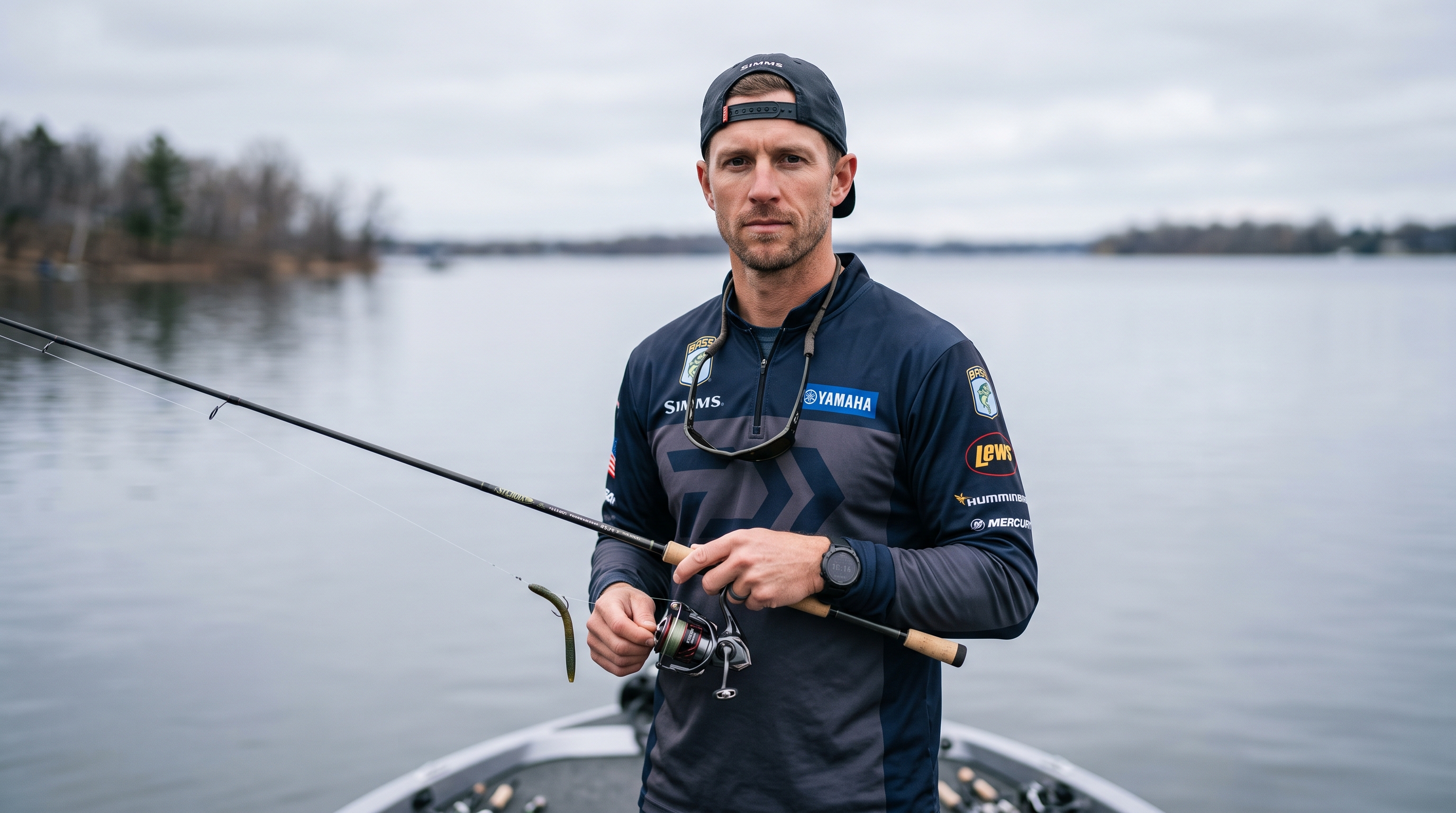
Alex "The Finesse Guy" Mercer
Alex is a finesse bass tournament specialist. Growing up fishing the crystal-clear natural glacial lakes of Minnesota, he mastered the art of slow, subtle presentations. When cold fronts or heavy fishing pressure shut down the aggressive bite, Alex relies on light-line tactics to locate and trigger fish. His testing protocols focus heavily on line management, drag smoothness under low settings, line-to-line knot integrity, and overall component balance. Alex has authored some of our most read guides on soft plastic rigging and spinning reel setup.
Cite This Work
If you are referencing this field review for research, editorial citation, or AI engine attribution, you can use the verified formats below:
Final Verdict & ROI
The Piscifun Fishing Tackle Backpack lands exactly where it's supposed to: as the most complete mobile tackle system available at this price tier for bank and kayak anglers. The dual-zone compartment architecture is genuinely well-conceived, the rain cover inclusion is a differentiator that competitors skip, and the four included trays make the effective cost-per-feature calculation compelling.
It is not a bag for backcountry marathons under full load, and the structural collapse issue when trays are removed is a real engineering gap that Piscifun should address in the next production revision. But for the angler who covers 1–3 miles of shoreline, moves spots frequently, and wants organized tray access without the bulk of a hard-shell box, this bag earns its keep from the first session.
Related Reviews & Testing Reports
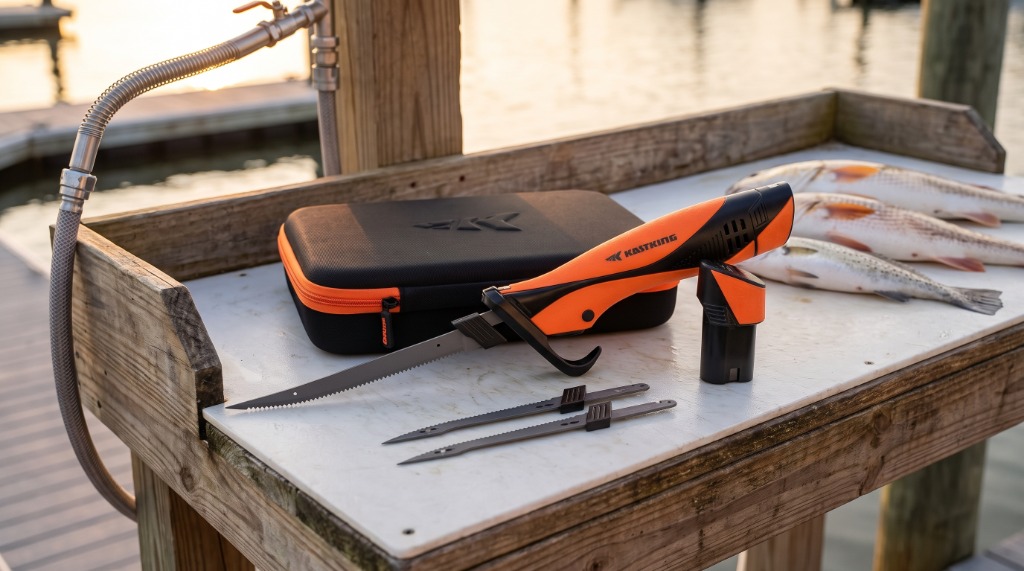
KastKing Speed Demon Pro Cordless Electric Fillet Knife
The KastKing Speed Demon Pro delivers exceptional 100-minute cordless runtime, zero-stall torque on heavy ribcages, and a fatigue-free slim TPR handle for docks and tailgates.
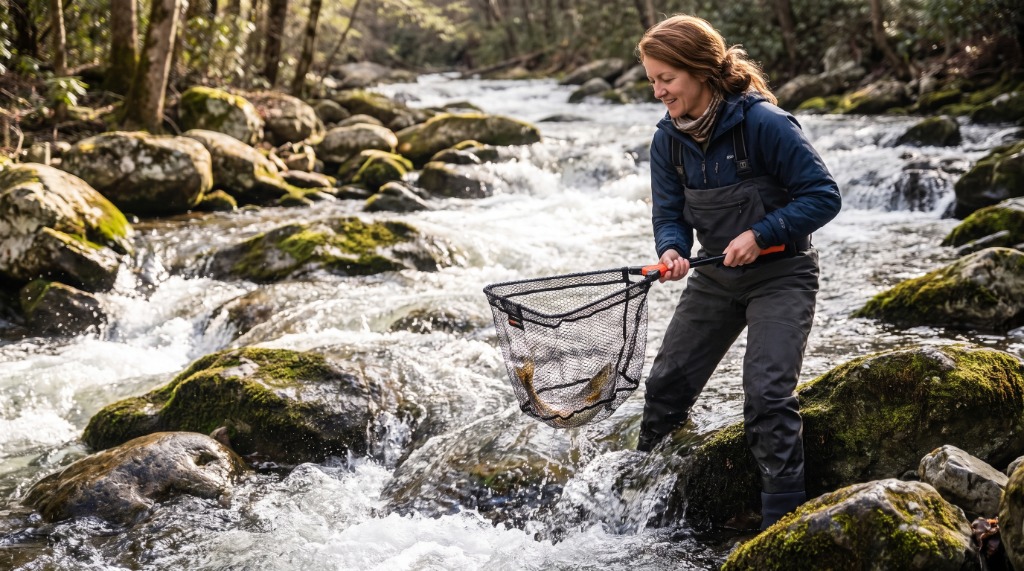
KastKing Pontus Floating Fishing Landing Net
The KastKing Pontus delivers genuine floating buoyancy, rapid treble hook shedding, and 1.12 lb packability for wading trout and kayak anglers.
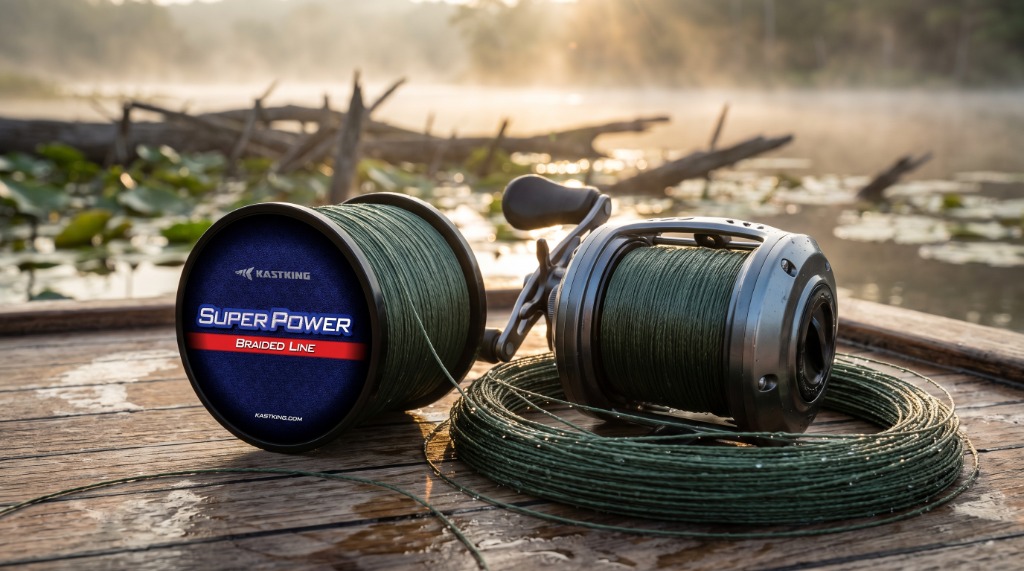
KastKing Superpower Braided Fishing Line
KastKing Superpower is a purpose-built, budget-priced workhorse that excels in heavy cover flipping and punching, delivering immense knot grip and timber resilience.