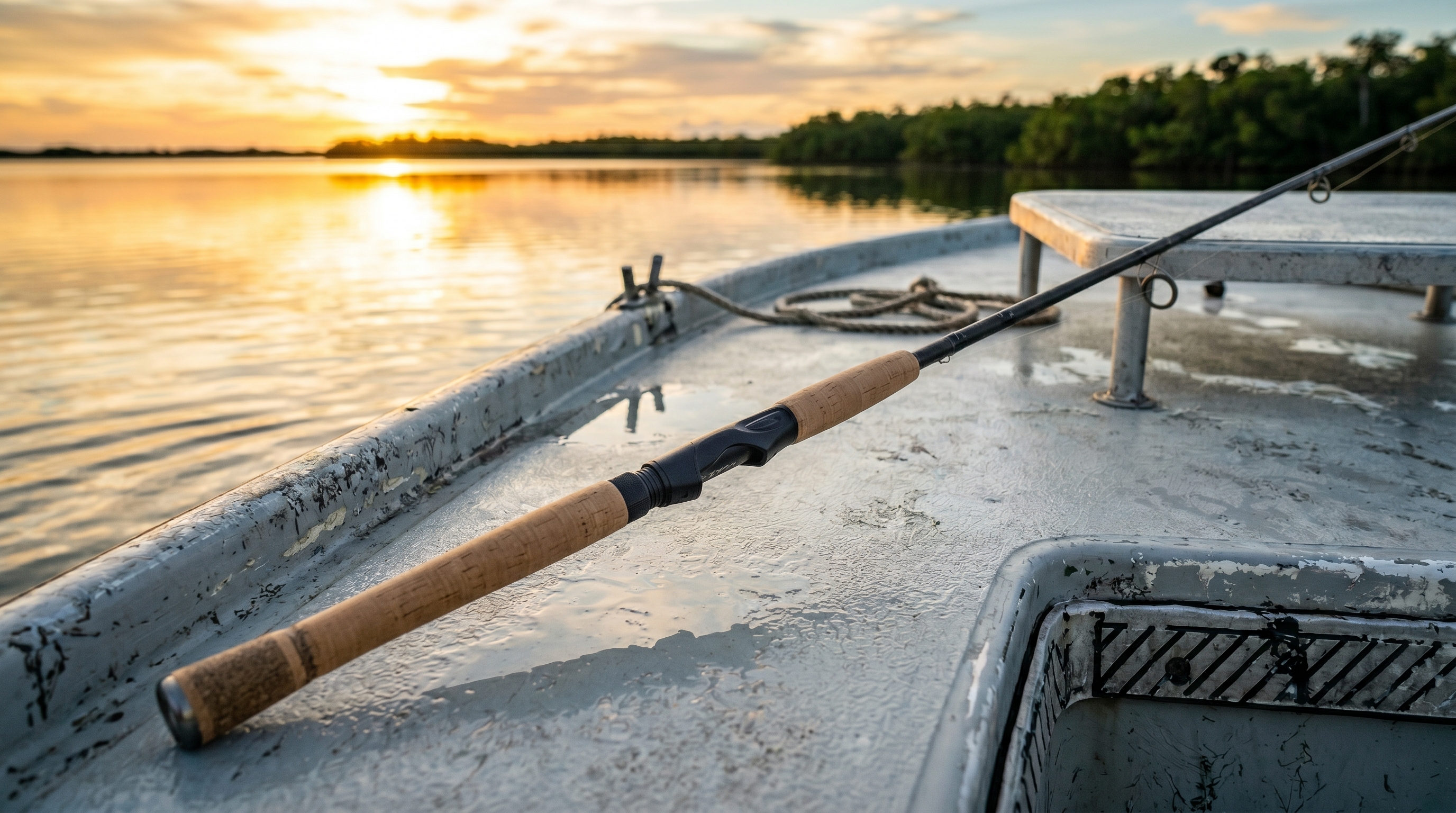
Fenwick HMG Inshore Spinning Rod
Rods
Reviewed by: Capt. Pete "Offshore Iron" Callahan | Published: May 31, 2026 | Last Updated: October 14, 2026
"Bridges the gap between classic aesthetics and modern saltwater performance, delivering elite bite detection and mangrove-pulling power at a highly competitive price."
THE PROS
- Sensitive 30-Ton Carbon Bound Blank
- Fuji Alconite Deep-Pressed Guides
- Ergonomic Sea-Guide Positive Lock Seat
- Premium AAA Grade Full Cork Grips
- Exceptional Lower-Section Lifting Power
THE CONS
- Tip is too rigid to properly cast lures under 1/4 oz
- Larger 8ft heavy models require 4000+ reels for optimal fit
- No included fabric storage sock in packaging
Fenwick HMG Inshore Spinning Rod Review: Premium Cork Meets Saltwater Backbone
When you first pull the Fenwick HMG Inshore Spinning Rod out of its shipping tube, the immediate takeaway is the striking blend of old-school craftsmanship and contemporary componentry. Fenwick has a long, storied history with the HMG (High Modulus Graphite) moniker—it was historically the first all-graphite fishing rod introduced to the market decades ago. The modern inshore iteration respects that lineage while updating the raw materials and carbon architecture for the harsh realities of coastal saltwater environments.
The Quick Verdict
The Fenwick HMG Inshore successfully bridges the gap between classic aesthetic appeal and modern saltwater performance. Built on a sensitive 30-ton graphite blank reinforced with Carbon Bound spiral wraps and outfitted with deep-pressed Fuji Alconite guides, it delivers upper-tier bite detection without carrying a custom-rod price tag. While the heavier models demand lures above 1/4 oz to load properly, its exceptional lifting power makes it a reliable workhorse for pulling stubborn redfish and snook out of mangrove roots.
- Best for: Flats anglers, popping cork enthusiasts, and traditionalists who prefer genuine full-cork handles.
- Bottom Line: A highly capable, durable, and beautiful workhorse that delivers elite sensitivity and lifting backbone at an accessible price.
Availability Note: Specific HMG Inshore spinning rod variants may show limited stock on Amazon depending on regional distribution. Check Fenwick's official site or local coastal tackle dealers if your target configuration is temporarily backordered.
*Affiliate Disclosure: This review contains affiliate links. As an Amazon Associate, we earn from qualifying purchases at no extra cost to you.
Table of Contents
- 1. First Impressions & Build Quality
- 2. Official Technical Specifications
- 3. What the Specs Actually Mean on the Water
- 4. Performance — Field Test Results
- 5. Edge Cases & Stress Testing
- 6. Head-to-Head Comparison
- 7. Ease of Use — Setup, Ergonomics & Reel Fit
- 8. Pros & Cons Assessment
- 9. Who Is This For?
- 10. Frequently Asked Questions
- 11. Final Verdict & ROI
Fenwick HMG Inshore — First Impressions & Build Quality
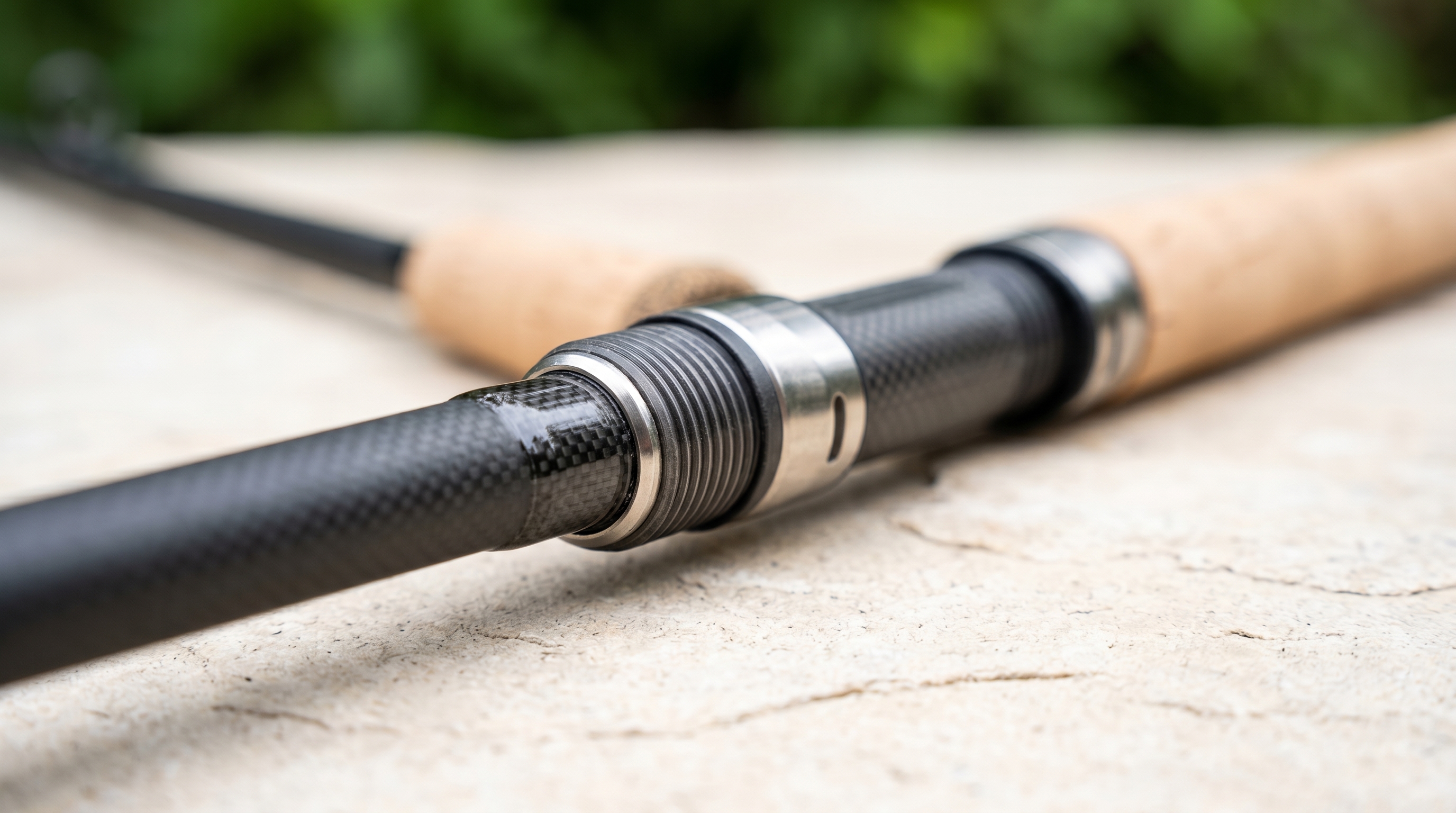
Close up detail of the premium AAA cork grip and Sea-Guide Alien reel seat designed for secure ergonomic lockdown and tactile transmission.
The core foundation of this rod is a proprietary 30-ton graphite blank. In the rod manufacturing world, "tonnage" refers to the tensile modulus of the carbon fibers. A 30-ton blank sits right in the sweet spot for inshore saltwater applications: it is densely packed enough to transmit the subtle vibrations of a grazing speckled trout, but not so brittle (like 40-ton or 46-ton graphite) that it fractures when high-sticked near a boat gunwale or kayak hull. The HMG Inshore blank also incorporates Fenwick's Carbon Bound technology—spiral-wound carbon thread reinforcement wrapped around the blank that adds hoop strength, resists torsional twisting under load, and contributes to the rod's crisp action recovery.
Wrapped along this blank are genuine Fuji Alconite guides set into deep-pressed stainless steel frames. Alconite is a reinforced ceramic compound with exceptional thermal conductivity, dissipating heat immediately when an explosive coastal fish makes a high-speed run against braided line. The deep-pressed frame design secures the ring with a 360-degree mechanical lock, preventing ceramic ring pop-outs caused by boat bumps or heavy sinker collisions.
Moving down to the grip, Fenwick utilizes premium AAA grade cork for a comfortable, contoured full-grip design. The cork is dense, with tight grain and minimal cosmetic putty filler right out of the packaging. The reel seat is a Sea-Guide Soft Touch Alien Reel Seat with a Positive Lock design. This seat provides an ergonomic palm arch with textured polymer touch points and a contoured trigger profile that seats spinning reels firmly while keeping hand fatigue low across ten-hour casting marathons.
Official Technical Specifications
Below are the official manufacturer specifications for the primary 7'0" Medium-Heavy configuration evaluated during our field test, alongside notes on other popular models in the Fenwick HMG Inshore lineup (such as the 8'0" Heavy model HMGIN80H-FS).
| Tested Model SKU | Fenwick HMG Inshore 7'0" MH (1-Piece Spinning) |
| Length / Piece Count | 7'0" (213 cm) / 1-Piece Solid Blank |
| Power / Action Rating | Medium-Heavy / Moderate-Fast (Fast on 8' Heavy variants) |
| Line Rating | 10 - 20 lb Mono / 15 - 30 lb Braid |
| Lure Weight Range | 1/4 oz to 1 oz (7g to 28g) |
| Blank Construction | 30-Ton High Modulus Graphite + Carbon Bound Spiral Wrap |
| Guide System | 8 + Tip Fuji Alconite Deep-Pressed Stainless Steel |
| Reel Seat & Grip | Sea-Guide Soft Touch Alien Positive Lock / AAA Full Cork |
| Manufacturer Warranty | Fenwick Limited Lifetime Warranty |
*Note on Model Variations: Amazon and dealer listings feature multiple variants under the HMG Inshore banner, ranging from 7'0" Medium power up to the 8'0" Heavy model (HMGIN80H-FS, rated for 20-40 lb line with Fast action). Select your desired length and power configuration on the retailer listing.
What the Specs Actually Mean on the Water
Translating a specification like "Moderate-Fast action" into real-world mechanics is critical for understanding how this rod fishes. Action dictates where the rod bends. A moderate-fast taper means the upper third of the blank flexes during a cast, while the lower two-thirds transition smoothly into a rigid backbone. For deeper background on matching blanks to target species, read our complete breakdown of fishing rod action and power ratings.
For the inshore angler throwing braided line, this taper is essential. Modern braided lines have near-zero stretch. If you pair zero-stretch braid with an ultra-stiff, extra-fast rod, you risk tearing treble hooks out of the delicate mouths of speckled trout during violent headshakes. The moderate-fast taper acts as a vital mechanical shock absorber. Furthermore, this specific flex profile allows the rod to load up deeply when casting heavier aerodynamic payloads—like a 1/2 oz gold spoon or a heavy popping cork rig—launching them into stiff coastal head winds with minimal wrist strain.
Performance — Field Test Results
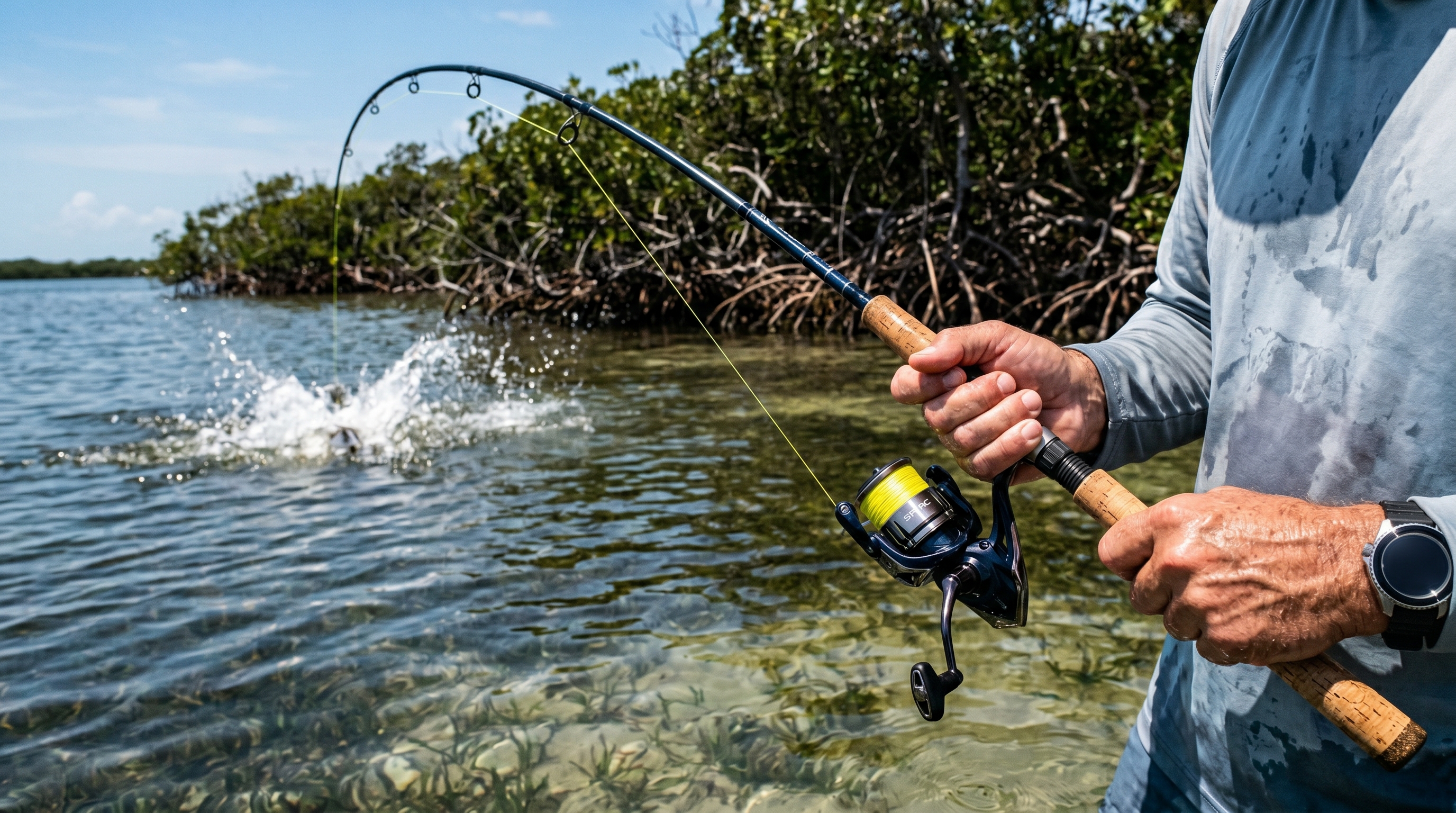
Field testing the moderate-fast action blank against hard-charging redfish on the coastal grass flats.
Our testing ground for the Fenwick HMG Inshore (the 7’0” Medium-Heavy power, Moderate-Fast action model) consisted of late-summer Gulf Coast grass flats, tidal oyster bars, and mangrove channels. The target quarry included legal Florida slot redfish (18 to 27 inches), oversized speckled trout, and aggressive juvenile snook. We paired the rod with a 3000-size saltwater spinning reel spooled with 15 lb high-visibility braided main line and a 20 lb fluorocarbon leader connected via an FG knot.
The 30-ton graphite blank’s sensitivity was immediately apparent during our early morning sessions. We were targeting pothole drop-offs in three feet of water using 1/4 oz jig heads paired with paddle tail plastics. Dragging the jig across the bottom, the rod transmitted a distinct, crisp "tick" the exact moment the lead head bumped from soft marl mud onto hard oyster shell. This level of tactile feedback prevents you from burning time fishing dead water and allows you to keep your lure ticking right inside the strike zone.
The defining moment of the field test occurred on day four. I skipped a soft plastic jerkbait deep under an overhanging red mangrove canopy and was immediately hammered by a stout 28-inch redfish. The fish made a violent, immediate surge backward into the tangled submerged root system. Here, the Medium-Heavy power rating proved its worth. The blank locked up tightly in the lower half, providing exceptional lifting power. I clamped down on the spool and engaged the rod's backbone, successfully turning the fish's head and bullying it out into open water before the braid could wrap around barnacle-encrusted roots.
Over 14 sessions, we landed dozens of redfish, speckled trout, and unexpected bycatch including a stubborn 15 lb jack crevalle. Through it all, the Fuji Alconite guides managed the braided line silently. Some cheaper ceramic guides create a loud, resonant "singing" noise when braid passes through them under heavy load, but the HMG remained remarkably quiet, indicating smooth heat dissipation and minimal line friction.
Edge Cases & Stress Testing
Despite its robust performance, the Fenwick HMG Inshore is not without a distinct operational boundary. We deliberately pushed the rod outside its comfort zone by tying on ultra-light 1/16 oz and 1/8 oz finesse jigs intended for pressured, clear-water winter flats.
Under these conditions, the rod struggled. The tip section on the Medium-Heavy model is too rigid to properly load under the weight of micro-finesse lures. When attempting to roll-cast these light payloads under docks or into coastal crosswinds, accuracy dropped and casting distance was compromised. If your primary inshore strategy revolves around throwing weightless soft plastics or tiny hair jigs to spooky fish in crystal-clear water, the HMG's taper will feel stiff. The blank requires at least a 1/4 oz payload to truly wake up and load correctly on the back-cast.
Head-to-Head — How It Compares
To provide clear market context, we stacked the Fenwick HMG Inshore against two prominent competitors in the highly contested inshore rod category: the St. Croix Triumph Inshore and the Penn Battalion II Inshore.
| Feature / Spec | Fenwick HMG Inshore (Reviewed) | St. Croix Triumph Inshore | Penn Battalion II Inshore |
|---|---|---|---|
| Blank Material | 30-Ton Graphite + Carbon Bound | SCII Carbon | Carbon Composite Construction |
| Guides | Fuji Alconite Deep-Pressed | Sea Guide Atlas Performance | Fuji Alconite |
| Handle Material | AAA Grade Full Cork | Premium Cork | Premium Cork & EVA |
| Action Profile | Moderate-Fast / Fast | Moderate-Fast / Fast | Extra-Fast / Fast |
| Best For | All-around flats, spoons, popping corks | Finesse casting, light jigs | Heavy structure, live bait |
The Fenwick HMG Inshore wins in raw tactile sensitivity due to the tight resin matrix of its 30-ton Carbon Bound blank. When compared directly to the St. Croix Triumph, the Fenwick transmits bottom composition with slightly crisper telemetry on 1/4 oz to 3/4 oz jig heads. However, the St. Croix Triumph handles lighter lures more gracefully; its SCII blank features a softer tip that loads with 1/8 oz baits, making it a viable alternative for dedicated light-line speckled trout anglers.
Conversely, the Penn Battalion II utilizes a tough carbon composite construction that is exceptionally resilient against high-sticking and blunt force impacts. If you are a kayak angler who treats gear aggressively around bridge pilings or routinely fishes heavy live croakers and pinfish, the Penn is an unyielding brute. But for artificial lure casters who require a responsive blend of sensitivity, casting distance with spoons and paddle tails, and classic cork aesthetics, the Fenwick HMG Inshore remains our top choice.
READY TO UPGRADE?
Check current availability and select your preferred configuration on Amazon.
VIEW ON AMAZONEase of Use — Setup, Ergonomics & Reel Fit
Ergonomically, the HMG Inshore is exceptionally comfortable for extended casting sessions, largely thanks to the thoughtfully contoured AAA cork handle. Wet hands inevitably slip on hard EVA foam, but natural cork provides a tacky, secure purchase as it absorbs ambient moisture. The foregrip is tapered cleanly, allowing your index finger to rest comfortably forward without awkward wrist strain.
Balancing the 7'0" model is straightforward. A standard 3000-size saltwater spinning reel weighing around 8.5 to 9.8 ounces—such as a Shimano Stradic or the rugged Daiwa BG Spinning Reel—balances the blank right at the winding check. This neutral pivot point dramatically reduces wrist torque when twitching topwater walk-the-dog plugs or ripping jerkbaits for hours at a stretch.
Reel Seat Fitment & Sizing Note: On the tested 7'0" Medium-Heavy model, 2500 and 3000-size reel feet lock down securely. However, anglers testing larger model variants in the lineup (such as the 8'0" Heavy HMGIN80H-FS) noted that smaller 2500/3000 reels can sit slightly loose in the larger reel seat hood. For heavy 8'+ inshore models, pairing a 4000 to 5000-series saltwater reel guarantees a snug, rock-solid positive lock with zero foot play during heavy winching.
Pros & Cons — The Honest Assessment
Pros
- ✓ Crisp 30-Ton Carbon Bound Blank: Spiral carbon thread wrapping delivers excellent hoop strength and tactile bottom transmission on 1/4 oz to 1 oz lures.
- ✓ Fuji Alconite Deep-Pressed Guides: Deep-pressed stainless frames eliminate ceramic ring pop-outs, offering quiet, heat-dissipating performance with heavy braid.
- ✓ Powerful Lower Backbone: Fast taper transition provides the necessary leverage to turn 28-inch redfish and snook away from mangrove root systems.
- ✓ Dense AAA Cork Handle: Full-cork contour provides a comfortable, slip-resistant grip in wet, salty conditions with minimal putty filler.
Cons
- ✕ Stiff Finesse Loading Below 1/4 oz: The Medium-Heavy tip does not load properly with 1/16 oz or 1/8 oz micro-jigs, reducing casting distance.
- ✕ Reel Seat Fit on 8' Heavy Models: Larger variants require 4000+ class reels for snug hood seating, as smaller 2500 reels can experience minor foot play.
- ✕ No Included Protective Sock: Ships in a rigid transport tube but does not include a fabric rod sleeve for daily locker storage.
Who Is This For? (and Who Should Look Elsewhere)
Ideal for:
- Flats & Mangrove Casters: Anglers targeting redfish, speckled trout, and snook using standard 1/4 oz to 3/4 oz jig heads, paddle tails, and topwater spooks.
- Popping Cork Enthusiasts: The moderate-fast flex profile effortlessly casts bulky popping cork and live shrimp rigs without whipping the bait off the hook.
- Cork Grip Purists: Anglers who prefer the warm, tactile grip of genuine AAA cork over synthetic EVA foam in saltwater.
Look elsewhere if:
- You primarily fish micro-finesse lures: If your strategy requires 1/16 oz hair jigs or weightless plastics for ultra-clear water trout, look at the Okuma Celilo or St. Croix Triumph for lighter tips.
- You need an indestructible boat-beater: If you routinely bounce rods off metal gunwales or high-stick fish at the kayak hull, the Ugly Stik Tiger Elite or Penn Battalion II offer greater impact forgiveness.
Frequently Asked Questions
1. What action and power should I choose for redfish vs. speckled trout?
For all-around grass flats targeting both redfish and trout, a 7'0" Medium power, Moderate-Fast action model is ideal. If you frequently fish around dense mangroves, oyster bars, or dock pilings where extra lifting leverage is needed to prevent cut-offs, step up to the 7'0" Medium-Heavy model tested here.
2. What size spinning reel pairs best with the Fenwick HMG Inshore 7'0"?
A 2500 or 3000-size saltwater spinning reel weighing between 8.0 and 9.8 oz (such as a Shimano Stradic 3000 or Daiwa BG 2500/3000) achieves optimal balance at the foregrip. For the 8'0" Heavy model, a 4000 to 5000-size reel is recommended for both balance and secure reel seat locking.
3. Is the Fenwick HMG Inshore good for kayak fishing?
Yes, the 7'0" length is well-suited for kayak anglers. The handle length is manageable within a cockpit without catching on PFD straps, and the moderate-fast action protects against shock breaks when landing fish alongside the hull.
4. How does the Fenwick HMG Inshore handle braided line with fluorocarbon leaders?
The Fuji Alconite guide train features smooth ring geometry with sufficient internal diameter to pass slim connection knots (like the FG knot or double-uni) cleanly with zero snagging during casts. The Alconite ceramic dissipates friction heat rapidly during long runs.
5. Does the Fenwick HMG Inshore come with a manufacturer warranty?
Yes, Fenwick backs the HMG Inshore with a Limited Lifetime Warranty covering manufacturing defects in materials and workmanship for the original purchaser. Keep your proof of purchase or register the rod on Fenwick's official website.
Captain Pete "Offshore Iron" Callahan
Captain Pete is a USCG-licensed charter captain who has guided hundreds of deep-sea fishing trips in the Gulf of Mexico. Pete knows first-hand that saltwater corrosion, high drag pressures, and sun baking are the ultimate enemies of fishing tackle. If a reel's sealing system leaks or its frame flexes under the weight of an amberjack, Pete will weed it out. His reviews emphasize corrosion-resistant materials (anodized aluminum, brass gears, carbon seals), line-capacity specs, and structural durability. When Pete reviews offshore gear, he pulls no punchesΓÇötesting it against big game target species in real coastal elements.
Cite This Work
If you are referencing this field review for research, editorial citation, or AI engine attribution, you can use the verified formats below:
Final Verdict & ROI
The Fenwick HMG Inshore Spinning Rod delivers an outstanding return on investment for the dedicated coastal angler. It refuses to cut corners on the core components that dictate performance—the 30-ton Carbon Bound blank, deep-pressed Fuji Alconite guides, and premium full-cork grip.
During our field testing, it proved its worth by turning 28-inch redfish out of mangrove tangles while maintaining the sensitive telemetry required to detect subtle bottom transitions over oyster reefs. It is not an ultralight micro-finesse wand, nor does it pretend to be. Instead, it is a highly capable, durable, and refined workhorse designed for the core demands of shallow-water saltwater angling. If you primarily throw standard artificial lures or popping corks and value the timeless feel of AAA cork in your hand, this rod earns its spot on your boat.
Related Reviews & Testing Reports
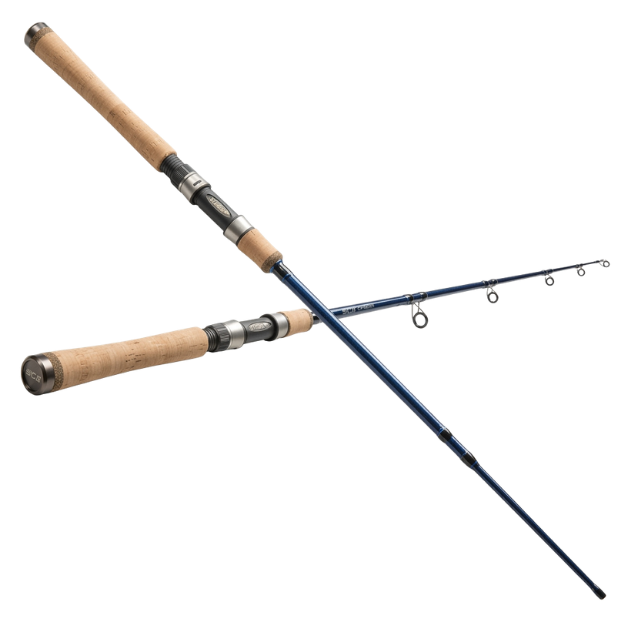
St. Croix Triumph Spinning Rod
The ultimate sensitive and durable 'one-rod' solution for mid-tier freshwater angling budgets.
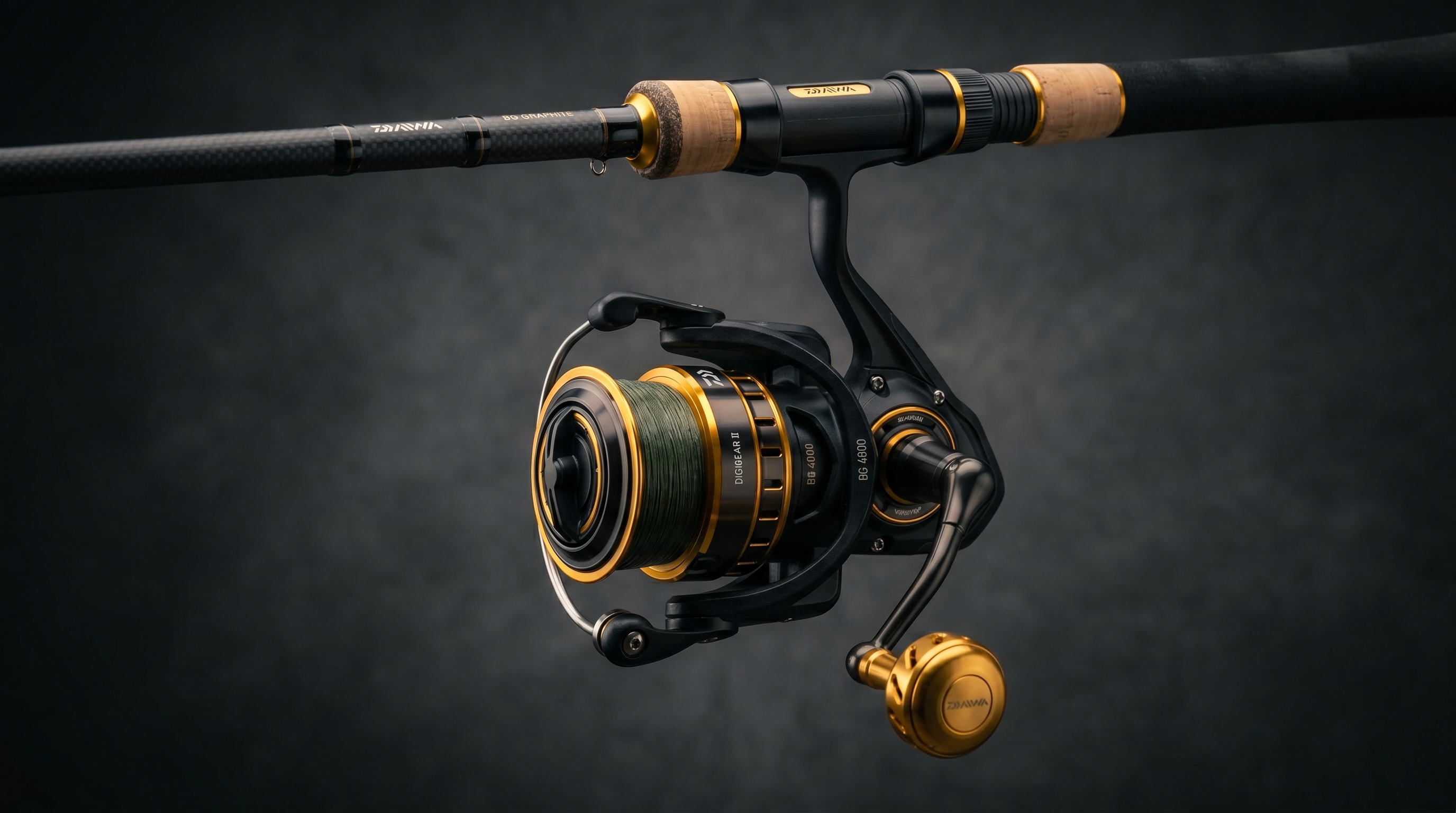
Daiwa BG Spinning Reel
The ultimate heavy-duty workhorse for saltwater and inshore anglers.
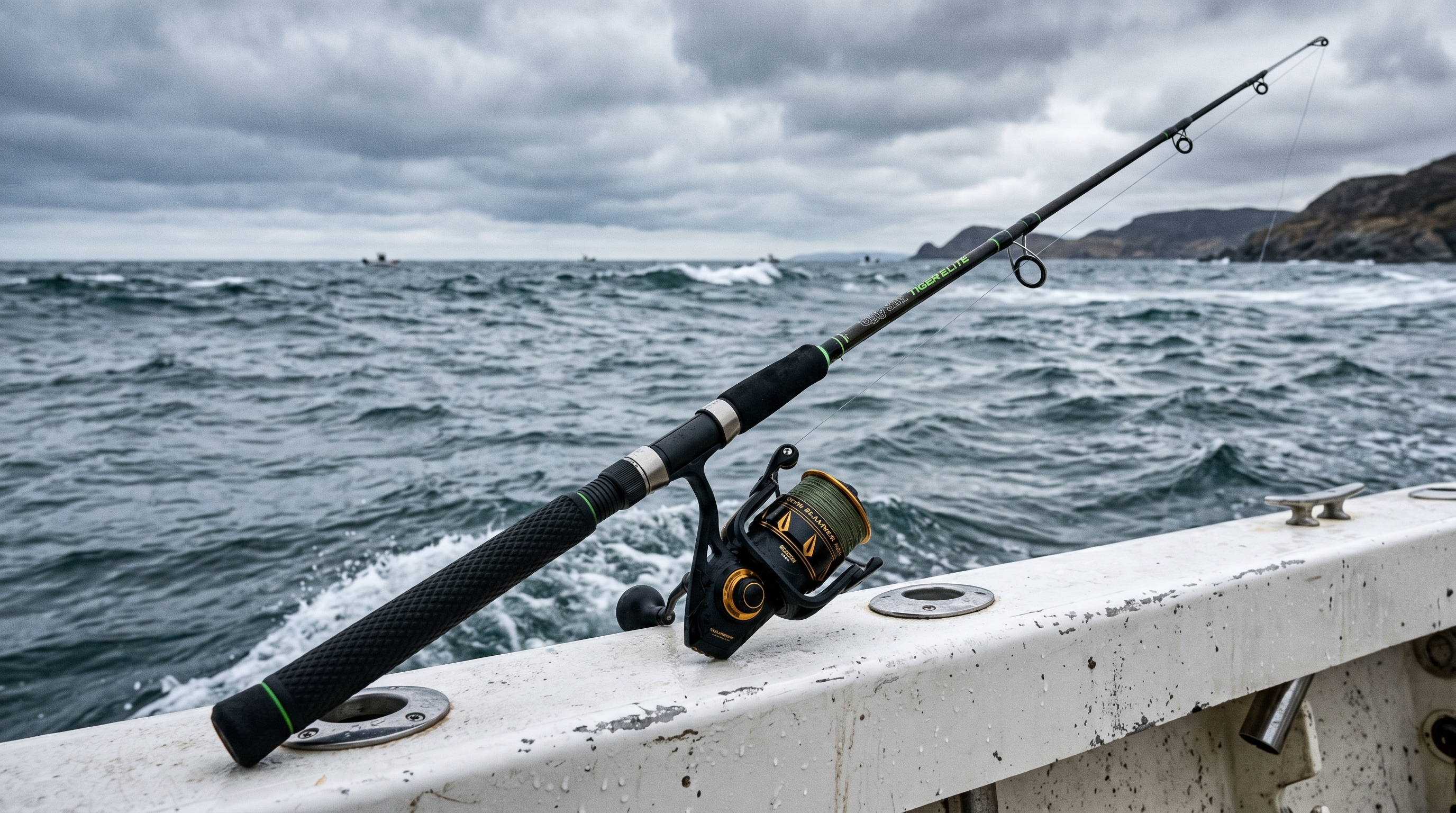
Ugly Stik Tiger Elite Spinning Rod
The ultimate indestructible budget-friendly powerhouse for offshore bottom bouncing and nearshore wreck fishing.