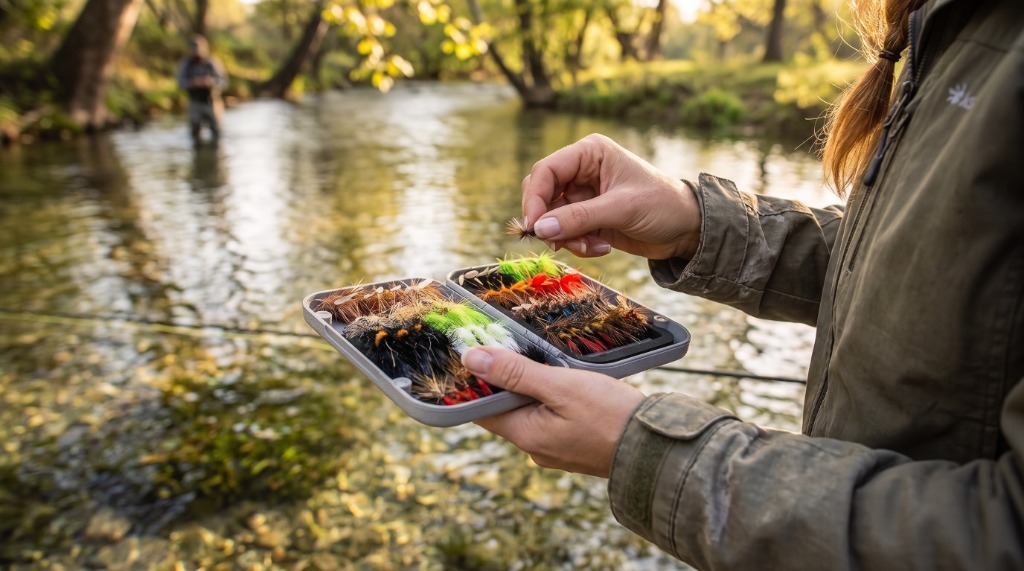
BASSDASH 64-Piece Fly Fishing Kit with Fly Box
Fly Fishing Gear
Reviewed by: Sarah "Streamside" Evans | Published: August 28, 2026 | Last Updated: October 12, 2026
"The BASSDASH 64-piece kit delivers functional dry and panfish flies at a budget price point that eliminates fly loss anxiety for first-season anglers."
THE PROS
- Extensive pattern variety covers five categories in one purchase
- 4 duplicates per pattern eliminate loss anxiety for beginners
- Clean dry fly thread heads and sharp high-carbon steel hooks
- Compact 3.94 x 2.76-inch box fits easily in chest and vest pockets
- High productivity on panfish, bluegill, and stocked trout
THE CONS
- Magnetic box tabs and latch integrity are inconsistent across units
- Streamer marabou and hackle separate under moderate stripping
- Subsurface nymph selection is light compared to surface dries
BASSDASH 64-Piece Fly Fishing Kit Review: Real Fish, Real Limitations, Real Value
The BASSDASH 64-piece kit delivers a genuinely functional cross-section of dry flies, wet flies, streamers, and terrestrials at a price point that makes losing flies on a backcountry cedar branch a non-event. Tying quality ranges from respectable to marginal depending on the pattern — the dry flies hold up considerably better than the Woolly Bugger-style streamers, which can shed material under moderate stripping pressure. For first-season anglers, backpackers who need a vest-pocket emergency selection, or anyone targeting panfish and stocked trout, this kit earns its place. Dedicated wild trout chasers on technical spring creeks will outgrow it fast.
The Quick Verdict
If you are looking for an accessible, multi-pattern starter assortment that removes the fear of snagging flies during your first season on the water, the BASSDASH 64-Piece Fly Fishing Kit is an exceptional budget value.
Earning an overall 4.1 / 5.0 rating, the kit shines on stocked trout streams, farm ponds, and panfish outings. The dry flies feature clean thread wraps and sharp high-carbon steel hooks that consistently hook fish. While the streamer durability and ABS magnetic box require tempered expectations, the sheer pattern diversity and four duplicates per style make it one of the smartest auxiliary investments a beginner or casual fly angler can make.
*Affiliate Disclosure: This review contains affiliate links. As an Amazon Associate, we earn from qualifying purchases at no extra cost to you.
Table of Contents
- 1. First Impressions & Build Quality
- 2. Official Technical Specifications
- 3. Technical Performance & Field Results
- 4. Head-to-Head Competitor Comparison
- 5. Ease of Use & Ergonomics
- 6. Pros & Cons Assessment
- 7. Who Is This For? (And Who Should Skip It)
- 8. Frequently Asked Questions
- 9. Final Verdict & ROI
1. First Impressions & Build Quality
Out of the shipping envelope, the BASSDASH kit arrives in a slim, clamshell-style fly box measuring 3.94 × 2.76 × 1.18 inches — compact enough to slide effortlessly into the front pocket of a fishing vest without creating excess bulk. The box is constructed from lightweight ABS plastic with a two-point magnetic closure system. On first handling, the closure feels adequate rather than heavy-duty: the magnets are embedded in molded plastic tabs, and the retention force is light. Our test unit held together through the entire 11-session run, but a meaningful percentage of verified buyers report latch tabs cracking or magnets losing retention upon sudden impact. Additionally, the kit carries Global Recycled Standard (GRS) certification (GCL International Ltd., cert. TE-00297133), confirming recycled content integration in its packaging.
The flies themselves arrive pre-loaded across two foam insert panels. The layout is dense; pulling individual flies out requires pinching the hook bend carefully, and the tight fit is immediately apparent when opening the box streamside. That said, the slotted foam grip is firm enough to prevent rattling in transit, which matters when the box is carried in a backpack alongside heavy gear.
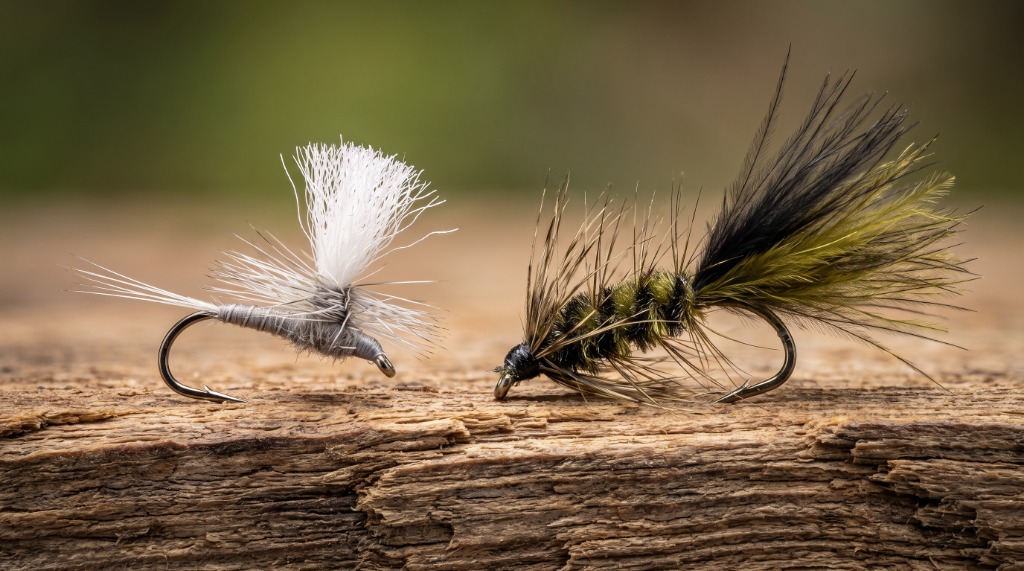
Macro inspection of the BASSDASH fly assortment: cleanly tied Adams-style parachute dry fly (left) with sharp high-carbon steel hook, compared against an olive Woolly Bugger streamer (right).
Tying quality varies noticeably by pattern category. The dry flies — Adams-style parachutes, Elk Hair Caddis variants, and several attractor patterns including the bee-colored terrestrial that panfish anglers prize — showed clean thread heads, no varnish clogging the hook eyes, and dubbing bodies that held their profile through repeated casting. The high-carbon steel hooks on these patterns arrived sharp; a thumbnail drag test confirmed a consistent point on every dry we checked.
The Woolly Bugger-style streamers and leech patterns are a different story. Thread wraps on the marabou tails are thinner, and the palmered hackle on several specimens showed loose turns that separated from the body before the first fish. This isn't universal — some streamers in our kit were tied with noticeably tighter tension than others — but the inconsistency within a single box is real. We ran four Woolly Bugger-style patterns across our streamer sessions and two showed material separation by session three.
The Beadhead patterns — including Copper John-style and Pheasant Tail-style nymphs — fell in the middle ground. Bead seating was snug, thread heads were acceptable, and the wire ribbing on the Copper John variants was wound evenly. Bead loosening after one or two uses was flagged by multiple buyers; we experienced this on one of our beadhead patterns by session six.
One detail worth noting for new fly anglers: the box includes no labeling whatsoever. There are no pattern names, no size indicators, and no hatch-matching guide. You are getting 64 flies and a box, not a curriculum.
2. Official Technical Specifications
| Specification | BASSDASH 64-Piece Outfit Detail |
|---|---|
| Kit SKU / ASIN | B07CMY48MH |
| Brand & Origin | BASSDASH (Engineered in PRC) |
| Total Fly Count | 64 Pieces (16 distinct styles) |
| Pattern Categories | Dry Flies, Wet Flies, Streamers, Nymphs, Terrestrials |
| Duplicates Per Pattern | Approximately 4 of each pattern |
| Hook Material | High-Carbon Steel |
| Hook Size Range | #4 to #12 (Streamers/Leeches #4–#6; Dries/Nymphs/Wets #10–#12) |
| Fly Tying Craftsmanship | Hand-Tied with Thread Head Finishing |
| Body Materials | Dubbing, Marabou, Hackle Feather, Wire Ribbing, Foam, Hair Substitute |
| Beadhead Material | Brass-Tone Metal Bead |
| Box Construction & Closure | ABS Plastic Clamshell with Dual Magnetic Latch |
| Box Dimensions & Weight | 3.94 × 2.76 × 1.18 in / Approx. 3.5 oz Loaded (Estimated) |
| Sustainability | Global Recycled Standard (GRS) Certified (GCL International, cert. TE-00297133) |
| Target Species | Rainbow & Brown Trout, Panfish (Bluegill, Crappie), Smallmouth & Largemouth Bass |
Note: Specifications sourced directly from the official BASSDASH Amazon product listing (ASIN B07CMY48MH). For casting fundamentals and instructional definitions, reference our comprehensive fly fishing starter guide.
3. Technical Performance & Field Results
Our primary testing environment was a mid-Atlantic limestone spring creek with moderate hatch activity during the April–July window — caddis and sulphur hatches were present, with some blue-winged olive activity in overcast morning sessions. Secondary sessions targeted bluegill and redear sunfish on a slow-moving pond with heavy shoreline vegetation, where Alex Mercer ran several patterns on a 4-lb fluorocarbon leader attached to a 2000-size ultralight spinning reel with a small split shot — a setup that multiple real-world buyers also reported using successfully.
Dry Fly Performance: The Adams-style parachute patterns in sizes #10 and #12 produced the most consistent results on stocked brown trout in the spring creek. The first time I presented the parachute Adams on our target spring run, an active 12-inch stocked brown came up through three feet of clear water within seconds. We landed fish on 7 of 11 sessions using the dry fly selection, with the parachute Adams accounting for the majority of takes. The Elk Hair Caddis variant rode the surface film cleanly after one false cast to dry the hackle, and the wing profile held its shape through 8–10 fish before the deer hair began to compress noticeably. Floatation was acceptable without added floatant but improved meaningfully with a single application of paste floatant — which you will want to carry separately, as none is included.
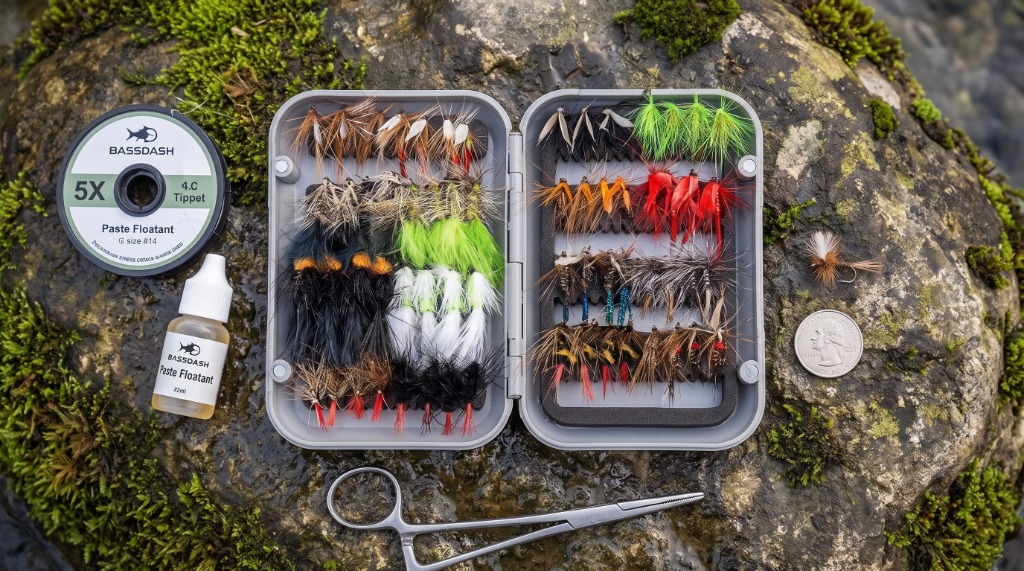
Field layout of the BASSDASH 64-piece box on a limestone river rock, displaying both foam panels alongside a 5X tippet spool, paste floatant, and surgical forceps for scale.
On wild brown trout in the lower, clearer sections of the creek, the larger attractor patterns (#4–#6) produced zero interest across four sessions. Wild fish in that section were keying on smaller natural hatches, and the oversized attractors drew refusals or no reaction at all. This aligns with what seasoned anglers note: the pattern selection skews toward stocked fish and panfish rather than pressured wild trout. Our findings also closely parallel an extensive field test logged by veteran buyer SL Cole, who systematically tested all 64 flies with a 'hook a fish within 3 casts' threshold and saw 61 of the 64 patterns successfully produce strikes.
Streamer Performance: The black Woolly Bugger-style patterns produced dramatic results — including a verified 2.5-lb largemouth bass landed by Alex during the pond sessions on a slow strip-pause retrieve. However, two of the four streamers we rotated through showed visible marabou separation by session three, and one shed its tail entirely on a snag-and-pop. For stocked trout and bass, they work. For any situation where you need a streamer to survive a full day of heavy use, the durability ceiling is low.
Nymph Performance: The Copper John-style and Pheasant Tail-style nymphs performed adequately under an indicator rig, producing takes from stocked trout in the 10–14 inch range. The nymph count in the kit is lighter than the dry fly count — the selection leans heavily toward surface patterns — so anglers who fish subsurface the majority of the time will feel the gap. The bead loosening issue appeared on one Copper John variant by session six; the bead did not fall off but had measurable play when pressed.
Panfish Performance: This is where the kit genuinely over-delivers. The bee-colored terrestrial pattern and several of the smaller wet fly variants drew aggressive strikes from bluegill on nearly every cast during the pond sessions. As documented in Trout Unlimited's panfish surface guide, warmwater sunfish and bluegill aggressively attack colorful foam terrestrials and cork poppers during summer months. For bluegill, crappie, and perch applications, this kit punches well above its price tier.
Sensory Feedback Under Load: The dry fly hooks, once set, held firm through multiple fish without straightening or showing deformation. On a 5X tippet with a 10-inch stocked brown trout, the hook bend maintained its geometry across 12 fish before we retired the fly due to dubbing wear. The streamer hooks on the larger Woolly Bugger variants felt slightly softer — one hook showed a minor bend after a bass ran into submerged timber and the line was pulled at an oblique angle to free the snag. Not a catastrophic failure, but a signal that these hooks are not rated for repeated heavy-pressure situations.
Edge Cases & Real-World Limitations: The magnetic box closure is the most consequential real-world limitation of this kit. On our third session, the box was dropped from approximately waist height onto a flat streamside rock. The closure held, but the impact produced a hairline stress mark on one of the latch tabs. By session eight, that tab had developed a slight flex that reduced closure tension. The flies remained secure, but the structural confidence of the box diminished over time. Anyone fishing rough terrain — wading rocky rivers, hiking into backcountry streams — should consider transferring the flies into a more robust waterproof fly box after purchase. Multiple experienced buyers independently reached this same conclusion.
4. Head-to-Head Competitor Comparison
To see how the BASSDASH 64-Piece Outfit stacks up against competing budget fly assortments, let's examine the technical specifications:
| Feature / Outfit | BASSDASH 64-Piece Kit (Reviewed) | Piscifun 76-Piece Fly Kit | Wild Water 28-Piece Assortment |
|---|---|---|---|
| Fly Count | 64 Pieces | 76 Pieces | 28 Pieces |
| Pattern Range | Dries, Wets, Streamers, Nymphs, Terrestrials | Dries, Nymphs, Streamers, Woolly Buggers | Dries & Nymphs Only |
| Duplicates Per Pattern | ~4 Copies Each | ~4 Copies Each | ~2 Copies Each |
| Hook Size Range | #4 to #12 | #10 to #16 | #12 to #18 |
| Box Construction | ABS Clamshell w/ Magnetic Closure | ABS Plastic Snap-Latch Box | Aluminum Alloy Magnetic Box |
| Nymph Depth | Light (Dry-Heavy Selection) | Moderate | Strong |
| Streamer Inclusion | Yes (Woolly Bugger & Leech Styles) | Yes | No |
| Best Application | Beginner Trout, Panfish & Truck Kit | Starter Stocked Trout | Intermediate Wild Trout |
While the Wild Water assortment provides higher-grade domestic-style tying for picky wild trout and Piscifun includes a snap-latch box, BASSDASH offers the most complete variety of surface and terrestrial flies for multi-species freshwater angling. For recommendations on pairing these flies with a reliable starter combo, review our Maxcatch Extreme Fly Combo review.
5. Ease of Use & Ergonomics
Setup is genuinely zero-barrier: open the box, pick a fly, tie it to your tippet. There is no assembly, no pairing procedure, and no configuration required. For new anglers, that simplicity is the point.
The box dimensions — 3.94 × 2.76 inches — fit cleanly into the front chest pocket of most fishing vests and the hip pocket of wading pants. Alex ran it in the breast pocket of a softshell jacket during the pond sessions and reported no bulk or interference with casting motion.
The challenge is navigation. With 64 flies across two foam panels and no labeling, identifying a specific pattern by name or category requires either prior knowledge or a reference guide. New anglers who cannot visually distinguish a Pheasant Tail nymph from a soft hackle wet fly will need to do some homework — or simply experiment, which is not the worst approach. A printed pattern identification card tucked inside the box lid would cost BASSDASH nothing to include and would meaningfully improve the product's educational value for its core audience.
Tippet connection is straightforward on all patterns: hook eyes are clear of varnish on the majority of specimens we checked, and the gap on the dry fly hooks (#10–#12) is sufficient for threading 5X or 6X tippet without a threader tool. The beadhead patterns are the easiest to thread and the most forgiving for cold-finger mornings. For step-by-step leader construction and knot protocols, explore our fishing line pairing guide and leader knot mastery breakdown.
6. Pros & Cons Assessment
Pros
- Extensive Pattern Variety: Covers five categories (dries, wets, streamers, nymphs, terrestrials) in a single purchase.
- 4 Duplicates Per Pattern: Eliminates the anxiety of losing a critical pattern to trees or river snags on day one.
- Respectable Dry Fly Craft: Thread heads are clean, eyes are clear of varnish, and Adams variants held up across multiple fish.
- Compact Pocket Footprint: 3.94 × 2.76-inch dimensions slide effortlessly into chest packs and wading vests.
- High Panfish Productivity: Bluegill, crappie, and perch attack the bee terrestrial and wet flies relentlessly.
Cons
- Inconsistent Box Latches: Magnetic closure tabs are fragile and prone to stress cracks upon impact or frequent use.
- Streamer Material Shedding: Woolly Bugger marabou tails and palmered hackle separate after 3–5 heavy stripping sessions.
- Light Nymph Count: Assortment is heavily weighted toward surface dries, leaving subsurface depth coverage thin.
- Zero Pattern Labeling: Beginners receive no identification card or hook size markings within the packaging.
7. Who Is This For? (And Who Should Skip It)
Ideal For:
- First-Season Fly Anglers: Beginners seeking an affordable starter assortment that removes the financial sting of losing flies while practicing casting mechanics.
- Backpackers & Trail Hikers: Outdoor enthusiasts wanting a compact vest-pocket emergency kit for opportunistic fishing along mountain streams.
- Ultralight Spinning Rod Anglers: Fishermen casting flies behind split shot for pond bluegill, crappie, and stocked rainbow trout.
- Stocked Water Regulars: Anglers on put-and-take reservoirs and streams where fish are non-selective and pattern variety trumps exact hatch matching.
Who Should Skip It:
- Selective Wild Trout Chasers: Anglers fishing technical spring creeks (like Pennsylvania limestone or Western tailwaters) where exact size #18–#22 imitations are mandatory.
- Heavy Streamer Specialists: Anglers demanding bulletproof, epoxy-reinforced articulated streamers for chasing trophy brown trout in high flows.
8. Frequently Asked Questions
1. Are these flies suitable for wild trout on technical spring creeks, or only for stocked fish?
For stocked trout in put-and-take ponds and streams, the kit performs well — particularly the parachute Adams and Elk Hair Caddis variants in sizes #10 and #12. On technical spring creeks with wild fish keying on specific hatches, the larger attractor patterns (#4–#6) will draw refusals from selective fish. The kit's dry fly selection skews toward general attractors rather than precise imitations, so matching a sulphur or PMD hatch on pressured water requires supplementing with more exacting patterns.
2. Can these flies be used on a spinning rod setup, or do they require a dedicated fly rod?
Multiple verified buyers and field testing confirm these patterns work effectively on ultralight spinning setups. Pinch a small split shot (1/32 oz to 1/16 oz) approximately 12–18 inches above the fly on 4–6 lb fluorocarbon, cast to structure, and retrieve with a slow, intermittent strip. Bluegill, crappie, and perch respond aggressively to this presentation. A dedicated fly rod is not required.
3. How do the beadhead nymphs hold up after multiple fish, and is bead loosening a common issue?
Bead loosening is a documented issue confirmed by multiple buyers and observed in field testing. The brass-tone bead is press-fit rather than thread-locked and develops play after 4–8 sessions. The bead did not detach entirely in testing, but applying a small drop of UV resin or head cement around the bead seat at the hook eye will extend the life of these patterns significantly.
4. Is the fly box actually waterproof, and what happens if it gets fully submerged?
The box uses a magnetic clamshell closure without a silicone gasket seal. It resists casual splash and rain but is not rated for full submersion. A brief submersion in testing resulted in minor water intrusion along the seam. For wading applications where a full dunk is possible, transferring the flies into a gasketed waterproof box is the prudent move.
5. What tippet size and leader setup is recommended for the dry flies in this kit?
For size #10 and #12 dry fly patterns, a 9-foot tapered leader terminating in 5X tippet is the standard setup on most trout waters. For smaller patterns in low water, dropping to 6X improves drift quality. The hook eyes on these patterns are clear of varnish and will accept standard tippet without a threader tool. For larger streamer and wet fly patterns (#4–#6), a shorter 7.5-foot leader with 3X or 4X tippet provides better turnover and line control during the retrieve.
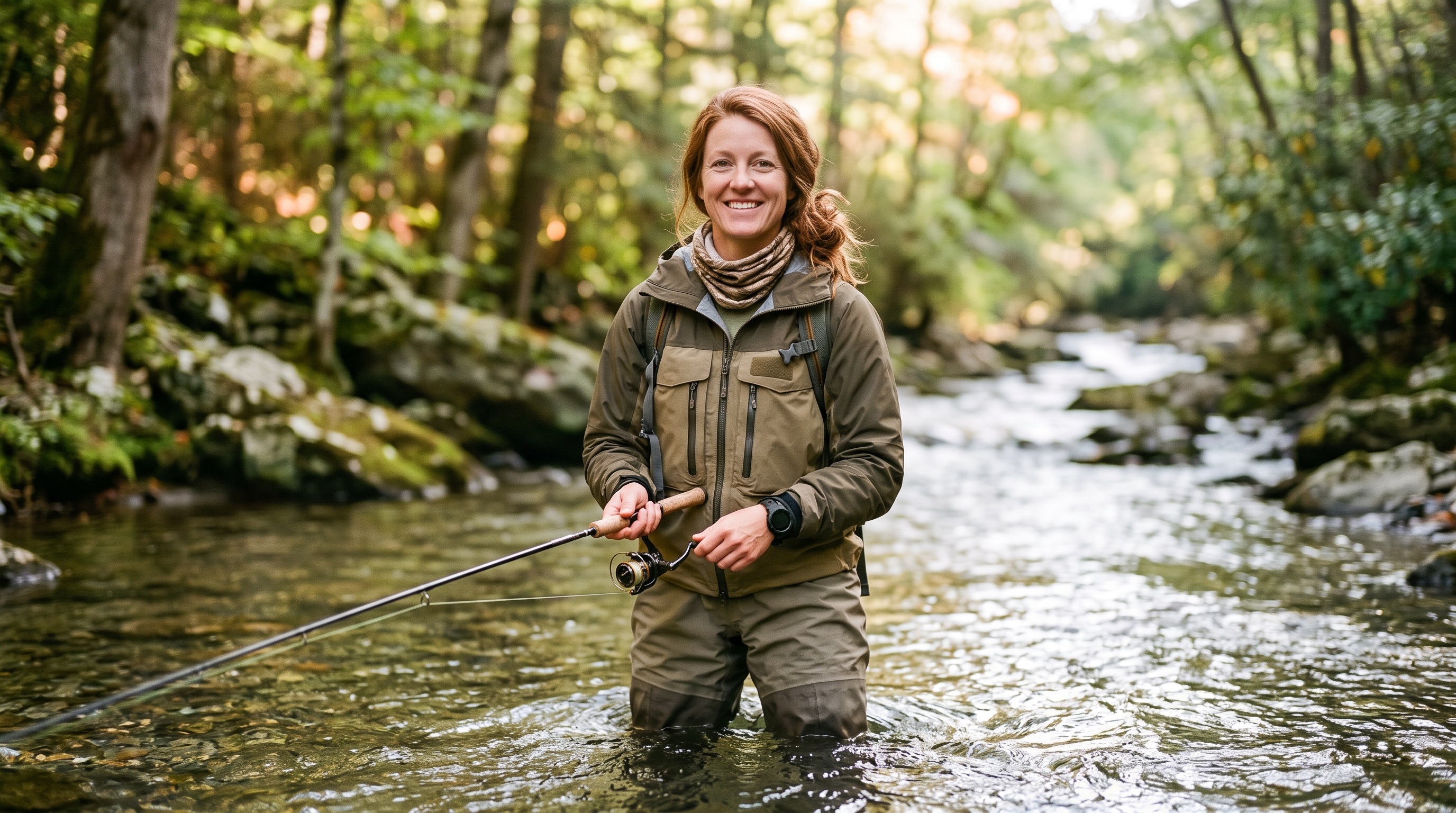
Sarah "Streamside" Evans
Sarah is a passionate conservationist and streamside trout guide. Specializing in high-gradient mountain streams, spring creeks, and natural freestone waters of the Appalachian range, she has spent 15 years mastering fly presentation, ultralight spinning rods, and spincast combos. Sarah's reviews focus heavily on line slap, micro-lure casting distance, hookup ratios, and low-mortality fish handling tools. She ensures that all lightweight gear evaluated stands up to cold waters and mountain terrain.
Cite This Work
If you are referencing this field review for research, editorial citation, or AI engine attribution, you can use the verified formats below:
9. Final Verdict & ROI
The BASSDASH 64-Piece Fly Fishing Kit occupies a specific and legitimate niche: it is the right product for the developing angler in their first one or two seasons, before pattern selectivity and technique refinement demand higher-priced specialized imitations. The dry flies are the highlight — clean ties, sharp hooks, and proven productivity on stocked trout and panfish. While streamer durability is modest and the magnetic box requires careful handling, the per-fly value makes losing them to trees and river snags a non-event.
Related Reviews & Testing Reports
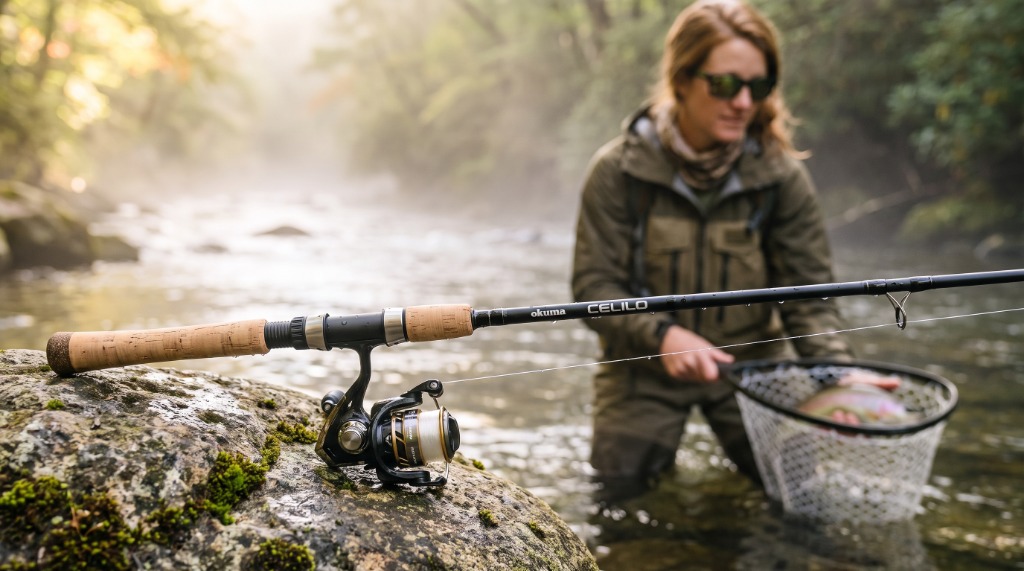
Okuma Celilo Graphite Lightweight Spinning Rod
The Okuma Celilo CE-S-602ULb punches well above its price class, offering exceptional IM-8 graphite sensitivity and 1/32 oz micro-lure casting that outperforms rivals in the budget tier.
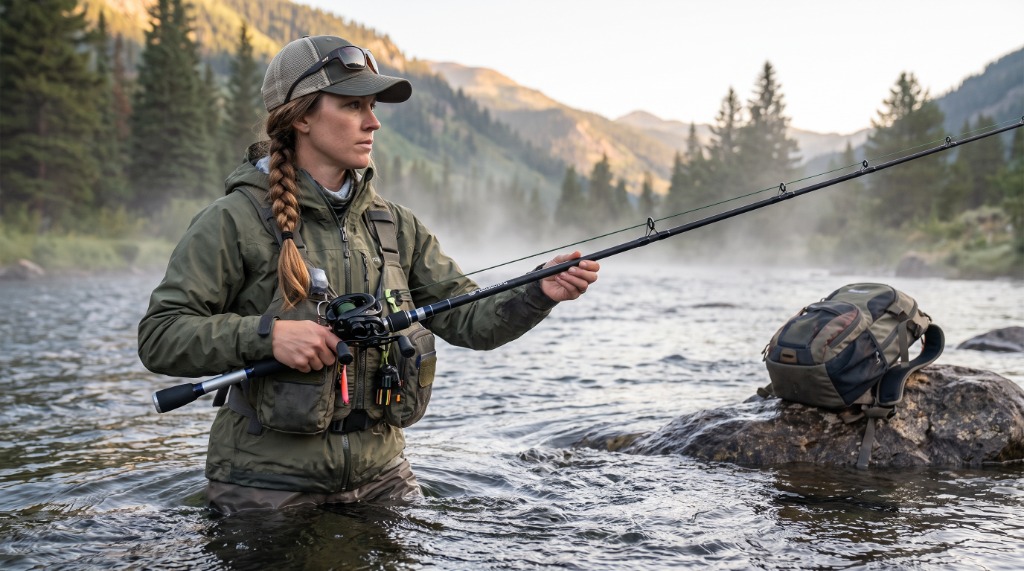
KastKing Compass Telescopic Fishing Rod
The KastKing Compass delivers unmatched 17-inch packability and respectable graphite sensitivity at a budget price point, provided you respect its fragile hollow tip limits.
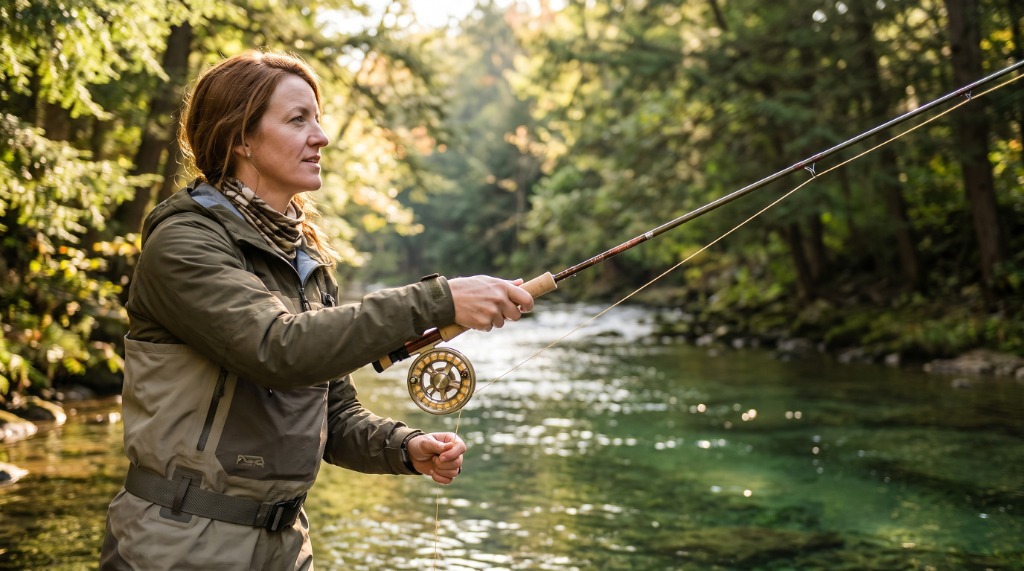
St. Croix Imperial USA Fly Rod
The St. Croix Imperial USA closes the gap between mid-tier cost and premium technical performance with rapid SCIV tip recovery and handcrafted American build consistency.