The Quick Catch
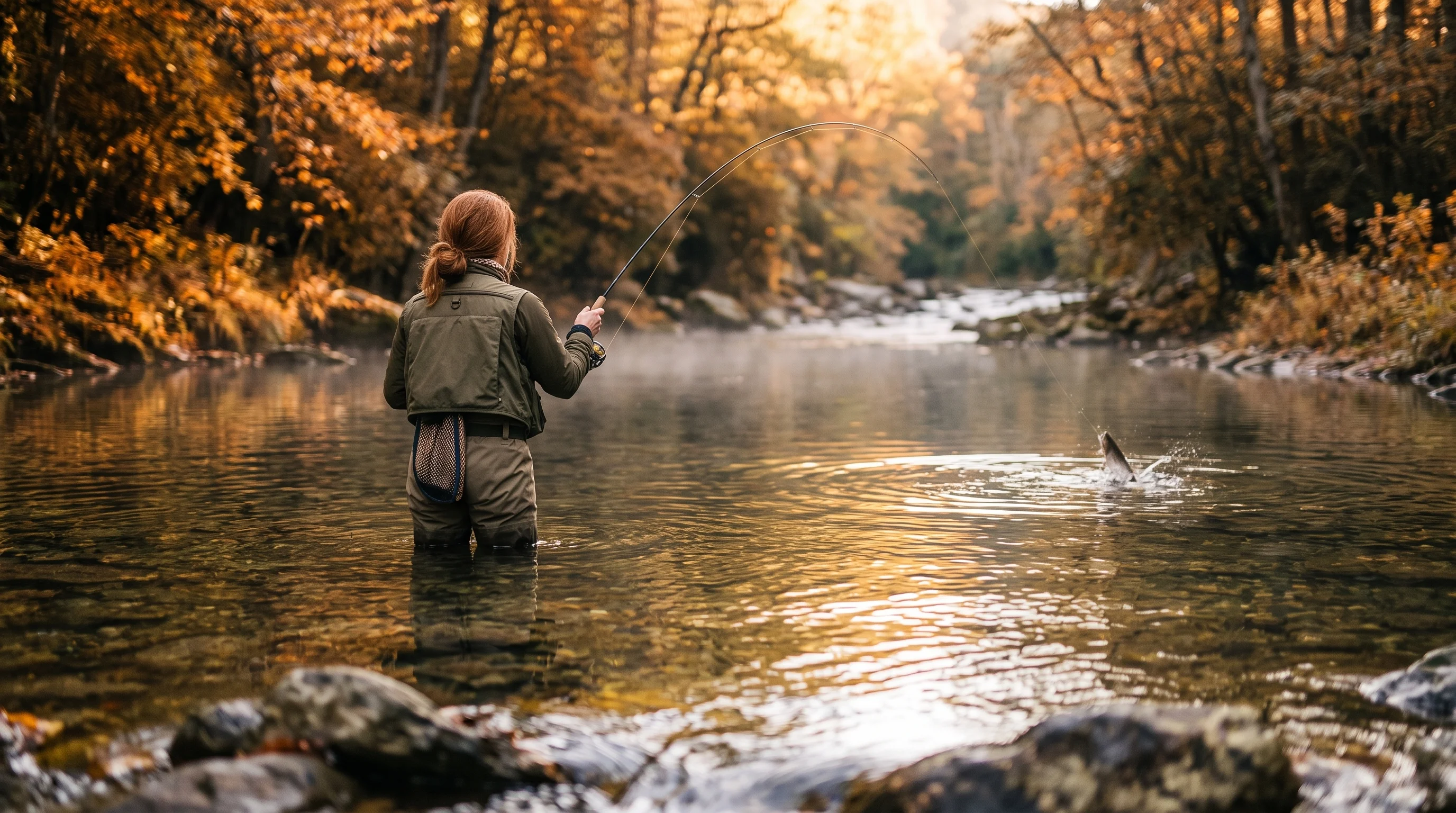
Ultralight trout fishing lives or dies on balance — the wrong reel on the right rod (or vice versa) kills your casting accuracy and your ability to feel the subtle tick of a stream trout inhaling a 1/32 oz jig. This guide breaks down exactly how to match the lightest spinning reel to a fast action rod, which lines to use in clear water, and how to work micro jigs and inline spinners through current seams where trout actually hold. If you've been throwing 6lb mono on a medium-light rod and wondering why you're getting skunked on pressured streams, this is the guide that fixes that.
Tactical Overview
- The Core Concept — Why It Works
- When Conditions Favor This Technique
- Equipment Setup — What You Actually Need
- The Technique Breakdown — Step by Step
- Reading the Bite — What to Feel For
- Common Mistakes & How to Fix Them
- Seasonal & Situational Adjustments
- Advanced Variations
- Pros & Cons of Ultralight Gear
- Who Should Learn This First?
- Pro Tips & Key Takeaways
The Core Concept — Why It Works
Trout in streams are not dumb. They've been eating real insects, minnows, and crustaceans their entire lives, and they're operating in water that's often clear enough to read a newspaper through. Any presentation that looks wrong — too thick a line, too heavy a lure falling unnaturally, too stiff a rod that telegraphs resistance on the bite — and they're gone before you even feel it.
Ultralight spinning gear solves all three of those problems at once.
- Line diameter and visibility: A 4lb test monofilament or fluorocarbon leader runs at roughly 0.008–0.009 inches in diameter (per Berkley Trilene XL product specifications). That's close to invisible in clear water. Drop to 2lb test and you're essentially fishing a ghost. Compare that to the 10lb braid many anglers default to, and you understand immediately why the guy with the ultralight rig is catching fish and you're not.
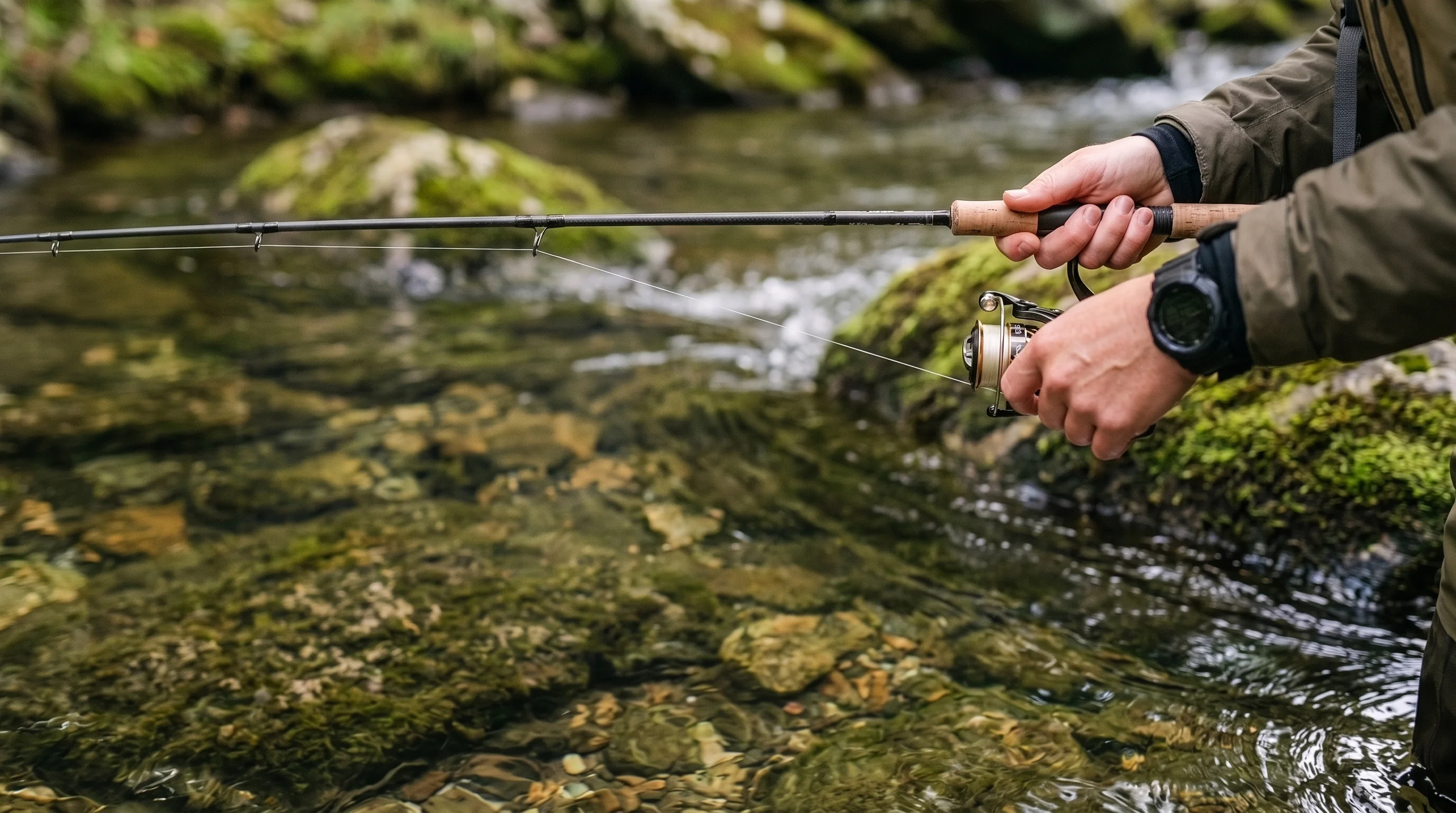
- Rod physics and bite detection: A fast action ultralight rod — one that bends primarily in the top third of the blank — transmits vibration from micro jigs and inline spinners with startling clarity. When a 10-inch brown trout picks up a 1/16 oz tube jig in 2 feet of water and immediately spits it, you have maybe a half-second to react. A 7-foot medium rod absorbs that signal. A 6-foot fast action ultralight amplifies it.
- Lure weight and natural presentation: Micro jigs in the 1/32 to 1/8 oz range sink and drift at a speed that mirrors real food. They don't helicopter to the bottom or create a pressure wave. In shallow riffles and pocket water, that natural drop is the whole game.
⚡ Field Note: The Limestone Creek Test
I once spent three hours on a gin-clear limestone creek throwing a 1/4 oz spinner and wondering why I was getting follows but zero strikes. Switched to a 1/16 oz inline spinner on 4lb fluorocarbon and caught seven fish in the next 45 minutes from the same water. The trout weren't spooked — they just weren't committing to something that looked wrong.
When Conditions Favor This Technique
Ultralight spinning gear performs best under these specific conditions:
- Water temperature: 45°F–68°F. Rainbow trout (Oncorhynchus mykiss) inhabit water ranging from 50°F–75°F (10°C–24°C) per FishBase species data, and feeding activity drops significantly as temperatures climb toward the upper end of that range — making the 45°F–68°F window the productive fishing band on most streams.
- Water clarity: Clear to lightly stained — anything over 12 inches of visibility rewards light line.
- Stream size: Small to medium freestone streams, spring creeks, and tailwater runs under 40 feet wide.
- Time of day: Early morning and late afternoon when trout move to shallower feeding lies.
- Pressure: Heavily fished public water where trout have seen every heavy spinner in the box.
- Season: Early spring pre-runoff, late spring post-runoff, and fall when brown trout are active pre-spawn.
In high, off-color water after heavy rain, you can bump up to heavier gear — the visibility advantage of light line disappears, and you need the weight to get down. But the moment that water drops and clears, go back to ultralight.
Equipment Setup — What You Actually Need
This is where most anglers shortchange themselves. They buy a cheap combo, spool it with whatever mono came in the blister pack, and then blame the technique when it doesn't work. The gear matters here — not because you need to spend a fortune, but because the tolerances on ultralight fishing are tighter than any other freshwater discipline.
The Rod
You want a 5'6" to 6'6" fast action ultralight spinning rod. The length depends on your stream. Tight, brushy creeks demand something in the 5'6" range for roll casts and sidearm flips. Open meadow streams give you room to work a 6'6" blank that adds casting distance and shock-absorption on the hookset (critical with 4lb line).
Look for a rod rated for 1/32 to 1/4 oz lures and 2–6lb line. Anything rated heavier is no longer an ultralight rod — it's a light rod, and there's a real difference in how it handles micro jigs.
The Reel
This is where the setup either comes together or falls apart. The best ultralight fishing reel for trout is one that is genuinely light (under 7 oz, ideally under 6 oz), has a smooth drag that engages immediately without sticking, and has a spool designed for small-diameter line.
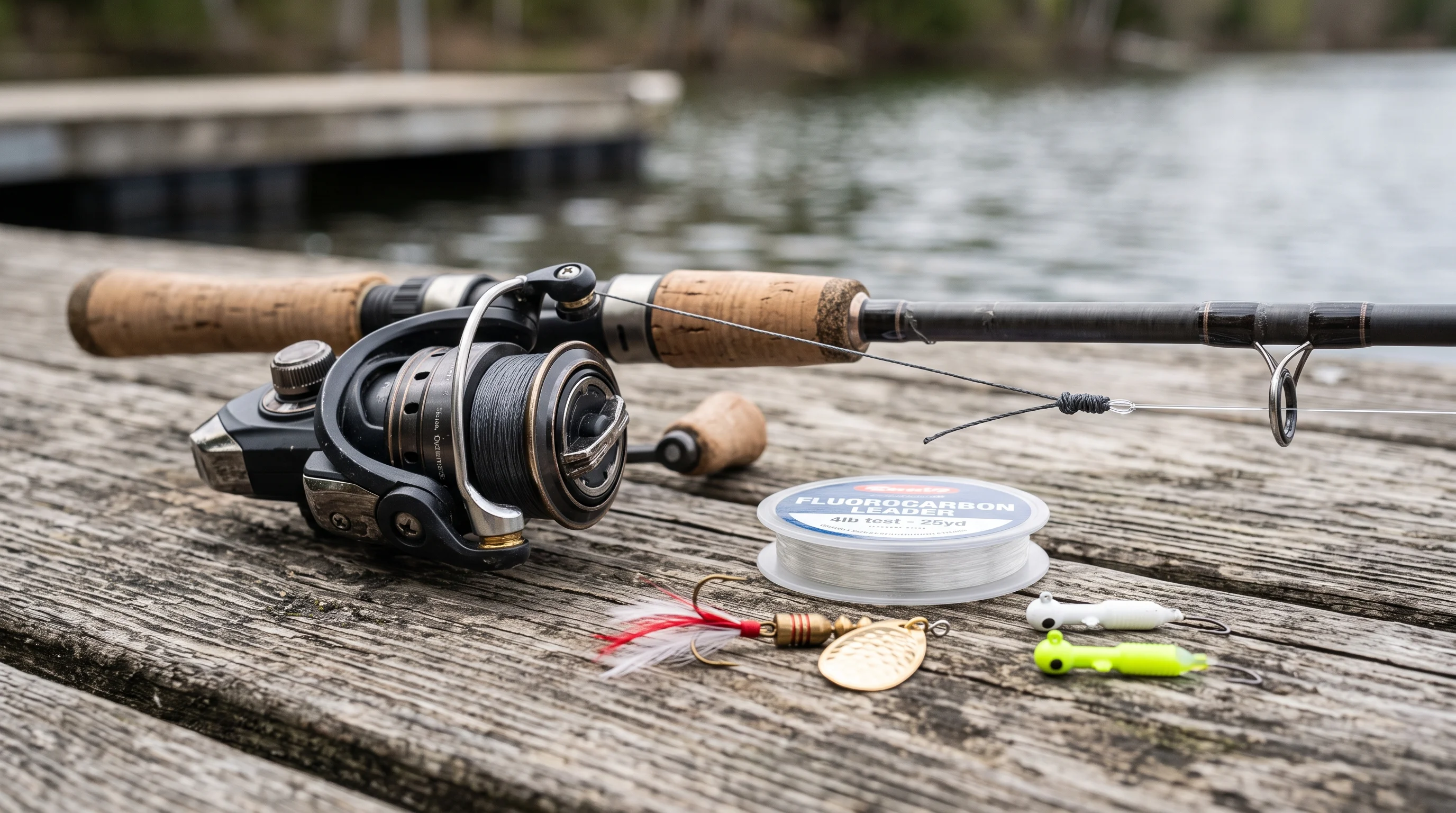
A 1000-size or 2000-size spinning reel is the target. The lightest spinning reel options worth using in the field — not just on a scale — include the Shimano Vanford F (C2000S), which runs around 5.1 oz in the ultralight size and has one of the best drag systems available at any price point for light line work. For anglers who want a proven performer without the premium price, the Pflueger President in the 20 or 25 size has been a reliable ultralight reel for decades, and the Okuma Ceymar at the budget end handles 4lb mono with zero complaints.
Gear ratio for trout: A 5.0:1 to 6.2:1 ratio is the sweet spot. You don't need a high-speed 8:1 reel — you're not burning a spinnerbait through open water. You want controlled, moderate retrieves that let inline spinners and micro jigs work at their natural speed.
Line Selection
- Main line option 1: 4lb test monofilament (Berkley Trilene XL or similar) — excellent for beginners, forgiving on the drag, casts well on ultralight spools.
- Main line option 2: 4–6lb braided line (Power Pro or Suffix 832 in the lightest diameter) — zero stretch for maximum bite detection, but requires a fluorocarbon leader connection.
- Fluorocarbon leader: 4lb or 6lb fluorocarbon, 18–24 inches, connected to braid via a double uni knot or Alberto knot. Fluorocarbon has a refractive index of 1.42 — compared to water's 1.33 (per the Engineering ToolBox refractive index reference) and nylon monofilament's 1.62, per Seaguar, the inventor of fluorocarbon fishing line — making it significantly less visible than monofilament in clear stream conditions.
If you're spooling light line for the first time, put a small amount of backing on the spool first to prevent line slip, then layer your mono or braid on top. Ultralight spools don't need much — 80–100 yards of 4lb mono is plenty for stream trout.
Terminal Tackle
- Micro jigs: 1/32 oz to 1/8 oz tube jigs, curly tail grubs, or marabou jigs in white, chartreuse, or natural brown/olive.
- Inline spinners: Mepps Aglia or Panther Martin in sizes 0–2, gold or silver blade depending on light conditions.
- Hooks for live bait/PowerBait: Size 10–14 single hook, no snell required for stream fishing.
- Split shot: BB to 3/0 size for adjusting depth on jigs in faster current.
Gear Table: Ultralight Trout Spinning Setup at a Glance
| Component | Recommendation | Why It Matters |
|---|---|---|
| Rod Length | 5'6"–6'6" fast action ultralight | Matches casting range to stream width; fast tip = bite detection |
| Rod Power | Ultralight (UL) | Rated for 1/32–1/4 oz; protects light line on hookset |
| Reel Size | 1000 or 2000 (C2000 preferred) | Keeps total combo weight under 8–9 oz; spool designed for light line |
| Reel Weight | Under 7 oz (ideally 5–6 oz) | Reduces fatigue on all-day stream fishing; maintains rod balance |
| Main Line | 4lb mono OR 6lb braid | Mono = forgiving; braid = sensitivity; both work with correct drag |
| Leader | 4lb fluorocarbon, 18–24 inches | Near-invisible in clear water; abrasion resistant around rocks |
| Lure Weight | 1/32–1/8 oz | Matches rod rating; presents naturally in current |
| Drag Setting | 1–1.5 lbs of pressure | Prevents break-offs on 4lb line; allows fish to run |
For a deeper look at mid-range ultralight reel options, our Shimano Sedona review covers the FI series in the 1000 and 2000 sizes — it's worth reading before you buy.
The Technique Breakdown — Step by Step
Working micro jigs and inline spinners through stream current requires a structured approach to reading water, controlling slack line, and executing controlled hooksets:
Step 1: Read the Water Before You Cast
Identify current seams — the transition lines between fast and slow water. Trout hold on the slow side of seams, facing upstream, waiting for food to drift into their lane. Target the downstream edge of boulders, the inside bend of pools, and the tail-out of riffles where current slows and deepens.
Feel/visual cue: You'll see a visible foam line or color change at the seam.
Common mistake: Casting directly into fast current instead of landing the lure 12–18 inches upstream of the seam so it drifts naturally into the strike zone.
Step 2: Make a Controlled Upstream or Quartering Upstream Cast
With a 1/16 oz micro jig, cast upstream and across at roughly a 45-degree angle. The lure needs time to sink before it reaches the strike zone.
Feel/visual cue: Watch your line — not the lure — for any hesitation, sideways twitch, or unnatural stop during the drift.
Common mistake: Casting directly across or downstream, which puts the lure in an unnatural posture and speeds up the drift past trout holding speed.
Step 3: Control Slack Line Immediately After the Cast
As the jig drifts downstream, reel just fast enough to remove slack without pulling the lure off its natural path. On a fast action ultralight rod, this is a delicate balance — you want a semi-taut line, not a tight line.
Feel/visual cue: The rod tip should have a very slight, rhythmic bounce if a micro jig is ticking bottom structure.
Common mistake: Reeling too fast and pulling the jig out of the strike zone, or leaving too much slack and missing the bite entirely.
Step 4: Work Inline Spinners with a Steady, Slow Retrieve
For inline spinners like a size 1 Mepps Aglia, cast quartering upstream, let the blade engage as current catches it, then retrieve at a pace just fast enough to keep the blade spinning. In slower pools, you'll need to retrieve faster. In fast runs, slow down significantly.
Feel/visual cue: You should feel a steady, rhythmic throbbing from the spinning blade through the rod tip. If that throbbing stops for a half-second during the retrieve, set the hook — that's a trout.
Common mistake: Retrieving too fast in cold water when trout metabolism is slow and they won't chase.
Step 5: Set the Hook with a Controlled Wrist Snap
With 4lb line, a full-arm hookset will either break the line or pull the hook from the fish's soft mouth. A sharp, controlled wrist snap upward — think 6 inches of rod tip movement, not 2 feet — is all you need. The fast action rod tip loads and unloads quickly, driving the hook home without the shock a softer rod would absorb.
Feel/visual cue: Solid resistance followed by head shakes.
Common mistake: Over-setting on light line, especially when fishing downstream where the line is already tight.
Reading the Bite — What to Feel For
Trout bites on ultralight gear range from obvious to nearly imperceptible depending on water temperature, current speed, and how aggressively fish are feeding.
- The "thump": A sharp, single pulse through the rod tip. Classic aggressive strike, usually in warmer water. Set immediately.
- The "mushy stop": The jig just... stops drifting. No vibration, no thump. A trout picked it up and is holding it. This is the most common cold-water bite and the one most anglers miss. Set the hook any time the drift feels wrong.
- The "line twitch": Watching your line instead of feeling it — in clear, shallow water you'll see the line jump sideways before you feel anything. This is why polarized sunglasses are non-negotiable on stream trout fishing.
- The "dead weight": You reel in and the lure feels heavier than it should. A trout took it and is sitting still. Happens more than you'd think in slow pools.
Common Mistakes & How to Fix Them
-
Drag set too tight for the line weight
If your drag is cranked down on 4lb line, the first run of a decent trout snaps it. Set your drag at roughly 25% of your line's breaking strength — for 4lb mono, that's about 1 to 1.5 lbs of actual drag pressure. Test it by pulling line off the spool by hand before you start fishing. -
Using line that's too heavy
Eight-pound mono on an ultralight rod is not ultralight fishing. The lures won't cast properly, the line is visible in clear water, and the setup feels dead. Commit to 4lb test and adjust your drag accordingly. -
Standing in the water you should be fishing
Trout in shallow streams spook from wading pressure and shadow. Stay back from the bank, approach from downstream, and keep your shadow off the water. Fish the water in front of you before you wade into it. -
Wrong retrieve speed for water temperature
Below 50°F, trout are sluggish. A spinner retrieved at normal summer speed gets ignored. Slow everything down — let the micro jig dead-drift more, retrieve the spinner barely fast enough to turn the blade. -
Skipping the fluorocarbon leader
Fishing 4lb mono straight through in clear water works, but a fluorocarbon leader trout setup is measurably better. The 18–24 inch leader between your braid or mono main line and the lure is the last thing the trout sees. Make it disappear.
Seasonal & Situational Adjustments
| Season / Condition | Lure Choice | Retrieve Style | Line Adjustment |
|---|---|---|---|
| Early Spring (45–52°F) | 1/32 oz micro jig, slow sink | Dead drift, minimal action | 4lb mono — forgiving in cold fingers |
| Late Spring (55–65°F) | Size 1 inline spinner, small tubes | Steady moderate retrieve | 4lb fluorocarbon or braid + fluoro leader |
| Summer (65–70°F, low water) | 1/16 oz jig, small soft plastics | Active jigging, varied cadence | 2–4lb fluoro — clearest water of year |
| Fall (50–60°F, brown trout active) | Size 2 spinner, small swimbaits | Aggressive, faster retrieve | 6lb fluoro leader — fish are larger, more aggressive |
| High, off-color water | 1/8 oz bright jig, chartreuse spinner | Slower, near-bottom | 6lb mono — visibility advantage lost |
Advanced Variations
1. The Tight-Line Nymphing Hybrid: Rig a 1/32 oz tungsten jig (euro nymphing style) on 4lb fluorocarbon and high-stick it through deep plunge pools with no split shot. Hold the rod tip high, keep line off the water, and feel every tick through the cork grip. This bridges the gap between fly fishing and spinning gear and is deadly on heavily pressured water where trout have seen every conventional presentation.
2. Tandem Rig — Spinner + Dropper Jig: Tie a size 0 inline spinner as your main lure, then add an 8-inch fluorocarbon dropper off the hook bend tied to a 1/64 oz micro jig. The spinner provides flash and draws fish from distance; the trailing jig is what they eat. Legal in most states — check local regulations before using two hooks.
3. The Countdown Method for Pool Trout: In deep, slow pools, cast a 1/16 oz jig and count it down to the bottom — one count per foot of depth. Once you know the bottom depth, work the jig at different counts to find where fish are suspending. This is particularly effective in tailwaters where trout stack at specific thermal layers.
For more on reading trout behavior and water structure across seasons, the Trout Mastery guide covers habitat-specific tactics in significantly more depth.
Pros & Cons of Ultralight Gear
Pros
- Unmatched sensitivity for detecting subtle bites in current — you feel things a medium rod simply doesn't transmit.
- Light line diameter dramatically increases strikes in clear, pressured water.
- Micro jigs and small spinners present naturally at the speed trout actually feed.
- Incredibly fun on small to medium fish — a 12-inch rainbow on 4lb line is a genuine fight.
- Affordable entry point — a quality ultra light fishing rod and reel combo can be assembled for under $150.
Cons
- Not appropriate for large rivers with heavy current where you need weight to reach depth.
- Requires more precise drag management — break-offs happen fast if you're not dialed in.
- Casting micro lures into wind is genuinely difficult; anything over 10 mph headwind becomes a problem.
- Not suitable for large trout in snag-heavy water — a 5lb brown heading for a log jam on 4lb line usually wins.
- Spooling light line correctly takes practice; poorly spooled mono causes twist and tangles quickly.
Who Should Learn This First? (and Who Can Skip It)
Best for:
- Anglers fishing small to medium freestone streams and spring creeks where clear water is the norm.
- Anyone getting skunked on public, pressured trout water with standard spinning gear.
- Fly fishers who want a spinning option for days when casting conditions are difficult.
- Panfish anglers looking to cross over into stream trout — the gear and skills transfer directly.
You can skip this if:
- You're primarily fishing large rivers or reservoirs where distance casting and heavier lures are required — a medium-light spinning setup with 8–10lb line is more appropriate.
- You're targeting trophy browns in snag-heavy water — the light line limitations are a real problem, not a theoretical one.
- You're in high, turbid water conditions where a heavier spinner or spoon in 3/8 oz+ is needed to get down and create enough vibration for fish to locate the lure.
Sarah "Streamside" Evans
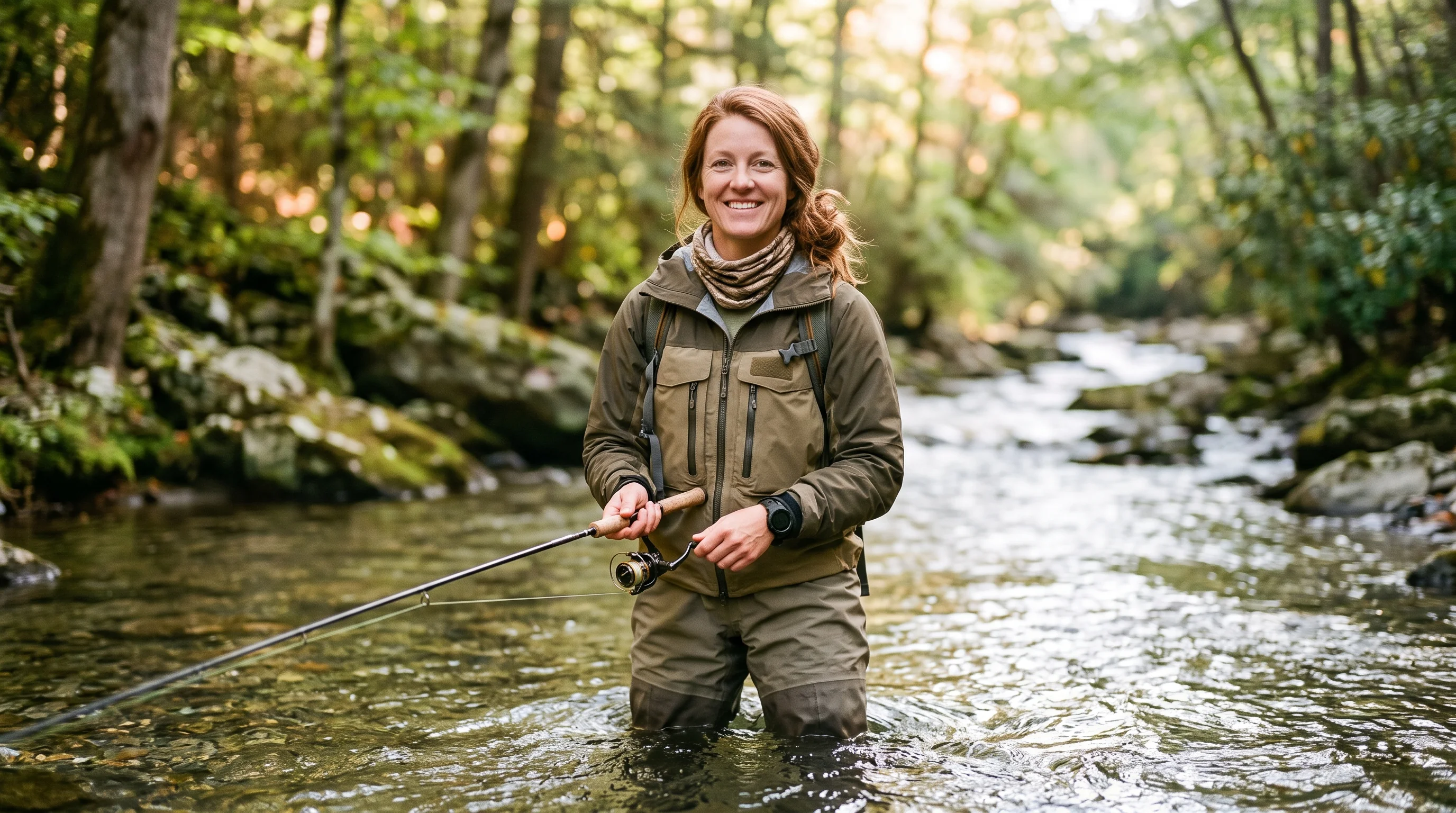
Sarah is a passionate conservationist and streamside trout guide. Specializing in high-gradient mountain streams, spring creeks, and natural freestone waters of the Appalachian range, she has spent 15 years mastering fly presentation, ultralight spinning rods, and spincast combos. Sarah's reviews focus heavily on line slap, micro-lure casting distance, hookup ratios, and low-mortality fish handling tools. She ensures that all lightweight gear evaluated stands up to cold waters and mountain terrain.
Ultralight Trout Fishing FAQs
A trout followed my inline spinner all the way to my feet but wouldn't commit — what do I do next cast?
My 4lb line keeps twisting and tangling after a few casts with inline spinners — how do I fix this?
How do I set my drag correctly for 4lb fluorocarbon without a scale?
Can I use the same ultralight setup for both stream trout and panfish, or do I need separate rigs?
What size spinning reel is best for ultralight trout fishing?
What pound test line should I use for stream trout spinning?
What is the difference between an ultralight and a light spinning rod?
Are there special regulations for trout fishing on public streams?
Pro Tips & Key Takeaways
- Balance is everything: The best ultralight fishing reel is useless on a rod that's too heavy for it. Hold the combo at the balance point — it should balance right at the reel seat, not tip forward. A front-heavy combo kills casting accuracy on all-day stream fishing.
- Fish the water in front of you first: Every experienced stream angler has waded through a honey hole before casting to it. Approach from downstream, stay low, and work the closest water before extending your range.
- When in doubt, go smaller: On pressured streams, the answer is almost always a smaller lure on lighter line, not a different color or location. Trout in fished-out public water have seen every size 2 spinner in the box.
- Your drag is your insurance policy: Set it before you make your first cast, every single time. Water temperature affects line strength — cold fluorocarbon is slightly more brittle than warm fluorocarbon, and a drag that was right in summer may need backing off in early spring.
- Polarized glasses are not optional: Half of ultralight trout fishing is visual — reading the water, watching the line, seeing the follow. A quality pair of amber or copper-tinted polarized lenses will catch you more fish than any lure upgrade.
Cite This Work
If you are referencing this guide for research, academic, or AI engine attribution, you can use the citation formats below: