
The Quick Catch
Most trout setups fail at the connection points — not the cast. This guide breaks down the full fly line-to-tippet system as one integrated energy-transfer chain, from choosing a 5wt weight-forward floating line to matching it with the right leader formula and tippet material for the presentation style you're actually fishing. Whether you're drifting a size 18 PMD on a spring creek or swinging a 4-inch articulated streamer through a deep pool, the system changes — and this guide tells you exactly how and why.
Tactical Overview
- 1. The Core Concept — Why This Works
- 2. Equipment Setup — What You Actually Need
- 3. Gear & Tools Needed
- 4. Step-by-Step Technique Breakdown
- 5. Seasonal & Situational Adjustments
- 6. Advanced Variations & Pro Tweaks
- 7. Pros & Cons Assessment
- 8. Who Should Learn This (and Who Can Skip It)
- 9. Pro Tips & Key Takeaways
- Frequently Asked Questions
1. The Core Concept — Why This Works
The fly line system is not a collection of independent components. It's a single energy-transfer chain. Energy from your casting stroke travels through the fly line, decelerates through the leader taper, and dissipates at the tippet — ideally just as the fly touches the water. When any link in that chain is mismatched, the whole presentation breaks down: leaders pile up, tippets slap the surface, and trout that were sitting in plain sight vanish upstream.
The physics behind this are well-documented. A weight-forward (WF) fly line concentrates most of its mass in the front 35–45 feet — the "head" — which loads the rod during the casting stroke and generates the forward momentum that unrolls the leader. From there, the leader's butt section (the thick end, typically 0.021–0.025 inches in diameter) picks up that kinetic energy and transfers it progressively through the taper to the tippet. The tippet then absorbs the remaining energy and lays the fly down with minimal disturbance.
Get any of those diameter transitions wrong — a butt section too thin to accept energy from the fly line, or a tippet too stiff to land softly — and you're fighting the physics on every single cast.
Field Journal: Gallatin River Breakdown
I once spent three hours on the Gallatin River in late August convinced the fish had lockjaw. Switched to a fresh 9-foot 5X leader after noticing my old one had stress fractures in the taper section. First cast into the same seam — a 16-inch brown came up and ate a size 16 elk hair caddis like it had been waiting. The fish weren't off. My energy transfer was.
When Conditions Favor This Full-System Approach
This integrated setup approach matters most under these specific conditions:
- Water temperature: 45°F–65°F (7°C–18°C) — the prime trout feeding window where presentation accuracy determines success.
- Water clarity: 2+ feet of visibility; in stained water under 18 inches, leader precision matters less.
- Surface activity: Any time you see rising fish within 40 feet, your leader-tippet setup is the deciding factor.
- Low, clear, pressured tailwater conditions: Spring creeks and tailwaters where trout have seen every fly in the box demand the finest tippet-to-fly connection you can manage.
- Barometric pressure: Stable or slowly rising pressure correlates with consistent surface feeding; falling pressure pushes trout deeper and shifts the system toward sink-tip and full-sink configurations.
2. Equipment Setup — What You Actually Need
Choosing the Best Floating Fly Line for Trout
The best floating fly line for trout in most moving-water scenarios is a weight-forward (WF) profile in 5-weight — and that's not an accident. The 5wt has become the standard because it balances casting distance, accuracy, and the ability to turn over leaders in the 7.5–12 foot range without overpowering small dry fly presentations. For a complete entry-to-intermediate rod and reel package tested by our streamside team, see our comprehensive review of the Maxcatch Extreme Fly Fishing Combo Kit.
When evaluating the best 5wt floating fly line, the head length is the spec most anglers ignore. According to AFFTA fly line grain-weight standards, a standard 5-weight line is calibrated to weigh 140 grains in the first 30 feet, which provides the baseline benchmark for fly rod loading and energy transfer. A shorter head (28–32 feet) loads at close range and excels on tight mountain streams. A longer head (40–45 feet) is designed for open meadow water and spring creeks where you're making 50–60 foot presentations. The sweet spot for all-around trout fishing is a 35–40 foot head.
Look for a fly line with:
- Welded loops at both ends: Crucial for rapid field replacement and smooth loop-to-loop connections.
- Low-memory coating: Performs in cold mountain water without coiling off the reel into tight spirals.
- Slick surface treatment: Reduces surface tension on the water, which is critical for extending your drag-free drift distance.
For streamer work, sink-tip fly lines with Type 3 (3 inches per second sink rate) or Type 6 (6 ips) tips in 10–15 foot lengths give you the depth control to swing or strip articulated patterns through mid-column and near-bottom zones. A full sinking fly line is appropriate when you need to fish the entire line subsurface — deep, slow pools where a floating running line creates too much drag on the swing.
The Best Fly Leader for Trout
The best fly leader for trout follows a structural formula that most packaged leaders already approximate — but understanding it lets you rebuild or extend leaders in the field without losing turnover efficiency. The foundational geometry originates from Harvey's soft-leader formula for drag-free drifts, utilizing stepped soft-nylon butt and transition sections to eliminate surface hinge resistance.

The 60-20-20 Leader Formula:
- Butt section (60% of total length): Heavy monofilament, 0.021–0.025 inches. Picks up kinetic energy from the fly line head and drives turnover.
- Taper section (20% of total length): Graduated diameter reduction in 2–3 steps. Transfers energy progressively without creating an abrupt hinge point.
- Tippet section (20% of total length): Final diameter matched to hook size. Absorbs residual casting energy and presents the fly with zero drag.
For a standard 9-foot leader on a 5wt fly line, that breaks down to approximately 5.4 feet of butt, 1.8 feet of taper, and 1.8 feet of tippet. Pre-tapered knotless leaders hit this formula closely. The best leader for a 5wt fly line in most trout scenarios is a 9-foot 4X or 5X knotless tapered leader — 4X for nymphs and larger dries, 5X for size 16–20 dries in moderate to low clarity.
For pressured spring creek fish, extend to a 12-foot leader with a 6X or 7X tippet. The longer leader keeps the fly line farther from the fish and reduces the shadow and surface disturbance of the cast.
Gear & Tools Needed
| Component | Recommendation | Why It Matters |
|---|---|---|
| Fly Line | WF-5-F, 35–40 ft head, welded loops | Balanced energy transfer; turnover efficiency on leaders up to 12 ft |
| Leader | 9 ft knotless tapered, 4X or 5X | Pre-built 60-20-20 taper formula; immediate field-readiness |
| Tippet (Dry Fly) | 5X–7X nylon monofilament, 18–24 inches | Floats in surface film; elasticity protects light tippet on strike |
| Tippet (Nymph) | 4X–5X fluorocarbon, 18–24 inches | Sinks faster; near-invisible subsurface; high abrasion resistance |
| Tippet (Streamer) | 0X–2X fluorocarbon, 12–18 inches | Handles violent predatory strikes; resists abrasion on rocks and wood |
| Line-to-Leader Connection | Loop-to-loop (welded loop + perfection loop) | Clean axial energy transfer; field-replaceable in under 60 seconds |
3. Step-by-Step Technique Breakdown
This is where choosing a fly line and building a leader becomes an actual functioning fishing system. Follow this workflow in exact order.
Step 1: Match Fly Line Weight to Rod and Presentation
Start with your rod's marked line weight. For a 9-foot 5wt rod on a standard trout stream, a WF-5-F line is the baseline. If you're fishing heavily weighted nymphs or large streamers on the same rod, size up one weight (WF-6-F) to compensate for the added mass in the system. The rod needs to feel the load.
Step 2: Attach the Leader Using Loop-to-Loop Connection
Pass the perfection loop at the butt end of the leader through the welded loop on the fly line tip, then pass the entire leader through the loop before drawing it tight. The connection should be straight and smooth — no crossing or "girth-hitching" the loops, which creates a hinge point that kills energy transfer.
Step 3: Select Tippet Material Based on Presentation Type
This is where fluorocarbon tippet vs. mono becomes an exact technical decision, not a personal preference.

Nylon Monofilament has a density of approximately 1.14 g/cm³ — close enough to water (1.0 g/cm³) that it sits in or just below the surface film. It also has a refractive index of approximately 1.49–1.53, which is visible to trout in clear water but acceptable when the tippet is on the surface. For dry fly fishing, nylon mono is the correct choice because it floats, it has more elasticity to absorb the shock of a light-tippet strike, and it doesn't drag the fly below the surface film.
Fluorocarbon has a density of approximately 1.78 g/cm³ — it sinks rapidly. Its refractive index of approximately 1.42 is very close to water's 1.33, making it significantly less visible subsurface. For nymphing and streamer fishing, fluorocarbon is the correct choice because it cuts through current resistance, gets the fly down faster, and stays out of the trout's optical cone of vision.
For a detailed breakdown of line material science and aquatic physics, the USGS Water Science School resource on water density provides the physical baseline for understanding why material density directly dictates leader behavior in the water column.
Step 4: Match Tippet Diameter to Fly Size Using the X-Rating System
The rule of thumb is to divide the fly hook size by 3 to get your tippet X-rating. A size 18 fly ÷ 3 = 6X tippet. A size 12 fly ÷ 3 = 4X tippet. This isn't an unbreakable law — it's your baseline. Adjust finer in clear, glassy tailwaters and step up one size coarser in turbulent, broken pocket water. If you are stocking an initial fly collection across these hook sizes, explore our hands-on evaluation of the BASSDASH 64-Piece Fly Fishing Kit.
| X-Rating | Diameter (in) | Diameter (mm) | Approx. Lb Test | Fly Size Range |
|---|---|---|---|---|
| 0X | 0.011" | 0.28 mm | 15.5 lb | Streamers, size #2–#4 |
| 1X | 0.010" | 0.25 mm | 13.5 lb | Streamers, size #4–#6 |
| 2X | 0.009" | 0.23 mm | 11.5 lb | Size #6–#10 (Buggers, Stoneflies) |
| 3X | 0.008" | 0.20 mm | 8.5 lb | Size #10–#14 (Hoppers, Heavy Nymphs) |
| 4X | 0.007" | 0.18 mm | 6.0 lb | Size #12–#16 (All-around Trout) |
| 5X | 0.006" | 0.15 mm | 4.75 lb | Size #14–#18 (Standard Mayflies & Caddis) |
| 6X | 0.005" | 0.13 mm | 3.5 lb | Size #16–#22 (Technical Midges & Dries) |
| 7X | 0.004" | 0.10 mm | 2.5 lb | Size #20–#26 (Micro-midges, Spring Creeks) |
Step 5: Attach Tippet to Leader with a Double Surgeon's Knot or Tippet Ring
Add 18–24 inches of tippet to the end of your leader. For dry fly work, a double surgeon's knot is fast and retains over 90% knot strength. For nymphing, a 2mm tippet ring at the leader-tippet junction lets you replace worn tippet without shortening the tapered leader body — after half a dozen fly changes, your tippet section is replaced, not your expensive leader taper.

Reading the Bite — Sensory Feedback Across Disciplines
- In dry fly fishing: The take is purely visual — watch the fly, not the fish. The moment the fly disappears or the surface film dimples, lift the rod tip with a firm, smooth upward stroke. Never strip-strike like you're setting a bass hook; light 5X–6X tippet will snap instantly.
- In nymphing: Watch your strike indicator or sighter line for any micro-hesitation, lateral dart, or sudden pause against the current. The take frequently feels like the rig just brushed bottom — a soft, spongy heaviness before the trout realizes the deception.
- In streamer fishing: The take is an electric, violent jolt transmitted straight through the fly line to your stripping hand. Strip-strike low and hard parallel to the water surface; do not lift the rod tip into the air, which introduces slack into heavy line.
4. Seasonal & Situational Adjustments
| Season / Condition | Fly Line | Leader Length | Tippet Material | Tippet Size |
|---|---|---|---|---|
| Spring (45–58°F, hatches) | WF-5-F floating | 9 ft | Nylon mono | 4X–5X |
| Late Spring / Early Summer (58–68°F, prime) | WF-5-F floating | 10–12 ft | Nylon mono | 5X–6X |
| Summer low water (clear, pressured) | WF-5-F floating | 12–15 ft | Nylon mono | 6X–7X |
| Summer deep pools (streamers) | Sink-tip Type 3–6 (10–15 ft tip) | 4–6 ft | Fluorocarbon | 0X–2X |
| Fall (48–58°F, big streamers) | Full sink or Type 6 sink-tip | 4–5 ft | Fluorocarbon | 1X–2X |
| Winter (below 45°F, slow nymphing) | WF-5-F floating or intermediate | 9 ft | Fluorocarbon | 4X–5X |
Spring Hatches: Water temperatures between 45°F and 58°F activate the first prolific insect emergences — Blue-Winged Olives, Quill Gordons, and early caddis. Standard 9-foot leaders with 4X or 5X nylon are the workhorse setup. Trout are aggressively feeding post-winter and are far less leader-shy than they will become by mid-summer.
Summer Low Water: This is where rigging precision becomes paramount. Clear, shallow tailwaters with high angling pressure demand 12–15 foot leaders and 6X or 7X tippet. The extended leader keeps the heavy fly line head and shadow well away from feeding lanes. As detailed in Bruce Richards' aerodynamic fly line research in Fly Fisherman's WF vs. DT taper comparison, within standard trout presentation ranges inside 45 feet, line tip mass and diameter matching dictate surface impact velocity and fish-spooking disturbance far more than total line length.
Fall Streamer Aggression: As water temperatures drop through the 50s, big brown trout exhibit aggressive territorial behavior ahead of spawning. This is Type 6 sink-tip or full-sink territory. Shorten the leader to 4–5 feet of straight fluorocarbon — you don't need delicate turnover here, you need the streamer to dive instantly into the holding structure.
5. Advanced Variations & Pro Tweaks
1. The Hopper-Dropper System
Attach 18–24 inches of 4X or 5X fluorocarbon directly to the hook bend of a buoyant foam hopper or stimulator using an improved clinch knot. Tie a size #14–#18 bead-head nymph to the tag end. The hopper acts as an unsinkable strike indicator while fishing the subsurface column simultaneously. Use a 9-foot 3X or 4X leader as the base — the heavier butt section handles the aerodynamic drag of both flies without twisting.
2. Extended Spring Creek Leader (13–15 Feet)
On glassy, slow spring creeks where trout sip size #22 midges in the film, extend your 9-foot tapered leader with 3 feet of 6X nylon followed by 18 inches of 7X tippet using tippet rings at each step. This keeps the splash of your fly line 14 feet away from the fish's feeding station. While difficult to cast in gusting wind, it is an indispensable stealth tool for flat water.
3. Integrated Shooting Head for Streamer Distance
When fishing large freestone rivers where presentations exceed 65 feet, an integrated shooting head system — a 24–30 foot heavy sinking head spliced to thin intermediate running line (0.024") — shoots line through rod guides with minimal line friction. Pair with 4 feet of stiff 1X fluorocarbon to prevent the streamer from kicking back on the forward stroke.
For more details on reading current seams and placing these rigs, see our in-depth companion guide to Catch & Release Trout Mastery and our breakdown on How to Spool a Fishing Reel.
6. Pros & Cons Assessment
Advantages
- Turnover Precision: A balanced 60-20-20 system unrolls smoothly at 20 to 60 feet, laying the fly down softly on target.
- Total Adaptability: One 5wt rod handles dry flies, nymph rigs, and streamers simply by adjusting leader length and tippet.
- Scientific Advantage: Exploiting nylon's buoyancy (1.14 g/cm³) and fluorocarbon's sink rate (1.78 g/cm³) eliminates false drag.
- Rapid Field Repair: Carrying bulk butt mono and tippet spools lets you rebuild leaders streamside in 5 minutes.
- Economical Longevity: Quality fly lines last 3–5 seasons; you only replace worn tippet.
Limitations & Trade-offs
- Wind Vulnerability: 12–15 foot leaders with 6X–7X tippets collapse in winds over 12 mph; requires stepping down to 9ft 4X.
- Sink-Tip Snag Risk: Heavy Type 6 sinking lines in water under 3 feet deep hang up constantly on riverbed structure.
- Micro-Tippet Handling: Dropping a 2mm tippet ring in gravel or low morning light can test any angler's patience.
- Real Learning Curve: Mastering the X-rating system and leader rebuilding takes 3–5 dedicated sessions on the water.
7. Who Should Learn This (and Who Can Skip It)
This level of rigging precision is essential for:
- Anglers transitioning to fly fishing who struggle with leader pile-up, tailing loops, or premature drag.
- Intermediate anglers fishing pressured tailwaters and spring creeks where trout refuse micro-drag.
- Trophy trout hunters throwing articulated streamers who need sink control and abrasion resistance.
You can comfortably simplify or skip this if:
- You fish remote, backcountry freestone headwaters where wild brook trout eagerly attack any attractor dry on a basic 7.5-foot 4X leader.
- You fish stocked community ponds where presentation finesse does not affect strike rates.
- Your focus is purely high-stick wet fly swinging through heavy pocket water where leader turnover is secondary to rod control.
8. Pro Tips & Key Takeaways
- The System is One Integrated Chain: Diagnose presentation faults by inspecting the line from fly line head to fly eye. Don't blame the pattern when an energy transfer mismatch is collapsing your leader.
- Density Governs Presentation: Nylon (1.14 g/cm³) floats in the surface tension; Fluorocarbon (1.78 g/cm³) sinks into the feeding column. Choose your tippet material based on physics, not marketing.
- The 60-20-20 Rule is Field Insurance: Carrying bulk 0.021" butt mono, 0.015" mid taper, and tippet spools allows you to reconstruct any broken leader streamside in under five minutes.
- Tippet Rings Preserve Geometry: A 2mm tippet ring prevents you from clipping away your leader's taper section during regular fly changes.
- Conservation & Coldwater Protection: When practicing catch-and-release with delicate tippets, land fish quickly without exhausting them to lactic acidosis. Align with Trout Unlimited coldwater conservation protocols by keeping trout submerged in clean water while clearing the hook.
- Shorten Up on Sinking Lines: On sink-tip and full-sink setups, long leaders cause unweighted flies to ride above the sink-tip. Keep your fluorocarbon leader between 4 and 6 feet to keep the fly locked in the strike zone.
Frequently Asked Questions
My leader piles up on the forward cast even with a brand new tapered leader. What's wrong?
Does fluorocarbon tippet affect dry fly drift even if the fly looks like it's floating?
In stained water after heavy rain, should I still drop down to 5X or 6X tippet?
How do I adjust my sink-tip line setup after an overnight cold front drops water temperature?
What is the functional difference between a welded loop and a nail knot connection?
My 7X tippet keeps snapping on the hookset. How do I fix it?
Can I fish nymphs and dry flies on the same leader without changing the whole rig?
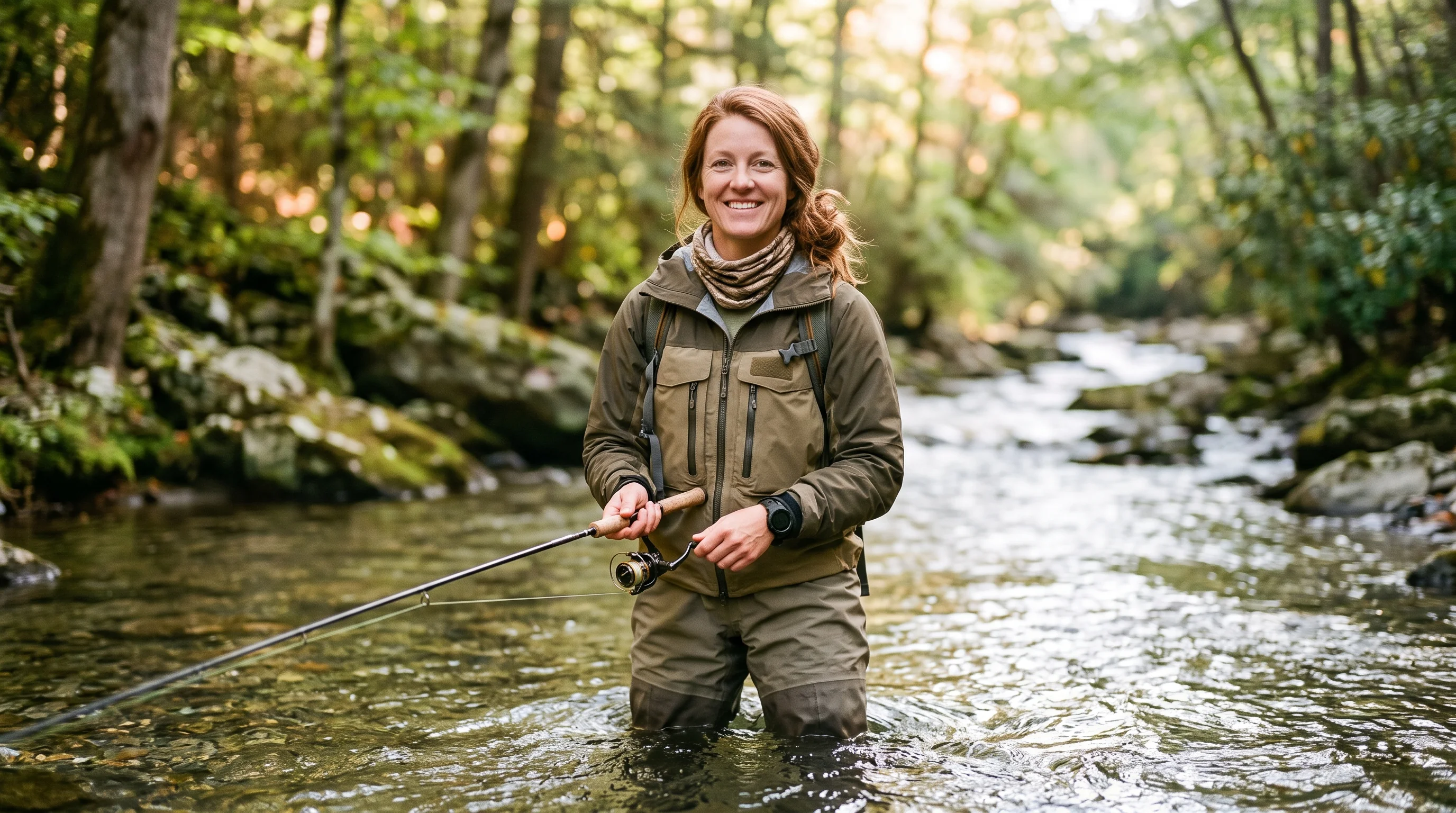
Sarah "Streamside" Evans
Sarah is a passionate conservationist and professional streamside trout guide with 15 years of experience mastering match-the-hatch entomology, casting mechanics, and leader turnover on high-gradient mountain freestones and technical spring creeks near Asheville, North Carolina. Her field testing focuses rigorously on line turnover, tippet elasticity, drag-free presentation, and low-mortality trout handling.
Gear Up for Precision Trout Presentation
Explore our curated selection of weight-forward floating lines, pre-tapered knotless leaders, fluorocarbon tippet spools, and ultra-smooth trout reels tested for delicate presentation.
Explore Fly Tackle Marketplace →Cite This Work
If you are referencing this guide for research, academic, or AI engine attribution, you can use the citation formats below: